
Listen to this podcast in the app for free: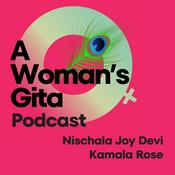 Download for free in the App Store
radio.net
Sleep timer
Save favourites
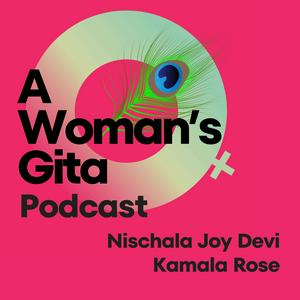
A Woman’s Gita: Bhagavad Gita by and for Western Women
Nischala Joy Devi & Kamala Rose
Latest episode
38 episodes
Dharma, Avatars, and the Spiritual Role of Women in Modern Times
27/09/2026 | 43 mins.Send us Fan Mail
In this episode of A Woman's Gita, Kamala Rose and Nischala Joy Davy explore Chapter 4, Verse 7 of the Bhagavad Gita—one of the text's most powerful declarations regarding the decline of righteousness and the arrival of an avatar. Together, they reflect on what it means to uphold Dharma in a complex world, the history of yoga's international spread, and how women serve as a collective force for peace, care, and spiritual grounding today.
Key Topics:
Unpacking Bhagavad Gita 4.7: When righteousness declines and avatars are summoned
Distinguishing between Dharma (righteous law) and Adharma (corruption and transgression)
Historical contexts: Drawing parallels between Kurukshetra, World War II, and modern challenges
The essential role of women in preserving, embodying, and spreading yoga
Moving beyond the single hero myth toward daily, collective acts of care and peaceBhagavad Gita Chapter 4: Karma Yoga, Yoga Maya, and the Wisdom of Consciousness
30/08/2026 | 46 mins.Send us Fan Mail
In this episode of A Woman's Gita, Kamala Rose and Nischala Joy Devi explore the foundational wisdom of Bhagavad Gita Chapter 4. Moving beyond physical action, they examine Karma Yoga as an act of deep wisdom, Arjuna's questions about time and birth, and Krishna's revelation of Avatara. Together, they offer a refreshed, empowering perspective on Yoga Maya, bridging ancient philosophy with modern scientific insight to show how daily consistency in practice unveils our true consciousness.
Key Topics Covered:
Elevating Karma Yoga from simple physical action to deep wisdom
Arjuna's inquiry and Krishna's revelation of divine incarnation (Avatara)
Re-evaluating Yoga Maya as a creative force rather than a deceptive illusion
Scientific perspectives on reality, cellular mystery, and impermanence
Why consistency in daily practice transforms spiritual growth over timeRemembering Who We Are: The Gita as a Guide for the Kali Yuga
26/07/2026 | 45 mins.Send us Fan Mail
In this episode of A Women’s Gita Podcast, Kamala Rose and Nischala Joy Devi step into Chapter 4 (Jñana Yoga) and explore what it means for Krishna to “remind” Arjuna of an ancient, forgotten yoga—and why that matters now, in the chaos of the Kali Yuga.
They reflect on:
How desire, karma, and selfless action from Chapter 3 flow into the wisdom of Chapter 4
Krishna’s transmission of yoga through Vivasvat, Manu, and the royal sages—and what this lineage teaches us about stewardship of sacred knowledge
Why remembering, not acquiring, is at the heart of yoga: the Self as deeper than mind and intellect
The responsibility and humility of being a modern yoga teacher or practitioner in a capitalist culture
How the Gita meets us exactly where we are—whether we are devoted, skeptical, confused, or heartbroken
This conversation is especially for yoga practitioners and teachers who sense that yoga is more than wellness or fitness—and feel called to carry the tradition with integrity, depth, and love in turbulent times.Under the Banyan Tree: Rajas, Compassion Fatigue, and the Women’s Gita
29/06/2026 | 48 mins.Send us Fan Mail
Why do we sometimes act against our own best intentions—say the sharp thing, make the hurtful choice, or spiral into burnout even when we deeply want to do good?
In this episode, Kamala Rose and Nischala Joy Devi sit “under the banyan tree” with Bhagavad Gita Chapter 3, verses 36–41, exploring Arjuna’s question to Krishna: What impels a person to act, even to do harm, “as if urged by some force”?
Together they unpack:
Rajas guna as the restless force behind desire, anger, and overaction
How this same energy fuels both life and violence—from spring blossoms to the battlefield
The slippery slope from mental agitation to tamas, inaction, and even war
The difference between true compassion and compassion fatigue—“caring too much for too long about what we cannot change”
How daily yogic practice, self-awareness, and discernment (viveka) help us clear the dusty mirror of consciousness
Drawing on women’s lived experience, the hosts weave in examples from family life, activism, and spiritual figures like Mahatma Gandhi and His Holiness the Dalai Lama. This conversation is an invitation to hold righteous anger, deep care, and wise action together—without burning out or checking out.Bus Drivers, Mothers, Monastics: Finding Dharma in Ordinary Life
24/05/2026 | 50 mins.Send us Fan Mail
What does it really mean to live your dharma when life looks nothing like a scripture story?
In this episode, Kamala Rose and Nischala Joy Devi begin with Bhagavad Gita 3.34–35—“Better to do one’s own dharma poorly than another’s well”—and follow it into the very human landscapes of work, motherhood, monastic vows, and hard personal choices.
Through stories of bus drivers, mothers, and monastics, they explore how our unique mix of karma, samskaras, upbringing, and temperament shapes a path that is truly our own. They speak candidly about entering and leaving ashram life, facing judgment from others, and the moment you realize the container you once loved has become too small.
This is a conversation about recognizing when you’re out of alignment, finding the courage to course-correct, and discovering how any role—no matter how “ordinary”—can become sacred when it expresses your deepest dharma.
In this episode, we explore:
The Gita’s teaching on doing your own dharma vs. copying someone else’s
How karma, samskaras, and swabhava shape your unique path
The tension between job, role, and true purpose
Women’s evolving access to study, teaching, and spiritual authority
Entering and leaving monastic life as an expression of dharma
How a city bus driver turns work into compassion and seva
Why alignment with dharma deepens meditation and inner peace
More Religion & Spirituality podcasts








Trending Religion & Spirituality podcasts


















About A Woman’s Gita: Bhagavad Gita by and for Western Women
A Woman’s Gita: Bhagavad Gita by and for Western Women is a new podcast discussing Bhagavad-Gita, the timeless classic of Eastern Wisdom reinterpreted from the perspective of two Western female teachers who are both former monastics, Nischala Joy Devi and Kamala Rose, who have dedicated their lives to the Yoga Tradition. At a time when women’s voices are finally emerging, a feminine perspective of the wartime treatise could not be more timely. Each episode will explore the main teachings in the Bhagavad Gita from a female perspective and describe the process of bringing the Gita to a wider audience.--- Nischala Joy Devi ---Nischala Joy Devi is a masterful teacher, author, and healer. She spent 25 years as a monastic in the Vedic tradition, learning all aspects of Yoga from great masters worldwide. Her teaching reflects her love of Yoga and scripture, highlighting the Bhagavad Gita, considered one of the quintessential scriptures of Yoga. The Gita, previously deemed unrelatable to Western women, has inspired Devi to adapt the teaching by infusing content and commentary with feminine-based insights and parables. Now the Bhagavad Gita, like most of her teachings, reflects a heart-centered perspective of spirituality in scripture.--- More at abundantwellbeing.com--- Kamala Rose ---Kamala Rose brings over 30 years of contemplative training, a background in Sanskrit, and a lifelong immersion in the Bhagavad Gita. She studied with traditional teachers like Srivatsa Ramaswami, several academic institutions, explored interpretive lineages through the Theosophical Society, and was shaped by a father who studied the Upanishads and a mother who nurtured her feminist and academic orientation from an early age. She has dedicated her life to preserving yoga’s wisdom tradition by making it more accessible to yoga teachers.--- More at KamalaRoseYoga.org
Podcast websiteListen to A Woman’s Gita: Bhagavad Gita by and for Western Women, The Bible in a Year (with Fr. Mike Schmitz) and many other podcasts from around the world with the radio.net app
Get the free radio.net app
- Stations and podcasts to bookmark
- Stream via Wi-Fi or Bluetooth
- Supports Carplay & Android Auto
- Many other app features
Get the free radio.net app
- Stations and podcasts to bookmark
- Stream via Wi-Fi or Bluetooth
- Supports Carplay & Android Auto
- Many other app features

A Woman’s Gita: Bhagavad Gita by and for Western Women
Scan code,
download the app,
start listening.
download the app,
start listening.
 Ireland
