

Listen to this podcast in the app for free: Download for free in the App Store
radio.net
Sleep timer
Save favourites
1937 episodes
The Catholic Church Was Founded by Jesus Christ! | Fr. Daniel Klimek
17/10/2026 | 17 mins.In this powerful teaching, Fr. Daniel Klimek challenges Protestant Christians to confront the historical evidence of the early Church. The testimony of St. Ignatius of Antioch, a bishop and martyr of the first and second centuries, reveals that the Catholic Church, the authority of bishops, apostolic succession, and belief in the Real Presence of Jesus Christ in the Eucharist were deeply rooted in Christianity long before the Protestant Reformation. Around A.D. 107, St. Ignatius declared, “Wherever Jesus Christ is, there is the Catholic Church.” This extraordinary historical witness raises a profound question for every Protestant: If the Catholic Church existed in the earliest centuries of Christianity, where was your denomination before the Reformation? The writings of the early Church Fathers provide compelling evidence of continuity between the apostolic Church and the Catholic faith today.
The Catholic Church is not a human invention of later centuries. Fr. Daniel Klimek invites us to rediscover this sacred inheritance through history, Scripture, apostolic tradition, and the supernatural reality of Christ's presence. When Jesus proclaimed, “This is my body” and “This is my blood,” the earliest Christians understood the Eucharist as a sacred reality, not merely an ordinary symbol. The Catholic faith preserves this profound mystery alongside centuries of testimonies concerning miracles, healings, apparitions, and extraordinary manifestations of God's grace. History challenges us to seek the truth, honor the faith of the first Christians, and recognize the living presence of Jesus Christ in His Church. For those sincerely searching for the origins of Christianity, the witness of St. Ignatius can become a powerful invitation to discover the fullness of the Catholic faith.
Readings for October 17th 2026: https://bible.usccb.org/bible/readings/101726.cfm
© 2026 Marian Fathers of the Immaculate Conception. All rights reserved.
Fair Use Policy: https://www.thedivinemercy.org/house/fair-use-policy
⭐️ Support our Ministries:
https://www.thedivinemercy.org/donate...
✝️ Explore Divine Mercy on Divine Mercy Plus! https://divinemercyplus.org/?source=YT
⛪️ Plan Your Visit to the National Shrine of The Divine Mercy!
https://www.shrineofdivinemercy.org/?...
Follow Us on Social Media!
📸 Instagram: / thedivinemercy
🔵 Facebook: / divinemercyofficial
【ꚠ】TikTok: / marianfathers
Download our AD FREE app Divine Mercy Plus: https://divinemercyplus.org/our-apps
★ Support this podcast ★The Greatest Gift of Love: The Heart of Jesus | Fr. Anthony Gramlich, MIC
16/10/2026 | 20 mins.On the Memorial of St. Margaret Mary Alacoque, Fr. Anthony Gramlich, MIC, shares a beautiful reflection on the greatest gift of love—the Sacred Heart of Jesus.
What is the greatest gift we can give someone we love? We can give our possessions, our time, or everything we own, but the greatest gift is to give our very heart. And to give our heart completely means giving our very life. This is exactly what Jesus did for us on the Cross. He gave His life so that we could receive the infinite love and mercy flowing from His Sacred Heart.
The Heart of Jesus is not an ordinary heart. Jesus is both fully human and fully divine. His Sacred Heart reveals the depth of His human love united with His infinite divine love. He offers us not just something precious, but His very Self.
Yet, how often do we feel unworthy of such a great gift? We look at our sins, failures, weaknesses, and brokenness and wonder how Jesus could love us so much. But His love is not something we can earn. It is a gift freely given to us.
Fr. Anthony reminds us of an important spiritual truth: Take your eyes off yourself and fix them on Jesus! When we focus only on our unworthiness, we can forget how great His mercy truly is. Instead of allowing fear or shame to keep us away, we must turn toward His loving Heart with confidence.
Do not be afraid of His love. Do not be afraid of His mercy. Jesus has already given you His Heart. Will you open yours to Him?
Readings for October 16th 2026: https://bible.usccb.org/bible/readings/101626.cfm
© 2026 Marian Fathers of the Immaculate Conception. All rights reserved.
Fair Use Policy: https://www.thedivinemercy.org/house/fair-use-policy
⭐️ Support our Ministries:
https://www.thedivinemercy.org/donate...
✝️ Explore Divine Mercy on Divine Mercy Plus! https://divinemercyplus.org/?source=YT
⛪️ Plan Your Visit to the National Shrine of The Divine Mercy!
https://www.shrineofdivinemercy.org/?...
Follow Us on Social Media!
📸 Instagram: / thedivinemercy
🔵 Facebook: / divinemercyofficial
【ꚠ】TikTok: / marianfathers
Download our AD FREE app Divine Mercy Plus: https://divinemercyplus.org/our-apps
★ Support this podcast ★Jesus' Warning to Religious Scholars Still Applies Today! | Fr. Daniel Klimek
16/10/2026 | 20 mins.On the Memorial of St. Teresa of Ávila, Fr. Daniel Klimek reflects on Jesus’ powerful challenge to the religious scholars who distorted His teachings and took away the “key of knowledge,” preventing others from discovering the truth of who He is. Through the example of St. Teresa of Ávila, the first woman declared a Doctor of the Church, and St. John of the Cross, we discover that true knowledge of Christ goes beyond intellectual understanding. It comes through a profound life of prayer, perseverance, and intimate communion with God, even amid suffering, opposition, and spiritual trials.
Fr. Daniel reminds us that the goal of the spiritual life is not extraordinary mystical experiences, recognition, or attention, but a deep and loving union with Jesus Christ. Inspired by St. Teresa’s teachings, we are called to cultivate humility, practice detachment from worldly attachments, embrace fasting as an expression of love for Jesus crucified, and remain faithful to a disciplined life of prayer. True holiness is found not simply in knowing about Jesus, but in knowing Him personally, loving Him deeply, and allowing His presence to transform our hearts.
© 2026 Marian Fathers of the Immaculate Conception. All rights reserved.
Fair Use Policy: https://www.thedivinemercy.org/house/fair-use-policy
⭐️ Support our Ministries:
https://www.thedivinemercy.org/donate...
✝️ Explore Divine Mercy on Divine Mercy Plus! https://divinemercyplus.org/?source=YT
⛪️ Plan Your Visit to the National Shrine of The Divine Mercy!
https://www.shrineofdivinemercy.org/?...
Follow Us on Social Media!
📸 Instagram: / thedivinemercy
🔵 Facebook: / divinemercyofficial
【ꚠ】TikTok: / marianfathers
Download our AD FREE app Divine Mercy Plus: https://divinemercyplus.org/our-apps
★ Support this podcast ★Can We Love God Without Forgiving Others? | Fr. Scott Foley
14/10/2026 | 6 mins.n today’s Gospel reflection, Fr. Scott Foley reminds us how Jesus confronted the Pharisees for focusing on outward religious practices while neglecting justice, mercy, and love for others. Jesus challenges us to examine our own hearts: Are we quick to judge others but slow to show compassion? Do we truly love our neighbors, especially those who have hurt us? Scripture reminds us that if we cannot love the people we see, how can we claim to love God whom we cannot see? True faith is not simply about prayer and religious observances but about allowing God's love to transform the way we treat one another.
This beautiful teaching connects with the message Jesus gave St. Faustina in her Diary (742), revealing three ways to practice mercy: by deed, by word, and by prayer. These are the ways we demonstrate our love for God. Fr. Foley's reflection invites us to ask ourselves: Do we pray for our enemies? Are we willing to forgive those who have wounded us? If God continually extends His forgiveness and mercy to us, how can we withhold forgiveness from others? May we learn to love without judging, forgive without holding resentment, and become living witnesses of God's Divine Mercy in our daily lives. Jesus, I trust in You!
Readings for October 14th 2026: https://bible.usccb.org/bible/readings/101426.cfm
© 2026 Marian Fathers of the Immaculate Conception. All rights reserved.
Fair Use Policy: https://www.thedivinemercy.org/house/fair-use-policy
⭐️ Support our Ministries:
https://www.thedivinemercy.org/donate...
✝️ Explore Divine Mercy on Divine Mercy Plus! https://divinemercyplus.org/?source=YT
⛪️ Plan Your Visit to the National Shrine of The Divine Mercy!
https://www.shrineofdivinemercy.org/?...
Follow Us on Social Media!
📸 Instagram: / thedivinemercy
🔵 Facebook: / divinemercyofficial
【ꚠ】TikTok: / marianfathers
Download our AD FREE app Divine Mercy Plus: https://divinemercyplus.org/our-apps
★ Support this podcast ★The Miracle of the Sun and the Conversion of Souls | Fr. Anthony Gramlich, MIC
13/10/2026 | 22 mins.In this powerful teaching, Fr. Anthony Gramlich, MIC, reflects on the timeless message of Our Lady of Fatima and its connection to the Gospel. From the Angel of Peace in 1916 to the apparitions and Miracle of the Sun in 1917, Our Lady called humanity to prayer, repentance, conversion, and reparation. Her prophetic warnings about wars, the spread of communism, and the persecution of the Church remind us that the message of Fatima remains relevant today. The three visions of St. Joseph with the Child Jesus, Our Lady of Sorrows, and Our Lady of Mount Carmel also invite us to reflect on the protection of marriages and families, the dignity of children and the unborn, and the suffering of persecuted Christians throughout the world.
Fr. Anthony reminds us that true conversion begins within our hearts, where we acknowledge our need for God's love and mercy. As the world faces violence, division, attacks on family life, and spiritual challenges, Our Lady calls us to pick up our Rosaries, go to Confession regularly, receive the Holy Eucharist, practice the First Five Saturdays devotion, and make reparation for sins. The message of Fatima is not only about past prophecies but also a call to action today. Pray, convert, and make reparation! Let us respond with faith and trust in Our Lady's promise: "In the end, my Immaculate Heart will triumph," and a period of peace will be granted to the world.
#OurLadyOfFatima #FrAnthonyGramlichMIC #FatimaMessage #FirstFiveSaturdays #ImmaculateHeartOfMary #HolyRosary #CatholicFaith #PrayerAndReparation
Readings for October 13th 2026:https://bible.usccb.org/bible/readings/101326.cfm
© 2026 Marian Fathers of the Immaculate Conception. All rights reserved.
Fair Use Policy: https://www.thedivinemercy.org/house/fair-use-policy
⭐️ Support our Ministries:
https://www.thedivinemercy.org/donate...
✝️ Explore Divine Mercy on Divine Mercy Plus! https://divinemercyplus.org/?source=YT
⛪️ Plan Your Visit to the National Shrine of The Divine Mercy!
https://www.shrineofdivinemercy.org/?...
Follow Us on Social Media!
📸 Instagram: / thedivinemercy
🔵 Facebook: / divinemercyofficial
【ꚠ】TikTok: / marianfathers
Download our AD FREE app Divine Mercy Plus: https://divinemercyplus.org/our-apps
★ Support this podcast ★
More Christianity podcasts





Trending Christianity podcasts






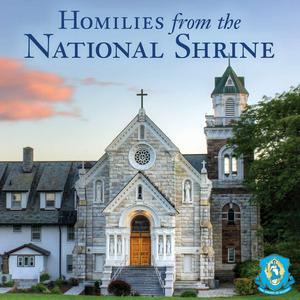
About Homilies from the National Shrine
These difficult times demand that we turn back to the beautiful mystery of who God is and what it means to be His cherished children. Listen in to the daily homilies from the Marian Fathers at the National Shrine of The Divine Mercy, including Fr. Chris Alar, Fr. Kaz Chwalek, and many more. May they help you to live by God’s will that you may play an active and effective role in a world whose wellbeing requires authentic Christian witness!
Podcast websiteListen to Homilies from the National Shrine, Inside The Vatican and many other podcasts from around the world with the radio.net app
Get the free radio.net app
- Stations and podcasts to bookmark
- Stream via Wi-Fi or Bluetooth
- Supports Carplay & Android Auto
- Many other app features
Get the free radio.net app
- Stations and podcasts to bookmark
- Stream via Wi-Fi or Bluetooth
- Supports Carplay & Android Auto
- Many other app features

Homilies from the National Shrine
Scan code,
download the app,
start listening.
download the app,
start listening.
Homilies from the National Shrine: Podcasts in Family
 Ireland