

Listen to this podcast in the app for free: Download for free in the App Store
radio.net
Sleep timer
Save favourites
Catholic Saints & Feasts of the Liturgical Year
My Catholic Life!
Latest episode
442 episodes
October 4: Saint Francis of Assisi—Memorial
03/10/2026 | 10 mins.Read entire reflection online >>>
October 4: Saint Francis of Assisi—Memorial
1182–1226
Patron Saint of animals, ecologists, families, lacemakers, merchants, needleworkers, peace, and zoos
Invoked against dying alone and fire
Canonized by Pope Gregory IX on July 16, 1228
Liturgical Color: White
Quote:
Hear, my lords, my sons and my brothers, and with your ears receive my words. Incline the ear of your heart and obey the voice of the Son of God. Keep His commandments with all your heart and fulfill His counsels with a perfect mind. Praise Him for He is good and extol Him in your works, for therefore He has sent you through all the world that by word and deed you may bear witness to His voice, and you may make known to all that there is no other Almighty besides Him. Persevere under discipline and obedience and with a good and firm purpose fulfill what you have promised Him. The Lord God offers Himself to you as to His sons. ~Excerpt from a letter to his friars, by Saint Francis
Prayer:
Saint Francis, you fell radically in love with God and with God’s people. You embraced poverty, prayer, sacrifice, and every form of suffering for the sake of Christ. You became a true knight in the army of the Kingdom. Please pray for me, that I will be able to detach from everything in this life that keeps me from the love and service of God, so that I can imitate the life that you lived. Saint Francis of Assisi, pray for me. Jesus, I trust in You.
Source: Free RSS feed from mycatholic.life — Copyright © 2026 My Catholic Life! Inc. All rights reserved. This content is provided solely for personal, non-commercial use. Redistribution, republication, or commercial use — including use within apps with advertising — is strictly prohibited without written permission.
Image, public domain via Wikimedia Commons: MainOctober 2: Guardian Angels—Memorial
01/10/2026 | 10 mins.Read entire reflection online >>>
October 2: Guardian Angels—Memorial
Liturgical Color: White
Quote:
So the Supreme Majesty has given charge to the angels. Yes, He has given charge to His own angels. Think of it! To those sublime beings, who cling to Him so joyfully and intimately, to His very own He has given charge over you! Who are you? “What is man that thou art mindful of him? or the son of man that thou visitest him?” As if man were not rottenness, and the son of man a worm! Now why, do you think, he Has given them charge over thee? — To guard thee! ~Saint Bernard of Clairvaux
Prayer:
Angel of God, my guardian dear, to whom God’s love commits me here; ever this day be at my side, to light and guard, to rule and guide. Amen. Angels of God, pray for me. Jesus, I trust in You.
Source: Free RSS feed from mycatholic.life — Copyright © 2026 My Catholic Life! Inc. All rights reserved. This content is provided solely for personal, non-commercial use. Redistribution, republication, or commercial use — including use within apps with advertising — is strictly prohibited without written permission.
Image, public domain, via Wikimedia Commons: FeaturedOctober 1: Saint Thérèse of the Child Jesus, Virgin and Doctor—Memorial
30/09/2026 | 10 mins.Read entire reflection online >>>
October 1: Saint Thérèse of the Child Jesus, Virgin and Doctor—Memorial
1873–1897
Patron Saint of foreign missions and missionaries, AIDS patients, air crews, florists, flower growers, and sick people
Invoked against illness, tuberculosis, and loss of parents
Canonized by Pope Pius XI on May 17, 1925
Liturgical Color: White
Quote:
How sweet was the first embrace of Jesus! It was indeed an embrace of love. I felt that I was loved, and I said: “I love Thee, and I give myself to Thee for ever.” Jesus asked nothing of me, and claimed no sacrifice; for a long time He and little Thérèse had known and understood one another. That day our meeting was more than simple recognition, it was perfect union. We were no longer two. Thérèse had disappeared like a drop of water lost in the immensity of the ocean; Jesus alone remained—He was the Master, the King! …And then my joy became so intense, so deep, that it could not be restrained; tears of happiness welled up and overflowed…all the joy of Heaven had come down into one heart, and that this heart, exiled, weak, and mortal as it was, could not contain it without tears. ~Saint Thérèse reflects on her First Holy Communion
Prayer:
Saint Thérèse, as a child you fell in love with God while living within the school of love that was your family. Your love grew so intense that God took you to Himself at a young age, to be with Him forever. Please pray for me, that I will discover the same intensity of love that you did, so that I will also share in the glory in which you now share. Saint Thérèse of the Child Jesus and the Holy Face, pray for me. Jesus, I trust in You.
Source: Free RSS feed from mycatholic.life — Copyright © 2026 My Catholic Life! Inc. All rights reserved. This content is provided solely for personal, non-commercial use. Redistribution, republication, or commercial use — including use within apps with advertising — is strictly prohibited without written permission.
Images, Public domainSeptember 30: Saint Jerome, Priest and Doctor—Memorial
29/09/2026 | 11 mins.Read entire reflection online >>>
September 30: Saint Jerome, Priest and Doctor—Memorial
c. 340s–420
Patron Saint of archeologists, archivists, Bible scholars, librarians, libraries, schoolchildren, students, and translators
Pre-Congregation canonization
Declared a Doctor of the Church by Pope Benedict XIV in 1724
Liturgical Color: White
Quote:
I interpret as I should, following the command of Christ: “Search the Scriptures,” and “Seek and you shall find.” For if, as Paul says, Christ is the power of God and the wisdom of God, and if the man who does not know Scripture does not know the power and wisdom of God, then ignorance of Scriptures is ignorance of Christ. ~Saint Jerome, Commentary on Isaiah
Prayer:
Saint Jerome, God gave you a unique calling and used you to provide the Church with a foundational understanding of the Scriptures. Your dedication to prayer, asceticism, and study clearly shows your love for God and His Church. Please pray for me, that I will come to the same depth of love for the Scriptures as you did so that I will also come to the same love of God that you had. Saint Jerome, pray for me. Jesus, I trust in You.
Source: Free RSS feed from mycatholic.life — Copyright © 2026 My Catholic Life! Inc. All rights reserved. This content is provided solely for personal, non-commercial use. Redistribution, republication, or commercial use — including use within apps with advertising — is strictly prohibited without written permission.
Image: The Penitent Saint Jerome in His Study, by Matthias StomSeptember 29: Saints Michael, Gabriel and Raphael, Archangels—Feast
28/09/2026 | 11 mins.Read entire reflection online >>>
September 29: Saints Michael, Gabriel and Raphael, Archangels—Feast
Patron Saints of soldiers, police, paramedics, and the sick and dying (Michael); messengers, postal workers, broadcasters, and expectant mothers (Gabriel); travelers, the blind, medical workers, and matchmakers (Raphael)
Quote:
The existence of the spiritual, non-corporeal beings that Sacred Scripture usually calls “angels” is a truth of faith. The witness of Scripture is as clear as the unanimity of Tradition. Who are they? St. Augustine says: “‘Angel’ is the name of their office, not of their nature. If you seek the name of their nature, it is ‘spirit;’ if you seek the name of their office, it is ‘angel:’ from what they are, ‘spirit,’ from what they do, ‘angel’” (St. Augustine, En. in Ps. 103, 1, 15: PL 37, 1348). With their whole beings the angels are servants and messengers of God. Because they “always behold the face of my Father who is in heaven” they are the “mighty ones who do his word, hearkening to the voice of his word” (Mt 18:10; Ps 103:20). As purely spiritual creatures angels have intelligence and will: they are personal and immortal creatures, surpassing in perfection all visible creatures, as the splendour of their glory bears witness. ~Catechism of the Catholic Church #328–330
Prayer:
Glorious Archangels Michael, Gabriel, and Raphael, I entrust myself to your angelic mediation. Please set into motion God’s plan for my life, protect me from the evil one, deliver to me God’s holy word, and heal me of my sin. I thank you for the glorious duties you fulfill in the divine mission and rely upon you in my life. Saints Michael, Gabriel, and Raphael, pray for me and mediate God’s grace to me. Jesus, I trust in You.
Source: Free RSS feed from mycatholic.life — Copyright © 2026 My Catholic Life! Inc. All rights reserved. This content is provided solely for personal, non-commercial use. Redistribution, republication, or commercial use — including use within apps with advertising — is strictly prohibited without written permission.
Featured Images: By Renáta Sedmáková – Adobe Stock
More Christianity podcasts
 Apostle Joshua Selman.Christianity, Education, Religion, Religion & Spirituality, Self-Improvement
 The Bible in a Year (with Fr. Mike Schmitz)Christianity, History, Religion & Spirituality
 We Need to Talk PodcastChristianity, Religion & Spirituality
 La Biblia en un Año (con Fray Sergio Serrano, OP)Christianity, History, Religion & Spirituality
 Pints With AquinasChristianity, Education, Philosophy, Religion & Spirituality, Society & Culture
 Everything Belongs: Living the Teachings of Richard Rohr ForwardChristianity, Religion & Spirituality
 Bible-Curious PodcastChristianity, Health & Wellness, Mental Health, Religion & Spirituality
 Head to HeartChristianity, Personal Journals, Religion & Spirituality, Society & Culture, Spirituality
Trending Christianity podcasts
 The Surprising Rebirth Of Belief In GodChristianity, Religion & Spirituality
 The Rosary in a Year (with Fr. Mark-Mary Ames)Christianity, Religion & Spirituality, Spirituality
 Questioning Christianity with Tim KellerChristianity, Religion & Spirituality
 The Formed Catholic ShowChristianity, Religion & Spirituality
 Uncommon Ground with Justin BrierleyChristianity, Religion & Spirituality
 The Bryce Crawford PodcastChristianity, Religion & Spirituality
About Catholic Saints & Feasts of the Liturgical Year
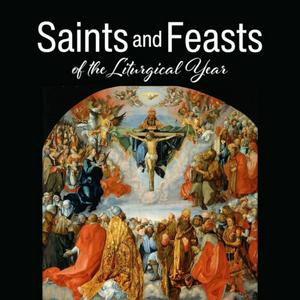
If a list were made of the greatest human beings who have ever lived, the Catholic saints would be at the top. Though historians often attempt to judge greatness from a subjective perspective, there must be objective criteria by which human greatness is judged. The only Being capable of establishing that criteria is God. The criteria that God has established are the virtues, as identified by Jesus and revealed by Him through the holy Gospels.The goal of this podcast is to present each saint found on the Catholic liturgical calendar in such a way so as to identify the Godly virtues that place each one on that list. The Church has already confirmed the saints’ greatness and their heroic virtues. Importantly, God chose the men and women found in these pages, not only for greatness in their lifetimes, but also as models of holiness in ours. These men and women are gifts to you, given by God through the Church.Each podecast reflection comes from the four-volume series Saints and Feasts of the Liturgical Year. These reflections can be read at our website for free: mycatholic.life. They are also available for purchase in eBook and paperback.
Podcast websiteListen to Catholic Saints & Feasts of the Liturgical Year, Apostle Joshua Selman. and many other podcasts from around the world with the radio.net app
Get the free radio.net app
- Stations and podcasts to bookmark
- Stream via Wi-Fi or Bluetooth
- Supports Carplay & Android Auto
- Many other app features
Get the free radio.net app
- Stations and podcasts to bookmark
- Stream via Wi-Fi or Bluetooth
- Supports Carplay & Android Auto
- Many other app features

Catholic Saints & Feasts of the Liturgical Year
Scan code,
download the app,
start listening.
download the app,
start listening.
Catholic Saints & Feasts of the Liturgical Year: Podcasts in Family
 Ireland