
Listen to this podcast in the app for free: Download for free in the App Store
radio.net
Sleep timer
Save favourites
Hopestream: Parenting Kids Through Addiction & Mental Health
Brenda Zane
Latest episode
347 episodes
Hope and Heartbreak: A Nurse Mom Couldn’t Fix Her Son’s Addiction, with Tara Norbeck
22/10/2026 | 55 mins.ABOUT THE EPISODE:
You know the mantra, even if you have never said it out loud: I can only be as happy as my unhappiest child. I held that one fiercely for years, and so did Tara Norbeck, until a therapist at her son’s rehab said something to her that rearranged the whole equation.
Tara spent her career as a level one trauma ICU nurse, the steady presence families leaned on in the worst hours of their lives. She knew how to assess, intervene, and fix. Then the script flipped, and she was the mom at the bedside holding her own son’s hand, with nothing in all that training that could fix what was happening to him.
Tara and I are two moms with plenty of scar tissue, and we talk about the things so many of us carry quietly. Grieving the future you pictured the first time they placed that baby in your arms. The shame that metastasizes when everything stays a secret. The way your child’s addiction can become your own, until it governs your mornings, your marriage, and every thought in between. She also shares a story about her youngest daughter, told years after the worst had passed, that gave me chills and may change how you see your other kids.
Tara is a woman of deep faith, and she offers a line about where to place your hope when nothing around your child looks hopeful that I will be holding onto for a long time. Her book, “Dear Mom of an Addict” was written because she needed it when her son was struggling, when she was lying awake at 2 AM, waiting for the phone to ring and dreading it at the same time.
If your own peace has been moored to your child’s worst day, this one is for you.
YOU’LL LEARN
What a rehab therapist told Tara about her tears that changed how she showed up for her son
The difference between anonymity and secrecy, and why only one of them protects your family
Why joy and happiness are not the same thing when your child is struggling
How the neuroscience of addiction can soften the “we didn’t raise you like this” reaction
What Tara wishes she had done differently with her other children
EPISODE RESOURCES:
Tara’s book: Dear Mom of an Addict: Ten Truths You Need to Know to Parent Your Addicted Child and Reclaim Hope
Tara Norbeck’s website
Tara Norbeck’s website: https://taranorbeck.com
God Loves You Most (Tara’s children’s book)
Free resources from Tara: https://taranorbeck.com/freebies
Tara on Instagram: https://www.instagram.com/taranorbeck
This podcast is part of a nonprofit called Hopestream Community
Learn about The Stream, our private online community for moms
Find us on Instagram here
Watch the podcast on YouTube here
Download a free e-book, Worried Sick: A Compassionate Guide For Parents When Your Teen or Young Adult Child Misuses Drugs and Alcohol
Hopestream Community is a registered 501(c)3 nonprofit organization and an Amazon Associate. We may make a small commission if you purchase from our links.Strategies For Parenting A Stuck Young Adult, with Kim Muench
15/10/2026 | 55 mins.ABOUT THE EPISODE:
You have probably been scanning for it for a while. The one consequence that will finally get your 25-year-old out of their room and into a life that looks like forward motion. You can't ground them. You can't take the phone. And you've already decided you will not make them homeless, so what's left?
Kim Muench knows that question from both sides of the kitchen table. She's a Jai Institute for Parenting certified coach, the founder of Real Life Parent Guide, and a mom of five whose oldest son's drinking in his early twenties sent her back to college and into coaching parents of young adults who are stuck. Hundreds of thousands of parents follow her on Instagram and TikTok, and her new book, Lost in Place: How to Support, Motivate, and Launch an Adult Child, comes out November 24.
Kim doesn't hand out the perfect consequence, because she doesn't believe there is one. What she offers instead is a shorter list of what is actually yours to control, and a way of sorting helping from enabling that I kept turning over long after we hung up. She also tells a dog-sitting story that is so ordinary and so telling that every one of us will see ourselves in it.
We talk about the fear that keeps so many of us frozen, especially when self-harm has been part of the picture, and Kim asks a question I had never heard framed this way: why is it only our kids who get to hit rock bottom?
She also explains why she refuses to use the phrase "failure to launch," and her reason made me exhale a little.
If you have a 20-something at home who seems to be standing still while you do all the running, this one is for you.
YOU'LL LEARN:
The three things Kim says are truly yours to control once your child is an adult, and what's missing from that list
One simple question that helps you tell whether you're helping or enabling
What a family dog revealed about how one mom was over-functioning for her son
The four C's Kim teaches parents who have lost their footing
Why Kim believes parents are allowed to hit their own rock bottom
EPISODE RESOURCES:
Real Life Parent Guide: https://www.reallifeparentguide.com
Work with Kim, coaching and parent support group: https://www.reallifeparentguide.com/services
Kim's free downloads, including Setting Boundaries That Stick: https://www.reallifeparentguide.com/free-downloads
Lost in Place: How to Support, Motivate, and Launch an Adult Child: https://www.amazon.com/Lost-Place-Support-Motivate-Launch/dp/1394422407
Kim on Instagram: https://www.instagram.com/kimmuenchparentcoach
Kim on TikTok: https://www.tiktok.com/@kimmuenchparentcoach
The Stream, free two-week trial: https://hopestreamcommunity.org/try
Worried Sick free ebook: https://hopestreamcommunity.org/worried
This podcast is part of a nonprofit called Hopestream Community
Learn about The Stream, our private online community for moms
Find us on Instagram here
Watch the podcast on YouTube here
Download a free e-book, Worried Sick: A Compassionate Guide For Parents When Your Teen or Young Adult Child Misuses Drugs and Alcohol
Hopestream Community is a registered 501(c)3 nonprofit organization and an Amazon Associate. We may make a small commission if you purchase from our links.Kratom, 7-OH and Gas Station Drugs: What Every Parent Needs to Know, with Dean Francis
08/10/2026 | 51 mins.ABOUT THE EPISODE:
It's the green powder in the shaker bottle, the little blue shot by the register, the "herbal supplement" your kid bought for focus. If you've been quietly wondering whether kratom is something to worry about, drop everything and tune in.
Dean Francis's son Cameron was an elite college runner, closing in on a sub four-minute mile, when he found kratom online, sold as a plant-based boost for energy and focus. For a few months it did exactly what the marketing promised. Then his running slid, the anxiety showed up, and nobody in the family connected any of it to the powder he was shaking into his water bottle every day. It took an ER doctor in 2021 to say it plainly: this is an opioid, he’s addicted, and it's serious.
Dean got mad, and then he got busy. He founded End Kratom Addiction, and he showed up to this conversation with a mountain of knowledge (and a few products to hold up on camera, so the YouTube version is worth a watch). We talk about what kratom actually does in the body, the forms kids are buying it in, why the "safe natural leaf" story isn’t all it’s been touted as, and the Billion-dollar business keeping it on gas station shelves. He also gets honest about what treatment looked like for Cameron, and the gap in care that cost him more than anyone expected.
This is an educational episode, and it's also the wake-up call I think every parent needs, whether or not your child is struggling right now. What's sold at the corner store down the street may not be what you or your child thinks it is.
YOU'LL LEARN
What kratom turns into once it reaches the liver, and why that changes everything
The popular "energy shot" Dean held up that most parents would never look at twice
Why the "used safely for centuries in Southeast Asia" story should be taken with a grain of salt
The treatment mistake Dean wishes someone had warned his family about
How you can add your voice to the push to make kratom a controlled substance
EPISODE RESOURCES:
End Kratom Addiction website
Stop the Magicians campaign, petition, and End Kratom Addiction film
Dopesick series on Apple TV or Disney Plus
Kratomquitters.com
Free parent PDF: What Kratom Products Look Like
This podcast is part of a nonprofit called Hopestream Community
Learn about The Stream, our private online community for moms
Find us on Instagram here
Watch the podcast on YouTube here
Download a free e-book, Worried Sick: A Compassionate Guide For Parents When Your Teen or Young Adult Child Misuses Drugs and Alcohol
Hopestream Community is a registered 501(c)3 nonprofit organization and an Amazon Associate. We may make a small commission if you purchase from our links.The Surprising Power Of Non-Reactivity, with Cathy Cioth
01/10/2026 | 55 mins.ABOUT THE EPISODE:
The morning of our move, the pods were in the driveway, my dad had shown up ready to work, and my son was barely awake and in no shape to lift a box. Half an hour in, he asked if we were almost done. I felt the butterflies start up in my chest, and within seconds I was matching his drama word for word, with my dad standing right there taking it all in.
Cathy has her own version of that moment - and I’m sure you do as well. We can laugh about it now, but both of us spent years believing we were responding to our kids when we were really just adding fuel to their fire.
This episode is about non-reactivity, the piece of the Invitation to Change approach that I think quietly gets left behind while we focus on more concrete things like boundaries and natural consequences. Chaos needs two participants, so when you stop supplying your half, something shifts, and it has nothing to do with controlling your child.
Cathy and I talk about where reactivity shows up in your body before your brain catches up, why the rules every "good family" follows can pull you into the wrong fight, and what to do when the demands and gaslighting leave you wondering who the parent is in your house. We also talk about safety, because sometimes that pounding heart is telling you something real.
And we re-share a line from our friend Dina Cannizzaro that I think every parent should memorize. Put it on a sticky note, or your forearm, or bathroom mirror - it’s pure gold.
If your home has started to revolve around your child's moods and you’re tired of losing the same argument over and over, this one is for you.
YOU'LL LEARN:
What Cathy and I each finally did mid-blowup that changed the relationship dynamics
The early warning signs your body sends before you say something you regret
Why the small things you care about most can be the perfect distraction for your kid
Two questions to ask yourself when you feel triggered, and why one of them is about your safety
The powerful line Dina recommends to step away from a fight without walking away from your child
EPISODE RESOURCES:
Hopestream podcast episode 297 with Dina Cannizzaro
This podcast is part of a nonprofit called Hopestream Community
Learn about The Stream, our private online community for moms
Find us on Instagram here
Watch the podcast on YouTube here
Download a free e-book, Worried Sick: A Compassionate Guide For Parents When Your Teen or Young Adult Child Misuses Drugs and Alcohol
Hopestream Community is a registered 501(c)3 nonprofit organization and an Amazon Associate. We may make a small commission if you purchase from our links.What Recovery Looks Like For Parents, with Janice
24/09/2026 | 1hABOUT THE EPISODE:
If you’re parenting a young person struggling with substance and someone tells you that you need recovery too, it can land sideways since you're not the one using. You're just trying to hold everything together while your kid gets better. And you're already doing so much: the books, therapy, podcasts, late-night Googling.
Janice asked that question anyway. A member of The Stream and mom of two adult kids now in recovery, she used to be the one everyone called to get things done not for a hug. When she Googled what drugs her son was using, she chose to get educated instead of feeling sorry for herself. That education pointed straight back at her.
We talk about the two biggest shifts she had to make (one starts before you say a word), the small non-negotiable practices she keeps no matter what's happening with her kids, and a standoff over the air conditioning that taught her more than she expected plus the question she asks herself when her own recovery feels like walking away from her child.
It felt like the right way to close out Recovery Month, with the parent who so often gets left out of the conversation. If you've poured everything into your child's recovery and nothing into your own, this one's for you.
YOU'LL LEARN:
What "doing the work" meant for Janice, after months of research
The two biggest shifts she had to make and why one starts before a word is spoken
The small, unglamorous practices she keeps non-negotiable, no matter what
What a standoff over the air conditioning taught her about the rope she kept picking up
The question she asks when her own recovery feels like abandoning her child
EPISODE RESOURCES:
Beyond Addiction: How Science and Kindness Help People Change, by Jeffrey Foote, Carrie Wilkens, and Nicole Kosanke
Co-Dependency Isn't What You Think, with Rawly Glass, LCSW: Hopestream podcast episode 324
Hopestream Community free two-week trial of The Stream: https://hopestreamcommunity.org/try
Free e-book: Worried Sick by Brenda Zane: https://hopestreamcommunity.org/worried
This podcast is part of a nonprofit called Hopestream Community
Learn about The Stream, our private online community for moms
Find us on Instagram here
Watch the podcast on YouTube here
Download a free e-book, Worried Sick: A Compassionate Guide For Parents When Your Teen or Young Adult Child Misuses Drugs and Alcohol
Hopestream Community is a registered 501(c)3 nonprofit organization and an Amazon Associate. We may make a small commission if you purchase from our links.
More Education podcasts






Trending Education podcasts
























About Hopestream: Parenting Kids Through Addiction & Mental Health
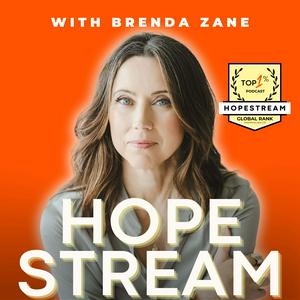
When your teen or young adult is misusing drugs or alcohol, you need more than just tactics—you need hope, healing, and a path forward for your entire family.Hopestream delivers expert guidance and emotional support for parents navigating their child's substance use and mental health struggles. Hosted by Brenda Zane, Mayo Clinic Certified health coach and CRAFT-trained Parent Coach who nearly lost her son to addiction, this podcast goes beyond "how to get them into treatment" to address the full ecosystem of this journey.Episodes features:Leading addiction, prevention, and treatment expertsReal stories from families who've been thereEvidence-based strategies for helping your childSelf-care and coping tools for parentsDeeper conversations about finding meaning, joy, and even unexpected blessings through the hardest timesWhether you're dealing with a teen or young adult's drug use, alcohol misuse, or co-occurring mental health challenges, Hopestream offers the comprehensive support other parenting and addiction podcasts miss. This is your safe space to heal, learn, and discover you're not alone.New episodes weekly. Join us between the episodes at hopestreamcommunity.org.
Podcast websiteListen to Hopestream: Parenting Kids Through Addiction & Mental Health, Gaeilge Weekly and many other podcasts from around the world with the radio.net app
Get the free radio.net app
- Stations and podcasts to bookmark
- Stream via Wi-Fi or Bluetooth
- Supports Carplay & Android Auto
- Many other app features
Get the free radio.net app
- Stations and podcasts to bookmark
- Stream via Wi-Fi or Bluetooth
- Supports Carplay & Android Auto
- Many other app features

Hopestream: Parenting Kids Through Addiction & Mental Health
Scan code,
download the app,
start listening.
download the app,
start listening.
 Ireland
