
Listen to this podcast in the app for free: Download for free in the App Store
radio.net
Sleep timer
Save favourites
21 episodes
How Manufactured Housing Creates Wealth While Solving the Housing Crisis
23/07/2026 | 6 mins.In this episode of Perceived Reality, Nadia Atwal speaks with Walter Johnson, Founder and CEO of Sonos Capital, about why manufactured housing communities have become one of the fastest-growing opportunities in real estate investing. Walter explains how affordable housing benefits both residents and investors, why his firm prioritizes people-first communities, and how disciplined acquisitions and operational improvements generate strong long-term returns.
Key Discussion Points
Why Manufactured Housing?
Walter explains why he chose manufactured housing over apartments, self-storage, and other real estate sectors, emphasizing affordability, community, and homeownership.
Investing with a People-First Approach
He discusses how improving communities benefits both residents and investors while creating long-term value.
Finding the Right Opportunities
Walter shares how Sonos Capital sources off-market deals directly from sellers and evaluates parks through strict investment metrics.
What Makes a Good Investment?
He explains why landlord-friendly markets, careful due diligence, and targeting double-digit returns are central to the firm's investment strategy.
The Future of Manufactured Housing
Walter discusses his goal of acquiring 1,000 manufactured housing spaces and why downsizing and affordable homeownership continue to drive demand across the U.S.
Key Takeaways
Manufactured housing provides one of America's most affordable paths to homeownership.
Strong investment opportunities begin with disciplined due diligence.
Landlord-friendly states can provide greater long-term stability for investors.
Improving communities benefits both residents and financial performance.
Passive investors can gain exposure to manufactured housing through pooled capital.
Demand for manufactured housing continues to grow as affordability becomes a national challenge.
Closing Thoughts
Walter Johnson believes successful real estate investing starts with serving people. By focusing on affordable housing, responsible community improvements, and disciplined acquisitions, Sonos Capital aims to create lasting value for residents while delivering attractive returns for investors.How Neckermann Strom Survived Germany's Energy Crisis
10/07/2026 | 10 mins.In this episode of Perceived Reality, Nadia Atwal sits down with Fabian Struck, CEO of Neckermann Strom, to discuss leading an energy company through one of Germany's most turbulent periods. Fabian shares how he transformed a struggling business during the energy crisis, why speed and adaptability are critical in today's market, and his vision for building a more secure, sustainable energy future through renewable generation and customer-focused innovation.
Key Discussion Points
Reviving Neckermann Strom
Fabian explains how he took over the company during the Russia-Ukraine energy crisis, restructured operations, and guided the business through unprecedented market challenges.
Why Smaller Companies Move Faster
He discusses how Neckermann Strom competes with larger utilities by making faster decisions, embracing new technologies, and rapidly adapting to changing market conditions.
Investing in Energy Independence
Fabian shares why the company is investing heavily in solar parks, energy generation, and infrastructure to reduce dependence on foreign energy sources.
A Customer-First Energy Strategy
Beyond supplying electricity and gas, Neckermann Strom helps residential and industrial customers find more efficient and cost-effective energy solutions.
Building the Next Five Years
Fabian outlines his long-term vision of generating more of the company's own energy while providing greater price stability and energy security for customers across Germany.
Takeaways
Agility can be a major competitive advantage in the energy industry.
Energy independence has become a strategic priority for Germany.
Renewable energy generation is central to long-term stability.
Faster decision-making enables innovation and customer responsiveness.
Energy companies can create value by combining supply, consulting, and infrastructure investment.
Long-term success requires balancing growth with customer security.
Closing Thoughts
Fabian Struck demonstrates how strong leadership, adaptability, and long-term planning can transform a legacy company during times of uncertainty. His vision for Neckermann Strom extends beyond supplying energy—it's about creating a more resilient, sustainable, and customer-focused energy ecosystem for the future.He Interviewed 1,200 CEOs and Says Most Leaders Are Unprepared for AI
29/06/2026 | 6 mins.In this episode of Perceived Reality, Nadia Atwal sits down with Brian Thomas, one of the leading voices in artificial intelligence and digital transformation. As the founder of Coruzant Technologies and host of The Digital Executive Podcast, Brian has interviewed more than 1,200 CEOs, founders, and technology leaders, giving him a unique perspective on what separates thriving companies from those that struggle to scale.
From building a personal brand and becoming a tech influencer to helping organizations navigate AI adoption, Brian shares practical insights on leadership, innovation, company culture, and why the next few years could fundamentally reshape how businesses operate.
Key Discussion Points
From CIO to Tech Influencer
Brian shares how he transformed his career by building a personal brand on LinkedIn, eventually becoming a recognized voice in AI and digital innovation.
Why Most Companies Struggle to Scale
After interviewing more than 1,200 CEOs, Brian says many companies chase growth but fail to build the sustainable systems needed to support it.
Culture Is More Than Perks
Ping-pong tables and free snacks don't create culture. Brian believes culture must be embedded into the company's DNA and daily operations.
The AI Advice Every Leader Needs
His recommendation is simple: immerse yourself in AI. Leaders don't need to be engineers, but they do need to understand the technology shaping their industries.
The Rise of Agentic AI
Brian predicts that autonomous AI systems will significantly change how businesses operate over the next few years, creating both opportunities and challenges.
Curiosity Is the Ultimate Competitive Advantage
In a rapidly changing world, Brian believes the leaders who stay curious and continue learning will be the ones who remain relevant.
Takeaways
Building a personal brand can create unexpected career opportunities.
Most companies struggle because they prioritize growth over sustainability.
Company culture should be treated as an operating system, not a perk.
Leaders need to immerse themselves in AI now rather than wait.
Agentic AI could dramatically transform business operations over the next few years.
Curiosity and continuous learning are becoming essential leadership skills.
Closing Thoughts
Brian Thomas has spent years sitting down with some of the world's most innovative leaders, and one lesson stands above the rest: technology changes rapidly, but great leadership principles remain timeless. Organizations that embrace learning, build sustainable systems, and stay curious about what's next will be best positioned to thrive in the age of AI.
As artificial intelligence accelerates, the biggest risk for leaders may not be moving too quickly—but failing to engage with the technology at all.Craig Hamilton-Parker Says Spencer Pratt Will Be the Next LA Mayor
03/06/2026 | 39 mins.Nadia Atwal and Daniel Robbins sit down with renowned psychic medium Craig Hamilton-Parker, often referred to as the "Prophet of Doom" for his highly publicized predictions on major world events. Craig discusses his lifelong psychic experiences, some of his most famous forecasts, and his outlook on global politics, war, AI, spirituality, and humanity's future. From predicting Donald Trump’s rise to forecasting geopolitical tensions involving Iran, China, and Taiwan, Craig shares the intuition and philosophy behind his work while emphasizing the importance of personal discernment and spiritual growth.
Key Discussion Points
A Childhood Filled with Psychic Experiences
Craig recounts seeing deceased relatives as a young child and describes how those experiences eventually led him toward mediumship. A meeting with legendary British medium Doris Stokes proved transformative, as she accurately predicted key events in his future, including meeting his wife.
The Predictions That Built His Reputation
Craig reflects on several forecasts that brought him international attention, including:
Donald Trump’s first presidential victory
Brexit
COVID-19
Queen Elizabeth II’s passing
The assassination attempt on Donald Trump
Biden leaving the presidential ticket
Kamala Harris replacing Biden
Trump’s eventual return to victory
He explains that intuition often arrives as impressions and patterns rather than precise facts.
The Future of Iran, China, and Taiwan
Craig believes the conflict involving Iran is far from over and may continue for years. He predicts escalating tensions that could eventually draw in Russia and China. He also discusses his longstanding forecast that Taiwan will become a major geopolitical flashpoint around the 2028 U.S. election cycle.
California Politics and Unexpected Leaders
One of Craig's most surprising predictions involves California eventually electing a Republican governor. He specifically discusses the growing momentum around figures such as Spencer Pratt and believes California may eventually produce a future U.S. president from a diverse ethnic background who is largely unknown today.
Why a Spiritual Awakening Is Coming
While many focus on the political and economic turmoil ahead, Craig believes the larger story is humanity's spiritual evolution. He argues that AI, global conflict, economic uncertainty, and rapid technological change will force people to ask deeper questions about identity, consciousness, purpose, and what it truly means to be human.
AI Will Not Replace Human Consciousness
Craig sees AI as a powerful tool rather than an existential threat. While acknowledging its capabilities, he argues that human intuition, imagination, humor, creativity, and consciousness remain fundamentally unique. He believes AI may ultimately help humanity navigate future crises rather than cause them.
The Role of Free Will in Prediction
Throughout the conversation, Craig stresses that predictions are not fixed destinies. Instead, they represent emerging possibilities. He encourages people to use intuition, seek multiple perspectives, and remember that free will always plays a role in shaping outcomes.
Takeaways
Psychic ability can be developed through practice, meditation, and awareness.
Major world events often emerge as patterns long before they become visible.
Geopolitical tensions involving Iran, China, and Taiwan remain key areas to watch.
AI may accelerate change but cannot replicate human consciousness.
Humanity may be approaching a period of significant spiritual transformation.
Free will remains one of the most important forces shaping the future.
Closing Thoughts
Craig Hamilton-Parker offers a perspective that blends politics, spirituality, intuition, and human potential. While many of his forecasts focus on turbulent global events, his overarching message is ultimately optimistic: humanity is evolving, consciousness is expanding, and periods of crisis often precede profound transformation. Whether viewed through a spiritual lens or a psychological one, his insights challenge listeners to think beyond headlines and consider the deeper forces shaping our collective future.Chris Kline on Crypto, Retirement, and America’s Financial Wake-Up Call
12/05/2026 | 5 mins.Chris Kline explains how generations of Americans were never properly educated about retirement planning, savings, or long-term investing. Many people assume they’ll “figure it out later,” but later often comes too fast.
Why Financial Literacy Is Still Missing
Despite years of schooling, most Americans leave school without understanding IRAs, retirement accounts, taxes, or compounding interest. Chris believes this educational gap is one of the biggest drivers behind financial insecurity.
The “Modern Portfolio” Strategy
Chris breaks down his approach to retirement investing:
70–75% in traditional investments like index funds, mutual funds, and bonds
25–30% in alternative assets such as crypto, real estate, land, venture capital, and private equity
He argues that relying only on traditional retirement vehicles may leave future retirees behind economically.
The Biggest Mistake Americans Make
According to Chris, the single greatest misconception is believing there’s always more time. Many delay investing because retirement feels distant, but he stresses that even small contributions made early can compound significantly over decades.
Why Crypto Belongs in the Conversation
As part of a diversified strategy, Chris discusses how assets like Bitcoin can play a role in long-term retirement planning—especially for younger generations with decades of growth ahead.
Takeaways
Retirement planning should start earlier than most people think
Financial literacy is one of America’s biggest hidden problems
Diversification matters more than ever in today’s economy
Even small investments compound meaningfully over time
Waiting “until later” is often the most expensive financial mistake
Closing Thoughts
Chris Kline delivers a clear warning: retirement is no longer something Americans can afford to ignore. In an economy shaped by inflation, rising healthcare costs, and shifting investment landscapes, long-term financial planning has become essential—not optional. The earlier people start, the more freedom they may ultimately create for themselves later in life.
More Education podcasts







Trending Education podcasts























About Perceived Reality
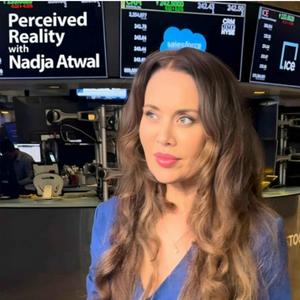
Perceived Reality dives beneath the surface of today's biggest stories, conversations, and cultural shifts—challenging what we think we know and revealing the deeper truths shaping our world. Hosted by media strategist and commentator Nadja Atwal, each episode brings thought-provoking interviews with global leaders, creators, and changemakers redefining how we see business, tech, and society.Perceived Reality delivers compelling insights at the intersection of influence, innovation, and impact—streamed from global financial hubs and aired to millions. Hosted on Acast. See acast.com/privacy for more information.
Podcast websiteListen to Perceived Reality, Anseo.net - If I were the Minister for Education and many other podcasts from around the world with the radio.net app
Get the free radio.net app
- Stations and podcasts to bookmark
- Stream via Wi-Fi or Bluetooth
- Supports Carplay & Android Auto
- Many other app features
Get the free radio.net app
- Stations and podcasts to bookmark
- Stream via Wi-Fi or Bluetooth
- Supports Carplay & Android Auto
- Many other app features

Perceived Reality
Scan code,
download the app,
start listening.
download the app,
start listening.
 Ireland
