
Listen to this podcast in the app for free: Download for free in the App Store
radio.net
Sleep timer
Save favourites
311 episodes
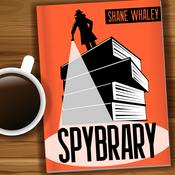
Crime Fiction Legend Sara Paretsky Takes on the Spy Thriller with Bad Company
21/10/2026 | 41 mins.Sara Paretsky, legendary creator of V.I. Warshawski, joins me on the Spybrary Spy Podcast to talk about Bad Company — her new spy thriller featuring retired CIA officer Lily, a woman who discovers that you never really leave the Company.
We talk about Sara's leap from detective fiction into espionage, creating the fictional Central Asian country of Hayalistan, women inside the CIA, and why an older female intelligence officer offers such a different take on the traditional spy hero. Sara also reveals why she needed eight drafts to find Bad Company, the dog-sled exfiltration scene that survived every rewrite, and how questions of power, anger and voicelessness drive her fiction.
And, naturally, we talk spy books: John le Carré, Tinker Tailor Soldier Spy, Mrs Pollifax, Manning Coles and the wonderful Walter Matthau and Glenda Jackson espionage caper Hopscotch.
A fascinating conversation with one of crime fiction's most influential writers about what happens when she enters the world of spies.
Join the Spybrary Community
Support Spybrary - a monthly dination helps us keep the lights on at the safehouse.
Full Shownotes with links to buy Sara Paretsky's Bad Company herehttps://www.spybrary.com/311The Ultimate Spy Movie & TV Guide — Inside Spies on Screen with Paul Burke
07/10/2026 | 1hPaul Burke joins Spybrary hosts Shane Whaley and Michael Huie to discuss his new book, Spies on Screen, an ambitious guide to more than 900 spy films and television series.
From James Bond and John le Carré to Slow Horses, The Bureau, The Americans and forgotten spy thrillers, Paul explores how espionage on screen has evolved from glamorous secret agents to damaged, morally complex intelligence officers.
Along the way, the trio debate which Bond actor is closest to Ian Fleming's original creation, why The Spy Who Came in from the Cold remains one of the great adaptations, what makes The Day of the Jackal such an enduring classic, and which overlooked spy films and TV series deserve to be rediscovered.
Paul also explains why many of the best spy stories are really anti-spy stories, how streaming has transformed the genre, and why international espionage dramas are becoming more important than ever.
Plus, stay to the end for the Spybrary quick-fire round, where Paul reveals his picks for best Bond, best spy film, best spy TV series, most underrated espionage movie and more.
If you love spy films, spy TV shows and discovering hidden gems, this episode is for you.
In this episode:
The evolution of spy films and TV
James Bond, Timothy Dalton and Ian Fleming
The Spy Who Came in from the Cold
The Day of the Jackal
Slow Horses
The Bureau
The Americans
Forgotten Cold War spy films
Underrated espionage TV
The future of spy stories on screen
Spies on Screen by Paul Burke is out now.
Visit Spybrary for more spy books, films, TV, interviews and intelligence history.William Boyd on the Appeal of Spy Fiction and Creating Gabriel Dax
29/09/2026 | 41 mins.What makes a great spy novel?
For William Boyd, it is complexity, uncertainty and that irresistible feeling that, as a reader, you are constantly trying to work out who can be trusted.
In this SPOILER FREE special Spybrary conversation, Boyd joins Ollie Webb Carter (History Book Club Podcast) to discuss his Gabriel Dax novels and the latest instalment, Cold Sunset.
They explore Boyd's lifelong fascination with espionage fiction, the influence of John le Carré, the real history that feeds into his novels, and why the analogue world of Cold War spying remains such fertile ground for a novelist.
Along the way, William reveals the remarkable real-life MI6 figure who helped inspire Faith Green, shares his thoughts on the JFK assassination, reflects on the old-boy network that once dominated British intelligence, and explains how a television project that never came to fruition ultimately helped give birth to Gabriel Dax.
They also discuss:
• Why the best spy novels force the reader to think
• Betrayal, false identities and the double and triple bluff
• John le Carré and the literary tradition of spy fiction
• How Gabriel Dax is gradually becoming a more accomplished spy
• The real intelligence officer behind Faith Green
• MI6, the CIA and Cold War regime change
• Why modern surveillance makes contemporary espionage harder to write
• The unexpected origins of the Gabriel Dax series
• What could come next for Gabriel
A fascinating conversation with one of Britain's most celebrated novelists about spies, history, writing — and the enduring appeal of espionage fiction.
Featuring William Boyd in conversation with Ollie Webb Carter for Spybrary.CIA vs MI6: David McCloskey Goes Inside London Station
23/09/2026 | 44 mins.What if the CIA and MI6 stopped behaving like allies—and started spying on each other?
David McCloskey joins Tim Shipman to discuss London Station, his fifth spy novel, and the real intelligence relationship behind its central premise.
McCloskey explains why the CIA–SIS "Special Relationship" can sometimes resemble a dysfunctional marriage, what the CIA Chief of Station in London actually does, and how conversations with former American and British intelligence officers shaped the book. He also introduces the wonderfully British intelligence concept of "deep chat"—those unofficial conversations where trusted allies may share rather more than appears in the official cables.
There's plenty for Artemis Procter fans too. David discusses her move to London, why she is spectacularly ill-suited to the diplomatic side of the job, and the changes the character is going through.
And then comes one of the episode's best stories: McCloskey reveals what happened when he unexpectedly came face-to-face at CIA headquarters with the former colleague he had in mind when he first created Artemis.
Plus: Bobby Jerome, CIA vs MI6 tensions, how McCloskey researched Vauxhall Cross, his direct sequel to Damascus Station, the Artemis TV series, Moscow X on film, and what's coming next.
A must-listen for David McCloskey readers, Artemis Procter devotees, and anyone fascinated by the real world behind modern spy fiction.Lies, Spies and Suspense: Inside Traitors with Robert B. McCaw
10/09/2026 | 40 mins.A propulsive, high-stakes thriller—Robert McCaw delivers a gripping tale of espionage, betrayal, and deception amid the race to expose Russian moles at the highest levels of the US government. Tense, timely, and full of international intrigue, Traitors will keep you on the edge of your seat. Highly recommended.
David McCloskey, former CIA analyst and author of The Persian
Author Robert B McCaw joins us to discuss Traitors, a geopolitical thriller shaped by his background in law, Washington and international affairs. He reveals how real-world stories involving Russia, Ukraine, Finland, nuclear weapons and ballistic submarines helped inspire the novel—and how his legal experience taught him to think about lies, interrogation and the search for truth.
Support Spybrary every month with a small donation and help us keep the lights on at the Spybrary Safehouse
McCaw also explains why he believes a thriller writer has to "play fair" with the reader: the clues should be there, the twists should feel earned, and even the most dramatic developments need to feel possible. Along the way, we explore his unusual path to publication—from spending nearly 20 years on his first novel and self-publishing it, to a chance encounter on a Mediterranean cruise that led to a literary agent and, eventually, Traitors being published by W. W. Norton.
More Arts podcasts


Trending Arts podcasts





About Spybrary Spy Podcast
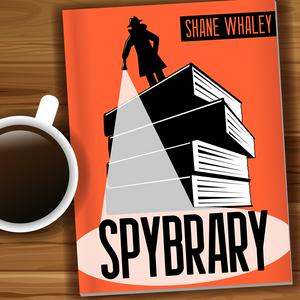
Spybrary is a podcast for fans of spy books, spy tv and spy movies since 2017. We bring you author interviews and reader discussions on our favorite spy books and novels.
Podcast websiteListen to Spybrary Spy Podcast, Stories of Art and many other podcasts from around the world with the radio.net app
Get the free radio.net app
- Stations and podcasts to bookmark
- Stream via Wi-Fi or Bluetooth
- Supports Carplay & Android Auto
- Many other app features
Get the free radio.net app
- Stations and podcasts to bookmark
- Stream via Wi-Fi or Bluetooth
- Supports Carplay & Android Auto
- Many other app features
Spybrary Spy Podcast
Scan code,
download the app,
start listening.
download the app,
start listening.
 Ireland