

Listen to this podcast in the app for free: Download for free in the App Store
radio.net
Sleep timer
Save favourites
97 episodes
How to Avoid Burnout as a Pilates Instructor
27/08/2026 | 37 mins.Why do passionate Pilates instructors burn out and leave an industry they love?
In this episode, Katie Crane shares what she has learned from more than 20 years of teaching and running a studio about creating a sustainable career in Pilates.
From protecting your energy and setting boundaries with clients to diversifying your skills beyond teaching, Katie explores practical ways instructors can avoid burnout and build careers that last.
In This Episode
Why teaching Pilates alone may not be sustainable long term
How to protect your energy and maintain professional boundaries
Why oversharing with clients can contribute to burnout
What "spiritual hygiene" means for Pilates instructors
Why instructors need to diversify beyond teaching
Ways to add value through marketing, social media, administration, mentoring and more
How finding your own strengths can create a more sustainable career
The Big Question
Who are you going to be besides a Pilates instructor?
Katie encourages instructors to think beyond teaching hours and consider what other skills they can develop to create longevity in the industry.
Katie's Takeaway
Protect your energy. Keep learning. Diversify your skills. Build a career you can sustain.
Work With Katie
Refine Mentoring Program — Develop and refine your Pilates teaching skills.
Thrive Mentoring Program — Build a stronger, more sustainable career and business.
Connect With Katie
The Pilates Professional
https://thepilatesprofessional.com.au
Don't forget to subscribe to the Pilates newsletter for free resources connected to the topics discussed on the podcast.
Keywords
Pilates, Pilates instructor, Pilates burnout, Pilates teacher, Pilates career, Pilates business, Pilates education, Pilates mentoring, sustainable Pilates careerIs This the End of Pilates?
18/08/2026 | 31 mins.What happens when the Pilates industry changes so much that you no longer recognise the Pilates you've spent 20 years teaching?
In this episode of The Pilates Lounge, Katie Crane reflects on the last 18 years of her life and career and the huge changes she has witnessed within the Pilates industry.
From the rise of Pilates in Australia to the growing popularity of heavily loaded reformer classes, shorter teacher training pathways, and the pressure for everything to be faster and easier, Katie asks a big question:
Is this the end of Pilates as we know it?
Katie shares honestly about mourning the Pilates she once knew, accepting that the industry is changing, and deciding that instead of fighting the change, she will focus on what she knows to be true: helping people move better, feel better, and develop a deeper understanding of their own bodies.
In This Episode
Why the 18-year eclipse cycle prompted Katie to reflect on her own life and career
What Pilates looked like in Australia when Katie first started teaching
How the Pilates industry has changed over the past 18 years
Why Katie believes the meaning of "Pilates" has become blurred
The growing focus on strength and heavy loading in modern reformer classes
Why Pilates, in Katie's view, is about much more than strength or equipment
The importance of listening to your body and developing self-awareness
Why more people are looking for shortcuts in Pilates education
Katie's decision to offer three different pathways to becoming a Pilates instructor
The tension between traditional Pilates education and what today's market wants
What it means to stop fighting industry change and focus on what you believe in
Katie's thoughts on the future of Pilates and her own place within it
The Big Question
Who are you becoming as the industry around you changes?
Katie reflects on how easy it is to hold onto the way things used to be, even when the world has already moved forward.
For her, the answer isn't to fight the evolution of Pilates anymore.
It is to continue teaching what she knows works.
Katie's Takeaway
Pilates isn't about simply performing exercises or following repertoire.
For Katie, the deeper purpose is helping people understand their bodies well enough to know what they need.
As she puts it, controllogy isn't simply about controlled movement — it's about having control of your body because you understand what your body needs.
A Conversation for Pilates Professionals
This episode is intentionally provocative.
Katie openly questions where the industry is heading, what should still be considered Pilates, and whether the profession is losing some of the depth that once defined it.
You may agree with her.
You may disagree.
Either way, she wants you to think about it.
Is Pilates changing — or are we simply seeing the next evolution of the method?
Connect With Katie
Find Katie and learn more about her work at:
The Pilates Professional
https://thepilatesprofessional.com.au
You can also find the podcast on YouTube at The Pilates Professional.
And don't forget to subscribe to the Pilates News newsletter for free handouts and resources connected to the topics discussed on the podcast.
Share This Episode
Know a Pilates teacher, educator, or movement professional who has been thinking about where the industry is heading?
Share this episode with them and keep the conversation going.
Keywords
Pilates, Pilates industry, Pilates instructor, Pilates teacher training, Pilates education, reformer Pilates, Pilates professional, Pilates teaching, Pilates methodology, Pilates trends, future of Pilates, Pilates certification, movement education, controllogyProgressive Load, the buzz word that misses the mark
11/08/2026 | 39 mins.In this thought-provoking episode, Katie Crane explores whether Pilates instructors have always been progressively loading their clients, or whether the recent emphasis on heavy resistance training has shifted the conversation. Katie unpacks the definitions of progression and load, examines why the term has become so popular, and questions whether chasing heavier weights aligns with the true purpose of Pilates.
Rather than rejecting strength training, Katie encourages Pilates professionals to understand where progressive loading belongs, how Pilates naturally develops strength, and why mobility, stability, and movement quality should never be sacrificed in the pursuit of heavier resistance.
In This Episode You'll Learn
What "progressive load" actually means.
Why Pilates has always included progressive loading—even without adding dumbbells.
How spring tension, repetitions, tempo, range of motion, and exercise progressions all contribute to loading.
Why progressive overload has become a popular marketing term in the Pilates industry.
The connection between women's health, aging, and resistance training.
Why Pilates plays an important role alongside strength training rather than replacing it.
How excessive loading can reduce mobility, flexibility, and movement quality.
Why Pilates should continue to prioritize functional movement over simply lifting heavier.
Key Takeaways
Progressive loading is not new—it has always been part of Pilates.
More weight doesn't automatically mean better outcomes.
Pilates develops strength through intelligent progression, movement quality, and control.
Mobility and stability are just as important as muscular strength.
Heavy resistance training and Pilates complement each other when used appropriately.
Great Pilates teaching is about building resilient, functional bodies—not simply increasing load.
Memorable Quotes
"Progressive load is what we do in Pilates—but we don't need to overload people if they aren't getting the Pilates principles right."
"The magic of Pilates is joint health, better alignment, improved posture, proprioception, and dynamic stability."
Resources Mentioned
Thrive Business Program for Pilates studio owners
Refined Teacher Training Program
Pilates Professional Newsletter
Pilates Lounge Podcast YouTube Channel
Connect with Katie Crane
Ready to continue your Pilates education?
Join Katie's community for practical education, business mentoring, and movement insights designed to help you become a more confident teacher and build a thriving Pilates career.
Subscribe to the Pilates Professional Newsletter
Join the waitlist for Thrive
Learn more about the Refined Teacher Training Program
Follow The Pilates Lounge Podcast for weekly episodes
If this episode challenged your thinking, share it with another Pilates instructor or movement professional. Conversations like these help elevate the industry and encourage thoughtful, evidence-informed teaching.Neutral Spine Is not the goal
04/08/2026 | 36 mins.*]:pointer-events-auto R6Vx5W_threadScrollVars scroll-mb-[calc(var(--scroll-root-safe-area-inset-bottom,0px)+var(--thread-response-height))] scroll-mt-[calc(var(--header-height)+min(200px,max(70px,20svh)))]" dir="auto" data-turn-id= "request-WEB:d19eb336-7ee1-4dae-90cf-d37bf08dcac0-0" data-turn-id-container= "request-WEB:d19eb336-7ee1-4dae-90cf-d37bf08dcac0-0" data-testid= "conversation-turn-2" data-turn="assistant"> For years, Pilates instructors have been taught to cue clients to "maintain a neutral spine." But what if neutral spine isn't actually the goal?
In this episode, Katie Crane revisits one of the most common concepts in Pilates education and challenges the idea that every body should move the same way. Drawing on years of teaching, continued study, and clinical definitions, Katie explains why neutral spine is best understood as a reference point—not a rigid position to hold throughout every movement.
Instead of chasing perfect alignment, Katie encourages Pilates professionals to become better observers of movement, adapt their teaching to the individual in front of them, and use neutral spine as information rather than a rule.
In This Episode You'll Learn
What "neutral spine" actually means from an anatomical and clinical perspective.
Why every person's neutral alignment looks slightly different.
The difference between stability and rigidity.
Why breathing naturally moves the spine—and why that's a good thing.
How forcing neutral spine can sometimes increase tension and discomfort.
Why observation is one of the most important skills a Pilates teacher can develop.
Practical ways to help clients move more comfortably without chasing perfect posture.
How understanding movement is more valuable than memorizing textbook cues.
Key Takeaways
Neutral spine is a starting point, not the destination.
Movement should adapt to the individual—not the other way around.
Stability allows movement; it doesn't eliminate it.
Every client brings a unique body, history, and movement pattern into the studio.
Great Pilates teachers observe first, cue second.
The goal isn't perfect posture—it's helping people move with greater ease, awareness, and confidence.
Memorable Quote
"Neutral spine is not the goal. Neutral spine is a reference point. It's information. It's an understanding."
Resources Mentioned
Previous podcast episode: Neutral Spine vs. Natural Alignment
Pilates Professional Newsletter
Pilates Lounge Podcast YouTube Channel
Connect with Katie Crane
Stay connected for more education, resources, and practical teaching insights:
Join the Pilates Professional Newsletter
Subscribe to The Pilates Lounge Podcast
Follow Katie for ongoing education and updates
If you enjoyed this episode, please subscribe, leave a review, and share it with another Pilates teacher or movement professional. Together we can continue improving the way we teach, move, and support the people we serve.Pilates patriarchy
23/07/2026 | 33 mins.Welcome to another episode of The Pilates Lounge Podcast with host Katie Crane. This week, Katie tackles a topic that keeps popping up in Pilates circles: the idea that Pilates only serves a narrow, "skinny white woman" demographic. She unpacks where this perception comes from, why it doesn't match what she sees in her own studio, and what it really means to market with clarity.
In This Episode, We Discuss
The Washington Post article claiming Pilates studios cater to a narrow, overwhelmingly white, thin, wellness-aesthetic demographic
Why social media creates a skewed perception of who Pilates actually serves
Who really walks through the door at Katie's studio — and why it's not the "skinny white woman" stereotype
Why niching down (not trying to serve everybody) is what allows a business to grow and improve
How clear, consistent marketing builds trust — using the Porsche vs. Honda and best restaurant vs. buffet analogies
Why it's okay for a studio or instructor to say "this isn't for you"
How creating an environment of like-minded clients helps people feel like they belong
Why chasing everyone on social media is often driven by fear of missing out, not strategy
Key Takeaways
✨ A perceived pattern isn't the whole picture
What shows up on Instagram reflects the algorithm and what's aesthetically pleasing, not the full range of who Pilates actually serves.
✨ You can't serve everybody well
Trying to be for everyone lowers your standard of service. Niching down sharpens your expertise and strengthens your community.
✨ Clarity in marketing builds trust
Studios that are clear and consistent about who they serve attract the right people faster and build deeper trust than studios trying to appeal to everyone.
✨ Saying "this isn't for you" is a strength, not a weakness
Businesses that own who they serve — and who they don't — are the ones that thrive.
About Katie Crane
Katie Crane is the host of The Pilates Lounge Podcast and owner of Encore Pilates and Wellness in Darwin, Australia. With 21 years of studio ownership and two decades of experience working with clients through pain, rehabilitation, and complex conditions, Katie brings a grounded, real-world perspective to conversations about movement, business, and the Pilates industry.
Resources Mentioned
Washington Post article by Yasmin Reid, referenced regarding demographics in Pilates studios
Follow Katie's studio: Encore Pilates and Wellness — Instagram: @encorepilatesandwellness_nt
Listen & Subscribe
Listen to The Pilates Lounge Podcast on your favourite podcast platform.
Continue the Conversation in The Pilates Muse
Join the conversation here: https://www.thepilatesprofessional.com.au/the-pilates-muse-publication
Prefer to Watch?
This episode is also available on YouTube.
About The Pilates Lounge
The Pilates Lounge is a space for Pilates professionals, movement educators, and curious learners to explore meaningful conversations around movement, teaching, health, and the evolving Pilates industry.
More Education podcasts
 Begin Again with Davina McCallEducation, Health & Wellness, Mental Health, Self-Improvement, Society & Culture
 The Comeback with Brenda DennehyEducation, Health & Wellness, Mental Health, Self-Improvement
 6 Minute EnglishEducation, Language Learning
 IMO with Michelle Obama and Craig RobinsonEducation, Self-Improvement, Society & Culture
 Coffee Break FrenchCourses, Education, Language Learning
 The Mel Robbins PodcastEducation, Health & Wellness, Mental Health, Relationships, Self-Improvement, Society & Culture
 IT IS WHAT IT IS!Education, Self-Improvement
 Motivation Daily by MotiversityEducation, Health & Wellness, Self-Improvement
 Coffee Break SpanishCourses, Education, Language Learning
 Gaeilge WeeklyEducation, Language Learning
Trending Education podcasts
 Learn Italian | ItalianPod101.comEducation, Language Learning, Places & Travel, Society & Culture
 French for BeginnersComedy, Education, Language Learning
 What the Focal!?Education, Language Learning
 Learn Italian with Joy of LanguagesCourses, Education, Language Learning
 Learning English ConversationsEducation, Language Learning
 Law of Attraction Changed My LifeEducation, Kids & Family, Parenting, Religion & Spirituality, Self-Improvement, Spirituality
 Zero to Finals Medical Revision PodcastEducation, Health & Wellness, Life Sciences, Medicine, Science
 The Brian O'Loughlin PodcastEducation, Self-Improvement
 Made In Chaos with Ryan CurtisEducation, Self-Improvement
 Luke's ENGLISH Podcast - Learn British English with Luke ThompsonComedy, Education, Language Learning
 ALIGNED | The Path to PurposeAlternative Health, Education, Health & Wellness, Religion & Spirituality, Self-Improvement, Spirituality
 Coffee Break Italian AdvancedCourses, Education, Language Learning
 Английский язык по плейлистам. Английский язык с нуля. Полный курсEducation, Language Learning
 How to PhD - your academic survival guideEducation, Science, Tutorials
 Unfiltered Autistic with Amanda McGuinnessEducation
 InnerFrenchEducation, Language Learning
 The Jefferson Fisher PodcastEducation, Relationships, Self-Improvement, Society & Culture
 The Jordan B. Peterson PodcastEducation, Science, Society & Culture
- 6 Minute EnglishEducation, Language Learning
 Passerelles : a French podcast for intermediate learnersEducation, Language Learning
 Dreaming Spanish Podcast – Chats in Beginner SpanishEducation, Language Learning
 The Art of DeclutteringEducation, Home & Garden, Kids & Family, Leisure, Parenting
About The Pilates Lounge
Welcome to the Pilates & Movement Journey, a show tailored for Pilates Professionals, movement educators, and enthusiasts. Immerse yourself in transformative content that connects mind, body, and spirit. Explore holistic wellness, gain expert insights, and foster a vibrant community. Ignite your passion for Pilates with engaging discussions, practical tips, and a focus on overall well-being.
Join us on this journey to elevate your spirit and embrace a healthier, more mindful lifestyle.
https://www.thepilatesprofessional.com.au/
Podcast websiteListen to The Pilates Lounge, Begin Again with Davina McCall and many other podcasts from around the world with the radio.net app
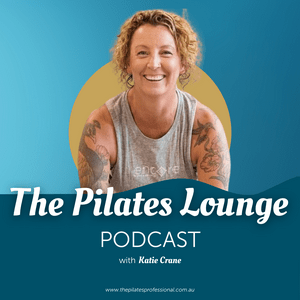
Get the free radio.net app
- Stations and podcasts to bookmark
- Stream via Wi-Fi or Bluetooth
- Supports Carplay & Android Auto
- Many other app features
Get the free radio.net app
- Stations and podcasts to bookmark
- Stream via Wi-Fi or Bluetooth
- Supports Carplay & Android Auto
- Many other app features

The Pilates Lounge
Scan code,
download the app,
start listening.
download the app,
start listening.
 Ireland