
Listen to this podcast in the app for free: Download for free in the App Store
radio.net
Sleep timer
Save favourites
637 episodes
The Psychology of Winning and Losing | Mikaela Shiffrin - From The Vault
21/10/2026 | 51 mins.Finding a way to coach yourself with challenge and grace can be an extraordinary unlock for performance.
Mikaela Shiffrin is an Olympic gold medalist and the winningest alpine ski racer in World Cup history. We first released this conversation in 2023. Since then, she has won Olympic slalom gold at Milano Cortina and her sixth overall World Cup title, tying the women’s record, and what she describes in this conversation is the inner work that was already well underway.
Mikaela and Mike get into the performance anxiety that had her sick at the start gate years into her career, the self-coaching habit she developed to put her own assessment first, and the race she lost at Killington that she calls the most free she has ever felt in her career. She is open about how long she let the outside world dictate how she felt about her own skiing before she reclaimed that for herself.
Coaching yourself well is incredibly difficult, and Mikaela shows us in this conversation what becomes possible when you do it in a world-class way.
Enjoy the conversation.
--------------------------------------------------
Links & Resources
Mikaela Shiffrin: linktr.ee/mikaelashiffrin
Mikaela Shiffrin’s YouTube Series: Moving Right Along, on her channel youtube.com/@mikaelashiffrin
Mikaela Shiffrin’s Podcast: What’s the Point with Mikaela Shiffrin: listen here
Subscribe to our Youtube Channel for more conversations at the intersection of high performance, leadership, and wellbeing: https://www.youtube.com/c/FindingMastery
Get exclusive discounts and support our amazing sponsors!
Go to: https://findingmastery.com/sponsors/
Subscribe to the Finding Mastery newsletter for weekly high performance insights: https://www.findingmastery.com/newsletter
Download Dr. Mike’s Morning Mindset Routine: findingmastery.com/morningmindset
Follow on YouTube, Instagram, LinkedIn, and X
See Privacy Policy at https://art19.com/privacy and California Privacy Notice at https://art19.com/privacy#do-not-sell-my-info.The Psychology of Healthy Relationships | Dr Thema Bryant
14/10/2026 | 1h 10 mins.What happens to the rest of your relationships when the one you have with yourself goes untended?
Dr. Thema Bryant is a clinical psychologist, tenured professor of psychology at Pepperdine University, director of the Culture and Trauma Research Laboratory, and former president of the American Psychological Association. She hosts The Homecoming Podcast and wrote Matters of the Heart: Healing Your Relationship with Yourself and Those You Love.
Thema emphasizes that one of the biggest predictors of our mental wellbeing is not your achievement or your bank account. It is the people you spend your time with.
Thema and Mike get into her working definition of trauma, the difference between guilt and shame, and why so much people pleasing begins as a strategy for staying safe. Thema talks about being evacuated from Liberia as a teenager during a civil war, and the shift in her own identity after the death of her mother.
This conversation is also for the person doing well by every external measure who sees no reason to do any of this work. It is not that you need to, Thema says. It’s that you deserve to.
At one point, Mike asks her how we would lead differently if we knew what she knew. Thema’s answer is that you would not leave yourself behind.
Enjoy the conversation.
__________________________________
Links & Resources:
Dr. Thema Bryant’s Website: drthema.com
Dr. Thema Bryant’s Books: Matters of the Heart: Healing Your Relationship with Yourself and Those You Love, Reclaim Yourself: The Homecoming Workbook, Homecoming: Overcome Fear and Trauma to Reclaim Your Whole, Authentic Self, The Antiracism Handbook
Dr. Thema Bryant’s Podcast: The Homecoming Podcast with Dr. Thema (video version on YouTube, audio on Spotify and Apple Podcasts)
Mentioned in this conversation: Dr. Lisa Miller’s research on spirituality as a protective factor for mental health. Her Finding Mastery episode: The Psychology of Spirituality | Dr. Lisa Miller. Her book: The Awakened Brain: The New Science of Spirituality and Our Quest for an Inspired Life.
Subscribe to our Youtube Channel for more conversations at the intersection of high performance, leadership, and wellbeing: https://www.youtube.com/c/FindingMastery
Get exclusive discounts and support our amazing sponsors!
Go to: https://findingmastery.com/sponsors/
Subscribe to the Finding Mastery newsletter for weekly high performance insights: https://www.findingmastery.com/newsletter
Download Dr. Mike’s Morning Mindset Routine: findingmastery.com/morningmindset
Follow on YouTube, Instagram, LinkedIn, and X
#FindingMastery #ThemaBryant #DrMichaelGervais #MattersOfTheHeart #Relationships #Trauma #Healing #Shame #EmotionalSafety #SelfWorth #Attachment #Loneliness #Therapy #Psychology #MentalHealth #HighPerformance #Emotionaltrauma #reltionshiptrauma #selfhelp #selfhealing
See Privacy Policy at https://art19.com/privacy and California Privacy Notice at https://art19.com/privacy#do-not-sell-my-info.The Psychology of Storytelling | IN-Q
07/10/2026 | 58 mins.“…the stories that we tell ourselves and other people become our lives.”
— IN-Q
This is a conversation about the story you are living inside, about creativity as a practice rather than a talent, and about why being witnessed helps us release what we might otherwise carry alone.
Before this conversation started, IN-Q walked the entire Finding Mastery team through a poetry workshop. Each person wrote about a personal experience with risk that changed the direction of their life, then read it out loud to the room. Mike opens this episode saying he has never started a podcast feeling the way he felt coming out of it.
IN-Q is a spoken word artist, two-time Emmy-nominated lyricist, multi-platinum songwriter, keynote speaker, and bestselling author of Inquire Within. He has written songs with Selena Gomez, Miley Cyrus, and Aloe Blacc, and he was one of the original members of Da Poetry Lounge in Los Angeles, the open mic he calls church without religion.
IN-Q and Mike get into the three guidelines he gives people before they write, and the night he read his old breakup poems and realized every one of them applied to the new breakup.
He also describes giving himself the room every morning to decide not to be a poet. Choosing it again each day – instead of waking up already being one – keeps the work from turning into a life he inherited from a version of himself that has already faded away.
Both of them tell stories about an old chip on the shoulder, and the two trace back to a similar place. The chip became fuel. IN-Q calls it unhealthy fuel, and describes chipping away at it now, trying to turn it into a sculpture.
Change your story, change your life, is how he puts it. He also tells you exactly where to start.
Enjoy the conversation.
____________________________________________________________________________
Links & Resources
IN-Q’s Website: in-q.com
IN-Q’s Books: Inquire Within, The Never Ending Now Poetry Journal
IN-Q’s Album: The Never Ending Now (featuring Isabella Turso)
IN-Q’s Poetry Special: IN-Q – Live at the Ace Theatre, streaming on Amazon Prime Video
IN-Q’s Poetry Workshops and Retreats: in-q.com/poetry-workshops
Subscribe to our Youtube Channel for more conversations at the intersection of high performance, leadership, and wellbeing: https://www.youtube.com/c/FindingMastery
Get exclusive discounts and support our amazing sponsors!
Go to: https://findingmastery.com/sponsors/
Subscribe to the Finding Mastery newsletter for weekly high performance insights: https://www.findingmastery.com/newsletter
Download Dr. Mike’s Morning Mindset Routine: https://www.findingmastery.com/morningmindset
Follow on YouTube, Instagram, LinkedIn, and X
See Privacy Policy at https://art19.com/privacy and California Privacy Notice at https://art19.com/privacy#do-not-sell-my-info.The Psychology of Inner Peace | Gurudev Sri Sri Ravi Shankar
30/09/2026 | 33 mins.What if the calmest person in the room isn’t avoiding pressure, but experiencing it differently?
Gurudev Sri Sri Ravi Shankar is one of the world’s most recognized spiritual teachers and humanitarian leaders. He founded the Art of Living, which teaches meditation, breathwork, and service in over 180 countries, and he is the author of Notes for the Journey Within.
Stress has a use, and Gurudev compares it to a pinch of salt in food, useful in that amount and unconsumable past it. Most of us have taken on far more than that, and have never learned how to put it down or manage it well.
Gurudev and Mike get into why he defines success as exhibiting your limitation, why he thinks failure is worth being proud of, and why authority over your own mind is the only authority there really is. Mike asks him when his body last went into fight or flight. He says it never has.
This one is for people who are working hard and running warm. What Gurudev points back to is something simple and repeatable: breathing, meditation, and learning how to release stress before it accumulates.
Near the end, Mike asks him to finish a sentence: Mastery is... Gurudev’s answer: recognizing you are not there.
Enjoy the conversation.
______________________________________________________
Links & Resources:
Gurudev Sri Sri Ravi Shankar’s Website: gurudev.artofliving.org
Gurudev Sri Sri Ravi Shankar’s Books: Notes for the Journey Within: Essentials of the Art of Living, An Intimate Note to the Sincere Seeker, Celebrating Silence
The Art of Living Foundation: artofliving.org
Subscribe to our Youtube Channel for more conversations at the intersection of high performance, leadership, and wellbeing: https://www.youtube.com/c/FindingMastery
Get exclusive discounts and support our amazing sponsors!
Go to: https://findingmastery.com/sponsors/
Subscribe to the Finding Mastery newsletter for weekly high performance insights: https://www.findingmastery.com/newsletter
Download Dr. Mike’s Morning Mindset Routine: findingmastery.com/morningmindset
Follow on YouTube, Instagram, LinkedIn, and X
See Privacy Policy at https://art19.com/privacy and California Privacy Notice at https://art19.com/privacy#do-not-sell-my-info.The Psychology of Pain | Dr Tom Walters
23/09/2026 | 1h 17 mins.How much of the time you spend in pain comes from the injury itself, and how much comes from the fear around it?
Dr. Tom Walters is a board-certified orthopedic physical therapist, strength and conditioning specialist, educator, and founder of Rehab Science. He has spent more than two decades helping people understand pain, movement, and injury recovery, and he is the author of Rehab Science: How to Overcome Pain and Heal from Injury.
Tom’s starting point is that pain and injury are not the same thing. Pain is an unpleasant sensory or emotional experience tied to actual or potential tissue damage, which means what you believe about your body can change what you feel in it.
Tom and Mike get into the nocebo effect, how a clinician’s words or reaction to a scan can amplify pain, why the field traded the word chronic for persistent, and how to manage exercise loads as your body adapts.
Mike tells the story of an MRI he had around the age of 23. The doctor looked at the film, his eyes got big, and he asked if Mike was okay. Mike says his pain felt worse instantly.
Tom says many musculoskeletal conditions improve with time and movement. He encourages people to take an active role in recovery: try an appropriate movement, notice how your body responds, and adjust from there.
Enjoy the conversation.
___________________________________________________________________
Links & Resources:
Dr. Tom Walters’ Website: rehabscience.com
Dr. Tom Walters’ Books: Rehab Science: How to Overcome Pain and Heal from Injury, plus the 2026 Rehab Science body-region series: Knee, Back and Spine, Hip, Shoulder, Elbow, Wrist & Hand, Ankle and Foot, and Head & Neck
Dr. Tom Walters’ YouTube Channel: Rehab Science
The Rehab Science App: Rehab Science on the App Store
Subscribe to our Youtube Channel for more conversations at the intersection of high performance, leadership, and wellbeing: https://www.youtube.com/c/FindingMastery
Get exclusive discounts and support our amazing sponsors!
Go to: https://findingmastery.com/sponsors/
Subscribe to the Finding Mastery newsletter for weekly high performance insights: https://www.findingmastery.com/newsletter
Download Dr. Mike’s Morning Mindset Routine: findingmastery.com/morningmindset
Follow on YouTube, Instagram, LinkedIn, and X
See Privacy Policy at https://art19.com/privacy and California Privacy Notice at https://art19.com/privacy#do-not-sell-my-info.
More Education podcasts




Trending Education podcasts


















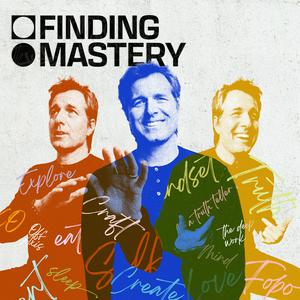
About Finding Mastery with Dr. Michael Gervais
Dive into the minds of the world’s greatest athletes, leaders, thinkers, and doers with Dr. Michael Gervais—a high performance psychologist and world-renowned expert on the relationship between high performance and the mind. Dr. Gervais’s client roster includes Super Bowl winning NFL teams, Fortune 50 CEOs, Olympic medalists, internationally acclaimed artists, and more.On Finding Mastery, Dr. Gervais sits down with the best at what they do, like David Goggins, Brene Brown, Toto Wolff, soccer legend Abby Wambach, neuroscientist Dr. Andrew Huberman, and Microsoft CEO Satya Nadella — translating their life stories, mental skills, and personal practices into applicable tools you can use to unlock your potential.Walk with us to the edge of human possibility and learn what you are capable of. New episodes every Wednesday.
Podcast websiteListen to Finding Mastery with Dr. Michael Gervais, Anseo.net - If I were the Minister for Education and many other podcasts from around the world with the radio.net app
Get the free radio.net app
- Stations and podcasts to bookmark
- Stream via Wi-Fi or Bluetooth
- Supports Carplay & Android Auto
- Many other app features
Get the free radio.net app
- Stations and podcasts to bookmark
- Stream via Wi-Fi or Bluetooth
- Supports Carplay & Android Auto
- Many other app features

Finding Mastery with Dr. Michael Gervais
Scan code,
download the app,
start listening.
download the app,
start listening.
 Ireland
