
Listen to this podcast in the app for free: Download for free in the App Store
radio.net
Sleep timer
Save favourites
100 episodes
How Do You Know When You're Healed From Trauma? Understanding the Healing Journey
16/10/2026 | 34 mins.EP:213 Hey, Thrive Community! 💛
One of the questions I get asked all the time is: “Brooke, how do you know when you're finally healed from trauma?”
And here's what I want you to understand: healing isn't about reaching a point where you never feel triggered, overwhelmed, anxious, or emotional again. It's not about waking up one day and realizing that all the hard stuff is suddenly behind you.
Trauma healing is about building awareness, developing emotional resilience, and learning to trust yourself through the difficult moments.
For me, one of the biggest signs of healing is being able to recognize when something triggers me and remind myself:
“I know what's happening right now.”
“I know how to support myself through this.”
“I've navigated these feelings before, and I trust that I'll be okay on the other side.”
That shift is incredibly powerful.
It's not that the trigger disappears. It's that you begin to recognize your capacity to move through it without feeling completely consumed by it.
In this episode of the Thrive Like a Parent Podcast, I'm getting real about trauma recovery, nervous system regulation, emotional healing, and what it actually means to make progress on your healing journey.
Am I more healed today than I was one, two, or five years ago? Absolutely. But I also love the person I am today, and I'm excited to see who I'll become a year from now.
You can celebrate how far you've come while still making room for the person you're becoming.
That's something I want you to give yourself permission to do.
Healing doesn't happen overnight. It takes time, patience, self-awareness, and often a willingness to revisit patterns you've carried for years. As we gain life experience, we can become more comfortable in our own skin, more confident in our decisions, and less consumed by other people's expectations.
And sometimes, those quiet changes are the biggest signs of growth.
🌿 In this episode, we'll explore:
How to recognize signs of emotional healing and trauma recovery
Why healing doesn't mean you'll never experience triggers again
The connection between trauma and nervous system regulation
How self-awareness can help you navigate difficult emotions
Why learning to trust yourself is an important part of healing
How to measure personal growth without expecting perfection
Why it's okay to take your healing journey one step at a time
If you're in the middle of your own healing journey, I want you to hear this:
You don't have to rush.
You don't have to compare your progress to someone else's.
You don't have to be a completely different person to recognize how much you've grown.
You can honor the person you are today while still working toward the person you want to become.
🎧 Tune in to this episode of Thrive Like a Parent for an honest conversation about trauma healing, emotional regulation, nervous system health, self-awareness, and learning to feel more confident in your ability to navigate life's challenges.
💛 I'd love for you to join the conversation: What does healing look like for you right now? Share your thoughts in the comments, and let's remind one another that growth doesn't have to be rushed.
If this episode resonates with you, subscribe to Thrive Like a Parent, leave a review, and share it with someone who needs a reminder to give themselves grace.
Your healing journey is uniquely yours. Trust the process, celebrate the progress, and remember that it's okay to go slow.
XOXO,
Dr. B ❤️
Links & Resources
📘 Listen to more episodes of Thrive Like a Parent:
https://drbrookeweinstein.com/thrive-podcast/
📸 Follow me on Instagram:
https://bit.ly/48VZI5e
🌐 Explore more resources for parenting, self-care, and nervous system regulation:
https://drbrookeweinstein.com
#ThriveLikeAParent #TraumaHealing #TraumaRecovery #HealingJourney #NervousSystemRegulation #EmotionalHealing #EmotionalRegulation #MentalHealth #SelfAwareness #SelfCompassion #PersonalGrowth #HealingFromTrauma #NervousSystemHealth #EmotionalResilience #MindBodyConnection #MentalHealthPodcast #ParentMentalHealth #InnerHealing #SelfGrowth #DrBrookeWeinsteinEmotional Eating: Break the Cycle Without Shame
10/10/2026 | 22 mins.EP:212 Hey, Thrive Community! 💛
Have you ever found yourself reaching for food when you're stressed, overwhelmed, anxious, exhausted, or simply trying to get through the day?
Maybe you're not physically hungry, but you feel the urge to eat anyway. And afterward, you find yourself questioning your choices or feeling guilty about what you ate.
If you've experienced this, I want you to know something: you don't need to approach emotional eating with shame. You need curiosity, awareness, and support.
On this week's episode of the Thrive Like a Parent Podcast, I'm diving into the connection between emotional eating, nervous system regulation, and understanding what your brain and body might be asking for.
Our relationship with food is influenced by many factors, including our emotions, stress levels, habits, and physical needs. Sometimes, eating can become a way to seek comfort or cope with feelings that are difficult to navigate.
Instead of judging yourself for reaching for food, I want you to start asking a different question:
“What might I be needing right now?”
Is it comfort? Rest? Connection? Relief from stress? Or are you physically hungry?
The goal isn't to label your choices as good or bad. It's to develop a deeper understanding of yourself and build a more supportive, intuitive relationship with food.
💛 In this episode, we'll explore:
The connection between emotional eating, stress, and nervous system regulation
Why you might reach for food when you're overwhelmed or overstimulated
How to recognize emotional triggers and become more aware of your body's signals
Ways to interrupt automatic eating patterns without guilt or shame
How self-awareness and emotional regulation can support a healthier relationship with food
Why building new habits takes time, patience, and self-compassion
For me, the process starts with three important steps:
✨ Recognition: Notice when you're reaching for food and what might be happening in that moment.
✨ Awareness: Get curious about your emotions, stress levels, physical hunger, and what your body might need.
✨ Trust: Give yourself time to build a relationship with your body's signals without judging yourself for the process.
I want you to remember that creating a healthier relationship with food isn't about controlling every craving or getting everything right. It's about learning to listen to yourself, understand your needs, and respond with compassion.
You deserve a relationship with food that feels nourishing, flexible, and free from unnecessary shame.
And please, give yourself grace along the way. You don't have to change every pattern overnight. Small, consistent steps can help you develop greater awareness and more supportive ways to care for yourself.
🎧 Tune in to this week's episode of Thrive Like a Parent for an honest conversation about emotional eating, stress, nervous system regulation, and how to begin breaking unhelpful patterns while building a healthier, more intuitive relationship with food.
💬 Let's talk: Have you ever noticed yourself reaching for food when you're stressed or overwhelmed? Share your experience in the comments. Let's make this a conversation rooted in understanding rather than judgment.
If this episode resonates with you, subscribe to Thrive Like a Parent, leave a review, and share it with someone who needs a little more compassion in their relationship with food. 💕
XOXO,
Dr. B ❤️
Links & Resources
📘 Listen to more episodes of Thrive Like a Parent:
https://drbrookeweinstein.com/thrive-podcast/
📸 Follow me on Instagram:
https://bit.ly/48VZI5e
🌐 Explore more resources for self-care, parenting, and nervous system support:
https://drbrookeweinstein.com
#ThriveLikeAParent #EmotionalEating #EmotionalEatingRecovery #NervousSystemRegulation #RelationshipWithFood #IntuitiveEating #MindfulEating #EmotionalRegulation #StressEating #StressManagement #SelfCompassion #FoodFreedom #MentalHealth #BodyAwareness #SelfAwareness #HealthyHabits #ParentMentalHealth #ParentingPodcast #EmotionalWellness #DrBrookeWeinsteinThe Fear of Slowing Down: Overcoming Burnout & Finding Joy
02/10/2026 | 29 mins.EP:211 Hey, Thrive Community! 💛
Have you ever felt like you can't slow down because there's always something else you need to do?
Another email to answer. Another task to finish. Another responsibility to manage. Another expectation to meet.
I see this so often, and honestly, I think many of us have become so accustomed to being busy that we've forgotten how to simply be.
We live in a society that glorifies the hustle. Being busy is often seen as a sign of success, productivity, and even worth. We're constantly juggling work, parenting, relationships, and the never-ending demands of everyday life.
But here's what I've been thinking about: What happens when slowing down starts to feel more frightening than burning ourselves out?
For so many of us, slowing down comes with fear.
We worry about losing income, missing opportunities, falling behind, or not doing enough for our families. We convince ourselves that if we stop moving, even for a moment, everything might fall apart.
So we keep pushing.
We multitask. We overcommit. We ignore the exhaustion, the irritability, the tension in our bodies, and the signals our nervous systems are sending us.
Until one day, we're completely depleted, overwhelmed, and wondering why it's so hard to enjoy the life we've worked so hard to build.
But what if slowing down isn't a sign of failure? What if it's actually part of what allows us to thrive?
In this week's episode of the Thrive Like a Parent Podcast, I'm diving into the fear of slowing down and exploring why learning to slow down can be such an important part of nervous system regulation, preventing parental burnout, and improving our overall mental health.
I'm inviting you to consider what life could look like if you gave yourself permission to move at a pace that actually works for you and your family.
Imagine being able to:
🌿 Enjoy a meal without rushing through it.
🌿 Take a walk without feeling like you should be doing something else.
🌿 Rest on the couch without feeling guilty.
🌿 Spend meaningful time with your children without mentally running through your to-do list.
🌿 Recognize when your body needs a break instead of pushing yourself to exhaustion.
🌿 Create a life that prioritizes connection, calm, and joy—not just productivity.
Slowing down doesn't mean giving up on your goals, responsibilities, or ambitions. It means learning how to recognize your limits, create healthier patterns, and support your nervous system so you can show up for the people you love without constantly running on empty.
And I want you to remember something: You don't have to earn your rest. You are allowed to enjoy your life while you're living it.
🎧 Tune in to this week's episode of Thrive Like a Parent as we explore the fear of slowing down, nervous system regulation, stress management, work-life balance, and how to move away from survival mode and toward a more fulfilling, intentional life.
💛 Here's your challenge: Take a moment today to notice where you're rushing. Ask yourself, “What am I afraid will happen if I slow down?” You might be surprised by what comes up.
If this episode resonates with you, please subscribe to the channel, leave a review, and share it with a parent or friend who needs permission to slow down, breathe, and enjoy life a little more.
You deserve a life that feels good to live—not just one that looks productive from the outside.
XOXO,
Dr. B ❤️
Links & Resources
📘 Listen to more episodes of Thrive Like a Parent:
https://drbrookeweinstein.com/thrive-podcast/
📸 Follow me on Instagram:
https://bit.ly/48VZI5e
🌐 Explore more resources for parenting, self-care, and nervous system regulation:
https://drbrookeweinstein.com
#ThriveLikeAParent #FearOfSlowingDown #NervousSystemRegulation #ParentBurnout #BurnoutRecovery #StressManagement #SlowLiving #MentalHealth #SelfCareForParents #MindfulParenting #WorkLifeBalance #EmotionalRegulation #OverwhelmedParents #ParentingPodcast #Mindfulness #RestWithoutGuilt #PersonalGrowth #EmotionalWellness #StressRelief #DrBrookeWeinsteinRaising Kids in a Digital World: Are We Losing Touch With Reality?
25/09/2026 | 25 mins.EP:210 Hey Thrive Community! 💛
There’s something that has been weighing heavily on my mind lately: the role technology plays in our children's lives—and what we're teaching the next generation about the world around them.
Technology has changed so much about how we live, work, communicate, shop, learn, and even how we parent. And while there are incredible benefits to technology, I also think we have to be willing to pause and ask ourselves:
What are our children actually learning from all of this?
What happens when screens, social media, digital entertainment, and constant connectivity become such a big part of childhood that we lose some of the connection to real-world experiences?
For me, this isn't about rejecting technology completely.
It's about balance, awareness, and intentional parenting.
Our children need opportunities to experience the real world—to play outside, have conversations, get bored, make mistakes, solve problems, connect with other people, and learn how to navigate life without everything being instantly available at their fingertips.
And as parents, we have a role in creating that environment.
We get to decide what technology looks like in our homes.
We get to decide what our children have access to.
We get to establish boundaries.
We get to model healthy technology habits.
And we get to teach our kids that there is a world beyond the screen.
The future our children grow up in will be shaped by many things, including the choices we make today.
So instead of asking, “How do I keep my kids away from technology?” maybe we can also ask:
“How can I teach my children to live well in a world where technology is everywhere?”
That's the conversation I want to have with you.
🎧 Tune in to this week's episode of Thrive Like a Parent as I dive deeper into technology, parenting, childhood, screen time, digital culture, and the choices we can make to support our children's mental health and connection to the real world.
💛 If this conversation resonates with you, subscribe to Thrive Like a Parent, leave a review, and share this episode with another parent who is navigating the challenges of raising kids in the digital age.
Let's be intentional about the world we're creating for our children.
XOXO,
Dr. B
Links & Resources
📘 Listen to more episodes of Thrive Like a Parent:
https://drbrookeweinstein.com/thrive-podcast/
📸 Follow me on Instagram:
https://bit.ly/48VZI5e
🌐 Explore more parenting and nervous system resources:
https://drbrookeweinstein.com
#ThriveLikeAParent #DigitalParenting #ParentingInTheDigitalAge #TechnologyAndKids #ScreenTime #ScreenTimeBoundaries #KidsAndTechnology #ParentingTips #ModernParenting #MindfulParenting #Childhood #KidsMentalHealth #NervousSystemRegulation #MentalHealth #FamilyWellness #ParentingPodcast #ConsciousParenting #OutdoorPlay #HealthyTechHabits #DrBrookeWeinsteinExhausted & Snapping at Your Kids? 9 Signs Your Nervous System Needs Support
18/09/2026 | 25 mins.EP:209 Hey Thrive Community! 💛
If you're exhausted all the time…
If you're lonely…
If you feel like you're constantly snapping at your kids…
If parenting feels like an uphill battle…
If your relationship feels disconnected or stale…
Or if the only moments of joy you can find are those quick dopamine hits from buying something, scrolling, or checking something off your list…
Ding, ding, ding. 🚨 It might be time for support.
And I want you to hear me when I say this:
You are not meant to do this alone.
As parents, we can get so used to pushing through that we don't even realize how much our bodies and nervous systems are trying to tell us.
Sometimes the signs aren't obvious. They're physical.
So today, I want you to pause and check in with yourself.
Ask yourself:
🧠 Am I picking at my skin?
🧠 Am I chewing or biting my nails?
🧠 Am I emotionally eating?
🧠 Am I snapping at my kids more than usual?
🧠 Do I feel completely disconnected from my partner?
🧠 Are my shoulders constantly raised?
🧠 Is my jaw clenched?
🧠 Is my forehead tense?
🧠 Am I experiencing frequent headaches?
🧠 Do I feel like I'm constantly rushing, reacting, or trying to keep up?
This is your body's communication system.
I want you to try a simple body scan.
Notice what you're feeling. Notice where you're holding tension. Notice what your body is telling you before you automatically push those signals aside.
Because when we're living in that fight-or-flight state, everything can feel harder. Parenting feels harder. Relationships feel harder. Making decisions feels harder. Even enjoying the things we normally love can feel difficult.
The goal isn't to force yourself from overwhelmed to perfectly calm overnight.
Sometimes you have to move through that uncomfortable “yellow zone” first—slowing down, noticing what's happening, and giving yourself the space and support you actually need.
And that can feel wildly uncomfortable.
But it can also be incredibly powerful.
🌿 So here's my challenge for you today:
Give yourself three hours.
Three hours to rest.
Three hours to move your body.
Three hours to ask for help.
Three hours without feeling guilty for taking care of yourself.
Because taking care of yourself isn't selfish.
You are worthy of support. You are worthy of rest. You are worthy of feeling more regulated, connected, and alive.
And sometimes the strongest thing you can do is stop pushing through and finally listen to what your body has been trying to tell you.
🎧 Tune in to Thrive Like a Parent for more conversations about nervous system regulation, parenting burnout, emotional regulation, self-care, relationships, and how to move out of survival mode and toward greater calm and connection.
💛 If this resonates with you, subscribe to the podcast/channel, leave a review, and share this episode with another parent who may need permission to slow down and take care of themselves.
XOXO,
Dr. B ❤️
Links & Resources
📘 Listen to more episodes of Thrive Like a Parent:
https://drbrookeweinstein.com/thrive-podcast/
📸 Follow me on Instagram:
https://bit.ly/48VZI5e
🌐 Explore more resources for parenting, self-care, and nervous system support:
https://drbrookeweinstein.com
#ThriveLikeAParent #NervousSystemRegulation #ParentBurnout #ParentingBurnout #ExhaustedParents #OverwhelmedParents #ParentingStress #EmotionalRegulation #SelfCareForParents #MentalHealth #ParentMentalHealth #FightOrFlight #StressManagement #BodyScan #SelfAwareness #MindfulParenting #ParentingSupport #BurnoutRecovery #EmotionalWellness #NervousSystemHealth #MomBurnout #ParentingPodcast #DrBrookeWeinstein
More Kids & Family podcasts










Trending Kids & Family podcasts
























About Thrive Like A Parent
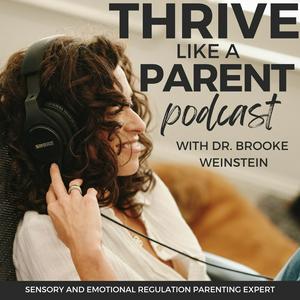
This podcast is different from all the other parenting podcasts you’ve seen. Dr. B gets real and open about the true struggles of parenthood. It’ll be messy, entertaining, educational and real! No quick band aid fixes but an authentic journey to THRIVING in parenthood. Think of Dr. B as a personal trainer for your brain. Cause this sh*t is REAL. She specializes in neuroscience based sensory and emotional regulation. But the good news is you don’t have to be a neuro science geek to learn all the brilliant tips and tricks to make your life so much easier in parenthood
*
New episode every Friday.
Podcast websiteListen to Thrive Like A Parent, IMAGE The Motherload and many other podcasts from around the world with the radio.net app
Get the free radio.net app
- Stations and podcasts to bookmark
- Stream via Wi-Fi or Bluetooth
- Supports Carplay & Android Auto
- Many other app features
Get the free radio.net app
- Stations and podcasts to bookmark
- Stream via Wi-Fi or Bluetooth
- Supports Carplay & Android Auto
- Many other app features

Thrive Like A Parent
Scan code,
download the app,
start listening.
download the app,
start listening.
 Ireland
