
Listen to this podcast in the app for free: Download for free in the App Store
radio.net
Sleep timer
Save favourites
92 episodes
The Builders of Stonehenge — Who Raised the Megaliths
23/11/2026 | 7 mins.Episode 93: The Builders of Stonehenge — Who Raised the Megaliths? explores the prehistoric communities behind Britain’s most famous monument. The episode follows Stonehenge from its early earthwork phase to the transport of Welsh bluestones and the raising of massive sarsen stones around 2500 BC. It examines Durrington Walls, communal feasting, solar alignments, burial practices, and theories about ancestry while separating archaeological evidence from myths about druids, Merlin, and lost civilizations. Stonehenge emerges as a monument built through generations of human cooperation rather than mysterious technology.The Voynich Manuscript of the Ancient World — Undeciphered Scripts and Lost Languages
16/11/2026 | 7 mins.Episode 92: The Voynich Manuscript of the Ancient World — Undeciphered Scripts and Lost Languages explores ancient writing systems that remain unreadable or only partly understood. The episode examines Linear A, the Indus script, Proto-Elamite, and Etruscan while explaining why decipherment requires far more than matching symbols to familiar letters. It also explores how archaeology, linguistics, statistics, and computing contribute to the search for meaning. These scripts are not evidence of mysterious lost super-civilizations, but reminders of how easily languages and voices can disappear even when their symbols survive.The Antikythera Mechanism — The Ancient Computer
07/11/2026 | 7 mins.Episode 91: The Antikythera Mechanism — The Ancient Computer explores the extraordinary geared device recovered from a Greek shipwreck near Antikythera. Built in the second or early first century BC, it modeled astronomical cycles, tracked calendars, and predicted eclipses through a sophisticated system of bronze gears. The episode examines its discovery, known functions, possible links with Greek astronomical traditions, and debates about its planetary displays. Rather than evidence of a lost super-civilization, the mechanism represents the remarkable achievements of ancient Greek astronomy, mathematics, and mechanical engineering.The Kingdom of Lydia — Where Money Was Born
30/10/2026 | 9 mins.Episode 90: The Kingdom of Lydia — Where Money Was Born explores the western Anatolian kingdom that played a central role in the development of coinage. The episode follows Lydia from the rise of the Mermnad dynasty to the wealthy reign of Croesus, examining Sardis, electrum coins, standardized gold and silver currency, trade, Greek connections, and the Persian conquest under Cyrus the Great. It also separates literary stories about Croesus and the oracle of Delphi from what can be established historically. Lydia disappeared as an independent kingdom, but its monetary innovations helped transform economic life across the ancient world.The Dacians — Rome’s Fiercest European Enemy
22/10/2026 | 10 mins.The Dacians were a powerful people who lived north of the lower Danube, mainly in the mountainous region of modern Romania. Their society developed around agriculture, metalworking, fortified settlements, and rich mineral resources. Under Burebista in the first century BC, separate Dacian groups were briefly united into a major regional kingdom. Later, Sarmizegetusa Regia became the political and religious center of a new Dacian state hidden deep in the Carpathian Mountains.
By the late first century AD, King Decebalus had transformed Dacia into a serious threat to Rome. After defeating Roman forces and securing an advantageous peace with Emperor Domitian, he strengthened his fortifications and military position. Emperor Trajan eventually launched two major wars against Dacia in AD 101–102 and 105–106. Roman armies crossed the Danube, captured the Dacian fortress network, and finally took Sarmizegetusa. Decebalus chose suicide rather than capture, bringing independent Dacian rule to an end.
Rome turned much of Dacia into a province, exploiting its resources and introducing new cities, roads, settlers, and institutions. Yet the Dacian population did not disappear. Local and Roman traditions blended over generations, while communities outside the province remained independent. The story of Dacia is therefore not simply one of Roman conquest, but of a sophisticated mountain kingdom that forced one of history’s greatest empires to commit enormous military resources before it could be defeated.
More History podcasts









Trending History podcasts





















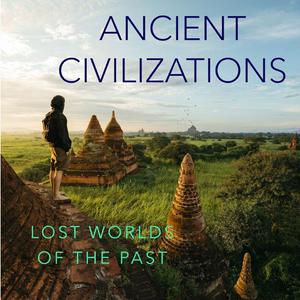
About Ancient Civilizations: Lost Worlds of the Past
The provided framework outlines a podcast series titled ”Ancient Civilizations: Lost Worlds of the Past” . Each episode explores a different civilization, such as Atlantis, Lemuria, Mu, and others, delving into their mythological, historical, and archaeological aspects. The series aims to unravel the mysteries surrounding these lost civilizations, discussing their cultural significance, speculated locations, and the enduring fascination they hold in popular imagination.
Podcast websiteListen to Ancient Civilizations: Lost Worlds of the Past, WW2 Pod: We Have Ways of Making You Talk and many other podcasts from around the world with the radio.net app
Get the free radio.net app
- Stations and podcasts to bookmark
- Stream via Wi-Fi or Bluetooth
- Supports Carplay & Android Auto
- Many other app features

 Ireland