
Listen to this podcast in the app for free: Download for free in the App Store
radio.net
Sleep timer
Save favourites
86 episodes
Saving the secret bat havens of Wild Ken Hill
18/11/2026 | 21 mins.We visit Wild Ken Hill in north-west Norfolk to learn about the restoration of two historic lime kilns that serve as bat roosts. The estate team explains how they stabilised the structures while preserving bat access and suitable conditions, and describes the monitoring methods and species recorded, including scarce whiskered and Brandt’s bats. We join a winter survey and hear about the planning, funding and ongoing work involved in protecting the kilns.
See photos of the kilns here.
Support the show
Please leave us a review or star rating if your podcast app allows it because it helps us to reach a wider audience so that we can spread the word about how great bats are. How to write a podcast review (and why you should).
Got a story to share with us? Please get in touch via comms@bats.org.uk
Bats are magical but misunderstood. At BCT our vision is a world rich in wildlife where bats and people thrive together. Action to protect & conserve bats is having a positive impact on bat populations in the UK. We would not be able to continue our work to protect bats & their habitats without your contribution so if you can please donate. We need your support now more than ever: www.bats.org.uk/donate Thank you!The Night the Bats Came Downstairs
04/11/2026 | 25 mins.We visit a family home in the Usk Valley to investigate Wales’s first documented Leisler’s bat maternity roost. The species is rarely seen, and records in Wales are scattered, with much of the available information coming from acoustic surveys that can be difficult to interpret. The discovery offers an opportunity to learn more about a bat that remains poorly understood in Britain.
We hear how Lucy and Andy discovered bats in their attic after moving into an old converted farm building. During a heatwave, young bats came down into the house, prompting the owners to seek advice from the Bat Conservation Trust and local wildlife carers. Ecologist Carys initially expected to find a more familiar species, but a closer look revealed a large Leisler’s roost alongside brown long-eared bats.
We discuss what is known about Leisler’s distribution, roosting and movement. The species is recorded in parts of Wales, but there are no previous records of a maternity colony in the area. Leisler’s bats use different roost spaces, including trees and buildings, and may shift location according to temperature and other conditions. The colony’s size and the surrounding habitat make the finding notable.
We also follow efforts to care for grounded pups and reunite them with their mothers. When reunification was unsuccessful, one pup went into care and is being raised with another Leisler’s pup before a planned soft release. The episode highlights how bat carers, local wildlife organisations, experts and roost owners can contribute to finding and documenting bat colonies.
Lucy and Andy describe their plans to live alongside the bats and make the house safer for young that wander into the living space.
Severn Wildlife Rescue assisted with the care for one of the pups mentioned in this episode. Take a look at their website and if you can, make a donation here.
Support the show
Please leave us a review or star rating if your podcast app allows it because it helps us to reach a wider audience so that we can spread the word about how great bats are. How to write a podcast review (and why you should).
Got a story to share with us? Please get in touch via comms@bats.org.uk
Bats are magical but misunderstood. At BCT our vision is a world rich in wildlife where bats and people thrive together. Action to protect & conserve bats is having a positive impact on bat populations in the UK. We would not be able to continue our work to protect bats & their habitats without your contribution so if you can please donate. We need your support now more than ever: www.bats.org.uk/donate Thank you!Series 8 is coming on November 4th
28/10/2026 | 1 mins.The new BatChat series brings you the first documented Leisler’s bat maternity roost in Wales, an in-depth interview with Dr Mark Avery who despite being a renowned birder did his PhD on pipistrelle bats as well as a new regenerative farming estate where bats are being considered one of the important species groups in determining how the project is progressing. Alongside all of that we'll be travelling across the UK to bring you field trips to hibernation surveys, exciting new developments in technology being used to study bats and the first ever Bat Conservation Trust garden at the RHS Chelsea Flower Show. So set yourself a reminder for Wednesday 4th November.
Support the show
Please leave us a review or star rating if your podcast app allows it because it helps us to reach a wider audience so that we can spread the word about how great bats are. How to write a podcast review (and why you should).
Got a story to share with us? Please get in touch via comms@bats.org.uk
Bats are magical but misunderstood. At BCT our vision is a world rich in wildlife where bats and people thrive together. Action to protect & conserve bats is having a positive impact on bat populations in the UK. We would not be able to continue our work to protect bats & their habitats without your contribution so if you can please donate. We need your support now more than ever: www.bats.org.uk/donate Thank you!The Bedfordshire Bat-by-Boat Survey
11/03/2026 | 29 mins.In this final episode of Series 7 of BatChat, we go out on a unique paddling journey along the River Great Ouse with the Bedfordshire Bat Group and the Viking Kayak Club. Bob Cornes from the bat group explains how the survey came about and as we embrace the peacefulness of the river we discuss bat behaviours in their environments. The episode showcases community-driven conservation efforts, emphasising the significance of grassroots initiatives in bat conservation.
As well as recording various people taking part in the survey, your host Steve Roe has two bat detectors strapped to the front of his kayak; one tuned to 20kHz and another at 50kHz to record the sounds of the bats around us.
See what the Bedfordshire Bat Group are up to.
Viking Kayak Club
Find your local bat group
Use our voicemail feature to send us a recording so that we can share your bat experience in the next series. It could be the sound of your bat detector or simply a narration of what you’re watching.
We’ll be back with series 8 in the autumn of 2026.
Support the show
Please leave us a review or star rating if your podcast app allows it because it helps us to reach a wider audience so that we can spread the word about how great bats are. How to write a podcast review (and why you should).
Got a story to share with us? Please get in touch via comms@bats.org.uk
Bats are magical but misunderstood. At BCT our vision is a world rich in wildlife where bats and people thrive together. Action to protect & conserve bats is having a positive impact on bat populations in the UK. We would not be able to continue our work to protect bats & their habitats without your contribution so if you can please donate. We need your support now more than ever: www.bats.org.uk/donate Thank you!Margam Castle & Eco-Poetry
25/02/2026 | 26 mins.S7E76 In this episode of BatChat, we explore bat conservation with experts Megan Price and Beth from Margam Park in South Wales. They share insights on the park's rich biodiversity, highlighting the fourteen bat species present and the importance of managing roosts while balancing conservation efforts with public access.
Watch a short video of the bats at Margam Park
A short article on the bats of Margam
In the second half of the episode Dr. Briony Hughes from Royal Holloway University introduces her creative approach to conservation through eco-poetry, emphasising the role of public engagement and education in fostering appreciation for bats. The episode showcases the collaborative efforts of ecologists and creatives to enhance understanding and protect these essential species.
Support the show
Please leave us a review or star rating if your podcast app allows it because it helps us to reach a wider audience so that we can spread the word about how great bats are. How to write a podcast review (and why you should).
Got a story to share with us? Please get in touch via comms@bats.org.uk
Bats are magical but misunderstood. At BCT our vision is a world rich in wildlife where bats and people thrive together. Action to protect & conserve bats is having a positive impact on bat populations in the UK. We would not be able to continue our work to protect bats & their habitats without your contribution so if you can please donate. We need your support now more than ever: www.bats.org.uk/donate Thank you!
More Life Sciences podcasts


Trending Life Sciences podcasts
About BatChat
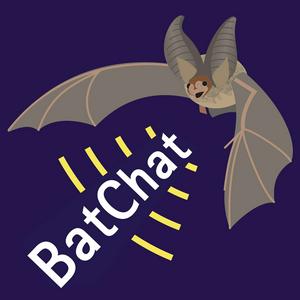
Taking you into the field to discover the world of bat conservation. BatChat is for anyone who loves bats or has an interest in the conservation of these fascinating mammals. Ecologist and Chair of the Bat Conservation Trust Steve Roe takes you on-location, talking to the experts as well as local heroes to bring you the latest from the world of bats. Series 7 is currently being released with new episodes dropping every other Wednesday. In this upcoming series we travel to the Yorkshire Dales to visit the Hoffman limekiln, to Pembrokeshire to visit the infamous greater horseshoe bat roost at Stackpole and to a disused water mill that is now home to one of the most important bat colonies in Wales. Get in touch with feedback and ideas for stories you’d like to hear: comms@bats.org.uk Bats are magical but misunderstood mammals. At the Bat Conservation Trust we have a vision of a world rich in wildlife where bats and people thrive together.
Podcast websiteListen to BatChat, Unexplainable and many other podcasts from around the world with the radio.net app
Get the free radio.net app
- Stations and podcasts to bookmark
- Stream via Wi-Fi or Bluetooth
- Supports Carplay & Android Auto
- Many other app features

 Ireland

