

Listen to this podcast in the app for free: Download for free in the App Store
radio.net
Sleep timer
Save favourites
25 episodes
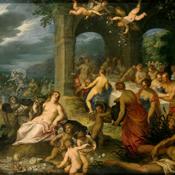
The Golden Fleece and the Land of Women
03/11/2025 | 4 mins.Welcome back to Greek Mythology Gods. In the previous episode, we explored the story of Jason’s birth and destiny.
Today, let us follow this hero chosen by fate, setting sail for uncharted waters to embark on a legendary adventure to reclaim the Golden Fleece and the Land of Women.
Long ago. Hermes, the messenger god, bestowed upon Phrixus and Helle a flying golden ram, rescuing the siblings—Phrixus and Helle—from persecution by their stepmother. On their journey, Helle fell into the strait and drowned. Phrixus rode the golden ram to Colchis on the eastern shore of the Black Sea. King Aeetes treated him with great respect and gave him his daughter in marriage. To thank the gods, Phrixus sacrificed the ram and gave the Golden Fleece to his father-in-law. Aeetes hung the Golden Fleece in the sacred grove of Ares, guarded by a giant dragon. From then on, the Golden Fleece became a coveted treasure of many nations.
Years later, Jason, seeking to reclaim his throne, was sent by the usurper Pelias to Colchis to retrieve the Golden Fleece. He rallied over fifty heroes, including Orpheus and Heracles. Under Athena's guidance, the skilled craftsman Argo built the warship "Argo." The heroes called themselves "Heroes of the Argo," offered sacrifices to the sea god, and set sail for the Black Sea.
The first stop—Limnos Island. This was a "land of women." The reason was not mysterious: driven by old grudges and fear, the island's women had slaughtered all the men in the city in a single night; they then declared themselves queens, ruled by Queen Hypsipyle, the daughter of the former king. She feared the Thracians might take advantage of the situation, and also worried about the outsiders' intentions.
Jason chose to proceed with diplomacy first. He sent men ashore to greet them, explaining they were merely seeking lodging. The queen convened a general assembly—to defend the city and also to quell the chain of hatred. The final decision was: to treat them with courtesy, the heroes landed to rest, a banquet was held in the city, and goodwill gradually dissipated. Some, however, became engrossed in the pleasures of the land, forgetting their mission.
At this point, a sober-minded person stepped forward. Hercules sternly reminded everyone: the Golden Fleece wouldn't come by itself. Jason then went to see the queen and solemnly bid her farewell.
At the moment of parting... The Queen, expressing her reluctance to part, wished Jason a triumphant return: "May the gods protect you as you successfully obtain the Golden Fleece; if you return, the gates here will always be open for you." Jason took this to heart, leading his crew aboard the Argo once more, sailing out to sea. The women of the Land of Women stood on the sea cliffs, watching the black sail disappear into the distance.
Amidst the echoing waves, the Argo gradually drifted away from the Land of Women, heading towards deeper unknowns. The tender farewell became an echoing incantation, while the storm of fate brewed ahead. Night fell, the sea lost its direction, and the heroes' songs became tinged with sorrow. The trials of the gods, the struggles of humanity, the shadows of love and betrayal—all would emerge in the darkness. Next episode—A Lament in the Night—let us listen to the voices of the Argo heroes and see how they search for a path to light in the darkness.
Thank you for listening to "Greek Mythology Gods." In the next episode, we will continue our journey into the fantastical world of ancient Greek mythology. The legends of the gods continue, and we look forward to seeing you again!
For further reading, you can refer to the following:
Phrixus- https://en.wikipedia.org/wiki/Phrixus
Aeetes- https://en.wikipedia.org/wiki/Ae%C3%ABtes
Hypsipyle- https://en.wikipedia.org/wiki/Hypsipyle
If you’d like to dive deeper beyond the stories, you can also explore sculptures inspired by these myths here:
https://www.greekartshop.com/Jason, the Chosen Hero
31/10/2025 | 3 mins.Hello everyone, welcome back to Greek Mythology Gods. Let's step into the mysterious world of mythology, follow in the footsteps of the gods, and uncover the secrets of destiny and power.
In the last season, we explored the emotional legends of Zeus: he transformed into a bull and carried away the beautiful Europa, giving the world its name; the innocent Callisto was punished for love and transformed into a bear; Io, transformed into a cow, endured jealousy and pain in exile; and the story of Leda and the swan blurred the lines betweenmortals and gods. Each myth is interwoven with the eternal entanglement of love, power, and destiny.
Now, we will begin a brand new epic chapter—the legend of the Argonauts. The story begins with Jason, the chosen hero, who, burdened by the call of his country and destiny, gathers the bravest warriors of Greece and embarks on a journey to find the Golden Fleece. Guided and tested by the gods, Jason's adventures will unveil a magnificent chapter of heroism, faith, and humanity.
Long ago, Creteus, the founder of the kingdom of Iolcus, was king and had two sons: Aeson and Pelias. By blood, the throne should have passed to the eldest son, Aeson. However, Pelias, ambitious and ruthless, seized the throne while Aeson was seriously ill and the court was in turmoil. He massacred his opponents, and Aeson was imprisoned. Aeson's wife, Alcimede, fearing for her newborn's safety, feigned death and secretly sent the child to be raised by Chiron, a centaur. This child was Jason.
Under Chiron's care, Jason grew up strong and quickly became a renowned hero, known for his kindness and virtue. On his way home as an adult, he carried an old woman across a river, losing one shoe in the process. He reached the other side wearing only one shoe. After crossing the river, the old woman, Hera, revealed her true form and offered to help Jason reclaim the throne.
Jason entered the city wearing only one shoe, fulfilling Pelias's oracle about "the one-shoe-wearing man." The two met, and Jason introduced himself: "I am the son of Aeson, returning from my studies with Chiron." He demanded the return of the throne that rightfully belonged to his father. Pelias appeared calm on the surface, but was wary inwardly.
To escape the threat, Pelias proposed an impossible task: "Since you wish to claim the throne legitimately, first accomplish something for the kingdom—travel to Colchis, retrieve the Golden Fleece, and bring back the remains of Phrixus." Young and confident, Jason accepted the mission. In his view, merit would secure his rightful inheritance; while Pelias saw it as a near-certain journey of no return.
Thus, Jason began gathering heroes; future friendships, love, and betrayals would unfold on the voyage.
Today we discuss: Jason's origins, his return home, the confrontation, and the trials set before him.
In the next story, we will embark on the true voyage of Jason's destiny. Under the watchful eyes of the gods, he will gather the heroes of the Argonauts and set sail for the legendary land of women.
Thank you for listening to "Greek Mythology Gods". In the next episode, we will continue to take you on a journey through time to explore the legends of gods and men. I am your narrator, see you next time!
For further reading, you can refer to the following:
Pelias- https://en.wikipedia.org/wiki/Pelias
Jason- https://en.wikipedia.org/wiki/Jason
If you’d like to dive deeper beyond the stories, you can also explore sculptures inspired by these myths here:
https://www.greekartshop.com/
https://www.arturbanstatue.com/other-product/greek-and-roman-statues/Leda and the Swan
30/10/2025 | 2 mins.Hello everyone, welcome back to Greek Mythology Gods! Let's continue our journey into the mysterious world of mythology, following in the footsteps of the gods and exploring the beauty of the intertwined destiny and power.
In the last episode, we told the story of Io, the heifer who was captivated by Zeus, envied by Hera, and forced to become a white bull. She endured escape and suffering, ultimately regaining her human form at Zeus's pleading, symbolizing the power of faith and redemption.
Today, we will encounter another myth—Leda and the Swan, a legend about temptation, destiny, and the eternal beauty of art.
Tyndareus, the Spartan prince banished by his brother Hippocrates, sought refuge with King Thestius in Aetolia. The king appreciated him and gave him his daughter Leda in marriage. Tyndareus returned to Sparta, ascended the throne, and Leda became Queen of Sparta.
Leda's beauty was renowned far and wide. One day, she was bathing on the riverbank. Zeus approached her disguised as a gentle swan. Leda cradled the swan in her arms, but when she awoke from her sleep, the swan was gone.
Soon after, Leda laid two eggs. One hatched into twin brothers: Polydius and Castor; the other into twin sisters: Helen and Clytemnestra.
The sisters were of different lineages—Zeus was the father of Polydius and Helen; Tyndareus was the father of Castor and Clytemnestra.
The sisters' fates rewrote history: the beautiful Helen became the catalyst for the Trojan War; Clytemnestra married Agamemnon, the commander of the Greek coalition.
The brothers also displayed their talents: Polydius was renowned for his boxing; Castor was skilled in horsemanship. The two accompanied the Argonauts on their voyages, embarking on numerous adventures.
This is "Leda and the Swan": a queen, a goddess, and four children; love and deception, fate and lineage intertwined. From an embrace, the story unfolds, revealing one of the most important families and wars in Greek mythology.
In the next episode, we'll embark on a brand new chapter—"The Argonauts." This is a legend of courage, friendship, and destiny. A group of heroes from all over Greece set sail on the Argo to reclaim the Golden Fleece. Among them are the power of Heracles, the music of Orpheus, and a tapestry of love and betrayal intertwined with fate. Are you ready? Let's set sail together, following the Argonauts, on the most magnificent adventure in Greek mythology.
Thank you for listening to "Greek Mythology Gods"! Next, we will continue our fantastical journey through ancient Greek mythology, encountering the gods again and exploring the intertwining of destiny and legend. Stay tuned!
For further reading, you can refer to the following:
Tyndareus- https://en.wikipedia.org/wiki/Tyndareus
Leda- https://www.theoi.com/Heroine/Leda.html
If you’d like to dive deeper beyond the stories, you can also explore sculptures inspired by these myths here:
https://www.greekartshop.com/
https://www.arturbanstatue.com/other-product/greek-and-roman-statues/Io the Cow
29/10/2025 | 2 mins.Welcome back to "Greek Mythology Gods." Let's once again journey into the mysterious world of myth, follow the footsteps of the gods, and uncover the secrets of fate and power.
Yesterday, we told the story of the innocent Callisto, a woman cursed and exiled by Zeus's lust, ultimately transformed into eternal starlight. Her sorrow shone brightly in the night sky, telling of the injustice of fate and the greatness of a mother's love.
Today, let's explore another woman caught in a fateful trap—Io the Cow. Her story also stems from Zeus's love and Hera's jealousy.
Io, the king's daughter, was pure and kind, and Zeus immediately fell in love with her.
Bewitched by her, Zeus, to evade his wife Hera's suspicions, immediately transformed Io into a white heifer.
Hera arrived, feigning ignorance, and demanded the "lovely cow." Zeus, unable to refuse, gave her the cow.
Hera entrusted the heifer to the care of the hundred-eyed giant Argus. When he slept, only one eye was closed, leaving the others open, leaving Io stranded.
Zeus, determined to save her but unwilling to anger Argus while carrying out his mission, gave his son, Hermes, a death order. Hermes journeyed to the mountains and lulled Argus into a deep sleep with beautiful music. Once Argus closed his eyes, he struck him down with a single blow and escaped with Io.
Furious, Hera sent gadflies to bite Io day and night, causing her to flee. Even free, she would still be a cow, homeless.
Io realized that true freedom lay in Hera's forgiveness.
Zeus, overcome with remorse at her plight, personally pleaded with Hera. Hera finally relented, agreeing to spare the poor girl.
Zeus cast a spell on the banks of the Nile, restoring Io to human form, bringing her suffering to an end. This is Io: caught in a storm of divine desire, driven adrift by jealousy, and ultimately regaining her dignity through perseverance and atonement.
In the next episode, we'll explore another myth of intertwined fate and desire—"Leda and the Swan." On that day, Zeus no longer transformed into a bull, but into a swan, swooping down from the sky. Amidst the storm, love, power, and deception once again entangled, destined to stir up new ripples. Stay tuned—"Greek Mythology Gods," the story of Leda and the Swan.
Thank you for listening to "Greek Mythology Gods." Next time, we'll continue exploring the mystery and romance of ancient Greek mythology and meet you again in the world of the gods.
For further reading, you can refer to the following:
Io- https://en.wikipedia.org/wiki/Io_(mythology)
Hermes- https://en.wikipedia.org/wiki/Hermes
Argus Panoptes-https://en.wikipedia.org/wiki/Argus_Panoptes
If you’d like to dive deeper beyond the stories, you can also explore sculptures inspired by these myths here:
https://www.greekartshop.com/
https://www.arturbanstatue.com/other-product/greek-and-roman-statues/Europa on the Bull
27/10/2025 | 3 mins.Welcome back to "Greek Mythology Gods"—exploring legends of power, love, and eternity in a world where gods and fate intertwine.
Last episode, we explored the seven wives of Zeus, representing wisdom, justice, grace, harvest, memory, light, and marriage. Each union not only perpetuated the divine lineage but also shaped the order of nature and the human world. From the prophecy of swallowing Metis to the establishment of the system of queens with Hera, Zeus's marital history is a fusion of power, fate, and divinity.
Today's story takes us to a romantic yet fateful tale—Europa on the Bull. A mortal princess and a divine king incarnated as a bull. Their encounter changed the world map and gave rise to the name "Europe."
Europa, the innocent and lovely daughter of the Phoenician king, loved playing with her friends in the seaside meadows. One day, her smile was seen by Zeus from the distant heavens. The king of the gods was tempted, but unwilling to disturb a mortal, so he transformed himself into a docile bull and blended into the herd.
He approached gently, neither barging nor roaring, allowing Europa to pet him. When the bull gently knelt and motioned for her to mount, she leaped aboard, calling upon her companions to join him.
At that moment, the bull suddenly rose, charging toward the shore, treading the waves into the sea. Terrified, Europa clutched the bull's horns and prayed for safety. The bull carried her across the sea until dusk, arriving at the island of Crete.
After reaching shore, the bull vanished, and a handsome man stood before her, declaring, "I am the master of Crete. If you will marry me, I will protect you." Looking back at the endless sea, Europa reluctantly agreed. But when she awoke, she discovered the man beside her had vanished, leaving her furious and heartbroken at the deception.
At this moment, Aphrodite appeared and comforted her: "Fear not, beautiful girl. It is the god Zeus who bears you here. You will be blessed for your love with the god, and your name, Europa, will give name to this continent."
And so fate was rewritten. Europa found refuge in Crete. She bore Zeus three children: a princess, a bull, and a journey across the sea—a name that became the name of a continent.
This is "Europa on the Bull": a fascinating intersection of desire and tenderness, deception and protection, personal destiny and global geography.
Zeus' story constantly oscillates between love and power. In the next episode, we'll delve into another story with an even crueler fate: that of the innocent Callisto. Artemis's most loyal follower, she was caught up in a tragedy of jealousy and punishment because of Zeus's lust. It's a myth of purity, betrayal, and transformation, revealing the deepest ruthlessness of the gods and the struggle between human nature.
Thank you for listening to "Greek Mythology Gods." Next time, we'll continue our journey through mythical time and space, exploring the love and wrath of the gods. See you next time—the story continues.
For further reading, you can refer to the following:
Europa- https://en.wikipedia.org/wiki/Europa_(consort_of_Zeus)
If you’d like to dive deeper beyond the stories, you can also explore sculptures inspired by these myths here:
https://www.greekartshop.com/
https://www.arturbanstatue.com/other-product/greek-and-roman-statues/
More Arts podcasts
 Table Manners with Jessie and Lennie WareArts, Food, Kids & Family, Music
 ill-advised by Bill NighyArts, Books, Comedy, Music
 THEMOVEArts, Sports
 The Bookshelf with Ryan TubridyArts, Leisure, Society & Culture
 DishArts, Comedy, Food, Society & Culture
 Fresh AirArts, Books, Society & Culture, TV & Film
 99% InvisibleArts, Design
 Fashion Neurosis with Bella FreudArts, Fashion & Beauty, Relationships, Society & Culture
 The Book ReviewArts, Books
Trending Arts podcasts
 Poetry UnboundArts, Books, Relationships, Religion & Spirituality, Society & Culture, Spirituality
 Carl Jung's Red Book + AstrologyArts, Books, Health & Wellness, Mental Health
 Extraordinary CreativesArts, Leisure, Personal Journals, Society & Culture, Visual Arts
 Take Four BooksArts, Books
 All About Agatha ChristieArts, Books, Film Reviews, TV & Film
 SplancArts
 Fiction Writing Made Easy with Savannah Gilbo | How to Write a Novel & Writing AdviceArts, Books, Education, Fiction, Tutorials
 History of Westeros - A Song of Ice and Fire | Game of Thrones | HOTD | AKOTSKArts, Books
 GastropodArts, Food, History, Science
 State of the Arc PodcastArts
 Love and DeathArts, Books, Courses, Education
 Work in Progress with Sophia BushArts, Comedy, Music
 Things Bakers Know: The King Arthur Baking PodcastArts, Food, Hobbies, Leisure
 Scary Stories and RainArts, Performing Arts
 Sunday Miscellany PodcastArts, Books
 Wild West Tales - Old Time Radio WesternsArts, Drama, Fiction, Performing Arts
About Greek Mythology Gods
Greek Mythology Gods takes you on a journey through the fascinating world of ancient Greece, where powerful gods, primordial beings, and legendary heroes shaped the cosmos. In each episode, we explore the myths of creation, the rise of divine rulers, and the timeless tales that still inspire art, culture, and imagination today. Whether you are new to mythology or a long-time enthusiast, this series brings the stories of the Greek gods to life in an engaging and accessible way.
Podcast websiteListen to Greek Mythology Gods, Table Manners with Jessie and Lennie Ware and many other podcasts from around the world with the radio.net app
Get the free radio.net app
- Stations and podcasts to bookmark
- Stream via Wi-Fi or Bluetooth
- Supports Carplay & Android Auto
- Many other app features
Get the free radio.net app
- Stations and podcasts to bookmark
- Stream via Wi-Fi or Bluetooth
- Supports Carplay & Android Auto
- Many other app features

Greek Mythology Gods
Scan code,
download the app,
start listening.
download the app,
start listening.
 Ireland