
Listen to this podcast in the app for free: Download for free in the App Store
radio.net
Sleep timer
Save favourites
147 episodes

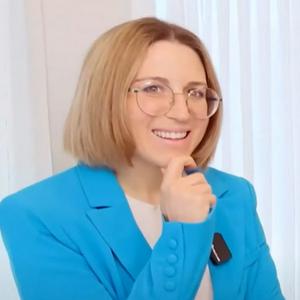
Her family shunned her | Gittel Schwartz
25/10/2026 | 46 mins.Video link to this episode: https://youtu.be/cBcXWpz0joA
What do you do when you are lucky to find love, but the price of that love is losing your family?
Gittel Schwartz's story is at the crossroads of happiness and heartbreak. As a young child, she lost her father and her large religious family was destabalized, deeply grieving, often confusing. In adulthood, she drifted over to Florida, where she met a man with whom she shared a passion for art, poetry, books. The problem? He was not Jewish. In this interview, Gittel shares her experiences and the choices she made, the price she paid. When you hear Gittel's story, how do you feel? I am drawn to her story for the questions they raise for you. Do you see a right or wrong in this situation?
To follow Gittel and learn about her work, please check out her instagram page:
https://www.instagram.com/gittele/
Other videos that might interest you:
-What I did when my son left the fold: https://youtu.be/vf_LDz3vD_A
-Melissa Weisz's story: https://youtu.be/mW6PTwWUVAU
-Fradel Newman's story: https://youtu.be/HoTzWaF7dU8
-Brachi and Avi's story: https://youtu.be/LV99eySK-24
Thanks for the channel members who make this work possible, and all of you who leave comments or just watch! ♥️
Become a supporter of this podcast: https://www.spreaker.com/podcast/the-frieda-vizel-podcast--5824414/support.Looking back at my life 20 years ago, today
23/10/2026 | 1h 18 mins.Twenty years ago today, I created a pseudonym for myself: Shpitzle Shtrimpkind. A 21-year-old Hasidic mother of a little baby boy, hiding furiously behind my alias. My first post was an attempt to defend my community. Within a month or two, I experienced a profound internal shift I couldn't stop or undo. It led me on a road of so much heartache, discovery, curiosity, friendship, loss, love, joy, and sorrow. If I had known then what I know now, I don't know that I would have ever created Shpitzel Shtrimpkind. But it happened. Life happens, whether we have courage for it or not. And I'm grateful for the chance to live life. Living life means getting hurt, falling low, and rebuilding. And it's been all that plus hell, but I'm grateful every day for the light, the hope, the kindness and of course - the audience that made me. Thanks for being here.
Thank you to all of you who have made it possible to turn a lifetime passion into something that can help me live! Your financial support means so much.
Video link: https://youtu.be/hwbU_R_b82c
Become a supporter of this podcast: https://www.spreaker.com/podcast/the-frieda-vizel-podcast--5824414/support."Only girls allowed", making Orthodox women's movies | Malky Weingarten
18/10/2026 | 56 mins.video link to this episode: https://youtu.be/9BwmSQ0Vwsk
Imagine a world where there are only women! That's the world of the filmmaker Malky Weingarten. Malky makes movies for Orthodox Jewish women and girls. This means no romance, no men on set, very kosher plotlines. What does it take to create these movies, and what motivates Malky? By her own admission, her target audience is tiny! And yet, she keeps going. She is passionate and brings artistic, creative, and fun energy to Orthodox Jewish life.
Check out Malky's website at Malky's Media where you can rent the movies: https://www.malkysmedia.com/
Check out Malky's instagram: https://www.instagram.com/malkys_media/
For more on this topic, see:
*My interview with Jessica Roda on Orthodox women's world of media:
https://youtu.be/blLciT0egb4
*My interview with Orthodox Jewish content creator Raizy Fried: https://youtu.be/oycLsS4ulyg
*Shpanier Arbet with Elena Solomon: https://youtu.be/2ZozNgfPTNU
*The story of the performer for women, Danielle Jacobs: https://youtu.be/UZTQRkr-rIs
Thanks to all the channel members for making this work possible!!
Become a supporter of this podcast: https://www.spreaker.com/podcast/the-frieda-vizel-podcast--5824414/support.Hasidic sects and the question "Who will lead?" | Samuel Heilman
11/10/2026 | 55 mins.Video link to this episode: https://youtu.be/Bt0V4N9lGfc
Hasidic groups are led by Rebbes. I come from the Satmar sect, and our rebbe was Moses Teitelbaum. What happened when he passed? The community erupted in a fight over who would take over, and Satmar split in two. There are now two Rebbes, Reb Aaron and Reb Zalmen Leib.
Satmar is just one sect. There are other huge sects with intense succession stories. In this episode, I speak to the scholar Samuel Heilman who spent 50 years studying Orthodox Jews. He wrote the book "Who Will Lead Us?: The Story of Five Hasidic Dynasties in America" and in this interview, he shares some of these succession stories. We especially talk about Bobov and Munkatch.
Books by Samuel Heilman:
Who Will Lead Us?: The Story of Five Hasidic Dynasties in America
https://amzn.to/4wKeJRW
The Rebbe: The Life and Afterlife of Menachem Mendel Schneerson
https://amzn.to/4zz0SAL
Hasidism: A New History
https://amzn.to/4qvPAsJ
Defenders of the Faith: Inside the World of Orthodox Jewry
https://amzn.to/4gShQSf
Other videos that might interest you:
An extremely short, animated primer on Hasidic sects
https://youtu.be/j26jMM6iYYI
A longer history on Hasidic sects:
https://youtu.be/ywWcEMPALlM
Interview with the great late scholar David Biale
https://youtu.be/ACAWSDr_zH8
An interview with my professor Glenn Dynner
https://youtu.be/6_HyuP4HAi4
Become a supporter of this podcast: https://www.spreaker.com/podcast/the-frieda-vizel-podcast--5824414/support.My experience as a Hasidic Jew with the health world | Interview by Dr. Archelle
28/09/2026 | 1h 5 mins.Video version of this episode: https://youtu.be/guXQwZ9h_5U
Dr Archelle from the podcast "Speak Up for Your Health" interviews youtuber Frieda Vizel about her experience growing up in the Hasidic community and experiencing the community's attitudes towards health.
Find Dr. Archelle on her webside: https://www.archellemd.com/
Follow Archelle's podcast Speak Up for Your Health: https://www.archellemd.com/speakupforyourhealth
Dr. Archelle's book: https://amzn.to/4ydzmr0
For more on Frieda and health, here are some relevant videos:
Reflections on my mother's illness: https://youtu.be/vCljrs_AgJQ
In this episode, I talk about my experience with the religious element of stillbirth: https://youtu.be/jjk5K5Rp6e4
Interview with Dr. Lynne Quittel: https://youtu.be/kP_NgV7y_Cs
Interview with Dr. Rosman: https://youtu.be/TkUS0jzJci4
As always, please leave a comment with your thoughts!
Become a supporter of this podcast: https://www.spreaker.com/podcast/the-frieda-vizel-podcast--5824414/support.
More Judaism podcasts




Trending Judaism podcasts

About The Frieda Vizel Podcast
Welcome to in-depth conversations on Hasidism, Judaism, NYC, culture, education, religion and more!This podcast is hosted by popular Youtuber Frieda Vizel, who has been studying the Hasidic community for more than ten years.This is the podcast version of the video conversations which are also published on Youtube. Please reach out with feedback. Here's the youtube channel if you prefer to see the host and guests! :)Become a supporter of this podcast: https://www.spreaker.com/podcast/the-frieda-vizel-podcast--5824414/support.
Podcast websiteListen to The Frieda Vizel Podcast, Guided Jewish Meditations and many other podcasts from around the world with the radio.net app
Get the free radio.net app
- Stations and podcasts to bookmark
- Stream via Wi-Fi or Bluetooth
- Supports Carplay & Android Auto
- Many other app features
Get the free radio.net app
- Stations and podcasts to bookmark
- Stream via Wi-Fi or Bluetooth
- Supports Carplay & Android Auto
- Many other app features

The Frieda Vizel Podcast
Scan code,
download the app,
start listening.
download the app,
start listening.
The Frieda Vizel Podcast: Podcasts in Family
 Ireland
