

Listen to this podcast in the app for free: Download for free in the App Store
radio.net
Sleep timer
Save favourites
226 episodes
How to Make Simple Bass Chords Sound Beautiful
14/10/2026 | 43 mins.A student asked me a question in a private lesson yesterday that I don’t think anyone had asked me quite that way before: “How do I listen to your music?”
Some of my albums connected with them immediately, but others left them wondering why they had little similarity to previous releases. That question became the starting point for this episode: a conversation about harmony, simplicity, and why I’m drawn to making something different each time I record.
There’s quite a lot of playing in this episode! I start with a simple ii–V idea and explore how a small harmonic detour can delay the resolution and open up new ways to eventually get to the tonic. From there, we get into chord inversions, voice leading, ostinatos, and some of the short solo bass pieces I’m developing.
I also talk about the expectations we bring to our favorite artists. Marcus Miller, Miles Davis, and Meshell Ndegeocello offer different examples of how a musical identity can develop, and how our attachment to a particular record can shape what we hope to hear next.
In this episode:
* Reimagining familiar ii–V–I harmony with an additional ii–V.
* Using inversions and closely spaced notes to give simple chords more character.
* Putting a repeating figure above the melody instead of underneath it.
* Turning improvisation and practice-room discoveries into compositions.
* Employing restrictive practice to find more possibilities within what you already know.
* Chick Corea’s Children’s Songs and the appeal of short musical forms.
* Balancing influence, artistic honesty, and audience expectations.
* Why time and sound remain the foundation, however complex the harmony gets.
Which influences can you hear in my playing? If a phrase reminds you of a particular musician, solo, or record, leave a comment. I’d love to hear what you recognize before digging into those transcriptions in a future episode.
Books Discussed in This Episode
Book a Private Lesson
More soon,
Janek
Get full access to Janek's Newsletter at janekgwizdala.substack.com/subscribeWhat Should You Actually Practice?
30/09/2026 | 41 mins.Does inspiration come before the work, or does the work create it?
A Jimmy Carr quote I heard while making breakfast this morning set this episode in motion. It reminded me how often musical ideas arrive simply because I’ve sat down and spent time with the instrument.
I share what that process looks like right now: working on a Brahms waltz for a potential duet with Daniele Camarda, exploring triadic movement around the bass, and following a chord progression that develops spontaneously during the episode.
We also get into a practice approach that has helped me keep improving after more than 30 years of playing: spending less time on an idea each day, but returning to it consistently for longer than I initially think necessary.
In this episode:• Why your goals should determine what you practice.• A focused 10-minute starting point for your practice routine.• The difference between understanding an idea and internalizing it.• Keeping a list of things to learn without chasing every new distraction.• Triads, inversions, and their application to bass lines and chordal playing.• Voice leading, passing chords, and developing ideas with a looper.• Using recordings and voice notes to preserve musical discoveries.• How returning to private teaching has sharpened my own focus.
I’m also considering a comprehensive book on triads—their inversions, applications, and musical context. I’d love to hear what you’d want from a resource like that.
And for anyone who stays to the end: a brief look at the humble footstool that travels everywhere with me.
If you’d like help identifying what to work on and building a practice routine around your goals I’m now offering Private lessons.
If you would prefer something with a little less commitment, but that packs a huge punch in terms of information, check out all my Books and learning resources.
More soon,
Janek
Get full access to Janek's Newsletter at janekgwizdala.substack.com/subscribeHow I Choose Bass Pedals
23/09/2026 | 38 mins.All my pedalboards start with a sound in my head and from there I slowly start to decide what I might need to create all the elements of the board, and where each piece belongs in the signal chain.
This week I play through my current setup, from the MXR Vintage Bass Octave, Mantic Hulk, and FMeron at the front of the chain to the HX Stomp, stereo effects, looper, and DI that follow. I explain why I use a hybrid of individual pedals and multi effects, and why the Stomp is both a complete travel rig and the point where my board splits into stereo.
Some choices are still up in the air. I’m getting to know the Chase Bliss Bad Mood, comparing it with the Stereo Mood, and questioning whether the Generation Loss MkII is the right way to find a texture I’ve missed since using the Dark World. If I bring a fuzz or bit crusher back onto the board, something else will have to go, and that could well be the Gen Loss at this point. 😭
Those choices come into focus when I think about the music ahead: a possible bass duo recording rooted in classical music, and a very different, improvised session with Jojo Mayer. One might need little more than a preamp and reverb. The other could take me deep into synths, loops, and cinematic sound design.
I also revisit my old classical guitar books and the notes my teacher Peter left in them. His reminders about light, shade, and phrasing still shape how I play over 35 years later, and it’s incredibly emotional seeing those notes and scribbles in the margins after all these years.
In this episode: choosing pedals by sound and playing feel; building a mono-to-stereo signal chain; using the HX Stomp alongside individual pedals; the sounds currently competing for space on my board; and adapting one rig to two very different projects.
Check out these links to stuff I mention in the episode:
HX Stomp presetsPrivate lessons
More soon,
Janek
Get full access to Janek's Newsletter at janekgwizdala.substack.com/subscribeI Found an Unreleased Album I forgot I Made
17/09/2026 | 33 mins.With the 10th anniversary of American Elm this year, I recently started contemplating the idea of a remix/remaster with not only some new material that never made it on the first release, but also some video footage since I release no visual representation of the album at the time.
While I was digging through hard drives this week on the hunt for all that old material, I came across a duo album I made in 2018 with guitarist Gabriel Santiago that never saw the light of day.
Despite the performances being great on the session, there were some technical issues with the audio files that left me pretty deflated at the time and convinced I could never release the material.
I chalked it up to bad luck and tried to forget about it and move on.
It turns out, not all the audio files were ruined, and even those that had some nosie on them may well be salvageable in today’s technologically advanced framework that we edit music in.
Suffice to say, the files have been sent off to Juan Pablo in Argentina, and there’s a good chance a new album will be popping up in the not-to-distant future.
Elsewhere in the episode, I talk about:
• The possible tenth-anniversary edition of American Elm• How these discoveries could result in two more releases before the end of 2026• Why I rarely listen to my albums once they’re finished• The danger of becoming attached to your most popular work• What I’m learning from teaching private lessons again• Potentially releasing more footage from the Quiet Places sessions with Peter Erskine and Nir Felder• My completely unprepared first encounter with the Chase Bliss Bad Mood pedal• Producing and encouraging other artists not to leave important music buried• Building a future around fewer, but far more meaningful, live performances
Ultimately, this episode is about getting out of my own way: becoming less attached to imperfections, more comfortable with vulnerability, and more willing to let the work exist.
Because sometimes the difference between an abandoned recording and a beautiful album is eight years, better technology, and a little more perspective.
LINKS
Private one-on-one lessons
Listen to Quiet Places
Music, books, and educational material
Watch the podcast on YouTube
Get full access to Janek's Newsletter at janekgwizdala.substack.com/subscribeAfter 30 Years, I Still Practice This Simple Exercise
10/09/2026 | 26 mins.If you’re already subscribed to my substack, you’ll have read a little about what’s in today’s episode yesterday already. Go straight to the video if that’s the case, and get stuck into the practice routine I’m sharing today.
For those new to the podcast or to my substack….
The longer I play music, the more value I find in returning to simple ideas.
This episode begins with one major-scale exercise pulled from a practice video I recorded nearly eight years ago. It’s a straightforward shape, but it contains an enormous amount of useful information: fretting-hand technique, articulation, fretboard knowledge, major-scale harmony and the ability to feel equally comfortable in every key.
I demonstrate the exercise in several positions, discuss the fingering and pull-off mechanics, and explore ways of introducing rhythmic variation. Then I show how quickly a technical pattern can escape the practice room and become something musical through inversions, suspensions, tension, resolution and spontaneous harmonic movement.
But the episode is also about something larger: deciding where our time should go.
After 30 years of traveling to play music, I’m thinking carefully about the balance between touring, recording, teaching and family life. I still intend to record extensively. and my goal is to release at least three albums a year—but accomplishing that means becoming more selective about the work I accept and more protective of the time I have at home.
That thinking has led to two new ideas.
The first is the launch of my private one-on-one Zoom lessons. There is now a limited selection of one-hour sessions available each week, with options to book either a single lesson or a discounted package.
These lessons don’t have to be limited to scales and technique. We can work on improvisation, practice strategy, finding direction when you feel stuck, preparing for professional situations, navigating the music business or simply getting better results from the limited time you have with your instrument.
We live in an era of unprecedented access to musical information. What most musicians still lack is personal feedback: someone they trust who can look at what they’re doing, identify what is working, uncover what isn’t and help determine the most productive next step.
The second idea is a small-group, one-day music intensive. I’m imagining approximately six hours of teaching with two instructors, a maximum of around 40–50 attendees, a good shared lunch, opportunities to meet other musicians and potentially a closing performance. It would offer more depth and interaction than a conventional clinic without requiring the expense and logistical commitment of a residential music camp.
I’d love your input:
• What would make an intensive like this impossible to miss?• What have you disliked about clinics or music camps you’ve attended?• Who would you like to see joining me as a guest instructor?• Which city should we bring it to?
Ian Martin Allison, John Patitucci and Henrik Linder are among the musicians I think could be fantastic collaborators, but nothing is fixed and your feedback will help shape the idea.
In this episode
• The simple exercise I still practice after 30 years• Developing confidence in every key• Technique, articulation and fretting-hand mechanics• Making repetitive material more engaging• Turning a scale pattern into actual music• Balancing professional music with family life• Why I’m becoming more selective about touring• Launching private one-on-one lessons• Information versus meaningful personal feedback• The idea behind a new one-day music intensive• Why experienced musicians still need trusted advice
Links
Book a private lesson
Browse my books, music and educational materials
Watch the episode on YouTube
More soon,
Janek
Get full access to Janek's Newsletter at janekgwizdala.substack.com/subscribe
More Music podcasts







Trending Music podcasts






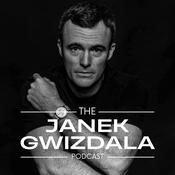
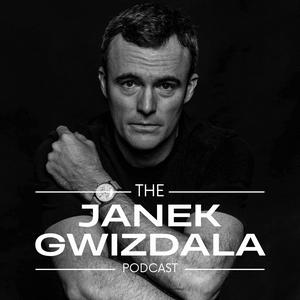
About Janek Gwizdala Podcast
Dive deep into the music universe with the podcast that unveils the journey of one of the most influential bass players in the music industry – Janek Gwizdala. Designed for bass enthusiasts and musicians alike, each episode is a sonic exploration into the world of groove, gear. technique, and artistic evolution.
Janek Gwizdala, renowned for his mastery of the bass, shares his life's narrative – from the early days as a budding musician to his current status as a sought-after sideman and solo artist. Whether you're a seasoned bassist or simply appreciate the magic of live music, join us as we unravel the layers of Janek's experiences, revealing the secrets behind his signature sound.
Expect in-depth conversations with Janek and special guests, offering unique perspectives on music, composition, and the art of creating an unforgettable groove. Explore the challenges and triumphs of a professional bass player, gain insights into the creative process, and discover the stories behind some of Janek's most iconic performances.
Whether you're looking for inspiration for your own musical journey or simply want to bask in the rich tones of the bass, "The Janek Gwizdala Podcast" is your backstage pass to the world of bass and music.
Subscribe now for an intimate look at the life and legacy of Janek Gwizdala's bass-centric career. janekgwizdala.substack.com
Podcast websiteListen to Janek Gwizdala Podcast, Bandsplain and many other podcasts from around the world with the radio.net app
Get the free radio.net app
- Stations and podcasts to bookmark
- Stream via Wi-Fi or Bluetooth
- Supports Carplay & Android Auto
- Many other app features
Get the free radio.net app
- Stations and podcasts to bookmark
- Stream via Wi-Fi or Bluetooth
- Supports Carplay & Android Auto
- Many other app features
Janek Gwizdala Podcast
Scan code,
download the app,
start listening.
download the app,
start listening.
 Ireland