

Listen to this podcast in the app for free: Download for free in the App Store
radio.net
Sleep timer
Save favourites
406 episodes
Episode 358 Dorothy Kilgallen Miniseries Part 6 (Finale)
02/10/2026 | 32 mins.In this dramatic finale to our Jack Ruby miniseries and six-part Dorothy Kilgallen investigation, we dissect the chilling aftermath, timeline cover-ups, and forensic revelations surrounding the November 8, 1965 death of syndicated columnist Dorothy Kilgallen. We expose the glaring four-to-six-hour delay between the early morning discovery of her body by her butler and hairdresser and the official notification of the police at 1:00 p.m., contrasting her husband Richard Kollmar’s false statement—that she came home and was in bed by 11:30 p.m.—with verified phone records and eyewitness accounts placing her at PJ Clarke's, the Regency Hotel lounge, and making Western Union calls past 2:20 a.m. We detail the immediate, total disappearance of her locked black accordion "assassination file"—containing two years of Jack Ruby interview notes, leaked Warren Commission transcripts, and draft chapters of her upcoming Random House book Murder One—which her husband ominously vowed would "go to the grave with me."
We examine the explosive toxicological evidence unsealed years after the official ruling of "undetermined" cause of death. We reveal how Manhattan Chief Medical Examiner toxicologist James Broich re-tested her preserved tissue samples in 1968, uncovering three distinct barbiturates in her system—Seconal, Tuinal, and Nembutal—despite only Seconal ever being prescribed to her, as well as dissolved Nembutal powder residue inside her bedside drinking glass. Furthermore, we trace the tragic, suspicious loss of her backup research "insurance policy" given to her confidante Florence Pritchett Smith, who died suddenly of a cerebral hemorrhage less than 24 hours after Kilgallen, taking any duplicate manuscript chapters to her grave before her apartment could be searched.
Finally, we track the decades-long crusade to uncover the truth and honor Dorothy Kilgallen's fearless legacy. We chronicle the cold case petitions brought before the Manhattan District Attorney's Office by investigative author Mark Shaw, the legal battles surrounding a proposed exhumation at Gate of Heaven Cemetery, and the enduring power of her investigative reporting. We close by reflecting on the street corner dedication of "Dorothy Kilgallen Way" at East 68th Street and Park Avenue in New York City, commemorating a pioneering journalist whose vow that "this story is not going to die as long as there's a real reporter alive" continues to echo through history.Episode 357 Dorothy Kilgallen Miniseries Part 5
02/10/2026 | 35 mins.In this gripping part five of our miniseries on the Dorothy Kilgallen investigation, we retrace the final hours of syndicated columnist and television star Dorothy Kilgallen leading up to her mysterious death on November 8, 1965. On Sunday evening, November 7, a composed and sharp 52-year-old Kilgallen took her regular seat on CBS’s What’s My Line?, correctly guessing that a contestant sold industrial dynamite before heading out to PJ Clarke’s and later stepping into the Regency Hotel lounge around 1:00 a.m. to meet an unidentified "mystery man" in a dark booth. Less than fifteen hours after her live broadcast, Kilgallen was found dead inside her East 68th Street Manhattan townhouse, and her locked "assassination file"—containing two years of explosive, unreleased research on Jack Ruby, Carlos Marcello, and the JFK assassination—vanished without a trace.
We examine Kilgallen’s complex relationship with 30-year-old Columbus film critic Ron Pataki, to whom she confided details of her investigation and read draft excerpts of her upcoming Random House book Murder One, including her Jack Ruby story. We detail the mounting paranoia during her final weeks as she warned her trusted hairdressers, Mark Sinclair and Charles Simpson, that her private files were somehow leaking, ominously stating, "If the wrong people knew what I know now, it would cost me my life." We also analyze Pataki's contradictory recollections, his casual admissions about editing her assassination copy and knowing Chicago mob boss Sam Giancana, and the surprising lack of law enforcement follow-up after police accepted a single phone call from his newspaper colleagues in Ohio as a complete alibi.
Finally, we dissect the alarming physical contradictions of the death scene and the massive timeline cover-up by authorities. Kilgallen’s body was found in the third-floor master bedroom—a room she had stubbornly refused to sleep in for years following a marital rift with her husband, Richard Kollmar—propped up in bed in full television makeup, false eyelashes, a hairpiece, and a dressy blouse over a peignoir, holding a novel she had already finished weeks earlier with no reading glasses in sight. Furthermore, while official reports claimed her maid discovered the body at noon, primary witnesses establish that hairdresser Mark Sinclair discovered her body between 8:30 and 9:00 a.m., but even that was after the staff or her husband had likely found her and altered the scene. Dr. Saul Heller was summoned by 9:30 a.m., and the police precinct was notified before 10:30 a.m, yet the official time of the police involvement seems to be around 1PM. And why was Dr. David Baldwin, the Kilgallen family physician, separately called to the townhouse later that afternoon to pronounce Dorothy dead for a second time, creating a major contradiction of facts that make the official record even more suspect. We explore the tragic, unsettling reality of an investigation silenced in its final miles, leaving behind a staged room, missing files, and two years of secret evidence gathered by Dorothy that is now buried forever.Episode 356 Dorothy Kilgallen Miniseries Part 4
28/09/2026 | 47 mins.In this gripping fourth installment of our Dorothy Kilgallen miniseries, we follow the relentless syndicated columnist as she escalates her independent investigation into the JFK assassination following her standoff with the FBI. Just two days after refusing to surrender her source for Jack Ruby's sealed testimony, Kilgallen published the Dallas Police Department radio logs from November 22, 1963, exposing that Police Chief Jesse Curry's very first order after shots rang out was to send officers to the triple overpass, railroad yard, and grassy knoll—not the Texas School Book Depository. We reveal how FBI files unsealed under FOIA show Director J. Edgar Hoover personally reading her columns and scrawling angry corrections in the margins, proving the federal government was intensely monitoring her reporting. When the Warren Commission Report was released in September 1964 claiming Oswald and Ruby acted alone, Kilgallen publicly blasted it as "pure baloney" and a "fairy tale designed to reassure the public," pledging to travel to Dallas and New Orleans to break the case wide open herself.
We go behind the scenes to examine Kilgallen’s extraordinary, hands-on investigative methods and her covert partnership with attorney Mark Lane. To test key witness Howard Brennan’s claim that he observed the assassin’s height and weight from over 100 feet away, Kilgallen conducted a late-night experiment outside her East 68th Street townhouse, watching her husband Richard Kollmar lean out a fifth-floor window with a broomstick before concluding Brennan’s identification was physically impossible. We trace her secret collaboration with Lane as they communicated from public payphones using code names "Parker" and "Robinson" and exchanged sensitive documents under Manhattan streetlights. Together, they unearth the Warren Commission's suppressed lead regarding an unnamed "rich oil man" present during a pre-assassination meeting at Jack Ruby's Carousel Club, while tracking the chilling, suspicious deaths of reporters Bill Hunter and Jim Koethe, who had both entered Ruby's apartment on the night of the shooting.
Finally, we follow Kilgallen as she identifies New Orleans and Louisiana Mafia boss Carlos Marcello as the true center of gravity in the assassination conspiracy. We detail her secret research trips to New Orleans—where she flew her hairdresser Mark Sinclair on a separate plane for security—and analyze her investigation into David Ferrie, Guy Banister's 544 Camp Street office, and Oswald's ties to anti-Castro exiles. As Kilgallen compiled her explosive findings into an accordion folder that was kept under lock for a planned chapter in her upcoming book Murder One, we explore the atmosphere of terror surrounding her final weeks: buying a gun, updating her will, sending her 11-year-old son trick-or-treating in a limousine following a mysterious surveillance photograph, and entrusting duplicate research files to JFK’s close confidante Florence Pritchett Smith. We close on her bold, fateful declaration to friends that she was "five days away from busting this case wide open" before her sudden, mysterious death in November 1965.
Music includes excerpts from "Hot Swing" by Kevin MacLeod (incompetech.com)
Licensed under Creative Commons: By Attribution 4.0
https://creativecommons.org/licenses/by/4.0/ and from "Take Off and Shoot a Zero" by Chris Zabriskie (chriszabriskie.com). Licensed under Creative Commons: By Attribution 4.0. https://creativecommons.org/licenses/by/4.0/Episode 355 Dorothy Kilgallen Miniseries Part 3
27/09/2026 | 46 mins.In this part three of our Dorothy Kilgallen deep dive, we reach the high-stakes intersection where America's most famous female journalist took on the official narrative of the JFK assassination. Following the live TV shooting of Lee Harvey Oswald by Dallas nightclub owner Jack Ruby on November 24, 1963, syndicated columnist Dorothy Kilgallen vowed to her butler James Clement: "If it is the last thing I do, I'm going to break this case." Driven by a deeply personal connection to John F. Kennedy—who had played charades in her Manhattan home and personally presented her young son Kerry with a PT-109 pin—Kilgallen launched an independent crusade, locking her research inside a private "assassination file." In her November 29 column, "The Oswald File Must Not Close," she challenged President Johnson and savaged the Dallas Police Department, exposing how Ruby enjoyed open, casual access to police headquarters while asking how a small-time strip club owner could stroll through high-security corridors as if visiting a health club.
We track Kilgallen's relentless field investigation, from walking Dealey Plaza and measuring Elm Street shooting angles to covering Jack Ruby's 1964 capital murder trial in Dallas. We reconstruct her unprecedented, five-minute one-on-one interview with Jack Ruby at the courtroom rail—arranged by defense attorney Joe Tonahill under the pretext of a message from a San Francisco opera singer—making her the only journalist in the world granted private access to the prisoner. We explore her explosive April 1964 front-page column on the J.D. Tippit shooting, where she highlighted overlooked witness Aquilla Clemens, who reported seeing two men running from the scene (neither matching Oswald) and revealed that Dallas police officers had ordered her to keep quiet. Furthermore, we examine Kilgallen's earth-shattering August 18, 1964 scoop, where she published Jack Ruby's secret, sealed Warren Commission testimony on the front page of the New York Journal-American months before official release, exposing Ruby's desperate, unheeded pleas to Chief Justice Earl Warren to be transferred to Washington because his life was in mortal danger in Dallas.
Finally, we confront the federal backlash triggered by Kilgallen's reporting and the shadow of surveillance that darkened her final months. We detail J. Edgar Hoover's furious FBI leak investigation and the tense August 1964 standoff inside Kilgallen's East 68th Street townhouse, where she looked federal agents in the eye and declared she "would die rather than reveal" her source—lightheartedly adding that her source wasn't What's My Line? host John Daly, who happened to be Earl Warren's son-in-law. We examine disclosures from her attorney Mark Lane and her personal hairdressers, Mark Sinclair and Charles Simpson, confirming that her 18 home telephone lines were wiretapped and her inner circle was trailed by intelligence operatives. We close on the tragic mystery of her November 1965 death, exploring how her multi-year research files and court notes mysteriously vanished from her home, leaving behind an enduring legacy of fearless journalism and unresolved questions.Music includes excerpts from "Hot Swing" by Kevin MacLeod (incompetech.com)
Licensed under Creative Commons: By Attribution 4.0
https://creativecommons.org/licenses/by/4.0/ and from "Take Off and Shoot a Zero" by Chris Zabriskie (chriszabriskie.com). Licensed under Creative Commons: By Attribution 4.0. https://creativecommons.org/licenses/by/4.0/Episode 354 Dorothy Kilgallen Miniseries Part 2
25/09/2026 | 33 mins.In this captivating 2nd installment of the Dorothy Kilgallen miniseries, we trace how a 1938 Broadway gossip columnist transformed herself into one of the most formidable investigative figures in Cold War America. We examine her meteoric media empire—spanning her nationally syndicated The Voice of Broadway column read by 20 million people across 146 newspapers, her daily radio show with husband Richard Kollmar, and her iconic Sunday night seat on CBS's What's My Line?. We explore her public feuds, including her bitter clash with Frank Sinatra, as well as her complex personal life inside her five-story East 68th Street Manhattan townhouse.
We go behind the courtroom doors of the 1954 Dr. Sam Sheppard murder trial in Cleveland, unearthing the explosive secret that Dorothy guarded for a decade. We detail how trial judge Edward Blythin summoned her into his private chambers before a jury was even seated and declared that Sheppard was "guilty as hell"—a staggering breach of judicial neutrality. We analyze how Dorothy's sworn affidavit, delivered years later to young defense attorney F. Lee Bailey, became a cornerstone of the federal habeas corpus petition that ultimately reached the U.S. Supreme Court, setting off the legal chain reaction that overturned Sheppard’s conviction and secured his eventual acquittal.
Finally, we confront Dorothy’s dangerous early run-ins with federal intelligence agencies and J. Edgar Hoover’s FBI. We examine her 1951 reporting on Radio Free Europe subversion, where she politely but firmly refused CIA interrogation attempts to name her source, and her prophetic July 1959 column revealing that the Mafia was actively plotting to assassinate Fidel Castro—a full year before the CIA's top-secret mob plots were formally initiated. We set the stage for her 1964 arrival at the Dallas courthouse for Jack Ruby’s capital murder trial, where Judge Joe B. Brown granted her an exclusive, private one-on-one interview with Ruby in his chambers, launching the relentless two-year independent investigation into the JFK assassination that would follow her to her grave. Music includes excerpts from "Hot Swing" by Kevin MacLeod (incompetech.com)
Licensed under Creative Commons: By Attribution 4.0
https://creativecommons.org/licenses/by/4.0/ and from "Take Off and Shoot a Zero" by Chris Zabriskie (chriszabriskie.com). Licensed under Creative Commons: By Attribution 4.0. https://creativecommons.org/licenses/by/4.0/
More Documentary podcasts
 Documentary on One PodcastDocumentary, Society & Culture
 The Slow NewscastDocumentary, News, News Commentary, Society & Culture
 UncannyDocumentary, Society & Culture
 A Very British CultDocumentary, Society & Culture, True Crime
 Black Box: The ChatbotsDocumentary, News, Society & Culture
 CriminalDocumentary, Society & Culture, True Crime
 The Documentary PodcastDocumentary, Society & Culture
 I’m Not a Monster Presents… Where is Austin Tice?Documentary, Society & Culture, True Crime
 Careless | Tortoise InvestigatesDocumentary, Society & Culture, True Crime
Trending Documentary podcasts
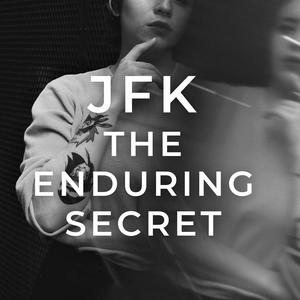
About JFK The Enduring Secret
An in depth tutorial and discussion around the assassination of John F. Kennedy, (JFK) the country's 35th president who was brutally murdered in Dallas Texas on November 22, 1963. The series comprehensively explores the major facts, themes, and events leading up to the assassination in Dealey Plaza and the equally gripping stories surrounding the subsequent investigation. We review key elements of the Warren Commission Report , and the role of the CIA and FBI. We explore the possible involvement of the Mafia in the murder and the review of that topic by the government's House Select Committee on Assassinations in the 1970's. We explore the Jim Garrison investigation and the work of other key figures such as Mark Lane and others. Learn more about Lee Harvey Oswald the suspected killer and Jack Ruby the distraught Dallas night club owner with underworld ties and the man that killed Oswald as a national TV audience was watching. Stay with us as we take you through the facts and theories in bite sized discussions that are designed to educate, and inform as well as entertain the audience. This real life story is more fascinating than fiction. No matter whether you are a serious researcher or a casual student, you will enjoy the fact filled narrative and story as we relive one of the most shocking moments in American History. An event that changed the nation and change the world forever.
Podcast websiteListen to JFK The Enduring Secret, The Birth Keepers and many other podcasts from around the world with the radio.net app
Get the free radio.net app
- Stations and podcasts to bookmark
- Stream via Wi-Fi or Bluetooth
- Supports Carplay & Android Auto
- Many other app features
Get the free radio.net app
- Stations and podcasts to bookmark
- Stream via Wi-Fi or Bluetooth
- Supports Carplay & Android Auto
- Many other app features

JFK The Enduring Secret
Scan code,
download the app,
start listening.
download the app,
start listening.
 Ireland