
Listen to this podcast in the app for free: Download for free in the App Store
radio.net
Sleep timer
Save favourites
158 episodes
H.L. Mencken at Dayton: Revival Night and the Opening Battles of the Scopes Trial
20/10/2026 | 34 mins.In Noble American Lives podcast episode 165 (Oct. 20, 2026), host William H. Benson continues reading from his sixth book, H.L. Mencken versus Jim Bakker, moving into a biography of H.L. Mencken amid the Scopes Monkey Trial. The excerpt recounts Mencken attending an outdoor Pentecostal "Holy Roller" revival near Dayton, Tennessee, describing ecstatic prayer, speaking in tongues, and frenzied penitents, and his astonishment that participants were sincere. It then follows early Scopes proceedings: Bryan's push to bar defense experts, Darrow's constitutional arguments against the Butler Act, disputes over courtroom prayer, the judge's denial of the motion to quash, and the defense's effort to introduce scientific testimony through Maynard Metcalf. Bryan later argues parents' rights and anti-evolution claims as Mencken watches, amid courtroom heat, crowds, and a reporters' table collapse.
00:00 Episode Introduction
00:21 Series Overview
00:53 Book and Newsletter Notes
03:24 Today's Mencken Reading
03:40 Copyright Notice
04:21 Holy Roller Revival Scene
07:32 Back to Dayton Buzz
09:09 Mencken Reacts and Writes
10:07 Bryan vs Darrow Clash
14:42 Darrow's Constitution Argument
18:56 Courtroom Reactions and Storm
21:07 Prayer Fight in Court
25:33 Ralston Ruling and Trial Starts
26:31 Metcalf Explains Evolution
29:19 Expert Testimony Showdown
30:34 Bryan Takes the Floor
32:11 Mencken's Table Crash
33:37 Closing Bryan WarningH.L. Mencken and the Road to the Scopes Monkey Trial
14/10/2026 | 35 mins.William H. Benson introduces episode 164 of the Noble American Lives podcast, continuing his sixth book, H.L. Mencken versus Jim Baker, with the Mencken biography. The script recounts how the ACLU sought a test case against Tennessee's Butler Law, leading Dayton leaders to recruit teacher John T. Scopes, arrange his arrest, secure bail, and fast-track indictment and trial dates. As national attention grew, William Jennings Bryan joined the prosecution and Clarence Darrow, with Dudley Malone and Arthur Garfield Hays, took over the defense despite ACLU misgivings, adopting a strategy Mencken favored: attacking and humiliating Bryan. Mencken travels to Dayton, coins "Scopes Monkey Trial," describes the town's carnival atmosphere, and reports on fundamentalist street preachers and a Holy Roller meeting he attended with reporters.
00:00 Podcast Intro and Series
03:28 Episode Focus Mencken
04:25 ACLU Seeks Test Case
05:34 Scopes Volunteers Arrest
10:13 Grand Jury and Trial Set
11:15 Bryan and Darrow Join
17:54 Mencken Strategy Advice
18:47 Arrivals in Dayton
23:22 Dayton Carnival Atmosphere
29:02 Trial Opens and Jury
31:16 Mencken Holy Roller Night
32:13 Shinbone Ridge Frenzy
35:20 Closing Barbaric GrotesqueryH.L. Mencken's American Mercury, Love Affairs, and the Rise of Fundamentalism
09/10/2026 | 35 mins.In Noble American Lives Podcast (Oct. 6, 2026), episode 163, host William H. Benson continues reading from his sixth book, H.L. Mencken versus Jim Baker, recapping earlier paired biographies in the series and promoting his Roger Williams vs. Cotton Mather volume and Substack newsletter. The Mencken biography describes his 1923 break with The Smart Set after a dispute over ridiculing the late President Harding, Hearst's purchase of the magazine, and Mencken and George Jean Nathan's launch of The American Mercury, which quickly succeeded, influenced other magazines, and published Black writers including Du Bois, Hughes, and Cullen. It covers Mencken's intense editorial work, multiple romantic relationships, and his civil-liberties crusades against the Red Scare, prohibition, censorship, and the Sacco-Vanzetti case, then traces the growth of Protestant fundamentalism and the anti-evolution campaign culminating in Tennessee's 1925 Butler Bill banning evolution instruction.
00:00 Series Introduction
00:52 Books and Subscription Notes
01:22 Recap of Prior Volumes
03:27 Mencken Biography Begins
04:21 Harding Controversy Fallout
05:26 Launching American Mercury
06:10 Editorial Revolution and Influence
07:25 Mencken Work Ethic Spotlight
08:51 Love Affairs and Marion Bloom
11:25 Sara Hart and Other Romances
14:06 Eileen Pringle and Marriage Pressure
17:11 Civil Liberties and Prohibition
19:59 Rise of Religious Fundamentalism
25:56 Anti Evolution Crusade Spreads
28:33 William Jennings Bryan Profile
33:26 Tennessee Passes Butler Bill
34:32 Closing and TransitionH.L. Mencken: In Defense of Women, The American Language, and the Prejudices Years
27/09/2026 | 36 mins.H.L. Mencken in War, Romance, and Literary Rise (1912–1919)
15/09/2026 | 35 mins.William H. Benson introduces Noble American Lives podcast episode 161 and continues his biography of H.L. Mencken from The Parallel Lives of the Noble American Religious Thinkers and Believers: H.L. Mencken versus Jim Bakker. The script recounts Mencken's 1912 Europe trip during the Titanic disaster, a failed prank effort to list him for vice president, and his contempt for the 1912 Democratic convention and William Jennings Bryan, alongside broader critiques of American society. It follows Mencken's intense, ultimately doomed romance with Marion Bloom, shaped by class tensions and later her conversion to Christian Science, which he attacked. During World War I he became openly pro-German, lost his Sun column, co-edited The Smart Set promoting new writers, reported from Berlin and the Eastern Front, then returned amid worsening U.S.-German relations. The period also saw major books and controversy over his anti-Puritan essay and accusations by Stuart Pratt Sherman.
00:00 Show Intro and Series
00:54 Books and Newsletter
01:21 Recap of Prior Volumes
03:26 Episode Focus Mencken
03:40 Copyright Notice
04:20 Europe Trip and Titanic
06:07 Convention and Bryan
08:09 Meeting Marion Bloom
11:53 Turbulent Romance Years
13:05 War and Pro Germany
16:33 Smart Set Co Editor
18:33 Billy Sunday Spectacle
19:38 Berlin Correspondent 1917
21:54 Eastern Front Trenches
23:10 Escape via Switzerland Cuba
25:13 Marion Nurse and Drift
26:40 Christian Science Clash
29:56 Breakup and Aftermath
32:19 Books and Puritanism
34:01 Sherman Feud Conclusion
More History podcasts

Trending History podcasts




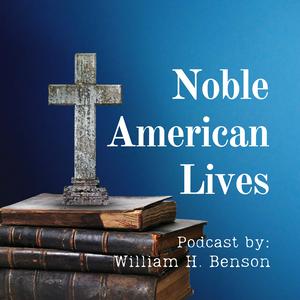
About Noble American Lives: Biographies of America's Religious Thinkers and Believers
This show is about the lives of certain individuals from America's past, who participated in America's religious journey over the past five centuries. Some thought more deeply than did others. Some believed in new ways. Some believed in old ways, but promoted an existing religion in a new way.
Each episode covers a chapter from a biography from twelve individuals: Roger Williams, Cotton Mather, Thomas Paine, George Whitefield, Ralph Waldo Emerson, Joseph Smith, William James, Mary Baker Eddy, Mark Twain, Billy Graham, H. L. Mencken, and Jim Bakker.
In addition, other episodes will include comparisons and contrasts between the individuals.
Podcast websiteListen to Noble American Lives: Biographies of America's Religious Thinkers and Believers, The Rest Is History and many other podcasts from around the world with the radio.net app
Get the free radio.net app
- Stations and podcasts to bookmark
- Stream via Wi-Fi or Bluetooth
- Supports Carplay & Android Auto
- Many other app features
Get the free radio.net app
- Stations and podcasts to bookmark
- Stream via Wi-Fi or Bluetooth
- Supports Carplay & Android Auto
- Many other app features
Noble American Lives: Biographies of America's Religious Thinkers and Believers
Scan code,
download the app,
start listening.
download the app,
start listening.
 Ireland