
Listen to this podcast in the app for free: Download for free in the App Store
radio.net
Sleep timer
Save favourites
250 episodes
Why Am I Lonely but Too Tired to Socialize?
20/10/2026 | 26 mins.You can feel lonely and still not want to be around anyone.
What will surprise you is that inflammation itself can create a feeling of disconnection, and loneliness feeds that inflammation back.
➡ Full show notes + resources
In this solo episode, Dr. Aimie answers a question from a participant in her practitioner training: why do I feel lonely, but also not want to be around people? She explains the difference between being alone and feeling lonely, why healthy habits did not offset the health cost of loneliness in a study of 277,489 adults, and how stored trauma creates a part that hides and a part that craves connection.
She walks through the loop between loneliness and inflammation, and what to do as the holidays come closer, whether you are with family, with friends or on your own: blood sugar, sleep, a containment hug and words of support for the lonely part of you.
WHAT YOU'LL LEARN:
00:00 – 03:12 Being Alone vs Feeling Lonely
03:12 – 06:19 Why Healthy Habits Don’t Offset Loneliness
06:19 – 08:56 Stepping Back From Family
08:56 – 11:58 Low Energy, Inflammation and Disconnection
11:58 – 14:39 The Loneliness-Inflammation Loop
14:39 – 18:15 Blood Sugar and Comfort Foods
18:15 – 20:56 Sleep and the Containment Hug
20:56 – 24:23 What to Say to the Lonely Part
24:23 – 26:01 Stress Loneliness or Trauma Loneliness?
"I'm not trying to make the loneliness go away. I'm trying to make the loneliness know that it actually isn't all alone." ~ Dr. Aimie Apigian
If you feel lonely but too tired to be around people, or you have stepped back from family on your healing journey, this episode is for you.
RESOURCES:
Get the free Stress or Trauma Guide and learn whether your nervous system has been running a stress response or a trauma response.
Get The Biology of Trauma book. Chapter 9 describes the pattern of disconnection.
This episode is educational and is not medical advice. Please work with your own qualified healthcare provider for decisions about your care.
Grab your copy of The Biology of TraumaCan Early Life Stress Show Up in My Gut? Dr. Emeran Mayer
13/10/2026 | 31 mins.A hard start in life can still be shaping your gut decades later.
What will surprise you is that your gut microbes can sense when you are stressed, and they change how they treat your gut wall.
➡ Full show notes + resources
Dr. Aimie speaks with Dr. Emeran Mayer, gastroenterologist, neuroscientist and Distinguished Research Professor at UCLA, about how early life stress reaches the gut, the immune system and the brain. He explains increased stress responsiveness, his term for how a difficult birth or childhood becomes biology, and why it does not mean you are doomed.
They also talk about why brain fog may start in the gut, the mucus layer that protects the gut wall, and the foods that help it, from diverse fiber to fermented foods.
WHAT YOU'LL LEARN:
00:00 – 00:38 Introduction
00:38 – 02:44 The First 1,000 Days
02:44 – 06:31 Early Stress Doesn't Mean You're Doomed
06:31 – 08:44 Hard Births and Stress Responsiveness
08:44 – 10:56 How Early Stress Shows Up in the Gut
10:56 – 14:27 Your Gut Microbes Can Sense Stress
14:27 – 17:28 From Gut to Brain: LPS and Brain Fog
17:28 – 19:17 The Gut's Protective Mucus Layer
19:17 – 21:42 The Interconnected Plate
21:42 – 24:01 Why Food Diversity Matters
24:01 – 26:46 Foods That Protect the Mucus Layer
26:46 – 30:13 Dr. Mayer's Key Message
30:13 – 31:12 Closing Reflection and Stress or Trauma Guide
"When a gut microbe is exposed to the stress hormone norepinephrine, it changes its genes and becomes more aggressive toward the bowel wall." ~ Dr. Emeran Mayer
If you had a difficult birth or a stressful childhood and have lived with gut symptoms or brain fog for years, this episode is for you.
RESOURCES:
Get the free Stress or Trauma Guide and learn the physical difference between a stress response and a trauma response in under two minutes.
Get The Biology of Trauma book. Chapter 11 explains how early life shapes the filter through which the body meets every later stress.
The Mind-Gut Connection by Dr. Emeran Mayer.
This episode is educational and is not medical advice. Please work with your own qualified healthcare provider for decisions about your care.
Grab your copy of The Biology of TraumaCan I Safely Feel Emotions I Buried? Dr. Howard Schubiner
08/10/2026 | 23 mins.Emotions held down for decades are still shaping your body.
What will surprise you is that the way back can start very small, even with one finger.
This is Part 2 of a two-part conversation. Part 1 is here.
➡ Full show notes + resources
➡Trauma Pattern Quiz: https://draimie.co/4jIXc9V
Dr. Aimie continues her conversation with Dr. Howard Schubiner, internist, Clinical Professor at Michigan State and an early mentor of hers. He describes what changes in the body when an emotion held down for decades is finally felt and expressed, and why safety and self-compassion make that possible.
They talk about why neuroplastic symptoms are reversible, how compassion, curiosity and calm answer the question pain is asking, and where to start when your capacity is very low.
WHAT YOU'LL LEARN:
00:00 What changes when buried emotions are finally felt?
01:14 What does it mean that neuroplastic symptoms are reversible?
03:36 How does the nervous system learn its default response?
04:31 What changes in the body when emotions are expressed?
07:15 How do you make it safe to feel buried emotions?
10:37 How can compassion, curiosity and calm change pain?
13:49 Where do you start when capacity is very low?
18:23 How do you train the nervous system with patience?
20:45 Why ask whether your symptoms are neuroplastic?
22:29 How can you see your own patterns of stored emotions?
"Sadness turns right into compassion. Anger gets expressed, and you let it go." ~ Dr. Howard Schubiner
If you have held your emotions down for years and wonder whether it is safe to feel them, this episode is for you.
RESOURCES:
Take the free 2-Minute Assessment for Stored Trauma and see which patterns of stored trauma are most active for you.
Get The Biology of Trauma book. Chapter 3 explains capacity and the critical line of overwhelm.
Unlearn Your Pain by Dr. Howard Schubiner.
The Foundational Journey, a clear path for stabilizing your internal state and nervous system.
This episode is educational and is not medical advice. Please work with your own qualified healthcare provider for decisions about your care.
Grab your copy of The Biology of TraumaIs My Pain Coming From My Brain? Dr. Howard Schubiner
06/10/2026 | 20 mins.➡ Full show notes + resources
➡Trauma Pattern quiz:
Pain that no test has fully explained is still real pain.
What will surprise you is that the brain decides whether to turn on pain, and it treats emotional danger from childhood or from an unjust world as danger.
This is Part 1 of a two-part conversation
Dr. Aimie welcomes back Dr. Howard Schubiner, internist, Clinical Professor at Michigan State and author of Unlearn Your Pain. He describes how a child who learned to keep the peace grows into an adult whose brain still reacts to everyday stress as danger, and why he sees racism and injustice as sources of pain.
They talk about why chronic pain, fatigue and POTS keep rising while the body has not changed, why neuroplastic symptoms are real and reversible, and how someone with rheumatoid arthritis can carry both structural and neuroplastic pain.
Trauma Pattern quiz:
WHAT YOU’LL LEARN:
00:00 Why would the brain create pain?
02:02 Can emotional pain cause physical pain?
04:23 How does a childhood without safety become pain later?
07:32 Can racism and injustice cause chronic pain?
10:08 Why are chronic pain, fatigue and POTS becoming more common?
14:37 Can rheumatoid arthritis pain be neuroplastic?
18:27 How can the nervous system learn it is safe?
“Not all pain is due to injury. It’s our job to sort it out because emotional pain can cause physical pain, and that’s a fact. And that’s how we’re wired.” ~ Dr. Howard Schubiner
If you live with pain that no test has fully explained, this episode is for you.
RESOURCES:
Take the free 2-Minute Assessment for Stored Trauma and see which patterns of stored trauma are most active for you.
Get The Biology of Trauma book.
Unlearn Your Pain by Dr. Howard Schubiner.
The Foundational Journey, a clear path for stabilizing your internal state and nervous system.
This episode is educational and is not medical advice. Please work with your own qualified healthcare provider for decisions about your care.
➡ Full show notes + resources
Grab your copy of The Biology of TraumaWhere Do I Start With Flaring Mast Cells? Dr. Bruce Hoffman
01/10/2026 | 27 mins.➡ Full show notes + resources
You react to everything. You want to find the cause and get rid of it.
What will surprise you is that the most common place people start, binders, chelation or a mold detox, may be the very thing that makes a reactive body worse.
This is Part 2 of a two-part conversation. Part 1 is here: Apple · Spotify · show notes.
Dr. Aimie and Dr. Bruce Hoffman talk about where to start when the body reacts to everything. Dr. Hoffman shares the order he used for 30 years with his most complex patients: safety first, then daylight and natural rhythms, self-regulation, POTS, and then calming the mast cells, with binders, chelation and mold treatment much later.
They also cover which medications calm mast cells, why supplements alone rarely do, how to tell a Herxheimer reaction from a mast cell reaction, and why mast cell labs so often come back normal.
WHAT YOU'LL LEARN:
00:00 Where do you start when your body reacts to everything?
02:57 Why does safety come first for highly reactive patients?
04:03 What are the health cycle principles?
06:48 What order did Dr. Hoffman use with his most complex patients?
08:11 How do you stabilize mast cells beyond histamine?
10:50 Can supplements stabilize mast cells?
12:45 Why not start with binders or antibiotics?
16:19 Herxheimer or mast cell reaction: how can you tell?
19:29 What is a therapeutic trial?
21:11 Why wait 3 to 6 months before chelation?
"I never approached the toxic load until I've got them stabilized in the health cycle principles, self-regulation, POTS, and mast cells." — Dr. Bruce Hoffman
If you have tried detox after detox and your body only gets more reactive, this episode is for you.
RESOURCES:
Get the free Companion Guide to Mast Cell Reactivity. Every term and medication from this conversation explained in plain words, in the order it comes up. [Swap for the tracked Apple show notes link, campaign ep198-stabilize-mast-cells, needs a Lead Magnet Inventory row]
Get The Biology of Trauma book. Chapter 12 lays out the biology lens that follows this same sequence. [VERIFY chapter]
Dr. Bruce Hoffman’s website and his Substack, The New Medical Curriculum.
The Foundational Journey, a clear path for stabilizing your internal state and nervous system.
This episode is educational and is not medical advice. Please work with your own qualified healthcare provider for decisions about your care.
➡ Full show notes + resources
Grab your copy of The Biology of Trauma
More Education podcasts


Trending Education podcasts
















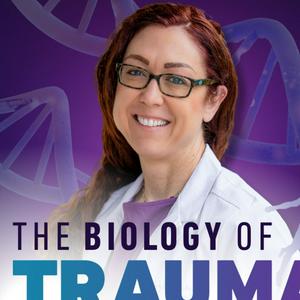
About The Biology of Trauma® With Dr. Aimie
People are done dancing around the topic of trauma. They're ready to face this square-on. None
of the current systems are getting to the root of the issue in the current model. Their biology has
been affected on a cellular level, and that is now what's preventing the important work that
they're trying to do.
The Biology of Trauma® podcast is the missing piece to that puzzle. It's a practical living manual for the human body in a modern, traumatizing world. Join your host, Dr. Aimie Apigian—a medical physician and expert in attachment, trauma, and addiction—as she challenges outdated trauma paradigms and introduces a new model for healing.
Podcast websiteListen to The Biology of Trauma® With Dr. Aimie, The Rich Roll Podcast and many other podcasts from around the world with the radio.net app
Get the free radio.net app
- Stations and podcasts to bookmark
- Stream via Wi-Fi or Bluetooth
- Supports Carplay & Android Auto
- Many other app features
Get the free radio.net app
- Stations and podcasts to bookmark
- Stream via Wi-Fi or Bluetooth
- Supports Carplay & Android Auto
- Many other app features

The Biology of Trauma® With Dr. Aimie
Scan code,
download the app,
start listening.
download the app,
start listening.
 Ireland
