Let’s start with something that might make you uncomfortable. What if everything you’ve been told about vaccinating your dog isn’t entirely true? What if the idea of the “annual vaccination” isn’t just outdated, but flat-out wrong? Because here’s the reality—there is no such thing as an annual vaccination. So why are so many people still doing it?
And while we’re at it, why are we so obsessed with controlling every tiny risk that we forget to actually let dogs be dogs? Let them sniff. Let them explore. Because the irony is, in trying to protect them from everything, we might be causing harm anyway.
If you’ve ever felt uneasy about this—if you’ve ever thought, “Hang on, this doesn’t quite add up…” you’re not wrong. And you’re definitely not alone. So maybe it’s time to ask a bigger question. Are we making decisions based on science, or habit? Or worse—money?
Because here’s where it gets uncomfortable. Even the World Small Animal Veterinary Association, as mainstream as it gets, says very clearly: vaccinate as little as possible. Not every year. Not automatically. As little as possible. So again, why is that not what’s happening everywhere?
Let’s talk about risk. Vaccines are not neutral. They have side effects. Sometimes mild, sometimes not. We’re talking immune reactions that can range from nothing, to seizures, to chronic disease, to death. And yet, how often is that conversation actually had openly and honestly, without being shut down?
And here’s another one. Does it make any sense that a tiny Pomeranian and a massive Great Dane get the exact same dose? Same injection. Same volume. No adjustment. Really?
Then there’s leptospirosis. Lepto 2. Lepto 4. Non-core vaccines. So what’s the real risk of the disease, and what’s the real risk of the vaccine? Because those are not the same conversation, but they’re often treated like they are.
Now let’s talk puppies, because this is where things start to unravel. Multiple vaccines, strict schedules—and yet, we don’t actually know which vaccine will take. So we give more, and more, instead of asking why not test first? Why not use titre testing to see what immunity already exists? Because in many cases, one successful vaccine may be enough.
And then we hit the real dilemma—socialisation versus vaccination. Because here’s the truth nobody wants to say out loud. If you keep your puppy locked away “just to be safe,” you might be trading one risk for a much bigger one: fear, anxiety, aggression, and in the worst cases, behavioural euthanasia. So what’s actually more dangerous? A controlled exposure to the real world, or raising a dog that’s terrified of it?
We talk a lot about safety, but life itself involves risk. And maybe part of responsible dog ownership is learning which risks actually matter.
And before we wrap this intro—worming, flea treatments. Routine. Automatic. Constant. But based on what? Evidence, or just what we’ve always done?
This isn’t a comfortable conversation. It’s not supposed to be. Because asking better questions means challenging what feels familiar, and that makes people nervous. Good. It should.
This is just the beginning. And we’re going all the way in.Dr Lise Hansen—let’s talk about what’s really going on. 🎙️🔥https://alternative-vet.co.uk/
---- oOo ----
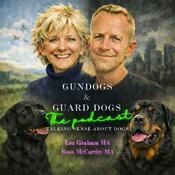
Lez and Ross have both been in the industry professionally for well over 20 years and each has been involved with dogs for over 40 years.
They were 'study buddies' and were the first in the UK to achieve a Masters Degree (Professional Practice) in Canine Behaviour and Psychology in 2011. They work well together and apart, support and work with dog rescue organisations and train professional dog trainers and behaviourists.
Different as chalk and cheese, but maybe not as different as they like to think.Intrigued? want to know more? then check out our websites...
www.rossmccarthy.com ~ www.lezgraham.com


































 Ireland