

Listen to this podcast in the app for free: Download for free in the App Store
radio.net
Sleep timer
Save favourites
54 episodes
Gold, Commodities & the Coming Monetary Reset | Alan O’Sullivan and Ivan Yates
09/10/2026 | 23 mins.Is gold the ultimate portfolio insurance — or has its extraordinary rise made it too risky? And could a changing global monetary order reshape how we invest?
In this episode of The MOST Important Thing, Dr Alan O’Sullivan and Ivan Yates examine gold’s role in a diversified portfolio, the central-bank buying driving demand and the question of trust in the US dollar. They also discuss silver, copper, uranium, oil and other real assets, before weighing the opportunities and risks of Bitcoin.
Drawing on conversations with Ronnie Stoeferle, Russell Napier and Justin Huhn, Alan explores what a potential monetary reset could mean for investors — and why portfolio diversification may matter more than ever.
Previous guest interviews referenced in this episode:
Ronnie Stoeferle — Gold, Trust and the Monetary System — https://podcasts.apple.com/ie/podcast/ep2-why-gold-is-the-best-hedge-against-a/id1876953002?i=1000751266217
Justin Huhn — Uranium and Nuclear Energy — https://podcastrex.com/shows/the-most-important-thing/uraniums-long-runway-china-scarcity-the-nuclear-investment-opportunity
Russell Napier — Gold and the Monetary Reset — https://open.spotify.com/episode/1Aqq65d972ehdcjQOAtxl1
Topics include: gold allocation and volatility; central-bank reserves; inflation and commodities; nuclear energy; Bitcoin as a store of value; and the future of the global monetary system.
Subscribe for more insights from The MOST Important Thing. Available on YouTube, Spotify and Apple Podcasts.
IMPORTANT - PLEASE READ
For information and educational purposes only. Nothing in this episode constitutes personal investment advice.Gold, Commodities & the Coming Monetary Reset | Alan O’Sullivan and Ivan Yates
09/10/2026 | 21 mins.Is gold the ultimate portfolio insurance — or has its extraordinary rise made it too risky? And could a changing global monetary order reshape how we invest?
In this episode of The MOST Important Thing, Dr Alan O’Sullivan and Ivan Yates examine gold’s role in a diversified portfolio, the central-bank buying driving demand and the question of trust in the US dollar. They also discuss silver, copper, uranium, oil and other real assets, before weighing the opportunities and risks of Bitcoin.
Drawing on conversations with Ronnie Stoeferle, Russell Napier and Justin Huhn, Alan explores what a potential monetary reset could mean for investors — and why portfolio diversification may matter more than ever.
Previous guest interviews referenced in this episode:
Ronnie Stoeferle — Gold, Trust and the Monetary System — https://podcasts.apple.com/ie/podcast/ep2-why-gold-is-the-best-hedge-against-a/id1876953002?i=1000751266217
Justin Huhn — Uranium and Nuclear Energy — https://podcastrex.com/shows/the-most-important-thing/uraniums-long-runway-china-scarcity-the-nuclear-investment-opportunity
Russell Napier — Gold and the Monetary Reset — https://open.spotify.com/episode/1Aqq65d972ehdcjQOAtxl1
Topics include: gold allocation and volatility; central-bank reserves; inflation and commodities; nuclear energy; Bitcoin as a store of value; and the future of the global monetary system.
Subscribe for more insights from The MOST Important Thing. Available on YouTube, Spotify and Apple Podcasts.
IMPORTANT - PLEASE READ
For information and educational purposes only. Nothing in this episode constitutes personal investment advice.Robert Gordon: Why the Great Era of Economic Growth May Be Over | Part 1
06/10/2026 | 35 mins.Professor Robert J. Gordon, one of the world’s leading economists on productivity and long-run economic growth, joins Alan O’Sullivan to examine why the extraordinary gains of the past two centuries may be becoming harder to repeat.
In Part 1, Gordon explains the difference between economic growth and productivity, traces the three major industrial revolutions, and discusses why the period from 1920 to 1970 delivered such exceptional productivity growth. He also revisits the central thesis of The Rise and Fall of American Growth and explains why productivity growth has slowed since the mid-2000s.
The conversation then turns to the major headwinds facing advanced economies: ageing populations, rising public debt, inequality and the diminishing contribution of education to productivity. Gordon also discusses the contrast between mature economies and faster-growing developing countries, as well as the role of energy, electrification and technology in future growth.
Topics include:
• Economic growth vs productivity
• The three industrial revolutions
• Why 1920–1970 was an exceptional period for productivity
• The post-2005 productivity slowdown
• Demographics and ageing populations
• Government debt and interest rates
• Inequality and living standards
• Education and graduate underemployment
• Growth in China, India and the developing world
• Energy, electrification and the transition away from fossil fuels
Part 2 continues the discussion with artificial intelligence, white-collar employment, education, demographics, retirement, immigration and advice for young people entering the labour market.
Ted talk: https://www.youtube.com/watch?v=PYHd7rpOTe8
Amazon UK – Robert J. Gordon, The Rise and Fall of American GrowthThe Long & Short Ep. 2 | Debt, Demographics & Sustainability
01/10/2026 | 26 mins.In Episode 2 of The Long & Short, Ivan Yates and Dr. Alan O'Sullivan examine three of the major forces shaping economies, markets and long-term investment decisions: debt, demographics and sustainability.
The discussion moves from the global sustainability challenge and the renewed debate around nuclear energy to rising government debt and the consequences of increasingly heavy debt burdens. Ivan and Alan also explore what could happen if confidence in sovereign debt is tested and why the financial system ultimately depends on trust.
They then turn to demographics and pensions, including falling worker-to-retiree ratios, longer life expectancy and the pressure these trends place on state pension systems. The episode also looks at private credit and shadow banking, liquidity and underwriting risks, Ireland's deemed disposal rules, and the role of state savings and government bonds in a portfolio.
Topics include:
• Debt, deficits and diminishing economic returns
• US government debt and the Treasury market
• Climate, energy security and nuclear power
• Ageing populations and pension sustainability
• Private credit and shadow banking risks
• Deemed disposal and long-term investing in Ireland
• State savings, government bonds and inflation
Featured clips from previous episodes:
• Justin Huhn – Part 1: Is Uranium the Most Important Investment Story of the Next Decade?
• Justin Huhn – Part 2: Uranium’s Long Runway: China, Scarcity & the Nuclear Investment Opportunity
• Mike Bell, CFA – Part 1: How to Gain an Edge in Markets: History, Cycles & Bubbles
• Mike Bell, CFA – Part 2: Gaining an Edge in Financial Markets
• Dr. Lacy Hunt – The Debt Crisis Nobody Wants to Talk About
• Prof. Brian O'Kelly – Banking Risk, Debt & the Future of Finance
The Long & Short is part of The Most Important Thing, with Ivan Yates and Dr. Alan O'Sullivan, looking beyond the headlines at the forces driving markets, economies and investment portfolios.
Listen / Watch:
Spotify: The MOST Important Thing
YouTube: @TheMOSTImportantThingPodThe Long & Short Ep. 2 | Debt, Demographics & Sustainability
01/10/2026 | 24 mins.In Episode 2 of The Long & Short, Ivan Yates and Dr. Alan O'Sullivan examine three of the major forces shaping economies, markets and long-term investment decisions: debt, demographics and sustainability.
The discussion moves from the global sustainability challenge and the renewed debate around nuclear energy to rising government debt and the consequences of increasingly heavy debt burdens. Ivan and Alan also explore what could happen if confidence in sovereign debt is tested and why the financial system ultimately depends on trust.
They then turn to demographics and pensions, including falling worker-to-retiree ratios, longer life expectancy and the pressure these trends place on state pension systems. The episode also looks at private credit and shadow banking, liquidity and underwriting risks, Ireland's deemed disposal rules, and the role of state savings and government bonds in a portfolio.
Topics include:
• Debt, deficits and diminishing economic returns
• US government debt and the Treasury market
• Climate, energy security and nuclear power
• Ageing populations and pension sustainability
• Private credit and shadow banking risks
• Deemed disposal and long-term investing in Ireland
• State savings, government bonds and inflation
Featured clips from previous episodes:
• Justin Huhn – Part 1: Is Uranium the Most Important Investment Story of the Next Decade?
• Justin Huhn – Part 2: Uranium’s Long Runway: China, Scarcity & the Nuclear Investment Opportunity
• Mike Bell, CFA – Part 1: How to Gain an Edge in Markets: History, Cycles & Bubbles
• Mike Bell, CFA – Part 2: Gaining an Edge in Financial Markets
• Dr. Lacy Hunt – The Debt Crisis Nobody Wants to Talk About
• Prof. Brian O'Kelly – Banking Risk, Debt & the Future of Finance
The Long & Short is part of The Most Important Thing, with Ivan Yates and Dr. Alan O'Sullivan, looking beyond the headlines at the forces driving markets, economies and investment portfolios.
Listen / Watch:
Spotify: The MOST Important Thing
YouTube: @TheMOSTImportantThingPod
More Business podcasts
 Inside Business with Ciaran HancockBusiness
 UnhedgedBusiness, Business News, Investing, News
 Ask About WealthBusiness, Education, Entrepreneurship, Investing, Tutorials
 Prof G MarketsBusiness, Investing
 Money TalksBusiness
 The Other HandBusiness, News, Society & Culture
 Aspire with Emma GredeBusiness, Entrepreneurship, Society & Culture
 Better With MoneyBusiness, Education, Investing, Self-Improvement, Tutorials
 A Bit of OptimismBusiness, Careers, Education, Self-Improvement
 The Diary Of A CEO with Steven BartlettBusiness, Education, Society & Culture
Trending Business podcasts
 Masters in BusinessBusiness, Investing
 Barclays BriefBusiness, Business News, News, Society & Culture
 The Hidden Hustle PodcastBusiness
 Digg PodcastBusiness
 Thoughts on the MarketBusiness, Investing
 The Economics of Everyday ThingsBusiness
 Top Traders UnpluggedBusiness, Business News, Investing, News
 The Economics ShowBusiness, Business News, News, News Commentary
 Get Started InvestingBusiness, Education, Investing
 Motley Fool Hidden Gems InvestingBusiness, Investing
 The BusinessBusiness, Business News, News, News Commentary, Tech News, Technology
 The Tim Ferriss ShowBusiness, Entrepreneurship
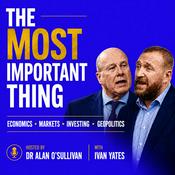 The MOST Important ThingBusiness, Education, Entrepreneurship, Investing
 The Iced Coffee HourBusiness, Entrepreneurship
 The Diary Of A CEO with Steven BartlettBusiness, Entrepreneurship
 声动早咖啡Business, Entrepreneurship, Investing, Technology
 How I Built This with Guy RazBusiness
About The MOST Important Thing
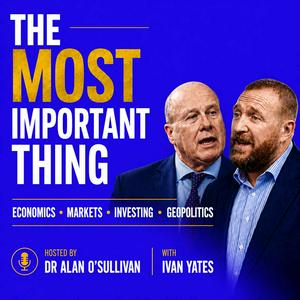
The world is full of noise, distraction and now dis-information. How do we extract the truth and become better informed? Join broadcaster Ivan Yates and finance expert Dr Alan O’ Sullivan as they meet the best and brightest minds in finance, investments, economics, and geopolitics. The Most Important Thing reveals what really matters.
Podcast websiteListen to The MOST Important Thing, Inside Business with Ciaran Hancock and many other podcasts from around the world with the radio.net app
Get the free radio.net app
- Stations and podcasts to bookmark
- Stream via Wi-Fi or Bluetooth
- Supports Carplay & Android Auto
- Many other app features
Get the free radio.net app
- Stations and podcasts to bookmark
- Stream via Wi-Fi or Bluetooth
- Supports Carplay & Android Auto
- Many other app features

The MOST Important Thing
Scan code,
download the app,
start listening.
download the app,
start listening.
The MOST Important Thing: Podcasts in Family
 Ireland