

Listen to this podcast in the app for free: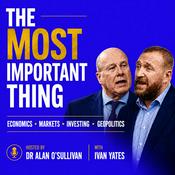 Download for free in the App Store
radio.net
Sleep timer
Save favourites
52 episodes
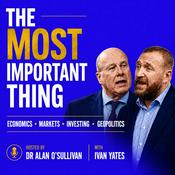
Gold, Commodities & the Coming Monetary Reset | Alan O’Sullivan and Ivan Yates
09/10/2026 | 23 mins.Is gold the ultimate portfolio insurance — or has its extraordinary rise made it too risky? And could a changing global monetary order reshape how we invest?
In this episode of The MOST Important Thing, Dr Alan O’Sullivan and Ivan Yates examine gold’s role in a diversified portfolio, the central-bank buying driving demand and the question of trust in the US dollar. They also discuss silver, copper, uranium, oil and other real assets, before weighing the opportunities and risks of Bitcoin.
Drawing on conversations with Ronnie Stoeferle, Russell Napier and Justin Huhn, Alan explores what a potential monetary reset could mean for investors — and why portfolio diversification may matter more than ever.
Previous guest interviews referenced in this episode:
Ronnie Stoeferle — Gold, Trust and the Monetary System — https://podcasts.apple.com/ie/podcast/ep2-why-gold-is-the-best-hedge-against-a/id1876953002?i=1000751266217
Justin Huhn — Uranium and Nuclear Energy — https://podcastrex.com/shows/the-most-important-thing/uraniums-long-runway-china-scarcity-the-nuclear-investment-opportunity
Russell Napier — Gold and the Monetary Reset — https://open.spotify.com/episode/1Aqq65d972ehdcjQOAtxl1
Topics include: gold allocation and volatility; central-bank reserves; inflation and commodities; nuclear energy; Bitcoin as a store of value; and the future of the global monetary system.
Subscribe for more insights from The MOST Important Thing. Available on YouTube, Spotify and Apple Podcasts.
IMPORTANT - PLEASE READ
For information and educational purposes only. Nothing in this episode constitutes personal investment advice.Robert Gordon: Why the Great Era of Economic Growth May Be Over | Part 1
06/10/2026 | 35 mins.Professor Robert J. Gordon, one of the world’s leading economists on productivity and long-run economic growth, joins Alan O’Sullivan to examine why the extraordinary gains of the past two centuries may be becoming harder to repeat.
In Part 1, Gordon explains the difference between economic growth and productivity, traces the three major industrial revolutions, and discusses why the period from 1920 to 1970 delivered such exceptional productivity growth. He also revisits the central thesis of The Rise and Fall of American Growth and explains why productivity growth has slowed since the mid-2000s.
The conversation then turns to the major headwinds facing advanced economies: ageing populations, rising public debt, inequality and the diminishing contribution of education to productivity. Gordon also discusses the contrast between mature economies and faster-growing developing countries, as well as the role of energy, electrification and technology in future growth.
Topics include:
• Economic growth vs productivity
• The three industrial revolutions
• Why 1920–1970 was an exceptional period for productivity
• The post-2005 productivity slowdown
• Demographics and ageing populations
• Government debt and interest rates
• Inequality and living standards
• Education and graduate underemployment
• Growth in China, India and the developing world
• Energy, electrification and the transition away from fossil fuels
Part 2 continues the discussion with artificial intelligence, white-collar employment, education, demographics, retirement, immigration and advice for young people entering the labour market.
Ted talk: https://www.youtube.com/watch?v=PYHd7rpOTe8
Amazon UK – Robert J. Gordon, The Rise and Fall of American GrowthThe Long & Short Ep. 2 | Debt, Demographics & Sustainability
01/10/2026 | 24 mins.In Episode 2 of The Long & Short, Ivan Yates and Dr. Alan O'Sullivan examine three of the major forces shaping economies, markets and long-term investment decisions: debt, demographics and sustainability.
The discussion moves from the global sustainability challenge and the renewed debate around nuclear energy to rising government debt and the consequences of increasingly heavy debt burdens. Ivan and Alan also explore what could happen if confidence in sovereign debt is tested and why the financial system ultimately depends on trust.
They then turn to demographics and pensions, including falling worker-to-retiree ratios, longer life expectancy and the pressure these trends place on state pension systems. The episode also looks at private credit and shadow banking, liquidity and underwriting risks, Ireland's deemed disposal rules, and the role of state savings and government bonds in a portfolio.
Topics include:
• Debt, deficits and diminishing economic returns
• US government debt and the Treasury market
• Climate, energy security and nuclear power
• Ageing populations and pension sustainability
• Private credit and shadow banking risks
• Deemed disposal and long-term investing in Ireland
• State savings, government bonds and inflation
Featured clips from previous episodes:
• Justin Huhn – Part 1: Is Uranium the Most Important Investment Story of the Next Decade?
• Justin Huhn – Part 2: Uranium’s Long Runway: China, Scarcity & the Nuclear Investment Opportunity
• Mike Bell, CFA – Part 1: How to Gain an Edge in Markets: History, Cycles & Bubbles
• Mike Bell, CFA – Part 2: Gaining an Edge in Financial Markets
• Dr. Lacy Hunt – The Debt Crisis Nobody Wants to Talk About
• Prof. Brian O'Kelly – Banking Risk, Debt & the Future of Finance
The Long & Short is part of The Most Important Thing, with Ivan Yates and Dr. Alan O'Sullivan, looking beyond the headlines at the forces driving markets, economies and investment portfolios.
Listen / Watch:
Spotify: The MOST Important Thing
YouTube: @TheMOSTImportantThingPodIvan Yates: The Game of Life – Success, Failure & Reinvention | The Most Important Thing
24/09/2026 | 34 mins.In this special episode of The Most Important Thing, the roles are reversed as Alan O’Sullivan sits down with Ivan Yates following the release of his new book, The Game of Life: And How to Win It.
Drawing on 50 years of experience across politics, business and broadcasting, Ivan reflects on the lessons that shaped his life – from leaving school early and becoming Ireland’s youngest TD at the time, to building a business, facing bankruptcy, reinventing himself in broadcasting and continuing to take on new challenges.
Alan and Ivan discuss success, failure and self-responsibility; the importance of people skills and relationships; leadership and resilience; recovering from major setbacks; knowing when to reinvent yourself; and how ambition changes as you move through life.
They also look at what the rise of AI means for the next generation – and why Ivan believes that in a world where information is increasingly accessible, relationships, communication and the ability to connect with people matter more than ever.
The Game of Life brings together Ivan’s own hard-earned lessons with insights gathered from around 200 people whose advice and experiences feature in the book across business, politics, sport, public service and media.
Buy Ivan Yates’ new book, The Game of Life: And How to Win It, using the links below.
Book Links
The Game of Life: And How to Win It by Ivan Yates is published by Gill Books. ISBN: 9781804583456.
• Eason – Hardback
• Books.ie – Hardback
• Kennys Bookshop – HardbackGaining an edge in Financial Markets with Mike Bell, CFA - Part 2
23/09/2026 | 37 mins.Mike Bell on History, Cycles, and Building Portfolios for Different Regimes
Mike Bell walks through the framework he uses to understand markets: study financial history, identify the cycle you are in, and match assets to the regime rather than to a simple stock-bond split. He explains why politics, demographics, debt, and central bank policy matter as much as traditional market data. In this interview, Alan speaks with Mike Bell, a macro and investment strategist, about how he built his approach from the 2008 financial crisis onward and why he thinks the biggest mistake investors make is looking at too little history. They also discuss inflation, gold, bonds, financial repression, and how AI may reshape investing and work.
Key Topics
Mike Bell shares how his interest in markets began with political philosophy, economics, and an early fascination with the relationship between politics and real-world outcomes.
He describes starting in markets in April 2008 and learning his craft during the financial crisis, when markets were falling hard and investors needed a framework for when to buy risk again.
We discuss the indicators he used after the crisis, including valuations, initial jobless claims, homebuilding data, new home sales, and other leading indicators that often turned before markets did.
Mike explains why he believes financial history is essential, not optional, and why he looks back not just 10 years but 100 years or more when possible.
He argues that cycles are driven by both fundamentals and sentiment, but that sentiment usually affects timing more than the root cause of bubbles and crashes.
In the episode, he outlines his “zooming out” approach, which means studying long-term history, politics, wars, debt cycles, and structural changes such as demographics and productivity.
He also outlines “zooming in” by dissecting data more deeply than the headline number, using non-farm payrolls and inflation components as examples.
Mike discusses why correlations change in stress periods, why 2022 mattered so much for portfolios, and why a plain 60-40 portfolio may not be enough in every regime.
He explains what tends to work in different environments, including gold, cash, inflation-linked bonds, commodities, and certain government bonds, depending on inflation, growth, and debt conditions.
We cover the debt problem in developed economies, especially the US and Europe, and why he expects financial repression to remain a major theme.
Mike closes by explaining how AI can help young investors learn faster, but also why technology that benefits only a small group may trigger political backlash.
Chapters - Part 2 of my interview with Mike Bell, CFA
1 - The short-term business cycle and how it turns
2 - Long-term debt cycles across government, household, and corporate balance sheets
3 - Why momentum, central banks, and fiscal policy drive turning points
4 - Inflation, stock-bond correlations, and why the 1970s matter
5 - What to own when stocks and bonds both struggle
6 - A better benchmark for diversification
7 - What hedges equity risk in stressed environments
8 - Debt, aging populations, and the future of financial repression
9 - How young investors should use AI without overestimating it
10 - Why innovation has to benefit the majority to stay politically sustainable
11 - How to follow Mike Bell’s work
Key Frameworks
Zooming out: Study long-run history, politics, and structural cycles.
Zooming in: Break down headline data into components and leading signals.
Short-term business cycle: Track interest rates, inflation, unemployment, wage growth, and credit.
Long-term debt cycle: Examine public, household, corporate, and financial-sector leverage over decades.
Regime-based investing: Match assets to the inflation and growth environment rather than assuming one allocation works everywhere.
Action Items
Study market history beyond the last decade, especially past bubbles, recessions, and inflation regimes.
Break down macro data into components instead of relying only on headline releases.
Build portfolios around different regimes, not just around stock and bond exposure.
Consider gold, inflation-linked bonds, cash, and commodities as part of broader diversification.
Use AI as a research accelerator, not as a replacement for judgment.
Want to follow Mike and keep the learning going?
Check out Mike's LinkedIn page. He shares a phenomenal amount of useful learning material every week (and most days)!
https://www.linkedin.com/in/mike-bell-cfa/
More Business podcasts
 Aspire with Emma GredeBusiness, Entrepreneurship, Society & Culture
 Money TalksBusiness
 Inside Business with Ciaran HancockBusiness
 UnhedgedBusiness, Business News, Investing, News
 Prof G MarketsBusiness, Investing
 The Real Eisman PlaybookBusiness, Investing
 The Diary Of A CEO with Steven BartlettBusiness, Education, Society & Culture
 Better With MoneyBusiness, Education, Investing, Self-Improvement, Tutorials
 A Bit of OptimismBusiness, Careers, Education, Self-Improvement
 The Other HandBusiness, News, Society & Culture
Trending Business podcasts
 Masters in BusinessBusiness, Investing
 The Compound and FriendsBusiness, Business News, Investing, News
 声动早咖啡Business, Entrepreneurship, Investing, Technology
 Barclays BriefBusiness, Business News, News, Society & Culture
 The HR Room PodcastBusiness, Management
 Top Traders UnpluggedBusiness, Business News, Investing, News
 The Noble Update PodcastBusiness, Investing
 Get Started InvestingBusiness, Education, Investing
 The Gstaad Guy PodcastArts, Business, Design, Education, Entrepreneurship, Self-Improvement
 She's On The MoneyBusiness, Investing
 Motley Fool Hidden Gems InvestingBusiness, Investing
 The BusinessBusiness, Business News, News, News Commentary, Tech News, Technology
 How I Built This with Guy RazBusiness
 The Irish FIRE PodcastBusiness, Investing
 HBR IdeaCastBusiness, Entrepreneurship, Management, Marketing
About The MOST Important Thing
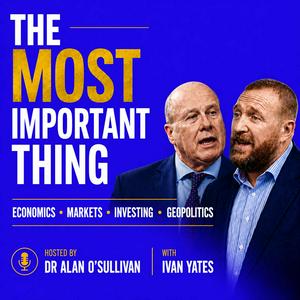
The world is full of noise, distraction and now dis-information. How do we extract the truth and become better informed? Join broadcaster Ivan Yates and finance expert Dr Alan O’ Sullivan as they meet the best and brightest minds in finance, investments, economics, and geopolitics. The Most Important Thing reveals what really matters.
Podcast websiteListen to The MOST Important Thing, Aspire with Emma Grede and many other podcasts from around the world with the radio.net app
Get the free radio.net app
- Stations and podcasts to bookmark
- Stream via Wi-Fi or Bluetooth
- Supports Carplay & Android Auto
- Many other app features
Get the free radio.net app
- Stations and podcasts to bookmark
- Stream via Wi-Fi or Bluetooth
- Supports Carplay & Android Auto
- Many other app features

The MOST Important Thing
Scan code,
download the app,
start listening.
download the app,
start listening.
The MOST Important Thing: Podcasts in Family
 Ireland