

Listen to this podcast in the app for free: Download for free in the App Store
radio.net
Sleep timer
Save favourites
50 episodes
E52 | The Murder of Elly Warren (AUS)
17/08/2026 | 41 mins.Elly Warren was 20, from Mordialloc in Melbourne, six weeks into a marine conservation placement and days from flying home to study marine biology. On the night of 8 November 2016 she was last seen outside a bar in Tofo, about half past eleven. At five the next morning a fisherman found her beside a public toilet block less than forty metres away, face down, her clothing disturbed, her airways packed with sand. Three autopsies in three countries reached three different conclusions. Her clothes were incinerated without being tested. Nearly ten years on, nobody has been charged, and the sand has never been compared.
IF YOU KNOW SOMETHING
No reward has ever been offered in this case. If you were in Tofo on the night of 8 November 2016, worked there, or were told something afterwards, the family are still asking.
Elly's father maintains the case archive and a contact page: ellywarren.net
In Australia, information can be passed anonymously to Crime Stoppers — 1800 333 000 — or through the AFP's online reporting form at afp.gov.au
The questions still open: whether the golden beach sand in Elly's airways came from somewhere other than the dark grey ground she was found on; whether she died at that spot or was moved there; and who was near the market and the bar between 11.30pm and 5am.
A NOTE ON SOURCING
Nobody has ever been charged over Elly Warren's death, and no person is named as a suspect in this episode. No private individual is named at all.
On 15 December 2023 the State Coroner of Victoria, Judge John Cain, found Elly died from aspiration of sand into her lungs. He could not establish how it got there, could not determine whether she died where she was found, and could not establish whether she was sexually assaulted, though he accepted it was possible. He made NO finding of homicide — he found it possible that a person or persons unknown caused or contributed to her death. Mozambique refused to provide its evidence brief to the court.
The opinions of retired homicide detective Charlie Bezzina, and the beliefs of Elly's father, are given as opinion and belief. They are not findings.
Material concerning the crime-scene photographs, the position of Elly's body and the state of her shirt comes from documents obtained by Paul Warren. It is untested and no court has ruled on it.
Much of the detail of Elly's last evening rests on the reporting of a single outlet. The coronial findings are reported here from news coverage; the finding document itself is not published online.
SOURCES
marie claire Australia — "Mozambique Murder: What Really Happened To 20 Year Old Aussie, Elly Warren?" The most detailed reporting on this case anywhere.
The New Daily (AAP), 15 December 2023 — the coronial findings.
The Canberra Times (AAP) — inquest evidence of David Cafarella, AFP Commander Andrew Smith and honorary consul Blake Gray.
Club of Mozambique — Mozambican police homicide classification, August 2023.
Now to Love, Sarah Marinos — interview with Paul Warren.
ellywarren.net — Paul Warren's case archive: the three autopsies, the 2019 radiological review, and the Elly Warren Protocol.
"Hunting Elly's Killer: A father's relentless pursuit of justice" by Paul Warren, Simon & Schuster Australia, 2026.
SUPPORT
This episode deals with the violent death of a young woman and with a suspected sexual assault.
Australia — 1800RESPECT: 1800 737 732. Lifeline: 13 11 14. Beyond Blue: 1300 22 4636.
New Zealand — Safe to Talk: 0800 044 334. Need to talk? Free call or text 1737.
Narrated by Ryan Wolf
www.brevityplus.com
While some dramatic license is taken during the retelling of these stories, but you can be sure that these true crime stories are all based 100% on real events and facts.
If you would like to suggest a case, you can message us via our website at www.brevityplus.com
Subscribers get ad free listening to The Veil and all of our podcasts. Please consider subscribing to support our work.
This podcast is researched, and written by the Brevity Studios team using AI tools, and is narrated in its entirety by - Ryan Wolf.
Hosted on Acast. See acast.com/privacy for more information.E51 | The Whiskey Au Go Go Murders (AUS)
16/08/2026 | 33 mins.At 2.08am on 8 March 1973, two drums of petrol were lit in the foyer beneath the Whiskey Au Go Go nightclub. Fifteen people died upstairs of carbon monoxide poisoning, in a first-floor room with one obstructed exit. Every one of them was dead before the fire brigade arrived. And months earlier, a career criminal named John Andrew Stuart had told a journalist — who printed it, and who personally warned the Police Commissioner and the Police Minister — that an empty club would be firebombed first, and then the Whiskey Au Go Go would be burned while it was full of people. On 25 February an empty club burned. Eleven days later, so did the Whiskey.
A NOTE ON SOURCING
James Finch and John Stuart were convicted in October 1973 of one murder — that of Jennifer Denise Davie, 17. The other fourteen charges were never proceeded with. Stuart died in Boggo Road Gaol in January 1979. Finch was released in 1988 and deported to England, where he confessed to a British newspaper and retracted within a day. He died of Covid in London, and the reopened inquest was told of his death on the opening day of its second tranche.
Police fabricated the evidence used to arrest Stuart. That is not in dispute. Finch was convicted largely on a typewritten record of a police interview that he never signed, in Queensland, in the years before the Fitzgerald Inquiry examined that police force.
A coronial inquest was reopened in 2017 and sat from June 2021 into 2022 — 30 days, more than 65 witnesses, over 2,000 exhibits — hearing credible evidence that Finch and Stuart did not act alone. As at the time of recording, the coroner's findings had not been delivered.
At a 2017 Supreme Court sentencing for the murders of Barbara McCulkin and her daughters, Vincent O'Dempsey told the court he had nothing to do with the Whiskey firebombing, and Justice Peter Applegarth said there was available evidence to the contrary. That is reported here as what was said in open court. It is not a finding about the fire. Mr O'Dempsey has never been charged over the Whiskey Au Go Go and denies any involvement in it. No other person is named in this episode in connection with the fire.
Two motives have been argued for fifty years — an extortion campaign, which is what the 1973 jury accepted, and an insurance fraud that went wrong. Neither has been established.
SOURCES
Geoff Plunkett, The Whiskey Au Go Go Massacre: Murder, Arson and the Crime of the Century (Big Sky Publishing, 2018) — written with access to the original police files
Matt Condon, 'What really happened at the Whiskey Au Go Go?', Courier-Mail, 4 March 2023
'Secrets of Whiskey may never come out', Courier-Mail, 8 March 2023
Both archived at whiskeyfire.info
Contemporaneous reporting: The Age, 9 and 13 March 1973; 7 January 1974; 2 January 1979; 6 June and 7 July 1984. The Sydney Morning Herald, 14 October 1966; 9 May 1974; 10 February 1984; 24 November 1988.
Australian Institute for Disaster Resilience, Whiskey Au Go-Go nightclub bombing 1973
Monument Australia — Whiskey Au Go Go Fire Victims
SUPPORT
This episode deals with mass killing, self-harm and death in custody.
Australia — Lifeline: 13 11 14. Beyond Blue: 1300 22 4636.
New Zealand — Need to talk? Free call or text 1737.
www.brevityplus.com
While some dramatic license is taken during the retelling of these stories, but you can be sure that these true crime stories are all based 100% on real events and facts.
If you would like to suggest a case, you can message us via our website at www.brevityplus.com
Subscribers get ad free listening to The Veil and all of our podcasts. Please consider subscribing to support our work.
This podcast is researched, and written by the Brevity Studios team using AI tools, and is narrated in its entirety by - Ryan Wolf.
Hosted on Acast. See acast.com/privacy for more information.E49 | How does it Feel to Hug a Murderer? (NZ)
10/08/2026 | 39 mins.In July 2011 Bruce Mouat came home drunk from a work function at 1am. Workmates walked him to his own front door. Minutes later he went backwards down the concrete steps outside it. He was 48, worked at the local dairy factory, and led the Taranaki Alpine and Cliff Rescue team. He died in Wellington Hospital eleven days later. Police considered homicide and ruled it out. A coroner found no foul play. At the tangi, his sister told police, his wife had hugged her and asked how it felt to hug a murderer — and the finding was accidental death regardless. It took five more years, and her own friends going to police about what she had been telling them, before Susan Mouat admitted she had pushed him. No new evidence was ever found.
IN MEMORY
Bruce Mouat led the Taranaki Alpine and Cliff Rescue team, volunteers who turn out for people in trouble on a mountain that has killed more than eighty people since the 1890s. If this episode stays with you, the volunteer search and rescue teams in your region are worth a thought.
A NOTE ON SOURCING
Susan Mouat pleaded guilty to manslaughter and was convicted. She was never charged with murder, and the Crown accepted she did not intend to kill her husband. All proceedings, including her sentence appeal, concluded in December 2017.
Because she pleaded guilty, there was no trial. Her account that she pushed him in self-defence has never been tested by cross-examination, and no court has made findings of fact about what happened at that door. Between 2011 and 2016 she gave police three statements denying involvement before admitting it. Only the final version has ever been accepted, and it was accepted unchallenged. In that account she alleges Bruce was behaving abusively that night. That allegation has never been tested, he cannot answer it, and his family have never accepted it.
Her confession is quoted from a transcript released to the Weekend Herald and reported by Kelly Dennett. The remark at the tangi is a witness's recollection recorded in a coronial finding, not a recording. Susan Mouat told the coroner she could not remember saying it, and that if she did, it was black humour.
Much of the direct quotation in this episode comes from journalists reporting from court, some of it from a single outlet. Bruce and Susan Mouat's daughter is named in a public judgment; she is not named here, and will not be.
No detailed post-mortem or scene evidence in this case has ever been made public.
SOURCES
Exclusive: What Susan Mouat told police about husband's death / Son of Bruce Mouat breaks his silence — NZ Herald and Herald on Sunday, Kelly Dennett, 2017
Couple had rocky past before fatal fall — RNZ, 13 October 2017
rnz.co.nz/news/national/341480
Wife's guilty plea six years after death — Taranaki Daily News, 5 September 2017, reporting by David Burroughs
pressreader.com/new-zealand/taranaki-daily-news/20170905/281479276561336
Fall death ruled accidental — despite wife's quip — NZ Herald, February 2012
Home detention for Susan Mouat / Appeal denied — NZ Herald, 2017
Son of Taranaki manslaughter victim awarded thousands by court — Stuff, 2018
Estate: Kawana-Mouat v Mouat, High Court, 17 July 2018 — summarised at nzbloglex.blogspot.com
Sentencing Act 2002, s 15A (home detention) — legislation.govt.nz
SUPPORT
This episode deals with family violence, alcohol dependence and a death in the home.
New Zealand — Family violence: 0800 456 450. Women's Refuge: 0800 REFUGE. Alcohol Drug Helpline: 0800 787 797. Need to talk? Free call or text 1737.
Australia — 1800RESPECT: 1800 737 732. Lifeline: 13 11 14.
While some dramatic license is taken during the retelling of these stories, but you can be sure that these true crime stories are all based 100% on real events and facts.
If you would like to suggest a case, you can message us via our website at www.brevityplus.com
Subscribers get ad free listening to The Veil and all of our podcasts. Please consider subscribing to support our work.
This podcast is researched, and written by the Brevity Studios team using AI tools, and is narrated in its entirety by - Ryan Wolf.
Hosted on Acast. See acast.com/privacy for more information.E48 | The Luna Park Ghost Train Fire (AUS)
09/08/2026 | 49 mins.On a quiet winter Saturday in 1979, three separate passengers rode the Ghost Train at Sydney's Luna Park, saw a small fire burning inside an imitation fireplace, and thought it was part of the show. Minutes later the ride was an inferno. Seven people died: John Godson and his two young sons, and four Waverley College schoolboys. A fifth boy was lifted out of his carriage seconds before it went in. The coroner could not say how the fire started. Forty-seven years on, a police report sits suppressed, a million-dollar reward stands unclaimed, and the State Coroner has still not decided whether to ask the question again.
A $1,000,000 reward remains on offer from the NSW Government and NSW Police for information about the Ghost Train fire. It is unusual, and worth understanding: it does not require the charge or conviction of any person. It is offered for information alone.
Strike Force Sedgeman, run by the Homicide Squad's Unsolved Homicide Team, has reviewed the case. Investigators have asked for anything about that night, including:
* the group of five men in distinctive motorcycle clothing seen near the Ghost Train shortly before the fire, who left the park quickly as it took hold and were never traced
* the smell of kerosene reported around the ride by several people
* anything from anyone who gave a statement to police in 1979 and was never called to the inquest
* anything about the conduct of the original police investigation
Crime Stoppers: 1800 333 000\
[nsw.crimestoppers.com.au](https://nsw.crimestoppers.com.au)\
Information is treated in strict confidence. Police ask that you do not report information via their social media pages.
**A NOTE ON SOURCING**
Nobody has ever been charged over this fire. Abe Saffron, Detective Inspector Douglas Knight, Jack Rooklyn and Neville Wran are all deceased and none was ever charged in connection with it. No court has made any finding against any of them in relation to the fire.
The allegation that Saffron ordered the fire came from an anonymous source in the ABC's 2021 series and was assessed by independent reviewers as essentially hearsay. The 1981 accusations that Knight took bribes were never tested or proved. Separate and on the public record: in 1974 Justice Athol Moffitt condemned Knight for dishonesty in evidence to his royal commission.
On Neville Wran we have followed the independent review commissioned by the ABC and conducted by Rodney Tiffen and Chris Masters, which found no evidence he interfered in the Luna Park lease decision and found the series' suggestion of a direct link between him and Saffron misleading. The same reviewers found the fire was, on the balance of probabilities, arson, and that the police investigation was inadequate and corrupted.
The investigation remains open.
**SOURCES**
Coroner Kevin Anderson, Inquiry into the fire and deaths at Luna Park, findings 3 September 1979 — [coroners.nsw.gov.au](https://coroners.nsw.gov.au)\
ABC Editorial Review 25: Exposed: The Ghost Train Fire, Rodney Tiffen and Chris Masters, August 2021\
ABC News, "Accident or arson?" — Meldrum-Hanna, Begley, Karagic, Balendra, 2021\
NSW Police Force, $1m reward — [police.nsw.gov.au](https://police.nsw.gov.au)\
AAP, Miklos Bolza, 10 September 2024\
Dictionary of Sydney; Australasian Leisure Management; The Conversation
**SUPPORT**
This episode concerns the deaths of children and the grief of the families left behind. If it lands heavily: Australia — Lifeline 13 11 14, Beyond Blue 1300 22 4636. New Zealand — call or text 1737.
While some dramatic license is taken during the retelling of these stories, but you can be sure that these true crime stories are all based 100% on real events and facts.
If you would like to suggest a case, you can message us via our website at www.brevityplus.com
Subscribers get ad free listening to The Veil and all of our podcasts. Please consider subscribing to support our work.
This podcast is researched, and written by the Brevity Studios team using AI tools, and is narrated in its entirety by - Ryan Wolf.
Hosted on Acast. See acast.com/privacy for more information.E45 | The Gatton Murders (AUS)
03/08/2026 | 43 mins.There was no Australia yet. Six British colonies, six sets of laws, and a farming town of fewer than five hundred people west of Brisbane. On Boxing Day 1898, Michael Murphy and his sisters Norah and Ellen drove ten kilometres into Gatton for a dance that had been cancelled. They turned for home and never arrived. The next morning their brother-in-law followed the tracks of his own sulky into a paddock and found all three dead, arranged in a triangle with a shot horse, their feet pointing west. Within hours, forty townspeople had walked across the only evidence there would ever be. No one was ever charged.
A NOTE ON SOURCING
Every person named in this episode died more than a century ago. No one was ever charged with the murders of Michael, Norah and Ellen Murphy. No coroner or court has ever made a finding as to who was responsible, and the case remains formally unsolved.
Thomas Day, Richard Burgess and William McNeill are named because each was publicly investigated at the time and named in the 1899 Royal Commission material and the Queensland Police Museum's own account. None was ever charged. Nothing here should be taken as a finding against any of them.
A man was charged in relation to the death of Alfred Stephen Hill at Oxley in December 1898. That indictment was not proceeded with, and that killing is also unsolved. He is not named here, and some widely-circulated sources are wrong to state the matter as settled.
The two sisters were sexually assaulted before they were killed. That is stated plainly in the episode and not described in detail.
Where testimony reaches us through a stenographer, then a book, then a retelling, it is described rather than quoted, and the episode says so on air. Direct quotation is confined to the Royal Commission's published findings and to Frederic Urquhart's own published verse. Single-source material — the calibre of the recovered bullets, the reported cry of "Father!", and the conclusion that more than one attacker was involved — is attributed as such.
SOURCES
Queensland Police Museum, "The Gatton Murders of 1898" — police.qld.gov.au/museum
1899 Royal Commission into the Queensland Police Force — testimony, post-mortem evidence and recommendations (archived copies linked at brevityplus.com)
The Telegraph (Brisbane), "Gatton Tragedy", 4 January 1899 — the £1,000 reward — nla.gov.au/nla.news-article173352686
Toowoomba Chronicle, "Police Inquiry", 5 December 1899 — nla.gov.au/nla.news-article217713782
The West Australian, "Suicide in Sydney — The Deceased and the Gatton Tragedy", 27 Oct 1900, and "The Oxley Murder — The Inquest", 18 Feb 1899 — both via Trove
Queensland State Archives — "Police Detectives and trackers in Blackfellow Creek, Gatton, c 1899"
Australian Dictionary of Biography — W. Ross Johnston on Frederic Charles Urquhart
Queensland Places (University of Queensland) — "Gatton"
Stephanie Bennett, The Gatton Murders (Pan Macmillan, 2004) and The Killer with 300 Names (2013)
Raymond Evans, A History of Queensland (Cambridge, 2007)
With thanks to the Queensland Police Museum and to the National Library of Australia's Trove — without Trove, the 1899 press record would be out of reach to anyone outside a reading room.
SUPPORT
This episode deals with sexual violence and, in its closing section, with suicide. If any of it lands close to home: Australia — Lifeline 13 11 14, Beyond Blue 1300 22 4636, 1800RESPECT 1800 737 732. New Zealand — 1737, Safe to Talk 0800 044 334.
Written and hosted by Ryan Wolf. Researched and produced with AI assistance — I use it to help me find and check the record, and I go through everything before it reaches you.
www.brevityplus.com
While some dramatic license is taken during the retelling of these stories, but you can be sure that these true crime stories are all based 100% on real events and facts.
If you would like to suggest a case, you can message us via our website at www.brevityplus.com
Subscribers get ad free listening to The Veil and all of our podcasts. Please consider subscribing to support our work.
This podcast is researched, and written by the Brevity Studios team using AI tools, and is narrated in its entirety by - Ryan Wolf.
Hosted on Acast. See acast.com/privacy for more information.
More Documentary podcasts
 CriminalDocumentary, Society & Culture, True Crime
 The Diamond King | Telegraph InvestigatesDocumentary, News, Politics, Society & Culture
 The Mandelson Files | Tortoise InvestigatesDocumentary, Society & Culture, True Crime
 Heretics | Andrew GoldDocumentary, Society & Culture
 World of SecretsDocumentary, Society & Culture
 The Missing CryptoqueenDocumentary, Society & Culture, True Crime
 Off Duty | The Guardian InvestigatesDocumentary, News, Society & Culture
 Sweet BobbyDocumentary, Society & Culture, True Crime
 AdriftDocumentary, History, Society & Culture
 Lucky BoyDocumentary, Society & Culture, True Crime
Trending Documentary podcasts
About The Veil
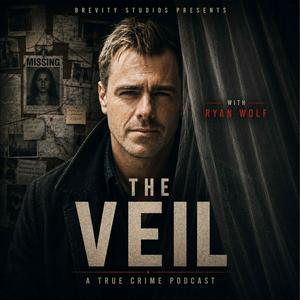
The Veil is a chilling true crime podcast that pulls listeners deep into the world’s darkest and most haunting cases. Hosted by Ryan Wolf, each episode is crafted like an immersive thriller - a story told not just through facts, but through atmosphere, tension, and detail that makes you feel as though you’re standing inside the crime scene itself.These are not urban legends or ghost stories; every case is real, every victim and every clue drawn from documented fact.From unsolved murders to bizarre disappearances, infamous trials to cold cases that still whisper through history, The Veil strips back the layers of time and rumor to confront the unsettling truths hidden beneath.With an eye for detail and a voice that guides you through the shadows, Ryan brings both journalistic rigor and cinematic storytelling to each 30-minute episode. What emerges is an experience that is at once gripping and unnerving, reminding us that the scariest stories are not fiction at all.Pull back The Veil - but beware. Because sometimes, when we lift it, we don’t like what we find. Hosted on Acast. See acast.com/privacy for more information.
Podcast websiteListen to The Veil, Criminal and many other podcasts from around the world with the radio.net app
Get the free radio.net app
- Stations and podcasts to bookmark
- Stream via Wi-Fi or Bluetooth
- Supports Carplay & Android Auto
- Many other app features
Get the free radio.net app
- Stations and podcasts to bookmark
- Stream via Wi-Fi or Bluetooth
- Supports Carplay & Android Auto
- Many other app features

The Veil
Scan code,
download the app,
start listening.
download the app,
start listening.
The Veil: Podcasts in Family
 Ireland