
Listen to this podcast in the app for free: Download for free in the App Store
radio.net
Sleep timer
Save favourites
977 episodes
Flatliners II: TALES FROM THE DARK SIDE
21/10/2026 | 1hLinks For The Occult Rejects
https://linktr.ee/theoccultrejects
Occult Research Institute
https://www.occultresearchinstitute.org/
Substack
https://substack.com/@theoccultrejects?r=7auau0&utm_campaign=profile&utm_medium=profile-page
Cash App
https://cash.app/$theoccultrejects
Venmo
@TheOccultRejects
Patreon
https://www.patreon.com/TheOccultRejects
Also want to remind people about the website, if you're into reading we have tons of information by multiple contributors, and we got t-shirts up on the site if you're interested. Fun fact, the art is all based on the eyeball.Flatliners: Into The Undiscovered Country
19/10/2026 | 1h 38 mins.Links For The Occult Rejects
https://linktr.ee/theoccultrejects
Occult Research Institute
https://www.occultresearchinstitute.org/
Substack
https://substack.com/@theoccultrejects?r=7auau0&utm_campaign=profile&utm_medium=profile-page
Cash App
https://cash.app/$theoccultrejects
Venmo
@TheOccultRejects
Patreon
https://www.patreon.com/TheOccultRejects
BIBLIOGRAPHY
CARDIAC ARREST, RESUSCITATION, AND CONSCIOUSNESS
Dreier, Jens P., Sebastian Major, Brandon Foreman, et al. “Terminal Spreading Depolarization and Electrical Silence in Death of Human Cerebral Cortex.” Annals of Neurology 83, no. 2 (2018): 295–310. DOI: 10.1002/ana.25147.
Parnia, Sam, Ken Spearpoint, Gabriele de Vos, et al. “AWARE—AWAreness during REsuscitation—A Prospective Study.” Resuscitation 85, no. 12 (2014): 1799–1805. DOI: 10.1016/j.resuscitation.2014.09.004.
Parnia, Sam, Tara Keshavarz Shirazi, Jignesh Patel, et al. “AWAreness during REsuscitation—II: A Multi-Center Study of Consciousness and Awareness in Cardiac Arrest.” Resuscitation 191 (2023): 109903. DOI: 10.1016/j.resuscitation.2023.109903.
West, Rebecca L., Quentin Otto, Ian R. Drennan, Sarah Rudd, Bernd W. Böttiger, Sam Parnia, and Jasmeet Soar. “CPR-Related Cognitive Activity, Consciousness, Awareness and Recall, and Its Management: A Scoping Review.” Resuscitation Plus 10 (2022): 100241. DOI: 10.1016/j.resplu.2022.100241.
van Lommel, Pim, Ruud van Wees, Vincent Meyers, and Ingrid Elfferich. “Near-Death Experience in Survivors of Cardiac Arrest: A Prospective Study in the Netherlands.” The Lancet 358, no. 9298 (2001): 2039–2045. DOI: 10.1016/S0140-6736(01)07100-8.
Greyson, Bruce. “The Near-Death Experience Scale: Construction, Reliability, and Validity.” Journal of Nervous and Mental Disease 171, no. 6 (1983): 369–375. DOI: 10.1097/00005053-198306000-00007.
THE DYING BRAIN
Vicente, Raul, Michael Rizzuto, Can Sarica, et al. “Enhanced Interplay of Neuronal Coherence and Coupling in the Dying Human Brain.” Frontiers in Aging Neuroscience 14 (2022): 813531. DOI: 10.3389/fnagi.2022.813531.
Greyson, Bruce, Pim van Lommel, and Peter Fenwick. “Commentary: Enhanced Interplay of Neuronal Coherence and Coupling in the Dying Human Brain.” Frontiers in Aging Neuroscience 14 (2022): 899491. DOI: 10.3389/fnagi.2022.899491.
Xu, Gang, Temenuzhka Mihaylova, Duan Li, et al. “Surge of Neurophysiological Coupling and Connectivity of Gamma Oscillations in the Dying Human Brain.” Proceedings of the National Academy of Sciences 120, no. 19 (2023): e2216268120. DOI: 10.1073/pnas.2216268120.
Martial, Charlotte, Pauline Fritz, Olivia Gosseries, et al. “A Neuroscientific Model of Near-Death Experiences.” Nature Reviews Neurology 21 (2025): 297–311. DOI: 10.1038/s41582-025-01072-z.
O’Grady, Greg, and Chris Varghese. “Limitations of Neurocentric Models for Near-Death Experiences.” Nature Reviews Neurology 21 (2025): 461. DOI: 10.1038/s41582-025-01117-3.
Parnia, Sam, Jignesh Patel, Erik Kulstad, et al. “Recalled Experiences of Death: Need for Empirical Research without Prejudice.” Nature Reviews Neurology 22 (2026): 196–197. DOI: 10.1038/s41582-026-01186-y.
Fritz, Pauline, Charlotte Martial, Olivia Gosseries, et al. “Reply to ‘Recalled Experiences of Death: Need for Empirical Research without Prejudice.’” Nature Reviews Neurology 22 (2026): 198. DOI: 10.1038/s41582-026-01187-x.
PEOPLE WHO CAME BACK AND APPARENT PERCEPTION
Sepioni, Francesco, Antonio Metastasio, and Manuel Monti. “A Distressing Near-Death Experience with Veridical Perceptions during Coma: Psychiatric and Clinical Reflections from a Rare Case.” Rivista di Psichiatria 61, no. 1 (2026): 33–36. DOI: 10.1708/4641.46507.
Smit, Rudolf H. “Corroboration of the Dentures Anecdote Involving Veridical Perception in a Near-Death Experience.” Journal of Near-Death Studies 27, no. 1 (2008): 47–61.
Sabom, Michael B. Light & Death: One Doctor’s Fascinating Account of Near-Death Experiences. Grand Rapids, MI: Zondervan, 1998. [Primary published source for the Pam Reynolds account.]
Ebbern, Hayden, Sean Mulligan, and Barry L. Beyerstein. “Maria’s Near-Death Experience: Waiting for the Other Shoe to Drop.” Skeptical Inquirer 20, no. 4 (1996): 27–33. [Critical investigation of the Maria’s-shoe case.]
Sharp, Kimberly Clark. “The Other Shoe Drops: Commentary on ‘Does Paranormal Perception Occur in Near-Death Experiences?’” Journal of Near-Death Studies 25, no. 4 (2007): 245–250. [Response concerning the Maria’s-shoe controversy.]
EXPERIMENTALLY INDUCED NDE-LIKE STATES
Lempert, Thomas, Michael Bauer, and Dieter Schmidt. “Syncope and Near-Death Experience.” The Lancet 344 (1994): 829–830. DOI: 10.1016/S0140-6736(94)92389-2.
Martial, Charlotte, Andrea Piarulli, Olivia Gosseries, Héléna Cassol, Didier Ledoux, Vanessa Charland-Verville, and Steven Laureys. “EEG Signature of Near-Death-Like Experiences during Syncope-Induced Periods of Unresponsiveness.” NeuroImage 298 (2024): 120759. DOI: 10.1016/j.neuroimage.2024.120759.
Whinnery, James E., and Angela M. Whinnery. “Acceleration-Induced Loss of Consciousness: A Review of 500 Episodes.” Archives of Neurology 47, no. 7 (1990): 764–776. DOI: 10.1001/archneur.1990.00530070058012.
Whinnery, James E. “Psychophysiologic Correlates of Unconsciousness and Near-Death Experiences.” Journal of Near-Death Studies 15, no. 4 (1997): 231–258. DOI: 10.17514/JNDS-1997-15-4-p231-258.
Blanke, Olaf, Stéphanie Ortigue, Theodor Landis, and Margitta Seeck. “Stimulating Illusory Own-Body Perceptions.” Nature 419 (2002): 269–270. DOI: 10.1038/419269a.
Kondziella, Daniel, Jens P. Dreier, and Markus Harboe Olsen. “Prevalence of Near-Death Experiences in People with and without REM Sleep Intrusion.” PeerJ 7 (2019): e7585. DOI: 10.7717/peerj.7585.
KETAMINE, DMT, AND NEUROCHEMICAL MODELS
Martial, Charlotte, Héléna Cassol, Vanessa Charland-Verville, et al. “Neurochemical Models of Near-Death Experiences: A Large-Scale Study Based on the Semantic Similarity of Written Reports.” Consciousness and Cognition 69 (2019): 52–69. DOI: 10.1016/j.concog.2019.01.011.
Timmermann, Christopher, Leor Roseman, Luke Williams, et al. “DMT Models the Near-Death Experience.” Frontiers in Psychology 9 (2018): 1424. DOI: 10.3389/fpsyg.2018.01424.
LIFE REVIEWS, MEMORY, AND PHENOMENOLOGY
Katz, Judith, Noam Saadon-Grosman, and Shahar Arzy. “The Life Review Experience: Qualitative and Quantitative Characteristics.” Consciousness and Cognition 48 (2017): 76–86. DOI: 10.1016/j.concog.2016.10.011.
Thonnard, Marie, Vanessa Charland-Verville, Serge Brédart, et al. “Characteristics of Near-Death Experiences Memories as Compared to Real and Imagined Events Memories.” PLOS ONE 8, no. 3 (2013): e57620. DOI: 10.1371/journal.pone.0057620.
Cassol, Héléna, Charlotte Martial, Johan Annen, et al. “A Systematic Analysis of Distressing Near-Death Experience Accounts.” Memory 27, no. 8 (2019): 1122–1129. DOI: 10.1080/09658211.2019.1626438.
Bush, Nancy Evans, and Bruce Greyson. “Distressing Near-Death Experiences: The Basics.” Missouri Medicine 111, no. 6 (2014): 486–490.
Greyson, Bruce, and Nancy Evans Bush. “Distressing Near-Death Experiences.” Psychiatry 55, no. 1 (1992): 95–110.
Greyson, Bruce. “Seeing Dead People Not Known to Have Died: ‘Peak in Darien’ Experiences.” Anthropology and Humanism 35, no. 2 (2010): 159–171. DOI: 10.1111/j.1548-1409.2010.01064.x.
HYPOTHERMIA, CIRCULATORY ARREST, AND “SUSPENDED ANIMATION”
Stecker, Mark M., Andrew T. Cheung, Alberto Pochettino, et al. “Deep Hypothermic Circulatory Arrest: I. Effects of Cooling on Electroencephalogram and Evoked Potentials.” Annals of Thoracic Surgery 71, no. 1 (2001): 14–21. DOI: 10.1016/S0003-4975(00)01592-7.
Stecker, Mark M., Andrew T. Cheung, Alberto Pochettino, et al. “Deep Hypothermic Circulatory Arrest: II. Changes in Electroencephalogram and Evoked Potentials during Rewarming.” Annals of Thoracic Surgery 71, no. 1 (2001): 22–28.
Drabek, Tomas, et al. “Induction of Profound Hypothermia for Emergency Preservation and Resuscitation Allows Intact Survival after Cardiac Arrest Resulting from Prolonged Lethal Hemorrhage and Trauma in Dogs.” Circulation (2006). PMID: 16618818.
Wu, Xianren, Tomas Drabek, Samuel A. Tisherman, et al. “Emergency Preservation and Resuscitation with Profound Hypothermia, Oxygen, and Glucose Allows Reliable Neurological Recovery after 3 h of Cardiac Arrest from Rapid Exsanguination in Dogs.” Journal of Cerebral Blood Flow & Metabolism 28, no. 2 (2008): 302–311. DOI: 10.1038/sj.jcbfm.9600524.
Tisherman, Samuel A., et al. “Emergency Preservation and Resuscitation for Cardiac Arrest from Trauma.” International Journal of Surgery 33 (2016): 209–212. PMID: 26497780.
ClinicalTrials.gov. “Emergency Preservation and Resuscitation for Cardiac Arrest from Trauma (EPR-CAT).” ClinicalTrials.gov Identifier: NCT01042015. Trial terminated in 2025; no study results posted.
HISTORICAL AND MYTHOLOGICAL FRAME
Shakespeare, William. Hamlet, Act III, Scene I. “The undiscover’d country, from whose bourn no traveller returns.”
Plato. Republic, Book X, 614b–621d. The Myth of Er.
Dalley, Stephanie, trans. Myths from Mesopotamia: Creation, the Flood, Gilgamesh, and Others. Revised ed. Oxford: Oxford University Press, 2000. [For Mesopotamian descent traditions, including Inanna/Ishtar.]
Assmann, Jan. Death and Salvation in Ancient Egypt. Translated by David Lorton. Ithaca, NY: Cornell University Press, 2005. [For Egyptian conceptions of death, Osiris, and postmortem transformation.]
Also want to remind people about the website, if you're into reading we have tons of information by multiple contributors, and we got t-shirts up on the site if you're interested. Fun fact, the art is all based on the eyeball.Christianity Created The Western Occult Part Two: When Christian Mysticism Became Magic
18/10/2026 | 52 mins.Links For The Occult Rejects
https://linktr.ee/theoccultrejects
Occult Research Institute
https://www.occultresearchinstitute.org/
Substack
https://substack.com/@theoccultrejects?r=7auau0&utm_campaign=profile&utm_medium=profile-page
Cash App
https://cash.app/$theoccultrejects
Venmo
@TheOccultRejects
Patreon
https://www.patreon.com/TheOccultRejects
PART TWO BIBLIOGRAPHY
Christianity Created the Western Occult
Primary Sources
Paracelsus. Paracelsus: Essential Theoretical Writings. Edited and translated by Andrew Weeks. Leiden/Boston: Brill, 2008. This is the edition I’d use for Paracelsus rather than modern occult compilations; it gives the German and English texts with extensive scholarly commentary. Wellcome Collection
Dee, John. John Dee’s Five Books of Mystery: Original Sourcebook of Enochian Magic. Edited and translated by Joseph H. Peterson. Weiser Books, 2003. A modern edition of Dee’s Mysteriorum Libri Quinque and one of the most useful primary-source collections for the early angelic sessions. Red Wheel/Weiser
Böhme, Jakob. Aurora: The Day-Spring, or Dawning of the Day in the Orient. Originally written 1612. Any scholarly or reliable critical edition can be used for the primary material concerning Böhme’s early cosmology.
Böhme, Jakob. The Way to Christ. Useful for the explicitly Christian and regenerative side of Böhme rather than treating him merely as an abstract occult cosmologist.
Swedenborg, Emanuel. Heaven and Hell. Originally published in Latin in 1758. I’d use the New Century Edition, translated by George F. Dole, because it includes scholarly historical material and annotations. Swedenborg Foundation
Saint-Martin, Louis-Claude de. Theosophic Correspondence between Louis Claude de Saint-Martin and Kirchberger, Baron de Liebistorf. Translated by Edward Burton Penny. Especially useful for documenting Saint-Martin’s engagement with Böhme and his increasingly interior understanding of Christian theosophy. Theosophy Society
Eckartshausen, Karl von. The Cloud Upon the Sanctuary. The A. E. Waite translation is historically useful because Waite’s transmission of the text is itself part of its later occult reception.
Lévi, Éliphas. Transcendental Magic: Its Doctrine and Ritual. Translated by A. E. Waite. Important as a primary document for Lévi’s synthesis of Kabbalah, ceremonial magic, Christian symbolism, priesthood, polarity, and magical theory.
Lévi, Éliphas. The History of Magic. Again, use this as a primary source for what Lévi believed, not as reliable modern historiography.
Waite, Arthur Edward. The Hidden Church of the Holy Graal. Essential for understanding the specifically Christian-mystical dimension of Waite’s esotericism.
Waite, Arthur Edward. The Secret Tradition in Freemasonry. Useful for Waite’s conception of mystical initiation and the “secret tradition.”
Fortune, Dion. The Mystical Qabalah. First published 1935. Essential primary material for Fortune’s attempt to interpret Qabalah through the twentieth-century Western Mystery Tradition.
Medieval Grimoires, Ritual Magic & Angelic Practice
This is the group I would rely upon heavily for the material we added concerning Christian prayer, exorcism, angels, grimoires, consecration, and the unstable boundary between religion and magic.
Kieckhefer, Richard. Forbidden Rites: A Necromancer’s Manual of the Fifteenth Century. Pennsylvania State University Press, 1997/1998. Absolutely essential. Kieckhefer edits and analyzes a real medieval magical manuscript containing prayers, conjurations, astral operations, spirit catalogues, and ceremonies for consecrating magical books. PSU Press
Fanger, Claire, ed. Invoking Angels: Theurgic Ideas and Practices, Thirteenth to Sixteenth Centuries. Pennsylvania State University Press, 2012. One of the strongest sources for our thesis because it specifically examines medieval and Renaissance attempts to obtain knowledge or supernatural assistance through angels. PSU Press
Fanger, Claire. Rewriting Magic: An Exegesis of the Visionary Autobiography of a Fourteenth-Century French Monk. Pennsylvania State University Press, 2015. Especially important for John of Morigny, monastic visionary practice, and the tension between Christian revelation and forbidden magic.
Page, Sophie. Magic in Medieval Manuscripts. University of Toronto Press/British Library. An accessible but scholarly overview of the manuscript environment in which learned medieval magic circulated.
Klaassen, Frank. The Transformations of Magic: Illicit Learned Magic in the Later Middle Ages and Renaissance. Cambridge University Press, 2013. Extremely useful for understanding how learned magic changed between medieval and Renaissance environments and how practitioners negotiated religious legitimacy.
Kieckhefer, Richard. Magic in the Middle Ages. Cambridge University Press. Still one of the most useful general studies of the distinction between learned magic, folk practices, necromancy, astrology, and Christian religious culture.
Also want to remind people about the website, if you're into reading we have tons of information by multiple contributors, and we got t-shirts up on the site if you're interested. Fun fact, the art is all based on the eyeball.Christianity Created the Western Occult Part 1: The Christian Occult Worldview
17/10/2026 | 51 mins.Links For The Occult Rejects
https://linktr.ee/theoccultrejects
Occult Research Institute
https://www.occultresearchinstitute.org/
Substack
https://substack.com/@theoccultrejects?r=7auau0&utm_campaign=profile&utm_medium=profile-page
Cash App
https://cash.app/$theoccultrejects
Venmo
@TheOccultRejects
Patreon
https://www.patreon.com/TheOccultRejects
Primary Sources
Agrippa, Heinrich Cornelius. Three Books of Occult Philosophy. Trans. James Freake; ed. and annotated by Donald Tyson. Llewellyn, 1993. The work itself dates to Agrippa’s developing project from 1510, with the complete revised three-book edition appearing in 1533. Google Books
Augustine of Hippo. Confessions. Trans. Henry Chadwick. Oxford University Press, 1991. Particularly important for Augustine’s encounter with the “books of the Platonists,” inward ascent, and his Christian appropriation of Platonic metaphysics. WorldCat
Ficino, Marsilio. Three Books on Life. Ed. and trans. Carol V. Kaske and John R. Clark. Medieval & Renaissance Texts & Studies/Renaissance Society of America, 1989. This is one of the most important primary texts for the astrology, medicine, music, planetary influence, and natural-magic portions of the episode. Google Books
Meister Eckhart. The Essential Sermons, Commentaries, Treatises, and Defense. Trans. Edmund Colledge and Bernard McGinn. Paulist Press, 1981. Google Books
Nicholas of Cusa. On Learned Ignorance: A Translation and an Appraisal of De Docta Ignorantia. Trans. Jasper Hopkins. 2nd ed. Arthur J. Banning Press, 1985. WorldCat
Pico della Mirandola, Giovanni. Syncretism in the West: Pico’s 900 Theses (1486): The Evolution of Traditional Religious and Philosophical Systems. Ed. and trans. Stephen A. Farmer. Medieval & Renaissance Texts & Studies, 1998. This should be one of our major Pico sources rather than relying on summaries of the 900 Conclusions. WorldCat
Pseudo-Dionysius the Areopagite. The Complete Works. Trans. Colm Luibheid, with Paul Rorem. Paulist Press, 1987. Includes The Divine Names, The Celestial Hierarchy, The Ecclesiastical Hierarchy, and Mystical Theology. Cambridge University Press
Core Modern Scholarship
Faivre, Antoine. Access to Western Esotericism. State University of New York Press, 1994. Very useful for correspondence, living nature, imagination, mediation, transformation, Christian Kabbalah, Hermeticism, and defining Western esotericism without treating it as one secret continuous religion. JSTOR
Goodrick-Clarke, Nicholas. The Western Esoteric Traditions: A Historical Introduction. Oxford University Press, 2008. An excellent broad academic overview covering Renaissance magic, Cabala, planetary and angel magic, and later Western esoteric developments. OUP Academic
Hanegraaff, Wouter J. Esotericism and the Academy: Rejected Knowledge in Western Culture. Cambridge University Press, 2012. Important for keeping our larger historical thesis rigorous and avoiding the mythology of one uninterrupted underground occult tradition. Cambridge University Press
Hanegraaff, Wouter J. Western Esotericism: A Guide for the Perplexed. Bloomsbury Academic, 2013. Probably the best compact methodological source for explaining what scholars mean by “Western esotericism,” including magic, astrology, alchemy, Rosicrucianism, Christian theosophy, and occultism. Bloomsbury
Magee, Glenn Alexander, ed. The Cambridge Handbook of Western Mysticism and Esotericism. Cambridge University Press, 2016. Especially useful for our argument that mysticism and esotericism overlap historically without being identical categories. Cambridge University Press
Walker, D. P. Spiritual and Demonic Magic: From Ficino to Campanella. Originally 1958; Pennsylvania State University Press edition, 2000. Still a foundational scholarly study of Ficino and Renaissance magic, although we should supplement it with newer scholarship rather than treating a 1958 interpretation as the final word. Penn State University Press
Christian Platonism and Mysticism
McGinn, Bernard. The Foundations of Mysticism. Vol. 1 of The Presence of God: A History of Western Christian Mysticism. Crossroad, 1991.
McGinn, Bernard. The Growth of Mysticism. Vol. 2 of The Presence of God. Crossroad, 1994.
McGinn, Bernard. The Flowering of Mysticism. Vol. 3 of The Presence of God. Crossroad, 1998.
Louth, Andrew. The Origins of the Christian Mystical Tradition: From Plato to Denys. Oxford University Press. Excellent for exactly the transition we are tracing from Platonism into Christian mystical theology.
Rorem, Paul. Pseudo-Dionysius: A Commentary on the Texts and an Introduction to Their Influence. Oxford University Press, 1993.
Turner, Denys. The Darkness of God: Negativity in Christian Mysticism. Cambridge University Press, 1995. Very useful for Dionysius, Eckhart, The Cloud of Unknowing, and apophatic theology.
Pseudo-Dionysius is especially central because current scholarship describes him explicitly as a Christian Neoplatonist who transposed late pagan Neoplatonism, particularly Proclus, into a distinctively Christian context. Stanford Encyclopedia of Philosophy
Ficino, Pico, Christian Kabbalah and Renaissance Magic
Wirszubski, Chaim. Pico della Mirandola’s Encounter with Jewish Mysticism. Harvard University Press, 1989. Essential for Pico and the actual Jewish material behind his Christian Kabbalah.
Farmer, Stephen A. Syncretism in the West. Medieval & Renaissance Texts & Studies, 1998. Useful both as a primary-text edition and a huge scholarly commentary on Pico.
Dan, Joseph, ed. The Christian Kabbalah: Jewish Mystical Books and Their Christian Interpreters. Harvard College Library, 1997.
Copenhaver, Brian P. Studies on Renaissance magic, Ficino, Pico, and the philosophical context of natural magic. Copenhaver is one of the scholars I’d rely on whenever we need to distinguish Ficino’s natural/spiritual magic from sensationalized claims about Renaissance occultism.
Walker, D. P. Spiritual and Demonic Magic. Particularly valuable for Ficino’s spiritus, music, astrology, and the theological problem of distinguishing natural/spiritual operations from demonic magic. Penn State University Press
The Pico material deserves extra source discipline because scholarship is very clear that Christianizing Kabbalah was one of Pico’s central projects, not merely an incidental interest; his 900 Conclusions contained 119 explicitly Kabbalistic theses, and he interpreted Kabbalah as supporting Christology and Trinitarian theology. Stanford Encyclopedia of Philosophy
Agrippa
Lehrich, Christopher I. The Language of Demons and Angels: Cornelius Agrippa’s Occult Philosophy. Brill, 2003. Excellent for ritual, language, signs, sigils, Kabbalah, angels, demons, and Agrippa’s theory of occult communication. De Gruyter Brill
Nauert, Charles G. Agrippa and the Crisis of Renaissance Thought. University of Illinois Press, 1965. Still useful for Agrippa’s intellectual and religious context.
The Stanford Encyclopedia of Philosophy’s revised Agrippa entry is also particularly useful because it emphasizes that Agrippa’s project was a deliberate attempt to restore magic as a “sublime and sacred science,” divided across natural, celestial, and religious/ceremonial magic, while connecting magical practice ultimately to God and spiritual pur
Also want to remind people about the website, if you're into reading we have tons of information by multiple contributors, and we got t-shirts up on the site if you're interested. Fun fact, the art is all based on the eyeball.The Real History of the Magic Circle Part 2: From the Goetic Circle to the Modern Magical Mind
16/10/2026 | 1h 11 mins.Links For The Occult Rejects
https://linktr.ee/theoccultrejects
Occult Research Institute
https://www.occultresearchinstitute.org/
Substack
https://substack.com/@theoccultrejects?r=7auau0&utm_campaign=profile&utm_medium=profile-page
Cash App
https://cash.app/$theoccultrejects
Venmo
@TheOccultRejects
Patreon
https://www.patreon.com/TheOccultRejects
EARLY-MODERN MAGIC AND THE GOETIC TRADITION
Anonymous. Historia von D. Johann Fausten. Frankfurt, 1587.
Harms, Daniel, James R. Clark, and Joseph H. Peterson, eds. The Book of Oberon: A Sourcebook of Elizabethan Magic. Woodbury, MN: Llewellyn, 2015. Based on Folger Shakespeare Library MS V.b.26.
Marlowe, Christopher. Doctor Faustus. Earliest printed A-text, 1604.
Mirčev, Andrej. The Poetics of Performance Diagrams. Cambridge: Cambridge University Press, 2024.
Weyer, Johann. Pseudomonarchia Daemonum. Published as an appendix to later editions of De praestigiis daemonum.
Scot, Reginald. The Discoverie of Witchcraft. London, 1584.
Lemegeton Clavicula Salomonis, or The Lesser Key of Solomon. Seventeenth-century manuscript compilation.
Peterson, Joseph H., ed. The Lesser Key of Solomon: Lemegeton Clavicula Salomonis. Comparative manuscript edition.
ABRAMELIN AND RITUAL SPACE
Franchetto, Andrea. “Temporary and Imaginal Sacred Space in the Textual Transmission of Modern Ritual Magic: The Temple of Abramelin (15th–20th Century).” In Modernity and the Construction of Sacred Space, edited by Aaron French and Katharina Waldner, 77–102. Berlin/Boston: De Gruyter Oldenbourg, 2024.
The Book of Abramelin. Seventeenth-century German and Italian manuscript witnesses to a work generally placed by modern scholarship in an earlier late-medieval/early-modern environment. For the influential English tradition, see S. L. MacGregor Mathers, The Book of the Sacred Magic of Abramelin the Mage.
ÉLIPHAS LÉVI AND THE NINETEENTH-CENTURY OCCULT REVIVAL
Lévi, Éliphas. Dogme et Rituel de la Haute Magie. 2 vols. Paris, 1854–1856.
Lévi, Éliphas. Transcendental Magic: Its Doctrine and Ritual. Translated by Arthur Edward Waite. London: George Redway, 1896.
Otto, Bernd-Christian. “A Catholic ‘Magician’ Historicizes ‘Magic’: Éliphas Lévi’s Histoire de la Magie.” In History and Religion: Narrating a Religious Past, edited by Bernd-Christian Otto, Susanne Rau, and Jörg Rüpke. Berlin/Boston: De Gruyter, 2015.
GOLDEN DAWN AND ALEISTER CROWLEY
Plaisance, Christopher A. “Magic Made Modern? Re-evaluating the Novelty of the Golden Dawn’s Magic.” Correspondences 2, no. 2 (2014): 159–187.
Regardie, Israel. The Golden Dawn: An Account of the Teachings, Rites and Ceremonies of the Order of the Golden Dawn. Vol. 1. Chicago: Aries Press, 1937.
Wheeler, Graham John. “A Microcosm of the Esoteric Revival: The Histories of the Lesser Banishing Ritual of the Pentagram.” Correspondences 8, no. 1 (2020): 5–44.
Crowley, Aleister. Book Four, Part II: Magick. 1912–1913. See especially Chapter II, “The Circle.”
Crowley, Aleister. Magick in Theory and Practice. Paris: Lecram Press, 1929.
Mathers, S. L. MacGregor, trans.; Aleister Crowley, ed. The Book of the Goetia of Solomon the King. 1904.
WICCA AND MODERN WITCHCRAFT
Callow, John. Gerald Gardner and the Creation of Wicca. Cambridge: Cambridge University Press, 2025.
Davies, Owen. Art of the Grimoire: An Illustrated History of Magic Books and Spells. New Haven: Yale University Press, 2023.
RITUAL, COGNITION, AND EXPERIENCE
Franchetto, Andrea. “Imaginal Architectural Devices and the Ritual Space of Medieval Necromancy.” Endeavour 44, no. 4 (2020): 100748.
Hobson, Nicholas M., Daniel Bonk, and Michael Inzlicht. “Rituals Decrease the Neural Response to Performance Failure.” PeerJ 5 (2017): e3363.
Lang, Martin, Jan Krátký, John H. Shaver, Danijela Jerotijević, and Dimitris Xygalatas. “Effects of Anxiety on Spontaneous Ritualized Behavior.” Current Biology 25, no. 14 (2015): 1892–1897.
Wiltermuth, Scott S., and Chip Heath. “Synchrony and Cooperation.” Psychological Science 20, no. 1 (2009): 1–5.
Also want to remind people about the website, if you're into reading we have tons of information by multiple contributors, and we got t-shirts up on the site if you're interested. Fun fact, the art is all based on the eyeball.
More Education podcasts



Trending Education podcasts




About The Occult Rejects
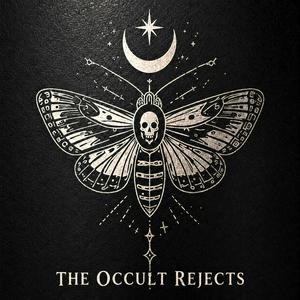
Occultists, Rejects, and Mystics trying to educate others about magick and occultism so others can figure out who they are and the world around them.
Podcast websiteListen to The Occult Rejects, Good Life Project and many other podcasts from around the world with the radio.net app
Get the free radio.net app
- Stations and podcasts to bookmark
- Stream via Wi-Fi or Bluetooth
- Supports Carplay & Android Auto
- Many other app features
Get the free radio.net app
- Stations and podcasts to bookmark
- Stream via Wi-Fi or Bluetooth
- Supports Carplay & Android Auto
- Many other app features

The Occult Rejects
Scan code,
download the app,
start listening.
download the app,
start listening.
The Occult Rejects: Podcasts in Family
 Ireland

