
Listen to this podcast in the app for free: Download for free in the App Store
radio.net
Sleep timer
Save favourites
359 episodes
The Lotus Eaters Episode 12: Reunited in Ithaca [unlocked]
22/10/2026 | 1h 1 mins.As foretold in the prophecies, Tamler and David unite in Ithaca to cover the final chapters (23 & 24) of The Odyssey, in which Odysseus passes Penelope's final test, reunites with Laertes, and Athena and Zeus do a little deus ex machina-ing and prevent the suitors' families from getting revenge.The Lotus Eaters Episode 11: Cleaning House
08/10/2026 | 1h 6 mins.Tamler and David discuss books 20, 21, & 22 of The Odyssey. Beginning with omens and portents and ending with merciless slaughter (with a bow contest in between), we finally see Odysseus' plans for revenge reach fruition.Episode 342: A Boy's Best Friend (Hitchcock's "Psycho")
06/10/2026 | 1h 53 mins.David and Tamler steal some of Laurie Santos' podcast money (she'll never miss it), drive to LA, and pull over in the rain to spend the night in the Bates Motel. That lanky young man in the office seems nice if a bit awkward, not sure about his mother though. Plus, we share a few things that might turn us into psycho killers. Like we always say, a son is a poor substitute for a lover.The Lotus Eaters Episode 10: Like-Minded [unlocked]
01/10/2026 | 1h 3 mins.Tamler and Dave devote a full episode to Book 19 of The Odyssey. In what is one of the most emotionally intense chapters of the story so far, Odysseus continues his Cretan lies, has a long tête-à-tête with Penelope, and finally gets recognized by his former slave Eurycleia.The Lotus Eaters Episode 9: An Ode to Argos [unlocked]
24/09/2026 | 49 mins.Tamler and David discuss The Odyssey books 17 & 18, in which Telemachus and Odysseus, back at home, continue their deception and put everyone to the test. Everyone except for Argos, that is, because Argos was (and will always be) a very good boy.
More Philosophy podcasts
Trending Philosophy podcasts

About Very Bad Wizards
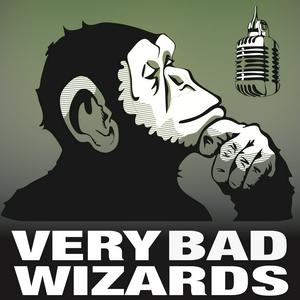
Very Bad Wizards is a podcast featuring a philosopher (Tamler Sommers) and a psychologist (David Pizarro), who share a love for ethics, pop culture, and cognitive science, and who have a marked inability to distinguish sacred from profane. Each podcast includes discussions of moral philosophy, recent work on moral psychology and neuroscience, and the overlap between the two.
Podcast websiteListen to Very Bad Wizards, The Shawn Ryan Show and many other podcasts from around the world with the radio.net app
Get the free radio.net app
- Stations and podcasts to bookmark
- Stream via Wi-Fi or Bluetooth
- Supports Carplay & Android Auto
- Many other app features
Get the free radio.net app
- Stations and podcasts to bookmark
- Stream via Wi-Fi or Bluetooth
- Supports Carplay & Android Auto
- Many other app features

Very Bad Wizards
Scan code,
download the app,
start listening.
download the app,
start listening.
 Ireland
