

Listen to this podcast in the app for free: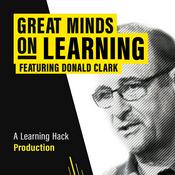 Download for free in the App Store
radio.net
Sleep timer
Save favourites
54 episodes
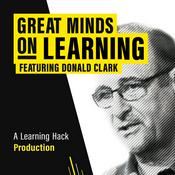
GMoL47 Learning in a Post-Literate World
01/09/2026 | 58 mins.Schools, universities and training departments took shape in the age of mass printing initiated by Guttenberg and others in the Sixteenth Century CE. Jeff Jarvis, In The Gutenberg Parenthesis (2023), argues that this development opened a parenthesis (or bracket) which closed with the rapid spread of internet technologies in or around the year 2000. We are now in a post-text, perhaps post-literate age, which in many respects looks more like what preceded the parenthesis.
The phrase, The Gutenberg Parenthesis was coined by Lars Ole Sauerberg at the University of Southern Denmark and the idea was developed by Thomas Pettitt. It argues that the age of print — roughly 1600 to 2000 — was an interruption in the normal run of human communication.
Great Minds has been on this ground before: two episodes in May 2024 covered the invention of writing, and literacy and orality. This is a sequel, which addresses the impact on learning of low-cost publishing without gatekeepers, social media and AI. If the bracket really has closed, the consequence is not a curriculum change: it's structural.
In this episode:
What you would actually see in a medieval university
Chaucer, Dante and Petrarch: authorship before print
The riot of forms — broadside ballads, pamphlets, corantos, newspapers, the essay, the novel, etc.
The arrival of silent reading
Post-literate or post-print? The reading statistics, and the middle-class moral panic
Why text-based assessment is the wrong test for a world of doing
Is an LLM the most Gutenbergian object ever built? Derrida, tokens and decoders
Links and resources:
Jeff Jarvis — The Gutenberg Parenthesis: The Age of Print and Its Lessons for the Age of the Internet (Bloomsbury Academic, 2023)
Walter Ong — Orality and Literacy; and his doctoral work on Ramus
John Amos Comenius — Orbis Sensualium Pictus (1658)
Michel de Montaigne — Essais (1580) · Miguel de Cervantes — Don Quixote (1605)
George Thomason — the Thomason Tracts, British Library
David Goodhart — Head Hand Heart: The Struggle for Dignity and Status in the 21st Century (Allen Lane, 2020)
Donald Clark — Learning Experience Design, second edition
Donald Clark — AI and Productivity (Kogan Page)
Previously on Great Minds on Learning: the two Scribes episodes, May 2024 — the invention of writing, and literacy and orality
CONNECT WITH LEARNING HACK
LinkedIn: linkedin.com/in/johnhelmer
YouTube: www.youtube.com/@JohnHelmerConsulting
X: @johnhelmer
Threads: @jphelmer
Bluesky: @johnhelmer.bsky.social
Website: learninghackpodcast.comGMoL46 How Creative People Learn
17/08/2026 | 1h 24 mins.Nobody is born into the world already able to design a brochure, cut a dress, light a photoshoot or shred on the guitar. All of it has to be learned. The question this episode asks is how, and whether the answer has anything to teach the rest of us.
In this episode, Donald Clark and John Helmer focus on the people who make things: artists, designers, film crews, painters, musicians. Both of them have history in different parts of this territory. John has been a working musician and songwriter, and worked in advertising and arts PR. Donald sat on the board of Skillset and spent ten years as deputy chair of the Brighton Dome and Festival.
They take us on a journey, from Ruskin's drawing classes to punk's screen-printed sleeves, art schools, the golden section ... and what a skill is worth once the machine has copied the homework.
In this episode:
Introducing Creators and Learning
Four Thinkers: Ruskin to Robinson
Applied Arts and Design
Screen and Audiovisual Arts
Visual Arts and the Art School
Performing Arts and the Grassroots
AI and the Means of Production
Summing Up
Links and resources:
John Ruskin — The Elements of Drawing (1857): https://www.gutenberg.org/files/30325/30325-h/30325-h.htm
Herbert Read — Education Through Art (1943)
Elliot Eisner — The Arts and the Creation of Mind (Yale, 2002)
Ken Robinson — "Do Schools Kill Creativity?" (TED, 2006): https://www.ted.com/talks/sir_ken_robinson_do_schools_kill_creativity
Ken Robinson — All Our Futures: Creativity, Culture and Education (1999)
John Carey — The Intellectuals and the Masses (1992)
Bert Weedon — Play in a Day
Andy Clark — on the predictive brain
Tomorrow's Warriors — grassroots jazz development
New Generation Jazz
Brighton & Hove Music Service
Donald Clark — AI and Productivity (Kogan Page): https://www.koganpage.com/hr-learning-development/ai-and-productivity-9781398623316
CONNECT WITH LEARNING HACK
LinkedIn: linkedin.com/in/johnhelmer
YouTube: www.youtube.com/@JohnHelmerConsulting
X: @johnhelmer
Threads: @jphelmer
Bluesky: @johnhelmer.bsky.social
Website: learninghackpodcast.comGMoL45 Sport and Learning with Donald Clark
03/08/2026 | 1h 10 mins.What education and workplace learning can take from sports coaching.
Modern sports coaching has abandoned the drilling of isolated techniques in favour of practice that is variable, contextual and informed by data. Opening Season 8, John Helmer and Donald Clark ask what education and workplace learning can learn from sport. From constraints-led practice and Moneyball analytics to AI tutors, coaching and performance support.
In this episode:
Practice, Constraints and Variability
Deliberate Practice and Autonomy
Gadgets, AI and Analytics
Scenarios, Simulations and Coaching
Desirable Difficulty and the AI Tutor
Multimodal Learning and Performance Support
Links and resources:
Donald Clark — Learning Experience Design (second edition in preparation)
Donald Clark — AI and Productivity (Kogan Page): https://www.koganpage.com/hr-learning-development/ai-and-productivity-9781398623316
Nick Shackleton-Jones — How People Learn (Kogan Page)
Jeff Jarvis — The Gutenberg Parenthesis
Johan Huizinga — Homo Ludens (1938) — see also GMoL16, Gamification
Michael Lewis — Moneyball (2003)
Jabbr — boxing and combat sports analytics
Jamestown Analytics — Tony Bloom's recruitment analytics company
STUDI
Blog post
https://donaldclarkplanb.blogspot.com/
Website:
https://studi.ie/
Books
How to Win the Premier League: The Inside Story of Football's Data Revolution by Ian Graham
AI for Sports by Chris Brady
CONNECT WITH LEARNING HACK
LinkedIn: linkedin.com/in/johnhelmer
YouTube: www.youtube.com/@JohnHelmerConsulting
X: @johnhelmer
Threads: @jphelmer
Bluesky: @johnhelmer.bsky.social
Website: learninghackpodcast.comGMoLS7E44 AI Learning and the Global South
15/12/2025 | 1h 17 mins.Recorded live at Online Educa Berlin, this episode of Great Minds on Learning explores AI and the Global South through history, hard lessons, and contemporary debate. John Helmer and Donald Clark examine early techno-utopian experiments, the ethics wars around AI, and newer perspectives rooted in language, power, and lived experience. From Negroponte and Mitra to Gebru, Arora, Manyika, and Mugane, the conversation asks who AI is really for—and who gets to decide.
Timestamps
00:57 – Intro
01:58 – Introduction to AI & the Global South
14:11 – Nicholas Negroponte
17:38 – Sugata Mitra
24:11 – Global South takes on AI
28:11 – Timnit Gebru
32:27 – Payal Arora
37:39 – James Manyika
43:12 – John Mugane
54:49 – Summing up
58:41 – Q&A
About the Show
Great Minds on Learning explores 2,500 years of learning theory—from the Greeks to the geeks. Hosted by John Helmer and Donald Clark, the podcast connects historical ideas to today's debates in education, technology, and society.
Connect
LinkedIn: https://linkedin.com/in/johnhelmer
X: @johnhelmer
Bluesky: @johnhelmer.bsky.social
Website: https://learninghackpodcast.comGMoL S7E43 Wellbeing with Donald Clark
14/07/2025 | 1h 26 mins.In this final episode before the summer break, Donald Clark and John Helmer explore the rise of happiness and wellbeing as central themes in psychology, education, and policy. From Seligman's Positive Psychology to Nussbaum's Capabilities Approach, they examine the thinkers who defined the science—and pseudo-science—of flourishing. Is wellbeing a universal human right, or a set of scantly-evidenced models that has somehow become an industry? And what happens when AI becomes your therapist?
⏱️ Timestamps
00:00:00 - Start
00:01:24 - Intro
00:02:25 - Introducing Wellbeing
00:09:07 - Martin Seligman (1942–) & Richard Layard (1934–)
00:21:47 - Ed Diener (1946–2021)
00:29:57 - Carol Ryff
00:41:22 - Corey Keyes
00:51:01 - Amartya Sen (1933–) & Martha Nussbaum (1947–)
00:58:37 - Lucy Foulkes
01:09:03 - Summing up
🔗 Contact
LinkedIn: linkedin.com/in/johnhelmer
X: @johnhelmer
Bluesky: @johnhelmer.bsky.social
Website: learninghackpodcast.com
More Education podcasts
 The Comeback with Brenda DennehyEducation, Health & Wellness, Mental Health, Self-Improvement
 Business Alchemy with Jackie MinskyEducation
 Begin Again with Davina McCallEducation, Health & Wellness, Mental Health, Self-Improvement, Society & Culture
 The Rich Roll PodcastEducation, Health & Wellness, Self-Improvement, Society & Culture
 Platypus Economics with Justin WolfersBusiness, Courses, Education, Science, Social Sciences
 InnerFrenchEducation, Language Learning
 The Mel Robbins PodcastEducation, Health & Wellness, Mental Health, Relationships, Self-Improvement, Society & Culture
 IT IS WHAT IT IS!Education, Self-Improvement
 Living Your LegacyBusiness, Education, Entrepreneurship, Film Interviews, Self-Improvement, TV & Film
 Coffee Break FrenchCourses, Education, Language Learning
Trending Education podcasts
 Know ThyselfEducation, Self-Improvement
 BEING HER with Margarita NazarenkoEducation, Health & Wellness, Relationships, Sexuality, Society & Culture
 Self ObsessedEducation, Self-Improvement
 German Stories - Learn German with StoriesComedy Fiction, Courses, Education, Fiction, Language Learning, True Crime
 Dear GabbyEducation, Health & Wellness, Mental Health, Religion & Spirituality, Self-Improvement, Spirituality
 Astronomy 161 - Introduction to Solar System Astronomy - Autumn 2007Astronomy, Courses, Education, Natural Sciences, Science
 Daughters of Narcissistic Mothers | Thriving After Maternal Narcissism Advice & CoachingAlternative Health, Education, Health & Wellness, Relationships, Self-Improvement, Society & Culture
 Sleep Sounds - White Noise & Sleep Music from Calm CoveEducation, Health & Wellness, Kids & Family, Mental Health, Self-Improvement
 Oyasumi Japanese with ShunEducation, Language Learning
 ALIGNED | The Path to PurposeAlternative Health, Education, Health & Wellness, Religion & Spirituality, Self-Improvement, Spirituality
 Zero to Finals Medical Revision PodcastEducation, Health & Wellness, Life Sciences, Medicine, Science
 Coffee Break Italian AdvancedCourses, Education, Language Learning
 No Hay Tos (Real Mexican Spanish)Comedy, Education, Language Learning
 Radio NaukoweEducation, Science, Society & Culture
 Clutterbug - Real-Life Hacks and Tips to Declutter, Organize and Clean your Home FastEducation, Home & Garden, Kids & Family, Leisure, Self-Improvement
 Learning English For WorkEducation, Language Learning
 Easy German: Learn German with native speakers | Deutsch lernen mit MuttersprachlernCourses, Education, Language Learning
 Luke's ENGLISH Podcast - Learn British English with Luke ThompsonComedy, Education, Language Learning
 Dreaming Spanish Podcast – Chats in Beginner SpanishEducation, Language Learning
 LanguaTalk Slow French: Learn French With Gaëlle | French podcast for A2-B1Education, Language Learning
 How I WriteArts, Books, Education, Society & Culture
 The Art of DeclutteringEducation, Home & Garden, Kids & Family, Leisure, Parenting
 Made In Chaos with Ryan CurtisEducation, Self-Improvement
About Great Minds on Learning
Internationally respected author, blogger and learning expert, Donald Clark joins John Helmer of the Learning Hack podcast to discuss the history of thought and theorising about learning. The inspired, the enduring, the wacked-out weird and the just plain wrong, from Aristotle to the present day.
© John Helmer 2021
Podcast websiteListen to Great Minds on Learning, The Comeback with Brenda Dennehy and many other podcasts from around the world with the radio.net app
Get the free radio.net app
- Stations and podcasts to bookmark
- Stream via Wi-Fi or Bluetooth
- Supports Carplay & Android Auto
- Many other app features
Get the free radio.net app
- Stations and podcasts to bookmark
- Stream via Wi-Fi or Bluetooth
- Supports Carplay & Android Auto
- Many other app features
Great Minds on Learning
Scan code,
download the app,
start listening.
download the app,
start listening.
Great Minds on Learning: Podcasts in Family
 Ireland