
Listen to this podcast in the app for free: Download for free in the App Store
radio.net
Sleep timer
Save favourites
1068 episodes
EP 560: Calling in a Masculine Man with Nicoletta
21/10/2026 | 29 mins.What if the reason you're struggling to receive the masculine partnership you desire isn't because you haven't found the right man—but because part of you still believes you have to do everything yourself to be safe?
In this deeply insightful coaching session, Christine works with Nicoletta, a divorced mother who has spent years navigating relationships where she never felt fully supported. Some partners were financially stable but emotionally unavailable, while others offered different qualities without providing the complete sense of partnership she desired.
Now, after taking time away from dating and doing significant personal growth work, Nicoletta knows she wants something different: a relationship with healthy masculine and feminine polarity, where she can feel cherished, emotionally supported, and safe enough to receive rather than constantly lead.
But underneath that desire is a deeply ingrained protective pattern.
Growing up, Nicoletta learned to prove her worth through pleasing others, giving more, and becoming who she thought her family wanted her to be. As an adult, she continued those patterns in her marriage and relationships, often putting other people's needs ahead of her own.
Christine helps Nicoletta recognize that her longing for a masculine partner may also reflect a deeper longing to finally feel supported in life—to step out of hypervigilance, over-functioning, and the exhausting belief that everything depends on her.
As they explore childhood experiences of emotional neglect, heartbreak, and sexual trauma, another important truth emerges: surrender and vulnerability can feel frightening when being vulnerable has previously led to pain.
Rather than encouraging Nicoletta to simply let her guard down, Christine offers a different starting point: reclaiming her discernment and learning to trust her own embodied wisdom.
Together, they explore feminine energy, emotional safety, protective patterns, self-worth, vulnerability, and the difference between being attracted to masculine leadership and choosing a partner who can remain grounded, accountable, and emotionally safe when life becomes difficult.
If you've ever longed for someone to take the lead but struggled to let go of control, or wondered why receiving support feels uncomfortable even when you deeply desire it, this conversation offers a compassionate path forward.
Press play to discover how shifting from protection to discernment can help you create more room for the kind of healthy, conscious love you truly want.
Consider / Ask Yourself
Do you desire a partner who can lead and support you, yet find it difficult to surrender control?
Did you learn early in life that you had to prove your worth or become someone else to receive love?
Are you longing for masculine partnership—or also longing to step out of chronic over-functioning and hypervigilance?
Does vulnerability feel unsafe because of experiences of heartbreak, abandonment, or betrayal?
Are your relationship standards rooted in embodied wisdom, or are they sometimes a way to protect yourself from being hurt?
Do you trust yourself to recognize a partner who is genuinely emotionally safe?
Key Insights and A-Ha's
Wanting a masculine partner may reflect a deeper desire to feel supported, safe, and free from constantly carrying everything alone.
Childhood experiences can teach us that love must be earned through proving, pleasing, or performing.
Protective strategies that once helped us survive can continue influencing how we approach relationships as adults.
Knowing intellectually that we're worthy of love is different from fully embodying that belief.
Surrender can feel threatening when our nervous system associates letting go with losing safety or stability.
We may become more invested in avoiding what we fear than in actively moving toward what we desire.
Vulnerability doesn't have to be the first step toward intimacy. Developing discernment and self-trust can come first.
Having high standards is valuable, but requiring absolute certainty or perfection can sometimes become another form of protection.
Healthy masculine energy involves more than leadership, attraction, or making plans. Emotional responsibility, accountability, and safety matter deeply.
Healing isn't about fixing something broken within ourselves. It's about remembering who we are and learning to trust ourselves again.
How to Deepen the Work
Notice where you may be over-functioning in your daily life and what you fear would happen if you allowed yourself to do less.
Explore the beliefs you developed in childhood about what you needed to do or become to receive love.
When the idea of surrender feels frightening, ask yourself: "What does a part of me believe I would lose if I let go?"
Instead of forcing yourself to be vulnerable, begin by strengthening your trust in your ability to recognize safe, emotionally available people.
Practice receiving support in ways that feel manageable rather than attempting to change all your protective patterns at once.
Examine whether your relationship standards are helping you recognize alignment or requiring an impossible level of certainty.
Notice the ways you already experience support, provision, and care in your daily life.
Shift your attention from constantly avoiding what you don't want toward taking aligned steps in the direction of what you do want.
A Powerful Reframe: From Protection to Discernment
One of the most important moments in this conversation comes when Christine asks Nicoletta to reconsider how she approaches vulnerability.
Nicoletta wants to open her heart, surrender, and receive love. But her history includes experiences where vulnerability was met with pain.
Rather than asking her to simply lower her defenses, Christine encourages her to develop something more sustainable: embodied wisdom.
The goal isn't to stop protecting yourself by becoming vulnerable with everyone.
It's to trust yourself enough to recognize who is safe to become vulnerable with.
That means learning to identify emotional availability, accountability, consistency, and the ability to remain grounded during difficult moments.
As Christine explains, the right masculine partner isn't simply someone who leads or makes plans. He's someone who can remain emotionally safe, even during stress, disagreement, or conflict.
You don't have to choose between protecting yourself and opening your heart. You can learn to protect yourself through wisdom rather than walls.
Resources Mentioned in This Episode
Be the Queen
Christine and her husband are opening enrollment for the next live cohort of Be the Queen, their relationship program for women who want to call in—or call forward—a healthy, conscious, soul-match partnership.
The program explores feminine energy, protective patterns, emotional safety, self-worth, receiving support, and cultivating the discernment needed for healthy relationships.
Christine shares that the live cohort begins October 27 and continues through mid-February. An application is required to help determine whether the program is a good fit.
Learn more and apply for Be the Queen
For questions about the program, Christine also mentions contacting Jill at Jill@ChristineHassler.com.
Love Magnet
Christine references Love Magnet, the workshop she teaches with her husband, where they explore calling in healthy love, masculine and feminine polarity, and the protective patterns that can interfere with relationships.
Learn more about Love Magnet
Social Media + Resources
Christine Hassler — Take a Coaching Assessment
Christine Hassler Podcasts including Coaches Corner
Expectation Hangover by Christine Hassler
Facebook — Christine Hassler
Instagram — @ChristineHassler
Instagram — @SacredUnionCouples
Apply to be coached on the show
Courses, retreats, and more resourcesEP 559: Changing Your Relationship Patterns with Darletha
14/10/2026 | 32 mins.What if the relationship patterns you've been trying so hard to change have actually been protecting you all along?
In this special re-air episode, Christine revisits a powerful coaching conversation with Darletha, a woman who has spent years recognizing and working through patterns that keep her from experiencing the healthy, committed relationship she desires.
Darletha knows she wants love, but when someone begins getting too close, she often finds herself pulling away. She notices red flags, questions compatibility, and eventually ends relationships before they can deepen. Despite years of therapy, reading, and personal growth, she's frustrated that awareness alone hasn't been enough to change the pattern.
But Christine offers a surprising perspective: What if Darletha hasn't been sabotaging every relationship? What if some of those relationships genuinely weren't right for her?
As they explore Darletha's childhood experiences of abandonment, rejection, and witnessing emotionally abusive relationships, Christine helps her understand why control, hypervigilance, and emotional distance became protective strategies.
Together, they uncover the difference between fear-based avoidance and healthy discernment, the importance of reconnecting with the body, and how learning to feel safe expressing vulnerability can transform the way we experience intimacy.
Rather than focusing exclusively on what's wrong or what needs to be fixed, Christine encourages Darletha to recognize how much progress she's already made. Her ability to identify unhealthy relationships, invest in herself, and begin expressing her emotions demonstrates strength, courage, and growing self-worth.
If you've ever wondered why you keep attracting unavailable partners, why you pull away when intimacy develops, or whether your relationship standards are protecting you or holding you back, this conversation offers a compassionate new perspective.
Press play to discover how understanding your protective patterns—without judging them—can help you create more safety, connection, and openness to healthy love.
Consider / Ask Yourself
Do you find yourself pulling away when someone begins getting emotionally close?
Are you judging yourself for relationship patterns that may have originally developed to protect you?
Have you confused genuine incompatibility with self-sabotage?
Do you spend more time analyzing another person's behavior than noticing how you feel around them?
Does being in control make you feel safer in relationships?
Can you acknowledge how far you've come instead of focusing only on what you still want to change?
Key Insights and A-Ha's
Awareness of a relationship pattern is an important first step, but awareness alone doesn't necessarily heal the underlying wound.
Childhood abandonment and rejection can create protective responses around intimacy, vulnerability, and trust.
Not every relationship that ends is an example of self-sabotage. Sometimes discernment is helping us recognize genuine incompatibility.
When we understand our wounds, we can become overly critical of ourselves and attribute every relationship challenge to our own patterns.
Hypervigilance and the need for control are often attempts to protect ourselves from emotional pain.
Constantly monitoring another person's behavior can disconnect us from our own emotions and bodily awareness.
Healthy intimacy begins with learning to recognize, accept, and express our own feelings.
Vulnerability is not weakness. It can be an important part of creating emotional safety and connection.
We can recognize the protective purpose of old patterns while still learning new ways of relating.
Healing happens through love, understanding, and compassion—not judgment.
How to Deepen the Work
When reflecting on a past relationship, distinguish between genuine incompatibility and moments when fear may have influenced your decisions.
Instead of immediately analyzing someone's words or actions, ask yourself: "How do I actually feel around this person?"
Notice whether your body feels relaxed, excited, anxious, guarded, or uncomfortable as you spend time with someone.
Explore where your need for control originated and what you believe control is protecting you from.
Practice expressing your feelings with emotionally safe people, even when vulnerability feels unfamiliar.
When fears of rejection or abandonment arise, remind yourself that you have developed the inner resources to support yourself through difficult experiences.
Recognize your progress. Consider the unhealthy relationships you've chosen not to remain in and the ways you've already honored your values.
Replace self-criticism with curiosity and compassion for the younger parts of yourself that learned to stay protected.
A Powerful Reframe: Discernment vs. Self-Sabotage
One of the most important moments in this conversation comes when Christine challenges Darletha's belief that she has been pushing away every opportunity for love.
Darletha describes ending a relationship with a man who had three children and wasn't clearly aligned with her desire to have another child.
Initially, she views this as another example of her fear of intimacy.
But Christine points out that their differences around family planning were significant.
Recognizing that someone isn't aligned with your values isn't necessarily self-sabotage. It may be healthy discernment.
The invitation is to acknowledge both truths: you may have protective patterns around intimacy, and you may also have made wise decisions about relationships that weren't right for you.
You don't have to make yourself wrong for every relationship that didn't work out.
Resources Mentioned in This Episode
Love Magnet — Free Workshop Replays
Christine shares that she and her husband have recently taught their free three-day Love Magnet workshop, focused on calling in healthy, lasting love.
The workshop explores protective relationship patterns, the different kinds of relationships, and what it means to call in a soul-aligned partnership.
Replays are available for those who missed the live workshop.
Access the Love Magnet workshop replays
Be the Queen
Christine also discusses Be the Queen, the three-month relationship program she teaches with her husband.
The program focuses on breaking protective patterns, strengthening self-worth, developing emotional safety, and becoming more available for healthy partnership.
In this episode, Christine mentions that the program begins October 27, with early-bird pricing available for applications submitted by October 17 or within 24 hours of watching the workshop replay.
Learn more about Be the Queen
Note: These dates and promotional details are from the re-air's introduction. Check the program website for current enrollment information.
Social Media + Resources
Christine Hassler — Take a Coaching Assessment
Christine Hassler Podcasts including Coaches Corner
Expectation Hangover by Christine Hassler
Facebook — Christine Hassler
Instagram — @ChristineHassler
Instagram — @SacredUnionCouples
Apply to be coached on the show
Courses, retreats, and more resourcesCC: What They Did to Call in Love
10/10/2026 | 47 mins.In this episode, I'm sitting down with two women who went from struggling while single to calling in the love of their life. We talk honestly about what they learned about themselves, the patterns they couldn't see before, and what actually changed for them when it came to love and relationships.
If you're a woman who deeply desires partnership with a man who can truly meet you, and you want to feel safe, seen, loved and fully yourself in your relationship, join my husband Stef and me for LOVE MAGNET, our free 3-day workshop.
Join us at christinehassler.com/lovemagnet.EP 558: I'm Still Single. Is Love Not in the Cards for Me? with Meredith
06/10/2026 | 29 mins.What if the reason love hasn't happened yet isn't because you're meant to be alone—but because part of you is still protecting you from the risk of losing it?
In this deeply insightful coaching session, Christine works with Meredith, a 44-year-old woman who has built a full and fulfilling life. She's dated throughout adulthood, had long-term relationships, and created a career and life she enjoys. But she's never been married or engaged, and she's beginning to wonder: Do I actually want partnership anymore, or should I simply accept that this is my life?
Yet underneath that question, the longing is still there.
Meredith wants companionship, attraction, shared interests, and the feeling of coming home to someone. At the same time, her history has taught her that loving someone can mean losing them.
Meredith suddenly lost her father when she was 13. Her mother was emotionally unavailable for many years, and just as their relationship eventually changed and Meredith began receiving more of the connection she needed, she lost her mother to cancer.
Christine helps Meredith recognize the competing intentions operating beneath the surface: one part deeply desires love, while another part has learned that love is risky because the people you love can disappear.
Rather than treating Meredith's relationship fears as evidence that she's broken or needs to fix herself before she can find love, Christine reframes them as protective parts doing exactly what they learned to do. The work isn't becoming perfectly healed before entering a relationship. It's understanding those parts, accepting them, and consciously deciding that love is worth the risk.
Together, they explore grief, fear of loss, subconscious protection, self-acceptance, relationship insecurity, and why healing is very different from fixing yourself.
If you've ever wondered whether you should give up on finding love, felt exhausted by the idea that you need to do more work on yourself before you're "ready," or found yourself simultaneously longing for intimacy and pulling away from it, this conversation offers a completely different perspective.
Press play to discover what can shift when you stop asking, "What's wrong with me?" and begin telling yourself: "I'm willing to risk it for love."
Consider / Ask Yourself
Do you genuinely no longer desire partnership, or have you become discouraged after years of disappointment?
Do you have one part that deeply wants intimacy while another part keeps its foot on the brake?
Have experiences of grief, abandonment, or loss taught you that loving someone isn't safe?
Are you afraid of the relationship itself—or are you actually afraid of losing the relationship?
Do you believe you have to completely heal or fix yourself before you're worthy of healthy love?
What happens inside your body when you say: "I'm willing to risk losing again to call in great love"?
Key Insights and A-Ha's
We can consciously desire something while subconscious protective parts are working hard to keep us from experiencing it.
When it comes to competing intentions, the protective parts often win because they're wired toward survival.
Meredith isn't necessarily afraid of love itself; she's afraid of experiencing love and then losing it.
Sudden loss and emotional unavailability in childhood can create powerful subconscious associations between intimacy, instability, and grief.
What we often label as insecurity may actually be fear that makes complete sense in the context of our history.
You don't need to fully love every part of yourself before you're capable of receiving healthy love.
Acceptance and compassion toward the parts of yourself you don't love can actually be powerful forms of self-love.
Healing is different from fixing. Fixing assumes you're broken; healing involves understanding your wounds and protective patterns.
You don't need to enter a relationship without any "scabs." You can take responsibility for your wounds while allowing someone to walk beside you.
Part of healthy intimacy is accepting that loving another person always involves some degree of risk.
The goal isn't to eliminate your desire for love so you won't be disappointed. It's learning to experience desire and longing without turning them into suffering.
How to Deepen the Work
Instead of asking whether you're destined to be single, become curious about the part of you that still wants partnership and the part that feels safer without it.
When insecurity appears, ask what fear may be underneath it.
Explore whether you're afraid of being in a relationship or afraid of eventually losing one.
Practice telling your protective parts: "I understand why you're scared, and I'm willing to risk loving again."
Stop treating your wounds as evidence that you're broken or unready for love.
Notice the difference between healing yourself and trying to fix yourself.
Practice accepting your fears and vulnerabilities rather than believing they must disappear before you're ready for partnership.
Allow yourself to desire love without judging yourself, becoming frustrated with yourself, or making the absence of partnership mean something is wrong with you.
Resources Mentioned in This Episode
Love Magnet — Free Three-Day Workshop
Christine and her husband are teaching Love Magnet, a free three-day workshop taking place October 13, 14, and 15.
The workshop focuses on magnetizing healthy love, moving beyond the belief that you need to continually fix yourself, and creating more fulfillment and relief around dating, intimacy, and relationships.
Christine shares that the workshop has been refreshed with new material since she last taught it in February 2025. A VIP upgrade is also available.
Learn more and register for Love Magnet
Be the Queen
Christine also discusses Be the Queen, the deeper program she teaches with her husband for women who want to call in a healthy, side-by-side partnership.
In the program, Christine goes deeper into subconscious blocks, protective patterns, feminine magnetism, and the different kinds of relationships we can attract.
Learn more about Be the Queen
Social Media + Resources
Christine Hassler — Take a Coaching Assessment
Christine Hassler Podcasts including Coaches Corner
Expectation Hangover by Christine Hassler
Facebook — Christine Hassler
Instagram — @ChristineHassler
Instagram — @SacredUnionCouples
Apply to be coached on the show
Courses, retreats, and more resourcesEP 557: Discovering What You Want After a Lifetime of Doing What Everyone Else Wants with Eliza
30/09/2026 | 31 mins.Growing up, Eliza learned that having a stable job meant you were doing well—and that people who didn't have one could be viewed as lazy or unable to get their lives together. She also missed an important developmental stage: the freedom to discover what she liked, who she was, and how she naturally wanted to express herself.
Now, through raising her own children, Eliza has an opportunity to give herself something she didn't receive: permission to discover herself without pressure.
Together, Christine and Eliza explore identity, people-pleasing, parenting, boundaries, self-worth, generational patterns, and the difference between who you truly are and the roles you play in the world.
If you've ever thought, "I should know what I want by now," or felt ashamed because your career doesn't look the way you thought it would, this episode offers a powerful invitation: stop forcing yourself to have the answer and allow yourself to enter a season of discovery.
Press play to explore how reconnecting with your authentic self may bring far more clarity than trying to force yourself into another role.
Consider / Ask Yourself
Do you feel pressure to have your career or next chapter figured out?
Was your worth growing up connected to achievement, productivity, or having a "good" job?
Are you making choices based on what you genuinely want—or what you believe other people will approve of?
Did you have the freedom as a child to discover your interests, preferences, and authentic self?
Have you confused your job, career, or other roles with your identity?
Where might people-pleasing be making it harder to hear your own desires?
Key Insights and A-Ha's
Not knowing what you want doesn't necessarily mean something is wrong with you. You may never have been given enough space to discover it.
When worth becomes tied to productivity or employment, career uncertainty can trigger deep shame.
Feelings can be powerful without necessarily being facts.
Missing a developmental stage in childhood can create patterns that continue showing up in adulthood.
Parenting can provide an opportunity to reparent ourselves alongside our children.
Moving from authoritarian parenting to overly permissive parenting doesn't necessarily break the pattern; healthy boundaries still matter.
People-pleasing makes discovering yourself difficult because so much energy is spent monitoring what everyone else wants.
Setting boundaries doesn't mean you're dishonoring someone else's feelings or desires.
A career can be one expression of who you are, but it does not have to define your identity.
Sometimes clarity comes after discovery—not before it.
How to Deepen the Work
Give yourself permission to put the pressure of finding the "right" job aside for now.
Consider this season a discovery process rather than a problem you need to solve.
As your children explore what they enjoy, allow their curiosity and playfulness to reconnect you with younger parts of yourself.
Notice the qualities, interests, and forms of expression that begin coming back online.
Practice stronger boundaries while remembering that honoring someone else's desires doesn't mean always giving them what they want.
Notice when you're making a decision because you're afraid someone will be disappointed in you.
Explore who you are through your qualities and authentic expression rather than through your job title.
Release guilt or shame around making a self-honoring choice that works for your family during this stage of your life.
A Powerful Reframe on Identity
Christine offers Eliza a helpful metaphor for separating identity from the roles we play.
Think of your authentic identity as water.
Your roles—mother, wife, teacher, coach, podcaster, employee, entrepreneur, or anything else—are the different glasses that hold that water.
The glasses can change.
You are the water, not the glass.
Instead of asking a job to give you an identity, begin by discovering the authentic version of yourself. Then ask: What roles allow that version of me to express itself?
Resources Mentioned in This Episode
Free Love Magnet Workshop
Christine and her husband, Stef, are teaching a free three-day virtual workshop on October 13, 14, and 15 for those who desire a healthy, aligned partnership.
Christine shares that they'll be teaching the work they did to call each other in and invites listeners who desire partnership to learn more and register.
Register for the free Love Magnet workshop
Social Media + Resources
Christine Hassler — Take a Coaching Assessment
Christine Hassler Podcasts including Coaches Corner
Expectation Hangover by Christine Hassler
Facebook — Christine Hassler
Instagram — @ChristineHassler
Instagram — @SacredUnionCouples
Apply to be coached on the show
Courses, retreats, and more resources
More Education podcasts








Trending Education podcasts























About Life Coaching with Christine Hassler
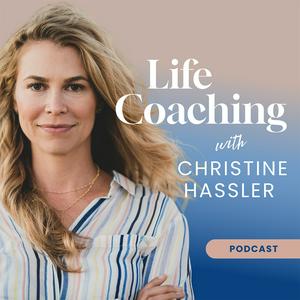
Christine Hassler provides you with practical tools and spiritual principles to help you overcome whatever obstacles might be holding you back.
Each episode, Christine coaches callers live on the air offering them inspiration and guidance to heal their past, change their present and create what they really want. Topics include: relationships, career, health, transitions, finances, life purpose, spirituality and whatever else callers have questions about.
Christine coaches "regular people" on problems – and opportunities - we all face. It's a show that reminds you that you are not alone, while also teaching things you can implement in your own life.
Podcast websiteListen to Life Coaching with Christine Hassler, Coffee Break French and many other podcasts from around the world with the radio.net app
Get the free radio.net app
- Stations and podcasts to bookmark
- Stream via Wi-Fi or Bluetooth
- Supports Carplay & Android Auto
- Many other app features
Get the free radio.net app
- Stations and podcasts to bookmark
- Stream via Wi-Fi or Bluetooth
- Supports Carplay & Android Auto
- Many other app features

Life Coaching with Christine Hassler
Scan code,
download the app,
start listening.
download the app,
start listening.
 Ireland
