
Listen to this podcast in the app for free: Download for free in the App Store
radio.net
Sleep timer
Save favourites
185 episodes
The Smuggler's Inn: America's Strangest Border Story
21/10/2026 | 49 mins.A backyard. Two countries. One unbelievable story.
Most people think of the U.S.-Canada border as quiet, friendly, and uneventful. But behind a quirky bed-and-breakfast in Blaine, Washington, one of the strangest border stories in modern North American history was unfolding.
This week, Shea sits down with author Reece Jones to discuss his new book Smuggler: Drugs, Gangs, and Refugees at America's Northern Border. What begins as the story of a roadside inn quickly turns into a tale involving smugglers, asylum seekers, Border Patrol agents, underground networks, and a Supreme Court case that continues to shape debates about federal law enforcement today.
At the center of it all is Bob Boulay, the owner of the Smuggler's Inn, whose backyard quite literally sat on the international border.
In This Episode
The Strangest Property in America
The Smuggler's Inn wasn't just near the border. It was on it.
Reece explains how Bob Boulay accidentally became a border innkeeper and found himself witnessing everything from drug trafficking operations to refugee crossings. What started as a simple real estate investment became one of the most important crossroads on the U.S.-Canada border.
Why Refugees Chose Canada
A major theme of the conversation is the little-known history of asylum seekers traveling through the United States to reach Canada.
Reece breaks down how changes to Canadian immigration policy unintentionally transformed the Smuggler's Inn into a destination for people fleeing persecution from places including Afghanistan and Turkey.
The Supreme Court Case That Changed Everything
The story eventually landed before the U.S. Supreme Court in the landmark case Egbert v. Boule.
The discussion explores how one confrontation between a Border Patrol agent and Bob Boulay evolved into a legal battle with major implications for constitutional rights, federal accountability, and border enforcement.
About Our Guest
Reece Jones is a professor of geography and environment at the University of Hawaii and the author of multiple award-winning books on borders, migration, and immigration policy. His latest book, Smuggler: Drugs, Gangs, and Refugees at America's Northern Border, was co-written with attorney Greg Boos.
Learn more about Reece and his work: 🔗 https://www.reecejonesauthor.com/
More Rainy Day Rabbit Holes
Explore more strange true stories and hidden history: 🔗 https://www.rainydayrabbitholes.com/
Related episodes:
🔗 https://www.rainydayrabbitholes.com/podcast/convergence-true-crime-and-corruption-in-the-windy-city
🔗 https://www.rainydayrabbitholes.com/podcast/when-tylenol-turned-deadly
Support this podcast at — https://redcircle.com/history-unhinged-rainy-day-rabbit-holes/exclusive-content
Advertising Inquiries: https://redcircle.com/brands
Privacy & Opt-Out: https://redcircle.com/privacyJody Returns and Big Changes Ahead
19/10/2026 | 43 mins.Jody's Back, Baby!
Good news, rabbit holers: Jody is officially back.
After taking time away to focus on family, travel, and life outside the studio, she's rejoining Shea behind the microphones. But this isn't just a welcome-back episode. It's a look at where Rainy Day Rabbit Holes is headed next and why the show is evolving.
After three years of producing episodes, meeting incredible listeners, and building a community neither host expected, Shea and Jody are making some changes designed to keep the podcast fun, sustainable, and full of the stories they love telling.
Why We're Changing Things
Weekly episodes have been rewarding, but they've also been demanding. Rather than rushing to produce content every week, Rainy Day Rabbit Holes is moving to a seasonal format.
Starting in 2027, listeners can expect:
Three themed seasons per year
Six episodes per season
More research and deeper storytelling
Guest interviews between seasons
Special rabbit holes that don't fit into a larger theme
The goal is simple: better stories, less burnout, and more room for curiosity.
A Sneak Peek at 2027
The upcoming seasons are shaping up to be some of the most ambitious yet:
Season One: Villains
Con artists. Grifters. Outlaws. Criminal masterminds. Strange and forgotten villains you probably haven't heard much about.
Season Two: Heroes
Inventors, scientists, explorers, doctors, civil rights pioneers, and everyday people who accomplished extraordinary things.
Season Three: Folklore & Mysteries
Cryptids, hauntings, strange legends, unexplained events, local lore, and the kind of weird stories that make perfect rabbit holes.
Building a Bigger Community
One unexpected part of creating the podcast has been meeting listeners who became genuine friends.
In this episode, Shea and Jody reflect on:
Live events in Tacoma
Meeting listeners in person
Growing the Patreon community
Why fan connections have become one of the most rewarding parts of podcasting
They also share ideas for future live events, listener involvement, and expanded Patreon perks.
UFO Festivals, Men in Black, and Other Future Shenanigans
The hosts also discuss their growing involvement with the annual Men in Black Birthday Bash and plans being explored for the 80th anniversary of the Maury Island Incident in 2027.
Expect:
UFO-themed events
Community gatherings
Independent films
Local history
Plenty of tongue-in-cheek mystery and folklore
No alien conversion required.
Just curiosity.
Visit www.rainydayrabbitholes.com for more or to learn how you can join the Patreon!
Support this podcast at — https://redcircle.com/history-unhinged-rainy-day-rabbit-holes/exclusive-content
Advertising Inquiries: https://redcircle.com/brands
Privacy & Opt-Out: https://redcircle.com/privacyKlondike Kate: Queen of the Yukon Gold Rush
14/10/2026 | 1h 19 mins.Klondike Kate, The Woman History Forgot
Recorded live before a packed audience at McMenamins Elks Temple's Spanish Ballroom in Tacoma, Washington, this episode follows the remarkable life of Kathleen Eloisa Rockwell, better known as Klondike Kate, one of the most colorful and influential figures of the Klondike Gold Rush.
While history remembers theater magnate Alexander Pantages, few remember the woman whose talent, charisma, and financial support helped launch the beginnings of his empire. Tonight, we're fixing that.
From Spokane to New York, from Chilean convents to Yukon dance halls, Kate's life was a whirlwind of adventure, scandal, romance, reinvention, and larger-than-life storytelling.
Gold, Gambling, and the Queen of Dawson
When news of gold discoveries in the Yukon ignited one of history's greatest stampedes, thousands of prospectors poured north through Seattle in search of fortune. Most failed.
Klondike Kate, however, discovered there was often more money to be made entertaining miners than digging beside them.
In Dawson City, she became a sensation.
Known as the Rose of the North, the Darling of Dawson, and the Queen of the Yukon, Kate earned extraordinary sums as a performer while capturing the affection of an entire city. Unlike many of the boomtown celebrities of her era, Kate built a reputation for generosity, remembering names, helping struggling miners, and sharing her success with those around her.
But fame and fortune would also bring her face to face with the ambitious young entrepreneur who would change the course of her life: Alexander Pantages.
The Woman Behind the Pantages Empire
Long before the Pantages name became synonymous with legendary theaters across the West Coast, Alexander Pantages was a struggling newcomer chasing opportunity in the Yukon.
Kate believed they were building a future together.
She financed ventures, supported his ambitions, and helped fund the theater business that would eventually make him one of the wealthiest entertainment figures in America. While Kate toured and earned money, she continued investing in what she believed was their shared dream.
Then she discovered he had secretly married another woman.
The fallout led to a highly publicized breach-of-promise lawsuit, heartbreak, and one of the most dramatic chapters in Gold Rush history.
Reinvention, Resilience, and Aunt Kate
Many stories would end there.
Kate's didn't.
After the spotlight faded, she reinvented herself repeatedly. She tried ranching in Oregon, survived financial setbacks, weathered failed relationships, cared for friends and strangers in need, and eventually became a beloved local figure known simply as "Aunt Kate."
Far removed from the glamorous stages of Dawson City, she spent her later years feeding the hungry, helping neighbors, supporting firefighters, and turning kindness into her final act.
By the time she passed away in 1957, Klondike Kate had lived more lives than most people could imagine.
Showgirl. Homesteader. Philanthropist. Celebrity. Scandal. Legend.
And somehow, after all of that, she also became the inspiration for Glittering Goldie from DuckTales.
Not bad for a woman history almost forgot.
In This Episode
The Klondike Gold Rush and the rise of Dawson City
How Klondike Kate became the Queen of the Yukon
The surprising origins of the Pantages theater empire
Alexander Pantages and his complicated relationship with Kate
Gold Rush entertainment and boomtown culture
Kate's famous lawsuit against Pantages
Homesteading in Central Oregon
Aunt Kate's philanthropy and community work
The Hollywood adaptation that never quite happened
The DuckTales connection to Klondike Kate
Special Thanks
Recorded live September 16, 2026, at McMenamins Elks Temple Spanish Ballroom in Tacoma, Washington.
Special thanks to:
McMenamins Elks Temple
PACK (People for Animal Care and Kindness)
Radio Tacoma
Pretty Gritty Tours
If you enjoyed this episode, please leave a review, share it with a friend, and subscribe for more strange and fascinating stories from the weird corners of history.
Related Episodes
If you enjoyed this journey into Gold Rush history, larger-than-life frontier personalities, and the strange world of the Yukon, check out these related Rainy Day Rabbit Holes episodes:
Madame Mustache: The Wild West's Most Badass Gambler
Another legendary woman of the Gold Rush era who built a reputation in boomtowns where few women could thrive.
https://www.rainydayrabbitholes.com/podcast/madame-mustache-the-wild-wests-most-badass-gambler
The Sourtoe Cocktail Club
Klondike Kate spent much of her life in Dawson City, home of one of the world's strangest traditions: the Sourtoe Cocktail. Learn the bizarre history behind the infamous mummified toe.
https://www.rainydayrabbitholes.com/podcast/sourtoe-cocktail-club
Hugh Glass: The Man Who Refused to Die
Survival, hardship, and determination on the North American frontier. If you enjoyed the grit and resilience in Kate's story, this one is for you.
https://www.rainydayrabbitholes.com/podcast/hugh-glass-the-man-who-refused-to-die
Lou Graham: Seattle's Powerful Madam & Secret Philanthropist
Like Klondike Kate, Lou Graham became a legendary woman of the Pacific Northwest whose charitable legacy often gets overshadowed by her colorful reputation.
https://www.rainydayrabbitholes.com/podcast/19-lou-graham-seattles-powerful-madam-secret-philanthropist
You Might Also Like This Episode Because...
Klondike Kate's story sits at the intersection of Gold Rush history, Pacific Northwest legends, forgotten women, frontier entrepreneurship, theater history, and larger-than-life personalities. If you're fascinated by boomtowns, colorful characters, and people who repeatedly reinvented themselves against impossible odds, these episodes make excellent companions to tonight's rabbit hole.
Support this podcast at — https://redcircle.com/history-unhinged-rainy-day-rabbit-holes/exclusive-content
Advertising Inquiries: https://redcircle.com/brands
Privacy & Opt-Out: https://redcircle.com/privacyConvergence: True Crime and Corruption in the Windy City
07/10/2026 | 57 mins.A Murder Case Everyone Wanted to Abandon
What do you do when witnesses vanish, evidence disappears, and corruption reaches into the courtroom itself?
Former Cook County homicide prosecutor Gregg Owen faced exactly that challenge.
In this episode of Rainy Day Rabbit Holes, Gregg joins Shea to discuss his upcoming true crime book, Convergence, which chronicles an extraordinary double murder prosecution that unfolded during one of the most corrupt periods in Chicago's history.
But Gregg's story is anything but ordinary.
Before becoming a prosecutor, he spent years as a professional musician, sharing stages with legendary performers and living the life of a touring rock artist. Then one unexpected decision changed everything, launching him into a legal career that would place him at the center of murder trials, gang prosecutions, and one of the largest judicial corruption scandals ever uncovered in America.
From Rock Stages to Courtrooms
Gregg recounts his unlikely transition from musician to prosecutor, including:
Opening for legendary acts including The Doors
Touring during the late 1960s and early 1970s
Attending law school while performing professionally
The chance encounter that changed the course of his life
Why courtroom advocacy felt unexpectedly similar to being on stage
You'll also hear incredible firsthand stories from Chicago's music scene and Gregg's unforgettable encounter with Jim Morrison.
Inside Chicago's Corruption Era
The conversation takes a darker turn as Gregg describes the realities of practicing law during one of Chicago's most infamous periods.
Topics include:
Operation Greylord
Judicial corruption in Cook County courts
How bribery influenced criminal proceedings
The undercover FBI operation that changed everything
The challenges prosecutors faced when pursuing justice
Why some cases seemed impossible to win
Gregg explains how prosecutors learned to expect missing evidence, compromised witnesses, and unexpected obstacles before every major trial.
The Story Behind Convergence
At its heart, Convergence is more than true crime.
It's a story about perseverance, character, and refusing to abandon victims when the system fails.
Gregg discusses:
The double murder case that inspired the book
Why victims remained central to the story
How unlikely connections helped break the case
The role integrity plays when doing the right thing comes at a personal cost
The life lessons he hopes readers will take away
Gregg Owen Links
🌐 Website
https://www.greggowen26th.com/
📚 Books
https://www.greggowen26th.com/books/
📸 Instagram
https://www.instagram.com/greggowen26th/
🎧 Convergence is available through major booksellers, Audible, Apple Books, Amazon, and Barnes & Noble.
Related Episodes
If you enjoyed this episode, check out:
📌 When Tylenol Turned Deadly
https://www.rainydayrabbitholes.com/podcast/when-tylenol-turned-deadly
📌 Mayhem and the Mob: Grit City's Dark Past
https://www.rainydayrabbitholes.com/podcast/29-mayhem-and-the-mob-grit-citys-dark-past
📌 Smooth Criminal: Roy Olmstead, Seattle's Good Bootlegger
https://www.rainydayrabbitholes.com/podcast/36-smooth-criminal-roy-olmstead-seattles-good-bootlegger
Key Takeaways
Gregg Owen transitioned from professional musician to homicide prosecutor through an unexpected twist of fate.
Convergence centers on a double murder case many believed was impossible to prosecute.
Chicago's judicial corruption crisis inspired the events chronicled in the book.
Operation Greylord became the largest judicial corruption investigation in American history.
Missing evidence and reluctant witnesses nearly derailed a major murder prosecution.
Gregg's music background unexpectedly helped him earn the trust of key witnesses.
Courtroom advocacy shares surprising similarities with live performance.
The book emphasizes perseverance when justice seems unattainable.
Victims remain the emotional core of the Convergence story.
Gregg believes a single decision can completely alter the course of a person's life.
Support this podcast at — https://redcircle.com/history-unhinged-rainy-day-rabbit-holes/exclusive-content
Advertising Inquiries: https://redcircle.com/brands
Privacy & Opt-Out: https://redcircle.com/privacyHow the Atomic Age Changed Metal Forever
30/09/2026 | 31 mins.Did Nuclear Testing Change Every Piece of Steel on Earth?
What if one of humanity's biggest technological achievements accidentally altered the materials we use every day?
In this Rabbit Hole short, Shea welcomes back her brother Jason to uncover a bizarre scientific mystery involving nuclear bombs, radioactive contamination, sunken warships, and some of the most sensitive scientific instruments ever built.
The story begins with the first atomic bomb test in New Mexico in 1945. While the world focused on the dawn of the nuclear age, very few people were thinking about steel. Yet the radioactive particles released by atmospheric nuclear testing would eventually become a problem for physicists attempting to detect incredibly rare events deep within the universe.
Why Scientists Needed Old Warships
Modern radiation detectors are designed to identify signals so faint they can be overwhelmed by even the smallest amount of background radiation. As scientists improved these instruments, they discovered that steel produced after atmospheric nuclear testing contained tiny traces of radioactive contamination.
The solution seemed almost unbelievable.
Researchers began seeking out pre-1945 steel, material produced before the atomic age. Some of the largest supplies of this steel could be found in battleships, cruisers, and other vessels that had sunk during wartime.
Shea and Jason explore how old shipwrecks became valuable resources for scientific research and why these forgotten relics of history took on an unexpected second life helping researchers study the fundamental nature of the universe.
The Amazing Quest for Ultra-Clean Materials
The conversation goes even deeper into the world of low-background physics.
From underground laboratories to copper grown atom by atom in mines, scientists have developed remarkable methods to create materials with incredibly low levels of radiation. The lengths researchers go to eliminate contamination can sound like science fiction, but they're essential for experiments searching for dark matter, rare particle interactions, and phenomena that could redefine our understanding of physics.
Along the way, Shea and Jason discuss:
The Trinity nuclear test and the beginning of the atomic age
How atmospheric nuclear testing spread radioactive particles worldwide
What "low-background steel" is and why it mattered
The surprising value of pre-war shipwrecks
The ethics of salvaging wartime gravesites
Underground copper production for ultra-sensitive experiments
How scientists eventually learned to manufacture cleaner materials
Why the atomic age permanently changed precision measurement
Fact vs. Folklore
Fact: Atmospheric nuclear testing introduced measurable radioactive contamination into the environment.
Fact: Scientists used pre-1945 steel in certain low-background physics applications.
Fact: Modern techniques allow researchers to manufacture extremely low-radiation materials without relying on historic shipwrecks.
Folklore/Oversimplification: Every modern scientific instrument depends on steel recovered from sunken warships. While ship steel was used in some applications, modern science is not dependent on salvaging wrecks.
Key Takeaways
Atmospheric nuclear testing left a detectable signature in many post-1945 industrial materials.
Ultra-sensitive detectors must account for even minuscule sources of radiation.
Pre-1945 steel became valuable because it predated atmospheric nuclear testing.
Sunken warships provided large supplies of low-background steel.
Some scientific experiments search for events so rare they may occur only a handful of times.
Researchers have grown ultra-pure copper underground to reduce contamination.
Modern manufacturing can now create materials comparable to historic low-background steel.
Advances in physics often require solving unexpected engineering challenges.
The atomic age altered how scientists think about background radiation.
History can influence scientific measurements decades after an event occurs.
Related Episodes
If you enjoyed this episode, check out:
The Travis Walton Incident: The Most Famous UFO Abduction in America
https://www.rainydayrabbitholes.com/podcast/travis-walton-the-most-famous-ufo-abduction-in-america
Japan's Oldest UFO Mystery (Utsuro-bune)
https://www.rainydayrabbitholes.com/podcast/japans-oldest-ufo-mystery
Hold My Sake: Japan Made Alcohol Out of Moth Poop
https://www.rainydayrabbitholes.com/podcast/hold-my-sake-japan-made-alcohol-out-of-moth-poop-5-minute-friday
Connect With Rainy Day Rabbit Holes
🌧️ Website: https://www.rainydayrabbitholes.com
🎟️ Live events, merch, episodes, and more: https://www.rainydayrabbitholes.com
Stay curious, and we'll see you down the rabbit hole. 🐇🕳️
Support this podcast at — https://redcircle.com/history-unhinged-rainy-day-rabbit-holes/exclusive-content
Advertising Inquiries: https://redcircle.com/brands
Privacy & Opt-Out: https://redcircle.com/privacy
More Comedy podcasts






Trending Comedy podcasts














About Rainy Day Rabbit Holes: History Unhinged
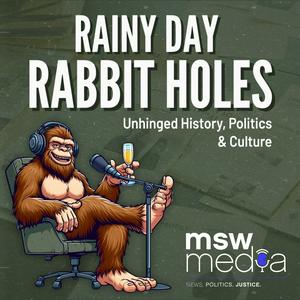
Rainy Day Rabbit Holes explores unhinged history, wild scandals, and politicians behaving badly - those moments when history went completely off the rails. Funny, curious, and unapologetic, hosts Shea and Jody break down the past like a late-night hang with your besties who just happen to love history.Visit www.rainydayrabbitholes.com for more!Proud member of MSW Media Network. Instagram https://www.instagram.com/rainydayrabbitholespod/ Facebook https://www.facebook.com/RainyDayRabbitHolesPodcast/ Support the show! https://www.patreon.com/c/RainyDayRabbitHolesPodcast
Podcast websiteListen to Rainy Day Rabbit Holes: History Unhinged, The Blindboy Podcast and many other podcasts from around the world with the radio.net app
Get the free radio.net app
- Stations and podcasts to bookmark
- Stream via Wi-Fi or Bluetooth
- Supports Carplay & Android Auto
- Many other app features
Get the free radio.net app
- Stations and podcasts to bookmark
- Stream via Wi-Fi or Bluetooth
- Supports Carplay & Android Auto
- Many other app features

Rainy Day Rabbit Holes: History Unhinged
Scan code,
download the app,
start listening.
download the app,
start listening.
Rainy Day Rabbit Holes: History Unhinged: Podcasts in Family
 Ireland
