
Listen to this podcast in the app for free: Download for free in the App Store
radio.net
Sleep timer
Save favourites
213 episodes
Dr. Kate Ackerman: RED-S, Bone Health & What Female Athletes Need to Know
15/10/2026 | 1h 7 mins.View This Week's Show Notes
Start Your 7-Day Trial to Mobility Coach
Join Our Free Weekly Newsletter: The Ambush
Women have always trained hard. The science surrounding how they fuel, recover, build bone, and respond to training has had a lot of catching up to do.
In this episode of The Ready State Podcast, Kelly and Juliet sit down with Dr. Kate Ackerman, a triple-boarded physician, former elite lightweight rower, and co-founder and president of the Women’s Health, Sports & Performance Institute (WHSP), to explore what changes when female physiology becomes part of the research question from the beginning.
Kate traces her work back to her own experience making weight as an athlete, then unpacks the evolution from the Female Athlete Triad to Relative Energy Deficiency in Sport (RED-S), including how underfueling can affect hormones, bone, cardiovascular health, injury risk, and performance. She explains why bone health begins much earlier than most people realize, how iron status should be evaluated in athletes, and why RED-S deserves attention in postmenopausal women, too.
They also dig into menopause research, strength training, GLP-1s, and WHSP’s mission to answer the questions women themselves say matter to their health and performance.
What You'll Learn in This EpisodeHow low energy availability and RED-S can affect bone, hormones, cardiovascular health, injury risk, and athletic performance and why RED-S can occur in both men and women.
Why adolescence represents such an important window for building bone density, with roughly 90% of peak bone mass accrued by age 18.
What athletes, parents, and coaches should understand about iron and ferritin, including why one lab value rarely tells the whole story.
Why RED-S can matter after menopause, even when menstrual-cycle changes can no longer serve as a warning sign.
How WHSP is approaching unanswered questions around female athletes across the lifespan, from adolescent health and pregnancy to menopause, strength training, hormone therapy, and performance.
Key Highlights: (00:00) Intro: Dr. Kate Ackerman & the Future of Female Athlete Health
(04:35) Kate’s journey from collegiate rowing to lightweight competition
(06:04) Making weight, underfueling & Crystal Light cereal
(09:30) Extreme weight-cutting tactics in lightweight rowing
(12:05) When losing your menstrual cycle was a “badge of honor”
(12:44) The Female Athlete Triad & Kate’s experience with menstrual loss
(15:43) Kate’s unconventional path into sports medicine
(16:33) Becoming triple-boarded in internal medicine, sports medicine & endocrinology
(20:50) Understanding the Female Athlete Triad & RED-S
(21:10) Why Kate calls osteoporosis a “childhood disease”
(23:01) How low energy availability affects health & performance
(24:49) RED-S warning signs for parents, coaches & athletes
(29:16) Why WHSP was created & the research gap in female athletes
(30:26) Building a one-stop medical model around the female athlete
(33:33) Moving from reactive healthcare toward prevention & performance
(39:06) Iron deficiency, ferritin & what athletes should know about their labs
(41:26) Why ferritin alone doesn’t tell the whole story
(43:53) WHSP’s research across the female lifespan
(44:51) Menopause, hormone therapy & the questions we still need to answer
(47:16) Strength training, bone health & better markers for RED-S recovery
(48:47) What the Boston Marathon study revealed about underfueling & performance
(53:06) What female athletes say they actually want researchers to study
(55:10) RED-S in postmenopausal women
(56:43) What RED-S can look like without a menstrual cycle as a marker
(58:26) GLP-1s, underfueling & muscle loss
(1:01:02) Strength training research for postmenopausal women
(1:02:16) Kate’s vision for the future of female athlete health
(1:05:34) Infinite Shelf: Ted Lasso & The Nightingale
Huge thanks to our sponsors, BEDGEAR, Momentous, and LMNT.RECESS: Romania's Black Card for Youth Sports, Diet Drink Research, and Outplay Is Finally Done
08/10/2026 | 25 mins.View This Week's Show Notes
Juliet and I just got back from Vancouver and 27 straight days of back-to-back conferences. The shift at the YPO Health Summit from two years ago was striking. The conversation has moved from mitochondrial supplements to something more basic: are you doing the fundamentals? We call this third wave fitness, and it finally feels like we are cresting into it.
Romania's football federation just introduced a Black Card for youth soccer, and it is unlike anything we have seen before. Referees can now permanently end games because of how parents and spectators are behaving. No rematch, no restart, just over. There are also silent game days where adults cannot cheer or coach at all. The whole platform is built around joy, respect, and optimism in youth sports. With Outplay finished and heading to shelves next fall, we are paying close attention.
EC Synkowski's A Good Nutrition Book dropped October 1st. We wrote the foreword to the book because her work and thinking around nutrition have been genuinely transformational for us.
And finally, the University of Liverpool just published the longest randomized trial ever run on diet drinks. The results are going to surprise you, or at least give you permission to enjoy your crispy Diet Coke in peace. We have opinions, a bedazzled can, and an unhinged passion that we can't totally explain.
What You'll Learn in This EpisodeWhy the YPO Health Summit felt fundamentally different this year and what the return to basics actually looks like in high-level wellness spaces
What first, second, and third wave fitness means and why the shift matters now
What's in EC Synkowski's A Good Nutrition Book and why the 800-gram challenge changed how Kelly and Juliet think about nutrition
How Romania's Black Card system works for youth soccer sidelines and whether something like it could take hold in the US
What the longest randomized trial on diet drinks found about weight loss and potential harm
Key Highlights(00:00) Intro
(00:24) Empty nesting and an overbooked fall
(01:43) YPO Health Summit Vancouver: the back-to-basics shift
(05:01) First, second, and third wave fitness
(06:32) Rope flow for 100 CEOs, forgotten anniversaries, and 16 years of Mobility WOD
(08:21) Outplay: manuscript submitted
(11:06) EC Synkowski's [A Good Nutrition Book](https://a.co/d/0519vMrI) and the [800-gram challenge](https://thereadystate.com/trs_podcast/ec-synkowski-sustainable-nutrition/)
(13:38) Romania's [Black Card](https://www.nytimes.com/athletic/7586821/2026/09/12/football-black-card-referee/) for youth sports sidelines
(19:15) The diet drink study and the Diet Coke debate
(25:21) WrapJoel Jamieson: How to Use HRV, Zone 2, & VO2 Max to Train Smarter
01/10/2026 | 1h 8 mins.View This Week's Show Notes
Start Your 7-Day Trial to Mobility Coach
Join Our Free Weekly Newsletter: The Ambush
What if the fitness metrics you’re obsessing over aren’t telling you what you think they are? HRV. VO2 max. Resting heart rate. Zone 2. Wearables have given us more data than ever… but do you know how to use it to inform your training?
In this episode of the Ready State Podcast, Kelly and Juliet Starrett sit down with renowned strength and conditioning coach Joel Jamieson to cut through the noise around cardiovascular fitness, recovery, and resilience. Drawing on more than 25 years of experience coaching UFC champions, Olympic athletes, special operators, and professional sports teams, Joel explains why a higher HRV isn’t always “better,” what Zone 2 training is really trying to accomplish, and why your aerobic engine matters even if endurance sports aren’t your thing.
They also explore how to balance low, moderate, and high-intensity training, practical ways to measure whether your conditioning is actually improving, and why stress outside the gym has to factor into how you train. The takeaway? Better fitness isn’t about chasing a perfect score – but about understanding what your body can handle, how well it recovers, and how to train accordingly.
What You'll Learn in This EpisodeWhy a higher HRV doesn’t always mean you’re better recovered
What Zone 2 training is actually trying to accomplish
Why cardiovascular fitness is important for improving resilience
How to balance low, moderate, & high-intensity conditioning
Why stress outside the gym should influence how you train
Key Highlights: (00:00) Intro: Joel Jamieson on HRV & Conditioning
(03:33) The HRV Problem for Midlife Athletes
(05:13) What Is HRV?
(09:41) The Evolution of HRV Tracking
(13:32) What's a Good HRV?
(16:18) Morning vs Overnight HRV
(20:49) Why Higher HRV Isn't Always Better
(24:00) HRV, Resting Heart Rate, & Heart Rate Recovery
(26:50) Chest Strap vs Wrist-Based HRV
(29:33) How to Improve Your HRV
(34:10) How Fast Cardiovascular Fitness Declines
(37:53) Training Intensity Zones Explained
(43:30) Low, Moderate, & High Intensity Training
(45:59) Why Low-Intensity Training Builds VO2 Max
(48:33) Is VO2 Max Testing Worth It?
(51:04) The Cooper's Test
(55:09) How Fast Can Conditioning Improve?
(59:55) Team Athletes & Recovery
(1:01:46) Life Stress, HRV, & Training
(1:04:00) Lifestyle Sets Your Gym Limits
(1:05:21) Infinite Shelf
Huge thanks to our sponsors,Momentous, LMNT, and BEDGEAR.RECESS: New Ferritin Thresholds, CTE Research & the Outplay Book
24/09/2026 | 32 mins.View This Week's Show Notes
This one's a first: Juliet and I are recording from different states. I'm up in Evergreen, Colorado, fresh off the Farren Summit in Boulder, where Juliet and I ended up in the same room as Robb Wolf, John Welbourn, and Andy Stumpf. Felt like CrossFit 2.0.
The American Society of Hematology just raised the diagnostic floor for ferritin from 15 to 30 ng/mL, and if you've ever been told your iron levels are fine while running on empty, this is a massive deal. Juliet shares her 30-year story here, including what finally worked.
Two landmark CTE studies dropped the same week: one out of Australia showing 61% of examined rugby league brains had CTE, and one from the US putting it at 1 in 4 NFL players. We get into what that means for families and youth athletes thinking about contact sports.
Plus a real update on Outplay, our book on youth sports performance for parents, which we are nearly ready to turn in.
What You'll Learn in This EpisodeWhy the American Society of Hematology raised the ferritin diagnostic floor from 15 to 30 ng/mL, and what the thresholds are for different populations
How to tell if iron deficiency may be affecting you, low ferritin symptoms, and which tests to ask your doctor about (ferritin, TIBC, CBC)
Why standard iron treatments so often fail, and what finally worked for Juliet after three decades of trying
How CTE differs from a concussion, and what two new studies on rugby league and NFL brains actually found
How families and coaches should think about youth contact sports in light of the new CTE research
What the Outplay book covers and where it stands in the writing process
Key Highlights:(00:00) Intro: first time recording apart, Kelly in Colorado
(00:40) Farren Summit recap and the Boulder trip
(01:13) Kelly's CU Boulder days and the shared senior thesis story
(04:48) CrossFit reunion: Robb Wolf, John Welbourn, and Andy Stumpf
(06:59) Fall travel: YPO Vancouver and the Brett Bartholomew conference
(07:57) Eudemonia with Momentous and the Antarctica trip
(10:24) New ASH ferritin thresholds explained: from 15 to 30 ng/mL
(11:38) Low ferritin symptoms and why standard treatments kept failing: Juliet's 30-year story
(14:35) What finally worked: iron infusions and menopause
(17:26) Which tests to ask your doctor for
(18:24) Kelly's concussion history and CTE intro
(19:24) New CTE research: 61% of rugby brains and 1 in 4 NFL players
(20:02) CTE vs. concussion: what's the difference
(21:37) Youth contact sports and how families should think about risk
(24:27) Guardian caps and other interventions; Eric Freitag episode on concussions, (https://thereadystate.com/trs_podcast/eric-freitag-concussions/)
(26:27) Outplay book update and the Outplay Way card deck
(30:50) Skateboarding as free play, shoutout to Lisa's son Fox:(https://www.instagram.com/p/DdiCvqzp1HL/)From Combat Zones to the White House: The Physical Therapist Behind Two U.S. Presidents | Drew Contreras
17/09/2026 | 1h 14 mins.View This Week's Show Notes
Start Your 7-Day Trial to Mobility Coach
Join Our Free Weekly Newsletter: The Ambush
What does it take to keep someone performing when their job leaves almost no room for downtime? In this episode of the Ready State Podcast, Kelly and Juliet Starrett sit down with longtime friend Dr. Drew Contreras, a retired Army physical therapist who went from supporting soldiers in combat to becoming the first full-time physical therapist embedded in the White House Medical Unit.
Drew shares what he learned caring for everyone from White House staff to Presidents Barack Obama and Joe Biden – and why the fundamentals of human performance matter even more when time is your most valuable resource. From encouraging naps during relentless work schedules to introducing walking meetings at the White House, Drew explains how small changes can help people stay functional under extraordinary pressure.
The conversation also explores the changing role of physical therapy, why PTs should be doing more than treating injuries one patient at a time, and how technology such as digital health and AI could reshape the profession.
What You'll Learn in This EpisodeWhat working with two sitting U.S. presidents taught Drew about keeping people functional under extreme pressure
Why naps, walking meetings, and other simple interventions can make a major difference during sustained periods of high-stress work
How physical therapists became a “force multiplier” for keeping soldiers healthy and operational during deployment
Why Drew believes physical therapists should play a bigger role in performance and musculoskeletal primary care
Why embracing new technology such as digital health and AI will be essential for the future of physical therapy
Key Highlights: (00:00) Intro to Dr. Drew Contreras
(02:55) How a Combat PT Got Handpicked for the White House
(07:00) The Birthday Basketball Game That Started It All
(12:05) Building a Wellness Culture in the White House
(19:15) What Actually Moved the Needle on Health
(22:05) Naps, Walking Meetings, & Reframing Work
(26:30) Deploying as One of the First Combat PTs
(31:00) PT as Human Performance, Not Just Rehab
(33:20) Treating Obama vs. Biden – Different Ages, Different Needs
(38:50) Leading the APTA & Scaling Physical Therapy
(43:45) The Money Problem in Physical Therapy
(53:30) PT as Musculoskeletal Primary Care
(1:00:30) AI, Digital Health, & the Future of PT
(1:04:21) What the Presidency Really Does to a Person
(1:11:30) Infinite Shelf: Legacy by James Kerr
Huge thanks to our sponsors, LMNT, BEDGEAR, and Momentous.
More Fitness podcasts


Trending Fitness podcasts

About The Ready State Podcast
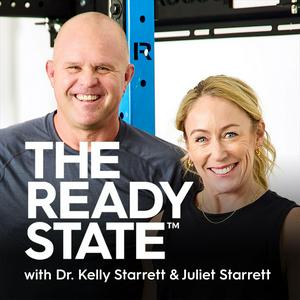
A podcast about health, aging, fitness, recovery, nutrition, parenting, and living well, featuring conversations with leading experts, coaches, and thought leaders. Each episode brings warmth, humor, and real-world perspective to the conversation, turning expert insight into practical tools for building a stronger, more durable life — and living in your Ready State.
Podcast websiteListen to The Ready State Podcast, Move Your DNA with Katy Bowman and many other podcasts from around the world with the radio.net app
Get the free radio.net app
- Stations and podcasts to bookmark
- Stream via Wi-Fi or Bluetooth
- Supports Carplay & Android Auto
- Many other app features
Get the free radio.net app
- Stations and podcasts to bookmark
- Stream via Wi-Fi or Bluetooth
- Supports Carplay & Android Auto
- Many other app features
The Ready State Podcast
Scan code,
download the app,
start listening.
download the app,
start listening.
 Ireland
