

Listen to this podcast in the app for free: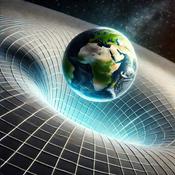 Download for free in the App Store
radio.net
Sleep timer
Save favourites
58 episodes
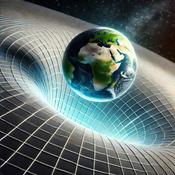
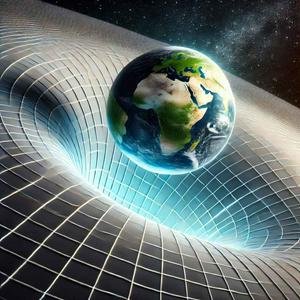
Quantum Mechanics vs General Relativity: The Biggest Divide in Physics Right Now
20/08/2026 | 24 mins.Imagine the universe as a grand puzzle, but two of its most fundamental pieces refuse to fit.
Quantum mechanics, the realm of the infinitesimally small, and General Relativity, the theory of gravity and the cosmos, offer wildly different, and often conflicting, pictures of reality. In this episode, we delve into the shocking contradictions that arise when these two pillars of modern physics collide.
Why does the smooth, predictable universe of Einstein's gravity clash so violently with the probabilistic, uncertain world of quantum mechanics?
We explore the places where this cosmic divide becomes glaringly apparent: the singularity at the heart of black holes, the birth of the universe, and the enigmatic realm of quantum gravity.
Could this fundamental incompatibility mean our understanding of the universe is fundamentally flawed? Or is there a deeper, hidden reality waiting to be uncovered?
Join us as we confront the terrifying implications of this cosmic schism, where the very fabric of space and time is caught in a battle between two seemingly irreconcilable truths.Could Quantum Gravity Save Physics?
13/08/2026 | 16 mins.We examine the current state of Lambda Cold Dark Matter (Lambda CDM), our best model of cosmology. While it remains the reigning champion of cosmology, it is facing an unprecedented onslaught of data from the James Webb Space Telescope (JWST) and advanced underground detectors that are stirring up revolutionary questions.
Lambda CDM has brilliantly predicted the Cosmic Microwave Background (CMB), the distribution of galaxies in colossal filaments, and the chemical elements forged just after the Big Bang. However, several "tensions" are pushing the model to its limits.The Information Paradox: Can Black Holes Disappear?
06/08/2026 | 25 mins.Imagine a black hole, that devours everything in its path, including information—the fundamental building block of reality.
But what if that information isn't truly lost?
In this episode, we dive into the mind-bending information paradox, a clash between Einstein's relativity and quantum mechanics that challenges our very understanding of the universe.
We'll explore the bizarre concept of Hawking radiation, the faint glow emitted by black holes, and the shocking possibility that these cosmic behemoths might actually evaporate, taking their secrets with them.
Do black holes erase information, violating the laws of quantum mechanics? Or does it somehow escape, encoded in the subtle whispers of Hawking radiation?
We'll delve into the radical theories, including the controversial 'firewall' paradox, that attempt to reconcile these conflicting ideas.
Join us as we journey into the heart of the black hole mystery, where the fate of information—and perhaps the universe itself—hangs in the balance.Amplitude of primordial ripples: Numbers That Make Universe Possible
30/07/2026 | 12 mins.This episode investigates Q, the fifth of the fundamental constants, which represents the amplitude of primordial ripples in the newborn universe. Measuring approximately 1 in 100,000, this number represents the faint "tremor" at the dawn of time that determined whether the cosmos would become a fertile ground for life or a sterile void.
Is this "exquisite calibration" a cosmic coincidence, or are we simply living in one rare bubble of a vast multiverse where the lottery of physics happened to go our way?Einstein Called this his "Biggest Blunder". Here's Why?
25/07/2026 | 19 mins.We're talking about the cosmological constant, a mysterious term that once seemed like a mathematical fudge factor, but now appears to be driving the accelerating expansion of the cosmos.
In this episode, we journey through the turbulent history of this enigmatic constant, tracing its roots from Einstein's attempts to create a static universe to its modern-day resurgence as a key player in the dark energy puzzle.
Why did Einstein call it his biggest mistake?
What hidden truths about the vacuum of space does it reveal? And could this 'blunder' actually hold the key to understanding the universe's ultimate destiny?
Join us as we delve into the shocking twists and turns of a cosmic mystery that continues to baffle and intrigue the world's greatest minds.
More Courses podcasts
 Teach Me BiologyCourses, Education, Life Sciences, Science
 Psychology in Everyday Life: The Psych FilesEducation, Health & Wellness, Science, Social Sciences, Technology
 EconTalkCourses, Education, Philosophy, Science, Social Sciences, Society & Culture
 Anseo.net - If I were the Minister for EducationCourses, Education, Tutorials
 Psychology 101: Exploring Mind and BehaviorEducation
Trending Courses podcasts



About Wonders of Relativity
"Theory of Relativity: Simplified" makes Einstein’s groundbreaking ideas accessible to everyone. We break down complex topics like special relativity, general relativity, time dilation, mass-energy equivalence (E=mc²), and gravitational waves in a clear, step-by-step manner. Discover how time slows down, why moving objects shrink, and how gravity warps spacetimeall explained in a way that anyone can understand. Whether you’re a beginner or just curious, join us to explore the wonders of relativity, one concept at a time.#Relativity #SpecialRelativity #GeneralRelativity #Einstein #TimeDilation #GravitationalWaves #Eequalsmc2 #PhysicsSimplified #TheoryOfRelativity #SpaceTime
Podcast websiteListen to Wonders of Relativity, The Seasoned Sonographer and many other podcasts from around the world with the radio.net app
Get the free radio.net app
- Stations and podcasts to bookmark
- Stream via Wi-Fi or Bluetooth
- Supports Carplay & Android Auto
- Many other app features
Get the free radio.net app
- Stations and podcasts to bookmark
- Stream via Wi-Fi or Bluetooth
- Supports Carplay & Android Auto
- Many other app features
Wonders of Relativity
Scan code,
download the app,
start listening.
download the app,
start listening.
Wonders of Relativity: Podcasts in Family
 Ireland