
Listen to this podcast in the app for free: Download for free in the App Store
radio.net
Sleep timer
Save favourites
2024 episodes
Oct 26, 2026. Gospel: John 18:33-37. Feria.
26/10/2026 | 2 mins.33 Pilate therefore went into the hall again, and called Jesus, and said to him: Art thou the king of the Jews?
Introivit ergo iterum in praetorium Pilatus : et vocavit Jesum, et dixit ei : Tu es rex Judaeorum?
34 Jesus answered: Sayest thou this thing of thyself, or have others told it thee of me?
Respondit Jesus : A temetipso hoc dicis, an alii dixerunt tibi de me?
35 Pilate answered: Am I a Jew? Thy own nation, and the chief priests, have delivered thee up to me: what hast thou done?
Respondit Pilatus : Numquid ego Judaeus sum? gens tua et pontifices tradiderunt te mihi : quid fecisti?
36 Jesus answered: My kingdom is not of this world. If my kingdom were of this world, my servants would certainly strive that I should not be delivered to the Jews: but now my kingdom is not from hence.
Respondit Jesus : Regnum meum non est de hoc mundo. Si ex hoc mundo esset regnum meum, ministri mei utique decertarent ut non traderer Judaeis : nunc autem regnum meum non est hinc.
37 Pilate therefore said to him: Art thou a king then? Jesus answered: Thou sayest that I am a king. For this was I born, and for this came I into the world; that I should give testimony to the truth. Every one that is of the truth, heareth my voice.
Dixit itaque ei Pilatus : Ergo rex es tu? Respondit Jesus : Tu dicis quia rex sum ego. Ego in hoc natus sum, et ad hoc veni in mundum, ut testimonium perhibeam veritati : omnis qui est ex veritate, audit vocem meam.Oct 25, 2026. Gospel: John 18:33-37. Kingship of Our Lord Jesus Christ.
25/10/2026 | 2 mins.33 Pilate therefore went into the hall again, and called Jesus, and said to him: Art thou the king of the Jews?
Introivit ergo iterum in praetorium Pilatus : et vocavit Jesum, et dixit ei : Tu es rex Judaeorum?
34 Jesus answered: Sayest thou this thing of thyself, or have others told it thee of me?
Respondit Jesus : A temetipso hoc dicis, an alii dixerunt tibi de me?
35 Pilate answered: Am I a Jew? Thy own nation, and the chief priests, have delivered thee up to me: what hast thou done?
Respondit Pilatus : Numquid ego Judaeus sum? gens tua et pontifices tradiderunt te mihi : quid fecisti?
36 Jesus answered: My kingdom is not of this world. If my kingdom were of this world, my servants would certainly strive that I should not be delivered to the Jews: but now my kingdom is not from hence.
Respondit Jesus : Regnum meum non est de hoc mundo. Si ex hoc mundo esset regnum meum, ministri mei utique decertarent ut non traderer Judaeis : nunc autem regnum meum non est hinc.
37 Pilate therefore said to him: Art thou a king then? Jesus answered: Thou sayest that I am a king. For this was I born, and for this came I into the world; that I should give testimony to the truth. Every one that is of the truth, heareth my voice.
Dixit itaque ei Pilatus : Ergo rex es tu? Respondit Jesus : Tu dicis quia rex sum ego. Ego in hoc natus sum, et ad hoc veni in mundum, ut testimonium perhibeam veritati : omnis qui est ex veritate, audit vocem meam.Oct 24, 2026. Gospel: John 5:1-4. St Raphael, Archangel.
24/10/2026 | 1 mins.1 After these things was a festival day of the Jews, and Jesus went up to Jerusalem.
Post haec erat dies festus Judaeorum, et ascendit Jesus Jerosolymam.
2 Now there is at Jerusalem a pond, called Probatica, which in Hebrew is named Bethsaida, having five porches.
Est autem Jerosolymis probatica piscina, quae cognominatur hebraice Bethsaida, quinque porticus habens.
3 In these lay a great multitude of sick, of blind, of lame, of withered; waiting for the moving of the water.
In his jacebat multitudo magna languentium, caecorum, claudorum, aridorum, exspectantium aquae motum.
4 And an angel of the Lord descended at certain times into the pond; and the water was moved. And he that went down first into the pond after the motion of the water, was made whole, of whatsoever infirmity he lay under.
Angelus autem Domini descendebat secundum tempus in piscinam, et movebatur aqua. Et qui prior descendisset in piscinam post motionem aquae, sanus fiebat a quacumque detinebatur infirmitate.
[2] "Probatica": That is, the sheep pond; either so called, because the sheep were washed therein, that were to be offered up in sacrifice in the temple, or because it was near the sheep gate. That this was a pond where miracles were wrought is evident from the sacred text; and also that the water had no natural virtue to heal, as one only of those put in after the motion of the water was restored to health; for if the water had the healing quality, the others would have the like benefit, being put into it about the same time.Benedict XV extended to the Universal Church the Feast of the holy Archangel St Raphael. He is known to us from the inspired words of the Book of Tobias, or Tobit. He is the angelical physician of soul and body.Oct 23, 2026. Gospel: Matt 24:42-47. St Anthony Mary Claret, Bishop, Confessor
23/10/2026 | 2 mins.42 Watch ye therefore, because ye know not what hour your Lord will come.
Vigilate ergo, quia nescitis qua hora Dominus vester venturus sit.
43 But know this ye, that if the goodman of the house knew at what hour the thief would come, he would certainly watch, and would not suffer his house to be broken open.
Illud autem scitote, quoniam si sciret paterfamilias qua hora fur venturus esset, vigilaret utique, et non sineret perfodi domum suam.
44 Wherefore be you also ready, because at what hour you know not the Son of man will come.
Ideo et vos estote parati : quia qua nescitis hora Filius hominis venturus est.
45 Who, thinkest thou, is a faithful and wise servant, whom his lord hath appointed over his family, to give them meat in season.
Quis, putas, est fidelis servus, et prudens, quem constituit dominus suus super familiam suam ut det illis cibum in tempore?
46 Blessed is that servant, whom when his lord shall come he shall find so doing.
Beatus ille servus, quem cum venerit dominus ejus, invenerit sic facientem.
47 Amen I say to you, he shall place him over all his goods.
Amen dico vobis, quoniam super omnia bona sua constituet eum.
Anthony Mary Claret founded the Missionary Sons of the Heat of Mary. He also founded the Teaching Sisters of Mary Immaculate, and other communities of nuns. For many years he laboured in Catalonia. He laboured for six years in Cuba as Archbishop of Santiago. He also laboured in Madrid. He died in exile in France in 1870 because of the political upheavals in Spain and the hostility his religious work attracted.Oct 22, 2026. Gospel: Matt 18:23-35. Feria.
22/10/2026 | 3 mins.23 Therefore is the kingdom of heaven likened to a king, who would take an account of his servants.
Ideo assimilatum est regnum caelorum homini regi, qui voluit rationem ponere cum servis suis.
24 And when he had begun to take the account, one was brought to him, that owed him ten thousand talents.
Et cum coepisset rationem ponere, oblatus est ei unus, qui debebat ei decem millia talenta.
25 And as he had not wherewith to pay it, his lord commanded that he should be sold, and his wife and children and all that he had, and payment to be made.
Cum autem non haberet unde redderet, jussit eum dominus ejus venundari, et uxorem ejus, et filios, et omnia quae habebat, et reddi.
26 But that servant falling down, besought him, saying: Have patience with me, and I will pay thee all.
Procidens autem servus ille, orabat eum, dicens : Patientiam habe in me, et omnia reddam tibi.
27 And the lord of that servant being moved with pity, let him go and forgave him the debt.
Misertus autem dominus servi illius, dimisit eum, et debitum dimisit ei.
28 But when that servant was gone out, he found one of his fellow servants that owed him an hundred pence: and laying hold of him, throttled him, saying: Pay what thou owest.
Egressus autem servus ille invenit unum de conservis suis, qui debebat ei centum denarios : et tenens suffocavit eum, dicens : Redde quod debes.
29 And his fellow servant falling down, besought him, saying: Have patience with me, and I will pay thee all.
Et procidens conservus ejus, rogabat eum, dicens : Patientiam habe in me, et omnia reddam tibi.
30 And he would not: but went and cast him into prison, till he paid the debt.
Ille autem noluit : sed abiit, et misit eum in carcerem donec redderet debitum.
31 Now his fellow servants seeing what was done, were very much grieved, and they came and told their lord all that was done.
Videntes autem conservi ejus quae fiebant, contristati sunt valde : et venerunt, et narraverunt domino suo omnia quae facta fuerant.
32 Then his lord called him; and said to him: Thou wicked servant, I forgave thee all the debt, because thou besoughtest me:
Tunc vocavit illum dominus suus : et ait illi : Serve nequam, omne debitum dimisi tibi quoniam rogasti me :
33 Shouldst not thou then have had compassion also on thy fellow servant, even as I had compassion on thee?
nonne ergo oportuit et te misereri conservi tui, sicut et ego tui misertus sum?
34 And his lord being angry, delivered him to the torturers until he paid all the debt.
Et iratus dominus ejus tradidit eum tortoribus, quoadusque redderet universum debitum.
35 So also shall my heavenly Father do to you, if you forgive not every one his brother from your hearts.
Sic et Pater meus caelestis faciet vobis, si non remiseritis unusquisque fratri suo de cordibus vestris.
[24] "Talents": A talent was seven hundred and fifty ounces of silver, which at the rate of five shillings to the ounce is a hundred and eighty-seven pounds ten shillings sterling.[28] "Pence": The Roman penny was the eighth part of an ounce, that is, about sevenpence half-penny English.
More Christianity podcasts








Trending Christianity podcasts










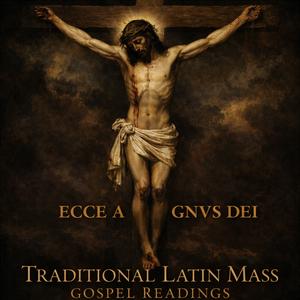
About Traditional Latin Mass Gospel Readings
Readings of the Gospel from the Traditional Latin Mass for every day. I am using the Online Douay Rheims Bible readings. There are good footnotes in this interpretation. Artwork: AI-generated, used with permission.
Podcast websiteListen to Traditional Latin Mass Gospel Readings, The Catechism in a Year (with Fr. Mike Schmitz) and many other podcasts from around the world with the radio.net app
Get the free radio.net app
- Stations and podcasts to bookmark
- Stream via Wi-Fi or Bluetooth
- Supports Carplay & Android Auto
- Many other app features
Get the free radio.net app
- Stations and podcasts to bookmark
- Stream via Wi-Fi or Bluetooth
- Supports Carplay & Android Auto
- Many other app features

Traditional Latin Mass Gospel Readings
Scan code,
download the app,
start listening.
download the app,
start listening.
 Ireland
