
Listen to this podcast in the app for free: Download for free in the App Store
radio.net
Sleep timer
Save favourites
2 episodes
What to Read This Halloween, According to Two Best-Selling Writers
23/10/2026 | 51 mins.Halloween is the season for scary stories, but what actually makes a book frightening? And where should you start if you’re not already a horror reader?
This week on “The Book Review” podcast, Gilbert Cruz talks with two writers who know their way around the genre. Leigh Bardugo is the best-selling author behind the Grishaverse series and the Ninth House trilogy, which just concluded with the release of “Dead Beat.” Paul Tremblay is the author of “A Head Full of Ghosts” and this year’s “Dead but Dreaming of Electric Sheep.”
Bardugo looks back at the books and stories that scared her as a child and talks about why she kept returning to them even after they left her “struggling to sleep for the better part of a month.” She also talks about her love of Anne Rice and recommends horror for readers who might not think the genre is for them.
Tremblay, who describes himself as a lifelong “scaredy-cat,” came to horror fiction later. He talks about the Joyce Carol Oates story that changed the way he thought about reading and writing, and shares some of the books he finds genuinely frightening.
Together, these two authors offer a Halloween reading list that ranges from Shirley Jackson and Stephen King to contemporary writers like Mariana Enriquez, Tananarive Due and Sara Gran.
Books discussed on this episode:
“The Boogeyman,” from “Night Shift,” by Stephen King
“Down a Dark Hall,” by Lois Duncan
“Bunnicula,” by Deborah Howe and James Howe
“’Salem’s Lot,” by Stephen King
“Nightjars,” by Michael Wehunt
“Affinity,” by Sarah Waters
“Black Arts,” by Megan Giddings
“The Reformatory,” by Tananarive Due
“Mazywood,” by Tananarive Due
“The Haunting of Hill House,” by Shirley Jackson
“We Have Always Lived in the Castle,” by Shirley Jackson
“Carrie,” by Stephen King
“The Turn of the Screw,” by Henry James
“Afterward,” from “Ghosts,” by Edith Wharton
“Interview With the Vampire,” by Anne Rice
“The Vampire Lestat,” by Anne Rice
“The Witch of Blackbird Pond,” by Elizabeth George Speare
“The Invisible Parade,” by Leigh Bardugo and John Picacio
“Our Share of Night,” by Mariana Enriquez
“Where Are You Going, Where Have You Been?,” by Joyce Carol Oates
“The Skull,” by Jon Klassen
“The Nest,” by Kenneth Oppel
“Come Closer,” by Sara Gran
“Off the Reservation,” by Stephen Graham Jones
“She Said Destroy,” by Nadia Bulkin
“Issues With Authority,” by Nadia Bulkin
“North American Lake Monsters,” by Nathan Ballingrud
“Wounds,” by Nathan Ballingrud
“Books of Blood,” by Clive Barker
“To Bewitch a Hunter,” by Luciano Lamberti
“Trad Wife,” by Sarah Langan
“Desert Radio,” by Pamela M. Durgin
“The Flayed Man,” by Chloe Lauter
Listen to and Follow ‘The Book Review’
Apple Podcasts | Spotify | Amazon Music | YouTube | iHeartRadio
Unlock full access to New York Times podcasts and explore everything from politics to pop culture. Subscribe today at nytimes.com/podcasts or on Apple Podcasts and Spotify.
We Want to Hear From You
We would love to hear your thoughts about this episode, and about the Book Review’s podcast in general. You can send them to thebookreview@nytimes.com.
Credits
“The Book Review” podcast is hosted by Gilbert Cruz and produced by Amy Pearl, Sarah Diamond and Patricia Sulbarán. The show is mixed by Pedro Rosado.
Special thanks to Dahlia Haddad.
Subscribe today at nytimes.com/podcasts or on Apple Podcasts, Spotify and Amazon Music. You can also subscribe via your favorite podcast app here https://www.nytimes.com/activate-access/audio?source=podcatcher. For more podcasts and narrated articles, download The New York Times app at nytimes.com/app.
Hosted by Simplecast, an AdsWizz company. See pcm.adswizz.com for information about our collection and use of personal data for advertising.A Book Review Critics’ Roundtable
16/10/2026 | 41 mins.As much as we love hearing from authors on “The Book Review” podcast, there are precious few who have read more than our staff book critics — Jennifer Szalai, Alexandra Jacobs and Dwight Garner. The three came on the show to talk about some of their favorite books of the year so far, as well as a few of the titles that helped shape their reading lives.
Books discussed on this episode:
“Nothing Random,” by Gayle Feldman
“Will and Attention,” by Meghan O’Gieblyn
“The Disappearers,” by Marlon James
“American Hagwon,” by Min Jin Lee
“Lives Other Than My Own,” by Emmanuel Carrère
“To the Lighthouse,” by Virginia Woolf
“The American Way of Death,” by Jessica Mitford
“Class: A Guide Through the American Status System,” by Paul Fussell
“The Great War and Modern Memory,” by Paul Fussell
“American Fried,” by Calvin Trillin
“Alice, Let’s Eat,” by Calvin Trillin
“Third Helpings,” by Calvin Trillin
“On Fire,” by Larry Brown
“Betsy-Tacy,” by Maud Hart Lovelace
“Betsy-Tacy and Tib,” by Maud Hart Lovelace
“Rabbit, Run,” by John Updike
“Into the Wood Chipper,” by Nicholas Enrich
“Cool Machine,” by Colson Whitehead
“The Oyster Diaries,” by Nancy Lemann
“Biological War: A Scenario,” by Annie Jacobsen
“Nuclear War: A Scenario,” by Annie Jacobsen
“The Story of Your Life,” by Kathryn Jezer-Morton
“Transcription,” by Ben Lerner
“The Wonderful World That Almost Was: A Life of Peter Hujar and Paul Thek,” by Andrew Durbin
“Contrapposto,” by Dave Eggers
“Brother of the More Famous Jack,” by Barbara Trapido
“Love and Hydrogen,” by Jim Shepard
“Trash!: A Garbageman’s Story,” by Simon Paré-Poupart
Subscribe today at nytimes.com/podcasts or on Apple Podcasts, Spotify and Amazon Music. You can also subscribe via your favorite podcast app here https://www.nytimes.com/activate-access/audio?source=podcatcher. For more podcasts and narrated articles, download The New York Times app at nytimes.com/app.
Hosted by Simplecast, an AdsWizz company. See pcm.adswizz.com for information about our collection and use of personal data for advertising.
More Arts podcasts

Trending Arts podcasts


About The Book Review
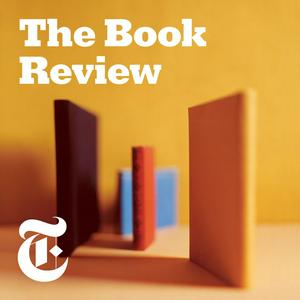
The world's top authors and critics join host Gilbert Cruz and editors at The New York Times Book Review to talk about the week's top books, what we're reading and what's going on in the literary world.
Subscribe today at nytimes.com/podcasts or on Apple Podcasts, Spotify and Amazon Music. You can also subscribe via your favorite podcast app here https://www.nytimes.com/activate-access/audio?source=podcatcher. For more podcasts and narrated articles, download The New York Times app at nytimes.com/app.
Podcast websiteListen to The Book Review, Dish and many other podcasts from around the world with the radio.net app
Get the free radio.net app
- Stations and podcasts to bookmark
- Stream via Wi-Fi or Bluetooth
- Supports Carplay & Android Auto
- Many other app features
Get the free radio.net app
- Stations and podcasts to bookmark
- Stream via Wi-Fi or Bluetooth
- Supports Carplay & Android Auto
- Many other app features
The Book Review
Scan code,
download the app,
start listening.
download the app,
start listening.
The Book Review: Podcasts in Family

 Ireland
