PodcastsEducation for KidsBetween Two Psychs with Dr Adam McCartney and Mike Lane

Between Two Psychs with Dr Adam McCartney and Mike Lane

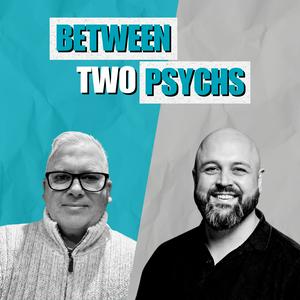
Dr Adam McCartney and Mike Lane
Between Two Psychs with Dr Adam McCartney and Mike Lane
Latest episode

21 episodes

  • Between Two Psychs with Dr Adam McCartney and Mike Lane

    Ep. 19 - What does it take to achieve an Inclusive Curriculum?

    07/04/2026 | 21 mins.
    In this episode, we unpack the Department for Education’s latest push on inclusion and ask a big question… is this the turning point schools have been waiting for or another ambitious idea that may struggle in reality?
    The conversation begins with the growing expectation on schools to embed inclusion into everything they do from leadership and culture to curriculum and classroom practice. While the vision is clear, there’s an immediate tension between ambition and practicality, especially when funding and time feel limited.
    We explore what “inclusion” really means in practice. It’s not just about placing children in mainstream settings it’s about adapting the environment so every child can genuinely access learning. That raises deeper questions about whether the current curriculum allows for that flexibility, or whether it unintentionally limits it.
    A key theme throughout the episode is expertise. But rather than placing that responsibility on one individual, the discussion reframes it as a shared effort. Teachers, leaders, specialists, and external professionals all bring something essential and it’s only through collaboration that meaningful inclusion can happen.
    There’s also an honest look at the pressures teachers face. High expectations, rigid curriculum demands, and accountability systems can sometimes restrict creativity rather than support it. Without space and trust, even the most skilled educators can feel constrained.
    At its core, this episode is about balance finding a way to hold onto ambition while creating systems that genuinely support the people delivering it.
    In This Episode, We Discuss
    What the new inclusion expectations mean for schools in practice
    The reality behind funding and whether it matches the ambition
    Why inclusion requires a shift in curriculum thinking, not just placement
    The idea of shared expertise across teachers, leaders, and specialists
    How collaboration can unlock more effective support for children
    The importance of linking psychological development with classroom practice
    Why This Episode Matters
    Inclusion is no longer a side conversation it’s becoming central to how schools operate. But real change won’t come from policy alone. It depends on how well professionals work together, how much flexibility schools are given and whether teachers are truly supported to meet the diverse needs in their classrooms.
    This episode offers a grounded, honest perspective on what it will take to turn inclusion from an expectation into a reality.
    Connect with Mike Lane
    Website: ridgewaypsychology.co.uk
    LinkedIn: Michael Lane
    Connect with Me
    Instagram: @‌dradammcartney
    Website: dradammccartney.com
    YouTube: @‌Dr.AdamMcCartney
  • Between Two Psychs with Dr Adam McCartney and Mike Lane

    Ep. 18 - Experts at Hand… But Is the System Ready?

    31/03/2026 | 30 mins.
    In this episode, we explore whether the “expert at hand” model can truly improve the S.E.N.D system, or whether it risks becoming another strong idea that struggles in practice.
    The conversation starts with a simple but important question… who actually is the expert? Rather than placing that label on one professional, the discussion reframes expertise as something shared. Teachers, SENCOs, specialists, families, and even the child all bring valuable insight and it’s only when those perspectives come together that meaningful support can happen.
    We also dig into the reality behind the policy. While the move towards inclusion and early intervention sounds promising, there are real concerns about how it will work in practice. Questions around funding, structure and collaboration remain unclear, and without those foundations, even the best intentions can fall apart.
    A key theme running throughout is relationships. When professionals know each other and understand how they work, support becomes more effective and families feel reassured. Without that, the system can feel fragmented, leaving parents and schools to navigate challenges alone.
    The episode also shifts perspective to the child’s voice, asking: what do you need to know and what are you going to do to help me? This question cuts through the complexity and brings the focus back to what really matters.
    Ultimately, the conversation highlights that real change won’t come from policy alone. It depends on people, on collaboration and on keeping the child at the centre of every decision.
    In This Episode, We Discuss
    What the “expert at hand” model really means in practice
    Why shared expertise matters more than individual roles
    The gap between policy ambition and real-world delivery
    The importance of relationships in effective support
    Why the child’s voice should guide decision-making
    Why This Episode Matters
    The S.E.N.D system is under pressure, and change is needed. This episode reminds us that inclusion isn’t just about new frameworks it’s about how people work together, how trust is built and how consistently we focus on the needs of the child.
    Connect with Mike Lane
    Website: ridgewaypsychology.co.uk
    LinkedIn: Michael Lane
    Connect with Me
    Instagram: @‌dradammcartney
    Website: dradammccartney.com
    YouTube: @‌Dr.AdamMcCartney

  • Between Two Psychs with Dr Adam McCartney and Mike Lane

    Ep. 17 - The Neuroscience of Learning ( Inspired by The Little Book of Big Stuff About the Brain) With Dr. Andrew Curran

    24/03/2026 | 32 mins.
    In this episode of Between Two Psychs, we’re joined by paediatric neurologist and author Dr. Andrew Curran to explore what the science of the brain can teach us about learning, relationships and emotional connection in education.
    Dr. Andrew shares insights from decades of studying the neurobiology of learning, explaining how the brain forms connections between nerve cells and why those connections depend heavily on emotional engagement.
    One of the central ideas in this conversation is that learning is not driven purely by intellectual processes. Instead, it is deeply influenced by the emotional brain.
    When students feel safe, understood and connected to the person teaching them, the brain becomes biologically primed to learn.
    We also explore the role of dopamine in forming new neural connections and how emotional relationships in the classroom can activate the systems that allow learning to happen.
    Dr. Andrew explains why the connection between teacher and student is not simply helpful it is central to how the brain processes and stores knowledge.
    The conversation also touches on the impact of trauma, stress, and attachment on both students and educators. These experiences can shape the patterns stored in the brain and influence behaviour, learning and emotional responses in the classroom.
    A powerful metaphor discussed in the episode is the idea of “facing the tiger,” representing the internal emotional patterns we all carry from earlier experiences.
    Understanding and reflecting on these patterns can help educators become more aware of what they bring into the classroom and how it affects the learning environment.
    When classrooms are built on trust, safety and understanding, they create the conditions where both students and staff can thrive.
    In This Episode, We Discuss
    How learning happens at the level of neural connections in the brain
    Why emotional relationships are central to effective learning
    Why relational approaches in education support both learning and wellbeing
    Why This Episode Matters
    Education is often discussed in terms of curriculum, assessment and performance.
    Understanding how the brain forms connections helps us see why trust, safety and emotional engagement are not optional extras in education they are the foundation that learning is built upon.
    When schools create environments where both students and staff feel understood and supported, the conditions for meaningful learning become possible.
    Connect with Dr. Andrew Curran (Guest)
    LinkedIn: Andrew Curran
    Connect with Mike Lane
    Website: ridgewaypsychology.co.uk
    LinkedIn: Michael Lane
    Connect with Mike Lane
    Instagram: @‌dradammcartney
    Website: dradammccartney.com
    YouTube: @‌Dr.AdamMcCartney

  • Between Two Psychs with Dr Adam McCartney and Mike Lane

    Ep. 16 - More S.E.N.D Places Won’t Fix the System

    17/03/2026 | 30 mins.
    In this episode of Between Two Psychs, we explore a key question emerging from the S.E.N.D White Paper:
    Is creating more S.E.N.D places enough, or are we overlooking the workforce needed to support them?
    While significant funding has been announced to expand provision, we reflect on whether enough attention is being given to developing the professionals who make inclusion work in practice.
    Schools may gain more places, but without confident and supported staff, the pressure on the system could simply increase.
    A central theme in our conversation is capacity versus demand.
    We discuss the difference between sufficiency planning and workforce development and why focusing only on infrastructure risks missing the bigger picture.
    Inclusion is not just about creating space in the system it depends on skilled teachers, strong leadership, and collaborative professional support.
    We also explore how the role of educational psychologists may evolve.
    Rather than relying solely on traditional assessment models, we highlight the value of consultative approaches that help teachers understand the child’s perspective and build solutions together.
    This kind of work focuses on empowerment, helping school staff develop confidence and insight in their everyday practice.
    In This Episode, We Discuss:
    The difference between creating S.E.N.D places and
    developing the workforce
    Why capacity in the system matters as much as provision
    The role of consultation in empowering teachers
    Pressures facing schools and leadership teams
    Why inclusion requires whole-system thinking
    Why This Episode Matters
    The S.E.N.D system is at a turning point.
    The direction of reform suggests a move toward greater inclusion and belonging in schools, but the success of that vision will depend on how well professionals are supported to deliver it.
    Ultimately, meaningful reform is not just about expanding provision it’s about strengthening the people and systems that support children every day.
    Connect with Mike Lane
    Website: ridgewaypsychology.co.uk
    LinkedIn: Michael Lane
    Connect with Me
    Instagram: @‌dradammcartney
    Website: dradammccartney.com
    YouTube: @‌Dr.AdamMcCartney

  • Between Two Psychs with Dr Adam McCartney and Mike Lane

    Ep. 16 - More S.E.N.D Places Won’t Fix the System

    16/03/2026 | 30 mins.
    In this episode of Between Two Psychs, we explore a key question emerging from the S.E.N.D White Paper:
    Is creating more S.E.N.D places enough, or are we overlooking the workforce needed to support them?
    While significant funding has been announced to expand provision, we reflect on whether enough attention is being given to developing the professionals who make inclusion work in practice.
    Schools may gain more places, but without confident and supported staff, the pressure on the system could simply increase.
    A central theme in our conversation is capacity versus demand.
    We discuss the difference between sufficiency planning and workforce development, and why focusing only on infrastructure risks missing the bigger picture.
    Inclusion is not just about creating space in the system it depends on skilled teachers, strong leadership, and collaborative professional support.
    We also explore how the role of educational psychologists may evolve.
    Rather than relying solely on traditional assessment models, we highlight the value of consultative approaches that help teachers understand the child’s perspective and build solutions together.
    This kind of work focuses on empowerment, helping school staff develop confidence and insight in their everyday practice.
    In This Episode, We Discuss:
    The difference between creating S.E.N.D places and
    developing the workforce
    Why capacity in the system matters as much as provision
    The role of consultation in empowering teachers
    Pressures facing schools and leadership teams
    Why inclusion requires whole-system thinking
    Why This Episode Matters
    The S.E.N.D system is at a turning point.
    The direction of reform suggests a move toward greater inclusion and belonging in schools, but the success of that vision will depend on how well professionals are supported to deliver it.
    Ultimately, meaningful reform is not just about expanding provision it’s about strengthening the people and systems that support children every day.
    Connect with Mike Lane
    Website: ridgewaypsychology.co.uk
    LinkedIn: Michael Lane
    Connect with Me
    Instagram: @‌dradammcartney
    Website: dradammccartney.com
    YouTube: @‌Dr.AdamMcCartney

More Education for Kids podcasts

About Between Two Psychs with Dr Adam McCartney and Mike Lane

In this podcast Adam and Mike address all your education questions. They show the power of thinking psychologically can have on resolving everyday issues within education, learning and in raising happy children.
Podcast website

Listen to Between Two Psychs with Dr Adam McCartney and Mike Lane, Smash Boom Best: A funny, smart debate show for kids and family and many other podcasts from around the world with the radio.net app

Get the free radio.net app

  • Stations and podcasts to bookmark
  • Stream via Wi-Fi or Bluetooth
  • Supports Carplay & Android Auto
  • Many other app features