

Listen to this podcast in the app for free: Download for free in the App Store
radio.net
Sleep timer
Save favourites
161 episodes
What are Wildlife Research-Adjacent Jobs and Should You Take One?
28/07/2026 | 39 mins.What if I told you that most jobs in wildlife, conservation, and environmental science aren't directly in research? Would you be shocked? Well, it's true! And that's exactly what I talk about in this episode of the Fancy Scientist Podcast.
When most people think of wildlife work, they think of jobs in wildlife research. Those are jobs where you pose questions or objectives, and then collect, process, and analyze data to address them. But when you compare these jobs to all of the others in the realm of wildlife, conservation, and environmental sciences work, they are actually in the minority.
I am calling these non- ”traditional” jobs wildlife research-adjacent work or even just wildlife-adjacent jobs, even though they relate to conservation and the environmental sciences, and some are definitely in the wildlife field.
This was a topic suggested by members of my Getting a Job in Wildlife Biology Facebook group a couple of years ago because there is strong interest in them, so I thought it would be the perfect topic to take a deep dive into for the podcast because it is a big one.
In fact, it’s WAY too much to cover in just an episode. This is by no means a full list, and there’s not enough time to go into them in-depth. For example, in my group mentoring program, the Successful Wildlife Professional, we spend at least 30 minutes for each job and organization type.
I’ll walk you through the major categories: data analytical and processing roles like GIS, statistics, lab work, and computer science; communications, outreach, fundraising, and education jobs; wildlife health careers, rehab, and vet work; zookeeping; more environmental science roles in water quality, forestry, and agriculture; corporate sustainability positions; and outdoor recreation jobs.
But first, before you even consider a wildlife-adjacent job, I ask you to question WHY you’re pursuing one of these jobs in the first place. Is it because it is truly a job you want? Or is it because you feel like you can’t get the job you really do want?
In my experience working with individuals seeking these kinds of jobs, it’s usually the latter, and if that’s the case, I encourage you to go after what it is you really want because this is a fixable problem. I identify the two big reasons that people can’t get wildlife jobs in the first place and what you can do about them.
Finally, I'll leave you with this: wildlife jobs have a reputation for being competitive and low-paying, but that's not universal, especially when you consider adjacent jobs. In a recent podcast interview with Patrick Rainey of Ducks Unlimited, we talked about some wetlands restoration jobs that are in demand and also well-paying. So if getting a high salary is important to you, you might want to explore wildlife-adjacent work.
Specifically, we cover:
What "wildlife-adjacent" work means and how it differs from traditional research careers
The two biggest reasons people fail to land wildlife jobs, and why that matters before you consider an adjacent path
When pursuing a wildlife-adjacent job is a smart move even if it’s not what you really want, and how to prevent it from becoming a trap
Analytics jobs, including GIS, statistics, lab work, and computer science roles
Communications, outreach, fundraising, and education jobs, including science writing and ecotourism
Wildlife health careers like rehabilitation and vet work
Zoo and aquarium roles outside of research
Environmental science jobs in water quality, forestry, agriculture, and more
Museum work
Corporate sustainability roles, even within companies you wouldn't expect to have a conservation focus, and how this can indeed make a big difference for wildlife
Outdoor recreation jobs
Why some wildlife-adjacent fields are actually in high demand
And more!
Jump links:
2:21 What Are Wildlife Research-Adjacent Jobs?
4:25 Common Job Search Mistakes
16:19 Data & Analytics Jobs
21:39 Communications & Education Jobs
28:19 Wildlife Rehab & Vet Careers
30:51 Zookeeping & Aquariums
35:11 Forestry, Agriculture & Museums
37:05 Private Sector and Corporations
37:47 Final Takeaways
Dream of being a wildlife biologist, zoologist, conservation biologist, or ecologist? Ready to turn your love of animals into a thriving career?🌿🐘 Then…
🐾 Get my FREE Weekly Wildlife Wrap-Up where every Friday, I share strategies on how to stand out and get hired in wildlife, conservation, and environmental careers using a framework that's landed my students permanent jobs, internships, and more: https://stephanieschuttler.podia.com/wildlife-wrap-up
📚 Read Getting a Job in Wildlife Biology: What It’s Like and What You Need to Know: https://www.amazon.com/Getting-Job-Wildlife-Biology-What/dp/B08JDYXS4G/
I’m Dr. Stephanie Manka (formerly Schuttler), a wildlife biologist of 20 yrs who is on a mission to empower wildlife professionals and break stereotypes of scientists so they can get jobs, live out their life’s purpose, and make a difference in this world.
🎥 How I became a wildlife biologist: https://youtu.be/zBvHRDO7gIg
Full show notes:
https://stephanieschuttler.com/fancy-scientist-podcast-157-wildlife-adjacent-jobs/
Let’s connect! 🤝✨
Website: https://fancyscientist.com/
Getting a Job in Wildlife Biology Facebook Group: https://www.facebook.com/groups/gettingajobinwildlifebiology
YouTube: https://www.youtube.com/@FancyScientist
Instagram: https://www.instagram.com/fancy_scientist/
LinkedIn: https://www.linkedin.com/in/sgschuttler/
Facebook: https://www.facebook.com/fancyscientist/
Twitter: https://twitter.com/FancyScientist
Threads: https://www.threads.net/@fancy_scientist
Bluesky: https://bsky.app/profile/fancyscientist.bsky.social
Pinterest: https://www.pinterest.com/fancyscientist/Do Zoos Help Conservation? Research, Ethics, and Careers
14/07/2026 | 33 mins.Do zoos actually help conservation? Contribute to wildlife research? Or are they mostly to entertain people?
A couple of years ago, I did a podcast interview all about zoos, and I thought this would be a great topic for my own podcast due to the complexity. It’s not a straightforward answer…
In fact, during the pandemic, when we were all watching The Tiger King, I did a whole blog post series on the ethics and research impacts of zoos, and these are still some of my most popular posts!
Zoos were originally built purely for entertainment and were the only way most people could see an exotic animal. Placed in cement cages or concrete pits, animals were there to fascinate, but at the expense of their well-being.
But as scientists and the public have learned more about animals, some zoos began to change. There are now high-quality institutions running genuine conservation science, captive breeding programs, and research on wild animal populations.
But unfortunately, not all zoos have stepped up. There are still dilapidated roadside attractions where animals are locked in cement cages, might be forced to do unnatural and harmful tricks, or be bred to have a constant supply of babies for tourists to pose with for photos, and with nowhere to go once they get older.
These zoos might do things that they call research, but really, this is a form of greenwashing so that they can use these small projects to justify their money-making operations from animals.
On the flip side, I talk about how zoos genuinely contribute to conservation. For example, conducting real research on animals outside of their zoo population, providing genetic safety nets, and captive breeding animals like the black-footed ferret and golden lion tamarin from the brink of extinction.
In this episode of the Fancy Scientist podcast, I’m going to walk you through zoos so that you can understand these differences, as well as offer some guidelines so that you can make an informed decision for yourself. I break down what separates a good zoo from a bad one, and the gray areas in between.
I also address the harder question of whether zoos change people's minds. Many claim that zoos educate the public about wildlife, but just because they present information doesn’t mean that people take it in or take conservation actions…Those are much harder to change. I talk about a meta-analysis of 56 studies on visitor attitudes after zoo visits, plus how zoos like Cheyenne Mountain Zoo are trying to close the gap between education and action with things like their sustainable palm oil initiative.
And because this podcast is always about helping you build a wildlife career, I offer an overview of the different kinds of roles that you can obtain for employment, as well as my own behind-the-scenes experience, where I monitored elephant pregnancy hormones and worked on reproductive research for cotton-top tamarins.
You’ll get a rundown of the career paths zoos actually offer: zookeeping, education, communications, research, and creative roles like videography, plus wildlife-adjacent jobs in finance, fundraising, and law. I also explain what kinds of zoo work won’t help your wildlife career, no matter how much hands-on animal experience it seems to offer.
Specifically, we talk about:
The history of zoos, and how they evolved from pure entertainment into institutions that can contribute to research, education, and conservation
The clear signs that separate an ethical zoo from an unethical one including enrichment, keeper barriers, and whether the public is allowed to touch wild animals
Why Tiger King-style roadside zoos like Myrtle Beach Safari don't count as real conservation work, and how to spot greenwashing when a zoo claims to "support conservation"
Why zoo populations serve as a safety net for species with critically small wild populations
Real conservation success stories through captive breeding, including golden lion tamarins and black-footed ferrets
The behind-the-scenes research zoos do that visitors never see, including my own experience monitoring elephant hormones as a Disney's Animal Kingdom intern
Whether zoos actually succeed at changing visitor attitudes and behavior toward conservation, and what the research says
The strongest arguments against zoos
An overview of wildlife career paths at zoos: zookeeping, education, communications, research, creative and media roles, and wildlife-adjacent careers like finance, fundraising, and law
And MORE!
Jump links:
1:52 Tiger King during COVID
4:59 History of zoos: from pure entertainment to modern standards
7:28 Roadside zoos & Tiger King-style operations
8:08 Signs of an ethical zoo: no touching wild animals, enrichment, barriers
13:00 Captive breeding & maintaining genetic diversity
15:10 Reintroduction programs & minimizing human contact
16:37 Personal experience at Disney's Animal Kingdom (elephant endocrine research)
20:31 Zoos & education: Do they change attitudes toward wildlife?
23:47 The argument against zoos
25:49 AZA accreditation & evolving zoo standards
27:56 Careers in zoos overview
33:02 Outro & upcoming free training: The Four Faux Paws
Dream of being a wildlife biologist, zoologist, conservation biologist, or ecologist? Ready to turn your love of animals into a thriving career?🌿🐘 Then…
🐾 Get my FREE Weekly Wildlife Wrap-Up where every Friday, I share strategies on how to stand out and get hired in wildlife, conservation, and environmental careers using a framework that's landed my students permanent jobs, internships, and more: https://stephanieschuttler.podia.com/wildlife-wrap-up
📚 Read Getting a Job in Wildlife Biology: What It’s Like and What You Need to Know: https://www.amazon.com/Getting-Job-Wildlife-Biology-What/dp/B08JDYXS4G/
I’m Dr. Stephanie Manka (formerly Schuttler), a wildlife biologist of 20 yrs who is on a mission to empower wildlife professionals and break stereotypes of scientists so they can get jobs, live out their life’s purpose, and make a difference in this world.
🎥 How I became a wildlife biologist: https://youtu.be/zBvHRDO7gIg
Full show notes:
👉https://stephanieschuttler.com/fancy-scientist-podcast-156-zoos/
Let’s connect! 🤝✨
Website: https://fancyscientist.com/
Getting a Job in Wildlife Biology Facebook Group: https://www.facebook.com/groups/gettingajobinwildlifebiology
YouTube: https://www.youtube.com/@FancyScientist
Instagram: https://www.instagram.com/fancy_scientist/
LinkedIn: https://www.linkedin.com/in/sgschuttler/
Facebook: https://www.facebook.com/fancyscientist/
Twitter: https://twitter.com/FancyScientist
Threads: https://www.threads.net/@fancy_scientist
Bluesky: https://bsky.app/profile/fancyscientist.bsky.social
Pinterest: https://www.pinterest.com/fancyscientist/My WILDEST Wildlife Biologist Moments
23/06/2026 | 44 mins.As a wildlife biologist, you have incredible moments with animals that are nearly impossible for other people to experience. But you also do some pretty crazy, strange, and downright WEIRD things.
In my 17 years working in the field across four continents and for a variety of organizations, I've had experiences that range from terrifying to awe-inspiring to disgusting. So in this episode of the Fancy Scientist podcast, I'm sharing my top ten with you! Plus, you’ll get a couple of bonus memories.
The show notes for this episode will be really short because I don’t want to give away too much, but I’ll take you on my adventures from Central Africa to Central Missouri, and from the suburbs to remote mountaintops. You’ll learn about the most dangerous things that I did, the (multiple) scary animal encounters that I had, and how I felt like I was living in an Indian Jones movie at times.
You’ll hear about encounters with lions and tigers and (no bears, sorry), but other animals!
Specifically, I go over:
My top ten moments in my 17 years of working as a wildlife biologist, including the scariest, most awe-inspiring, rare, weirdest, and more
The unexpected things I never thought I would do as a wildlife biologist
Why wildlife biologists have to do some really weird things for research
How my perception of what was scary changed over time
Psychologically scary vs what’s really scary
The scariest moment of my entire life
And much, much more! I don’t want to give too much away
Whether you want to work in wildlife professionally, you're already in the field, or you simply love wild animals and wild places, you'll walk away from this episode inspired to go explore the natural world, whether it’s traveling to a new country or taking a deep dive in the green spaces in your neighborhood. Nature is everywhere and ready for you to explore.
Jump Links:
00:00 Intro and why I'm doing superlatives
03:42 Most scary, early career
09:17 Most awe-inspiring
12:58 Most psychologically scary
15:03 Feeling most like a wildlife biologist
17:53 Most Indiana Jones
21:55 Closest animal encounter
23:59 Most rare and unique
26:12 Most dangerous
29:28 Weirdest
32:21 Scariest moment of my life
39:33 Bonus moment 1
41:42 Bonus moment 2
Dream of being a wildlife biologist, zoologist, conservation biologist, or ecologist? Ready to turn your love of animals into a thriving career?🌿🐘 Then…
🐾 Get my FREE Weekly Wildlife Wrap-Up where every Friday, I share strategies on how to stand out and get hired in wildlife, conservation, and environmental careers using a framework that's landed my students permanent jobs, internships, and more: https://stephanieschuttler.podia.com/wildlife-wrap-up
📚 Read Getting a Job in Wildlife Biology: What It’s Like and What You Need to Know: https://www.amazon.com/Getting-Job-Wildlife-Biology-What/dp/B08JDYXS4G/
I’m Dr. Stephanie Manka (formerly Schuttler), a wildlife biologist of 20 yrs who is on a mission to empower wildlife professionals and break stereotypes of scientists so they can get jobs, live out their life’s purpose, and make a difference in this world.
🎥 How I became a wildlife biologist: https://youtu.be/zBvHRDO7gIg
Full show notes:
👉https://stephanieschuttler.com/fancy-scientist-podcast-155-wildest-wildlife/
Let’s connect! 🤝✨
Website: https://fancyscientist.com/
Getting a Job in Wildlife Biology Facebook Group: https://www.facebook.com/groups/gettingajobinwildlifebiology
YouTube: https://www.youtube.com/@FancyScientist
Instagram: https://www.instagram.com/fancy_scientist/
LinkedIn: https://www.linkedin.com/in/sgschuttler/
Facebook: https://www.facebook.com/fancyscientist/
Twitter: https://twitter.com/FancyScientist
Threads: https://www.threads.net/@fancy_scientist
Bluesky: https://bsky.app/profile/fancyscientist.bsky.social
Pinterest: https://www.pinterest.com/fancyscientist/Don't Shoot the Messenger: Navigating AI in Wildlife Conservation Work
09/06/2026 | 48 mins.AI seems like it’s EVERYWHERE nowadays, and I know if you’re a conservationist like me, you’re concerned about its environmental impacts, and maybe even avoiding it because of them…
But I recently read an article that scared the bejesus out of me. It basically stated: AI is here, and those who don’t know how to use it well, WILL be left behind.
And then I realized, AI is already here, not just in our everyday lives (you can’t run a Google search without it), but it’s also here in wildlife work. Big conservation organizations all over the globe are using AI to document, assess, and analyze biodiversity to combat huge losses. Platforms like iNaturalist, Merlin Bird ID, and Wildlife Insights all use AI models.
And now I’m starting to see it pop up in wildlife job advertisements. Posts are now asking for applicants to know how to use and run AI effectively in wildlife work by integrating Claude and ChatGPT in their workflow and processes.
This episode is NOT about the environmental impacts of AI, but rather that it’s that AI is here, hard to avoid to some extent, and that organizations are already using it. If you’re pursuing wildlife work, they are now also asking you to adopt it. And just like the article I read, I’m concerned that if you don’t adopt it, you’ll be left behind.
So in this episode of the Fancy Scientist podcast, I am talking all about AI in wildlife work. I'll be honest, I was a little nervous to record this one. It's a topic that can ruffle some feathers, and as you’ll learn in the episode, there is a lot of real pushback from not just environmentalists, but society as a whole.
My goal in providing you with this episode isn't to tell you whether to use AI or avoid it. I’ll leave that up to you. Rather, it's to provide you with my perspective using 20+ years in wildlife work, and actually having worked on a large AI conservation project, on how it's already being used in nature and conservation research, how I expect it to be used in the future, and what it means for your career.
In this episode, I walk you through how large conservation organizations are using AI with examples across different species and systems, and what it means for you as a job-seeker. Should you use AI to write your cover letters and resume? Is AI messing up the system so that your applications can’t get through? I’ll cover all of that for you.
So if you're worried about what AI means for wildlife careers, or maybe you're curious and didn’t realize the extent to which it is being used in conservation research right now, or just want to get the competitive edge when it comes to wildlife, conservation, or environmental careers, this episode is for you.
Specifically, we talk about:
Real examples of how AI is being used in wildlife research right now, such as camera trap processing, animal behavior studies, in surveys, and more
How AI is changing data processing roles and what this means for internships and field assistant positions. Will these jobs be gone?
Why wildlife careers are becoming more quantitative and computer-heavy, and what skills to prioritize
How AI is going to continue to affect wildlife jobs and careers at a variety of levels
How AI is affecting the job application process. Should you use AI to write a cover letter? Resume?
If AI is making it harder for your job application to move to the interview stage
How leaning on AI can actually hurt your career when it comes to job applications, networking, and standing out
Why it’s more important than ever to be authentic and do something different to separate yourself from others when seeking jobs
What conservation organizations are starting to ask for when it comes to AI in wildlife jobs
And more!
Jump Links:
00:00 Welcome and Topic
04:25 AI Environmental Impact and Context
08:54 AI Is Already Here in Wildlife Work
12:57 AI Tools in Conservation
17:31 Research Automation Examples
22:00 Jobs and Skills Shift
26:21 Data Heavy Future
30:10 Regular Job Postings Seeking AI Skills
34:18 Authenticity Over Automation for Job Applications
43:26 AI in the Hiring Process
47:02 Final Thoughts and Next Steps
Dream of being a wildlife biologist, zoologist, conservation biologist, or ecologist? Ready to turn your love of animals into a thriving career?🌿🐘 Then…
🐾 Get my FREE Weekly Wildlife Wrap-Up where every Friday, I share strategies on how to stand out and get hired in wildlife, conservation, and environmental careers using a framework that's landed my students permanent jobs, internships, and more: https://stephanieschuttler.podia.com/wildlife-wrap-up
📚 Read Getting a Job in Wildlife Biology: What It’s Like and What You Need to Know: https://www.amazon.com/Getting-Job-Wildlife-Biology-What/dp/B08JDYXS4G/
I’m Dr. Stephanie Manka (formerly Schuttler), a wildlife biologist of 20 yrs who is on a mission to empower wildlife professionals and break stereotypes of scientists so they can get jobs, live out their life’s purpose, and make a difference in this world.
🎥 How I became a wildlife biologist: https://youtu.be/zBvHRDO7gIg
Full show notes:
👉https://stephanieschuttler.com/fancy-scientist-podcast-154-ai-in-wildlifework/
Let’s connect! 🤝✨
Website: https://fancyscientist.com/
Getting a Job in Wildlife Biology Facebook Group: https://www.facebook.com/groups/gettingajobinwildlifebiology
YouTube: https://www.youtube.com/@FancyScientist
Instagram: https://www.instagram.com/fancy_scientist/
LinkedIn: https://www.linkedin.com/in/sgschuttler/
Facebook: https://www.facebook.com/fancyscientist/
Twitter: https://twitter.com/FancyScientist
Threads: https://www.threads.net/@fancy_scientist
Bluesky: https://bsky.app/profile/fancyscientist.bsky.social
Pinterest: https://www.pinterest.com/fancyscientist/Not Accepting No! Succeeding at Wildlife Careers with a Disability: Interview with Grace O’Dea
26/05/2026 | 44 mins.Do you want a wildlife, conservation, or environmental sciences career, but feel that it is not physically possible for you? Do you have health challenges or a condition that limits you and are worried that it prevents you from working in a field that is notoriously demanding? Or do you feel discriminated against because of these circumstances?
You are not alone! I have heard from aspiring wildlife biologists all over the world that they struggle with conditions like chronic fatigue, anxiety, sight disabilities, strokes, ADHD, and more and are concerned that they can’t work in this field, which they love so much. I, myself, struggle with an autoimmune condition that greatly slows down my metabolism, and has made me heavily fatigued at key points in my career. Well, in this week’s episode of the Fancy Scientist Podcast, I’m showing you that it’s possible for you with an interview with a young conservationist who blew me away with her unstoppable attitude.
When I first heard Grace O’Dea speak on a Green Jobs webinar event, I was so inspired by her story that I knew I had to have her on the podcast. Grace has cerebral palsy, and at 17, she was told by someone that her lack of upper-body strength meant that she could never work in an animal career. But that’s not where her story ended…
In fact, she used that “no,” as ammunition to propel her wildlife career. Today she is a permanent educator at a major aquarium and has previously worked in physically demanding jobs at farms and zoos, proving that naysayer wrong.
This week’s episode of the Fancy Scientist Podcast is all about NOT accepting no as an answer when it comes to pursuing your dreams or whatever conservation goal you want to accomplish no matter what your circumstances are. If you want to work in the wildlife field, you'll want to listen for sure, but this episode is for everyone. No matter what you were going after in your career or even your life, the lessons that Grace shares will apply to the seemingly impossible situation that you are going through.
Through our conversation, you’ll learn how Grace navigated her path by refusing to let her disability define her. She didn't let being questioned stop her; instead, she purposely built her physical strength at the gym. She didn’t hide her disability either. Rather, she voiced her concerns to employers so that they could find ways to work with her condition rather than around it.
Grace shares her experience working with everything from hedgehogs to wild deer, and how she uses positive messaging and hope to impact the public rather than the typical conservation messages of doom and gloom. She explains how she handles the physical aspects of her current and past jobs and why being "ballsy" and confident is your greatest asset, even if you are naturally shy or introverted.
And the results of her boldness are incredible! Grace started as a seasonal employee, but she didn't just wait for it to end and look for something else. Instead, she took the initiative to email her bosses and ask if her position could be made permanent. And it worked! She now has a full-time permanent position as a conservation educator delivering daily talks to aquarium guests and teaching the next generation about ocean conservation.
Grace also excels at networking. She lets us in on her strategies, which led to her being invited as a guest speaker for her university’s graduation and connecting with influencers in the green jobs space. We talk about how she leverages LinkedIn by active and intentional posting, using hashtags strategically, and attracting professionals to her profile through sharing her personal and professional achievements.
I also noticed that Grace is a fancy scientist herself. We discuss her fancy side and how she owns her personal style and unique comedic value to be an unconventional, yet highly effective educator.
After the interview, I break down key take-home points for you to apply to your own career or situation, including sharing resources helping you adopt Grace's unstoppable mindset, using LinkedIn as a search strategy, and why you should never be afraid to ask for a job extension or a permanent role.
If you ever thought you couldn’t pursue conservation because of a health condition, your background, or a lack of financial resources, Grace is living proof that it’s all possible! After listening to this episode, I know you’ll walk away filled with hope, and ready to face the challenge in your career head on.
Specifically, we talk about:
Grace’s career path from graduation to securing a permanent educator role at an aquarium
What it was like for Grace to work at various kinds of animal organizations and places including farms and zoos
Magical wildlife moments from Grace’s career such as stampeding deer and circling buzzards, and humbling moments like collecting hedgehog poop
Why you shouldn't "play it safe" if you have a passion for animals and want to pursue this kind of work
The critical importance of a resilient mindset when facing physical or psychological barriers in the field
How to navigate a wildlife career while managing a disability or other health condition including when and how to disclose health conditions and get accommodations
How to ask for what you want in wildlife work
The power of LinkedIn for attracting employers and why posting once a week can change your career trajectory
Grace’s dissertation research on positive vs. negative messaging in conservation campaigns
How to give the public hope through small, actionable steps like beach clean-up
And more!
Jump links:
03:53 Meet Grace O’Day
06:02 Told No at 17
07:54 Finding Her Why
08:42 Aquarium Career Path
11:55 Turning Seasonal Permanent
16:14 Impact Through Education
19:20 Navigating Cerebral Palsy at Work
25:52 Networking With LinkedIn
29:50 LinkedIn for Wildlife Careers Masterclass
31:33 Hedgehog Sanctuary Stories
34:08 Being A Fancy Scientist
35:25 Advice And Future Plans
38:00 Key Takeaways And Wrap
Dream of being a wildlife biologist, zoologist, conservation biologist, or ecologist? Ready to turn your love of animals into a thriving career?🌿🐘 Then…
🐾 Get my FREE Weekly Wildlife Wrap-Up where every Friday, I share strategies on how to stand out and get hired in wildlife, conservation, and environmental careers using a framework that's landed my students permanent jobs, internships, and more: https://stephanieschuttler.podia.com/wildlife-wrap-up
📚 Read Getting a Job in Wildlife Biology: What It’s Like and What You Need to Know: https://www.amazon.com/Getting-Job-Wildlife-Biology-What/dp/B08JDYXS4G/
I’m Dr. Stephanie Manka (formerly Schuttler), a wildlife biologist of 20 yrs who is on a mission to empower wildlife professionals and break stereotypes of scientists so they can get jobs, live out their life’s purpose, and make a difference in this world.
🎥 How I became a wildlife biologist: https://youtu.be/zBvHRDO7gIg
Full show notes:
👉https://stephanieschuttler.com/fancy-scientist-podcast-153-grace-odea/
Let’s connect! 🤝✨
Website: https://fancyscientist.com/
Getting a Job in Wildlife Biology Facebook Group: https://www.facebook.com/groups/gettingajobinwildlifebiology
YouTube: https://www.youtube.com/@FancyScientist
Instagram: https://www.instagram.com/fancy_scientist/
LinkedIn: https://www.linkedin.com/in/sgschuttler/
Facebook: https://www.facebook.com/fancyscientist/
Twitter: https://twitter.com/FancyScientist
Threads: https://www.threads.net/@fancy_scientist
Bluesky: https://bsky.app/profile/fancyscientist.bsky.social
Pinterest: https://www.pinterest.com/fancyscientist/
More Nature podcasts
 Rewilding the World with Ben GoldsmithEarth Sciences, Nature, Science
 Get BirdingLeisure, Natural Sciences, Nature, Science
 NaturefileNature, Science
 In Your NatureNature, Science
 Chris Skinner's Countryside PodcastsEducation, Home & Garden, Leisure, Nature, Science
 Tooth & Claw: True Stories of Animal AttacksComedy, Nature, Science, True Crime
 The Critter ShedComedy, Nature, Science, Society & Culture
 Life WithoutDocumentary, Nature, Science, Society & Culture
 Mooney Goes WildNature, Science
Trending Nature podcasts
 Open CountryNature, Science, Society & Culture
- Tooth & Claw: True Stories of Animal AttacksComedy, Nature, Science, True Crime
 Bigfoot SocietyNatural Sciences, Nature, Science
- Chris Skinner's Countryside PodcastsEducation, Home & Garden, Leisure, Nature, Science
- The Critter ShedComedy, Nature, Science, Society & Culture
 Wild Tales | Nature PodcastNature, Places & Travel, Science, Society & Culture
 Wildlife Rehabilitation: From Rescue to Release
 EcolutionNature, Science
 Accidental Gods - The Thrutopian PodcastNature, Religion & Spirituality, Science, Spirituality
 Re:Energise from ESBArts, Nature, Science, Society & Culture
 Scotland OutdoorsNature, Science
 The Sod PodBusiness, Nature, News, News Commentary, Science
 Передача данныхCourses, Education, Nature, Science, Technology
 The Dairy TrailDocumentary, Nature, Science, Society & Culture
 Forest Schooled PodcastNature, Science
 Wild LivesNature, Science
 Messages from the WildNature, Science
- In Your NatureNature, Science
- Fancy Scientist with Dr. Stephanie MankaNature, Science
- Get BirdingLeisure, Natural Sciences, Nature, Science
About Fancy Scientist with Dr. Stephanie Manka
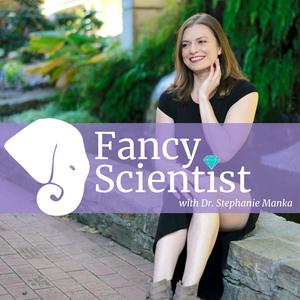
Dr. Stephanie Schuttler, the Fancy Scientist, is a wildlife biologist who loves breaking stereotypes and talking about the natural world. In this podcast, she shares her knowledge of animals, experiences as a wildlife biologist, and simple lifestyle choices you can make to conserve nature. Her 17 years in wildlife biology taught her that science alone cannot save species. We need to take collective action through simple things we can do every day. This podcast is for anyone who likes animals and wants to help make the world a better place for them, and for us too. You’ll learn cool things about the animals around you from her own and other scientists’ research. She’ll also give tips for other scientists to succeed (that really ANYONE can use), strategies for effective science communication, and how she gained the confidence to become a fancy scientist. Hit subscribe and let’s change the world!
Podcast websiteListen to Fancy Scientist with Dr. Stephanie Manka, Rewilding the World with Ben Goldsmith and many other podcasts from around the world with the radio.net app
Get the free radio.net app
- Stations and podcasts to bookmark
- Stream via Wi-Fi or Bluetooth
- Supports Carplay & Android Auto
- Many other app features
Get the free radio.net app
- Stations and podcasts to bookmark
- Stream via Wi-Fi or Bluetooth
- Supports Carplay & Android Auto
- Many other app features

Fancy Scientist with Dr. Stephanie Manka
Scan code,
download the app,
start listening.
download the app,
start listening.
 Ireland