

Listen to this podcast in the app for free: Download for free in the App Store
radio.net
Sleep timer
Save favourites
234 episodes
#239 - What I found in Amsterdam
07/09/2026 | 33 mins.An episode from 9/7/26: Tonight, I talk about a recent trip to Amsterdam. At the great art museums there I suddenly found myself wondering if the overcrowding in them didn’t suggest what I’ve been saying for a long time on this podcast: that great meaning and intensity is usually found in private experiences. In this case, in the memory of having seen so many great works in person, or actually just in reproduction, even on postcards or t-shirts.
The paintings I mention are: Vermeer’s Milkmaid and Little Street, Rembrandt’s Jewish Bride and Old Woman Reading, Henrik Avercamp’s Winter Landscape with Ice Skaters, Van Gogh’s Yellow House and Wheatfield Under Thunderclouds, and Rembrandt’s Anatomy Lesson of Dr. Deijman. Finally, I mention visiting the Esnoga, or Portuguese Synagogue.
I close the episode reading part of a letter that the American poet, Hart Crane, wrote when he was twenty four years old. It was written in response to his father’s offer of a job in the family business, and you can read more of it here, or in O My Land, My Friends: The Selected Letters of Hart Crane.
The best way to support the podcast is by leaving a review on Apple or Spotify, sharing it with others, or sending me a note on what you think. You can also order any of my books: Time and the River: From Columbine to the Invention of Fire, Notes from the Grid, To the House of the Sun, The Lonely Young & the Lonely Old, and Bone Antler Stone. I've also edited a handful of books in the S4N Pocket Poems series. I also have a YouTube channel where I share poems and excerpts from these books, mostly as YouTube shorts.
Email me at humanvoiceswakeus1@gmail.com.#238 - Georgia O'Keeffe in New Mexico
17/08/2026 | 30 mins.An episode from 8/17/26: Tonight, we look at the years of intense simplicity that the American artist Georgia O'Keeffe (1887-1986) spent in New Mexico. Attached to the area from her first visit to Taos in 1929, over the next fifteen years she continued to travel and paint there. In 1949 she moved to New Mexico permanently and achieved the kind of bare-bones life, seclusion from the wider world, and level of intimacy with the natural world she had long sought.
The books I read from are Laurie Lisle's biography, Portrait of an Artist, and Georgia O'Keeffe, a large book of reproductions and commentary by O'Keeffe herself.
The paintings of hers that O'Keeffe mentions in the episode are: The Grey Hills (1942) (the painting called Grey Hills 2, which she describes as looking like miles of elephants, is not online); Black Place III (1944), Patio with Black Door (1955), Road Past the View I (1964), and Black Rock with Blue III (1970).
The best way to support the podcast is by leaving a review on Apple or Spotify, sharing it with others, or sending me a note on what you think. You can also order any of my books: Time and the River: From Columbine to the Invention of Fire, Notes from the Grid, To the House of the Sun, The Lonely Young & the Lonely Old, and Bone Antler Stone. I've also edited a handful of books in the S4N Pocket Poems series. I also have a YouTube channel where I share poems and excerpts from these books, mostly as YouTube shorts.
Email me at humanvoiceswakeus1@gmail.com.#237 - Al Pacino remembers his childhood, and Eleanor Roosevelt finds herself
10/08/2026 | 30 mins.An episode from 8/10/26: Tonight, I read about the childhood and adolescence of the actor Al Pacino (born in 1940), as told in his wonderful memoir Sonny Boy. (I also recommend the audio version, read by Pacino himself). We also hear about Pacino now, and what looking back at his upbringing in the South Bronx means to him.
After a brief detour on Charlotte Brontë's 1847 novel, Jane Eyre (and recommending that audiobook, too), I read about the early years of Eleanor Roosevelt (1884-1962), as told in Geoffrey C. Ward and Ken Burns's documentary companion book, The Roosevelts: An Intimate History. Here, an orphan by the age of ten, a mostly unloved and unnoticed Eleanor is sent to a boarding school in London, where she finds love and belonging for the first time in her life.
The best way to support the podcast is by leaving a review on Apple or Spotify, sharing it with others, or sending me a note on what you think. You can also order any of my books: Time and the River: From Columbine to the Invention of Fire, Notes from the Grid, To the House of the Sun, The Lonely Young & the Lonely Old, and Bone Antler Stone. I've also edited a handful of books in the S4N Pocket Poems series. I also have a YouTube channel where I share poems and excerpts from these books, mostly as YouTube shorts.
Email me at humanvoiceswakeus1@gmail.com.#236 - At home with Bach
03/08/2026 | 36 mins.An episode from 8/3/26: Tonight, we return to the life of the composer Johann Sebastian Bach (1685-1750) and look into two very different aspects of his creative life. The first is to ask the question how, and under what circumstances, did he write his great music? As it turns out, for the last almost-thirty years of his life, he wrote his music in a 125-square foot room, amid the inescapable the sounds of his family and students. The second question: what was Bach like as a public performer, and what was it like to perform with him—or, more likely, under his critical eye? The two books I read from are John Eliot Gardiner's Bach: Music in the Castle of Heaven and Chritoph Wolff's Johann Sebastian Bach: The Learned Musician. My other episodes on Bach is Bach and God.
Let me know what you think in the comment.
The best way to support the podcast is by leaving a review on Apple or Spotify, sharing it with others, or sending me a note on what you think. You can also order any of my books: Time and the River: From Columbine to the Invention of Fire, Notes from the Grid, To the House of the Sun, The Lonely Young & the Lonely Old, and Bone Antler Stone. I've also edited a handful of books in the S4N Pocket Poems series. I also have a YouTube channel where I share poems and excerpts from these books, mostly as YouTube shorts.
Email me at humanvoiceswakeus1@gmail.com.#235 - London in 2011, London in the 1660s
27/07/2026 | 34 mins.An episode from 7/27/26: Tonight, we visit London at two different times in history. First, I read passages from Craig Taylor’s 2011 book Londoners: The days and nights of London now—as told by those who love it, hate it, live it, left it, and long for it. Then we go back a few centuries in Liza Picard’s Restoration London: Everyday Life in London 1660-1670, and focus especially on the lives of women, children, and the poor.
I also talk about the value of accounts like these, which don’t pretend to be definitive or objective. But what else do we really hold onto, in the end, other than vivid and subjective stories told by the people we’re closest to, or gleaned from books that we love? Taylor and Picard’s books have both become those for me.
The best way to support the podcast is by leaving a review on Apple or Spotify, sharing it with others, or sending me a note on what you think. You can also order any of my books: Time and the River: From Columbine to the Invention of Fire, Notes from the Grid, To the House of the Sun, The Lonely Young & the Lonely Old, and Bone Antler Stone. I've also edited a handful of books in the S4N Pocket Poems series. I also have a YouTube channel where I share poems and excerpts from these books, mostly as YouTube shorts.
Email me at humanvoiceswakeus1@gmail.com.
More Arts podcasts
 ArenaArts, Film Reviews, TV & Film
 DishArts, Comedy, Food, Society & Culture
 Sunday MiscellanyArts, Books
 THEMOVEArts, Sports
 The Bookshelf with Ryan TubridyArts, Leisure, Society & Culture
 99% InvisibleArts, Design
 This Cultural LifeArts, Personal Journals, Society & Culture
 Table Manners with Jessie and Lennie WareArts, Food, Kids & Family, Music
Trending Arts podcasts
 The New Yorker: The Writer's Voice - New Fiction from The New YorkerArts
 Sherlock Holmes Bedtime StoriesArts, Books
 Literature and HistoryArts, Books, History
 Glad We Had This Chat with Caroline HironsArts, Fashion & Beauty, Personal Journals, Society & Culture
 Talk ArtArts, Visual Arts
 The EmeraldArts, Religion & Spirituality, Society & Culture
 Glamorous Trash: A Celebrity Memoir PodcastArts, Books, Society & Culture
 The Irish Times Books PodcastArts
 Аудіокниги українською (Студія Калідор та інші)Arts, Books
 FiresideArts, Books
 Myths and LegendsArts, Books, Fiction, History
 The Go To Food PodcastArts, Food
 Ambridge on the Couch - this week on The ArchersAfter Shows, Arts, Performing Arts, TV & Film
 Scary Stories and RainArts, Performing Arts
 Sentimental GarbageArts, Books, Society & Culture
 Fréquence 9 3/4 - Le podcast Harry Potter chapitre par chapitreArts, Books, Fiction, Science Fiction
About Human Voices Wake Us
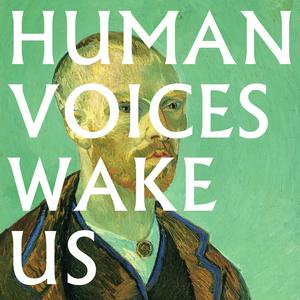
The poem says, "Human voices wake us, and we drown." But I’ve made this podcast with the belief that human voices are what we need. And so, whether from a year or three thousand years ago, whether poetry or prose, whether fiction or diary or biography, here are the best things we have ever thought, written, or said.
Podcast websiteListen to Human Voices Wake Us, Arena and many other podcasts from around the world with the radio.net app
Get the free radio.net app
- Stations and podcasts to bookmark
- Stream via Wi-Fi or Bluetooth
- Supports Carplay & Android Auto
- Many other app features
Get the free radio.net app
- Stations and podcasts to bookmark
- Stream via Wi-Fi or Bluetooth
- Supports Carplay & Android Auto
- Many other app features

Human Voices Wake Us
Scan code,
download the app,
start listening.
download the app,
start listening.
 Ireland