

Listen to this podcast in the app for free: Download for free in the App Store
radio.net
Sleep timer
Save favourites
56 episodes
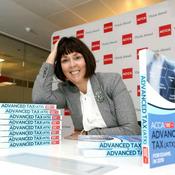
June 2026 Examiner's Report Review: ACCA ATX IRL Exam
15/09/2026 | 24 mins.Thank you to Amicus: Search and Recruitment for Sponsoring this episode. To find your next Finance or Accounting Role, head to https://amicus.ie/ and tell them that we sent you!
Today we're looking at the examining team’s feedback from the June 2026 ATX exam sitting and, as always, there are plenty of lessons we can take from it for future exams.
We’ll look at where students performed well, where marks were being left behind, and why question practice is about much more than simply knowing the tax rules. There’s a particular focus this time on professional marks, commercial acumen and scepticism, as well as some very familiar problem areas including relief conditions, close companies, pensions and ethics.
The big message from the examiner is a simple one: know your conditions properly, read the scenario carefully, and practise past questions under exam conditions. And please, make sure you’re using the ACCA-approved Advanced Tax material when you’re preparing for this exam.
Resources Mentioned in the Episode:
IRL June 2026 Examiner's Report (ACCAGlobal.com)
Ep040 on Ethics (Spotify)
Thank you for listening to Study For Tax in your Coffee Break! If you enjoyed the episode, make sure to leave a rating and review on your Podcast platform and share it with others to let them know you enjoyed the podcast.
To improve your study for the ACCA ATX Exams this year, head to Paula Byrne's website to purchase the Tax Conditions - the Spoken Word for audio-based revision (updated for 2026).
Thank you to Matthew Bliss for editing and production of this episode. If you'd like him to edit your podcast, send an email to business@mbpod.com or head to https://www.mbpod.com/.
Chapters:
(00:00) Intro to June 2026 ATX Examiner Feedback
(01:40) A Self-Study Success Story
(03:41) Professional Marks, Scepticism & Commercial Acumen
(04:45) Question 1: Liquidation, Reliefs & VAT
(07:52) Balancing Charges & Liquidation Calculations
(10:43) Entrepreneur Relief & Commercial Advice
(11:55) Pension Drawdown & PRSA Mistakes
(13:19) Ethics, Confidentiality & Revenue Refunds
(14:40) Question 2: CAT, CGT & Stamp Duty
(17:04) Non-Tax Issues & Scepticism Marks
(19:43) Question 3: Close Companies
(22:32) Final Lessons from the Examiner
Mentioned in this episode:
Get your Audio Revision for the 2026 ACCA ExamsTips to Overcome Anxiety during your ACCA Exam Study
15/08/2026 | 9 mins.Thank you to Amicus: Search and Recruitment for Sponsoring this episode. To find your next Finance or Accounting Role, head to https://amicus.ie/ and tell them that we sent you!
In this episode, I’m joined by Andrea Stanley, who recently completed her ACCA exams after a journey that included failed exams, knocks to her confidence and some very real anxiety around sitting them.
Andrea very generously shares what that experience was like, why exam technique and time management became so important for her, and how working on her mindset helped her move away from constantly expecting to fail.
We also talk about the support she received along the way, the value of doing mocks under proper time pressure, taking breaks instead of studying yourself into the ground, and why a failed exam absolutely does not mean you won’t get there.
It gets a little emotional towards the end — but I think Andrea’s story will be a very useful listen for anyone whose confidence has taken a knock during their ACCA journey.
And most importantly: if you’ve had a setback, keep going. Andrea did, and she got there.
Thank you for listening to Study For Tax in your Coffee Break! If you enjoyed the episode, make sure to leave a rating and review on your Podcast platform and share it with others to let them know you enjoyed the podcast.
To improve your study for the ACCA ATX Exams this year, head to Paula Byrne's website to purchase the Tax Conditions - the Spoken Word for audio-based revision (updated for 2026).
Thank you to Matthew Bliss for editing and production of this episode. If you'd like him to edit your podcast, send an email to business@mbpod.com or head to https://www.mbpod.com/.
Chapters:
(00:00) Sponsor: Amicus Search and Recruitment
(00:27) Andrea’s ACCA Journey
(01:33) Exam Setbacks and Losing Confidence
(02:19) Time Management and Exam Technique
(03:09) When Everyone Believes in You Except You
(04:03) How Mindset Coaching Helped
(05:26) Becoming a Fully Qualified ACCA Accountant
(06:29) Advice for Students Dealing With Anxiety
(06:44) Taking Breaks and Practising Under Time Pressure
(07:10) Learning to Rise After Failure
(07:39) An Emotional End to Andrea’s Story
Mentioned in this episode:
Get your Audio Revision for the 2026 ACCA ExamsACCA Tutor Ben Wilson on his ADHD Diagnosis and Why You Should Understand Your Own Mind
15/07/2026 | 26 mins.Thank you to Amicus: Search and Recruitment for Sponsoring this episode. To find your next Finance or Accounting Role, head to https://amicus.ie/ and tell them that we sent you!
In this episode, I’m joined by the brilliant Ben Wilson, AAA and SBL tutor, to talk about his ADHD diagnosis and the difference it has made to how he understands himself, his work and his students.
Ben shares what it was like to be diagnosed in his early 40s, how interest, motivation and dopamine affect the way he learns, and why forcing yourself through seven-hour study sessions may not be the best approach. We also discuss short study bursts, rewards, flexible learning and the importance of finding a tutor who can actually bring a subject to life.
It’s a very honest, practical and entertaining conversation about understanding how your own brain works, and using that knowledge to make studying, working and everyday life a little easier.
Thank you for listening to Study For Tax in your Coffee Break! If you enjoyed the episode, make sure to leave a rating and review on your Podcast platform and share it with others to let them know you enjoyed the podcast.
To improve your study for the ACCA ATX Exams this year, head to Paula Byrne's website to purchase the Tax Conditions - the Spoken Word for audio-based revision (updated for 2026).
Thank you to Matthew Bliss for editing and production of this episode. If you'd like him to edit your podcast, send an email to business@mbpod.com or head to https://www.mbpod.com/.CGT Offsets
31/05/2026 | 4 mins.Thank you to Amicus: Search and Recruitment for Sponsoring this episode. To find your next Finance or Accounting Role, head to https://amicus.ie/ and tell them that we sent you!
In this bite-sized episode of Study for Tax in your Coffee Break, I’m revisiting CGT Offset - a topic that often appears in exam questions and can easily catch students out on the details.
We walk through how CGT Offset works when a disponer pays Capital Gains Tax and the beneficiary has a CAT liability, along with the key rule that the offset only applies to the same transaction. I also explain why one beneficiary can’t use CGT paid on a different gift or inheritance, how the relief is capped at the CAT liability, and the important two-year clawback rule that students need to remember for exams.
If you’re preparing for tax exams and want a quick refresher on CGT offset in a clear and practical way, this episode is for you.
Main Topics Discussed in this Episode:
What CGT offset is and when it applies
The relationship between CGT and CAT liabilities
Why the offset only applies to the same transaction
Limits on claiming CGT offset
The two-year clawback rule
Thank you for listening to Study For Tax in your Coffee Break! If you enjoyed the episode, make sure to leave a rating and review on your Podcast platform and share it with others to let them know you enjoyed the podcast.
To improve your study for the ACCA ATX Exams this year, head to Paula Byrne's website to purchase the Tax Conditions - the Spoken Word for audio-based revision (updated for 2026).
Thank you to Matthew Bliss for editing and production of this episode. If you'd like him to edit your podcast, send an email to business@mbpod.com or head to https://www.mbpod.com/.
Mentioned in this episode:
Get your Audio Revision for the 2026 ACCA ExamsRetirement Relief & Marginal Relief
15/05/2026 | 7 mins.Thank you to Amicus: Search and Recruitment for Sponsoring this episode. To find your next Finance or Accounting Role, head to https://amicus.ie/ and tell them that we sent you!
In this episode of Study For Tax in your Coffee Break, I’m revisiting retirement relief and marginal relief with an updated explanation for 2026. This is an area that causes a lot of confusion for students, particularly when it comes to disposal proceeds limits and how the rules differ depending on whether a business is transferred to a child or to a third party.
We walk through the key retirement relief thresholds, including the €10 million and €3 million limits for transfers to children, and the much lower limits that apply to third-party disposals. I also explain why marginal relief only applies in very specific circumstances, how the calculation works in practice, and why entrepreneur relief has made marginal relief less common in real-life scenarios.
If retirement relief has ever felt confusing, this episode breaks it down step-by-step in a practical and exam-focused way.
Main Topics Covered in this Episode:
What retirement relief is and when it applies
Transfers to children versus third parties
Disposal proceeds limits for 2026
The €10 million and €3 million thresholds & the €750,000 and €500,000 third-party limits
Why failing one condition disqualifies retirement relief
How marginal relief is calculated
Thank you for listening to Study For Tax in your Coffee Break! If you enjoyed the episode, make sure to leave a rating and review on your Podcast platform and share it with others to let them know you enjoyed the podcast.
To improve your study for the ACCA ATX Exams this year, head to Paula Byrne's website to purchase the Tax Conditions - the Spoken Word for audio-based revision (updated for 2026).
Thank you to Matthew Bliss for editing and production of this episode. If you'd like him to edit your podcast, send an email to business@mbpod.com or head to https://www.mbpod.com/.
Mentioned in this episode:
Get your Audio Revision for the 2026 ACCA Exams
More Education podcasts
 Motivation Daily by MotiversityEducation, Health & Wellness, Self-Improvement
 Learning English For WorkEducation, Language Learning
 Good Life ProjectBusiness, Education, Health & Wellness, Self-Improvement, Tutorials
 The Ella EraEducation, Self-Improvement, Society & Culture
 The Daily StoicBusiness, Education, Self-Improvement, Society & Culture
 The Manifest MovementBusiness, Education, Religion & Spirituality, Self-Improvement, Spirituality
 Gaeilge WeeklyEducation, Language Learning
 The Mel Robbins PodcastEducation, Health & Wellness, Mental Health, Relationships, Self-Improvement, Society & Culture
 6 Minute EnglishEducation, Language Learning
 Begin Again with Davina McCallEducation, Health & Wellness, Mental Health, Self-Improvement, Society & Culture
Trending Education podcasts
 Stretch MarksEducation, Kids & Family, Parenting, Personal Journals, Self-Improvement, Society & Culture
 Hoy Hablamos Básico: Aprender español nivel básico-intermedio | Learn SpanishCourses, Education, Language Learning
 Deutsch Podcast - Deutsch lernenEducation, Language Learning
 Self Care Club - The Midlife EditionComedy, Education, Health & Wellness, Mental Health, Personal Journals, Self-Improvement, Society & Culture
 German Stories - Learn German with StoriesComedy Fiction, Courses, Education, Fiction, Language Learning, True Crime
 Coffee Break ItalianCourses, Education, Language Learning
 Le français avec FluiditéCourses, Education, Language Learning
 The Jordan B. Peterson PodcastEducation, Science, Society & Culture
 No More Booze - The PodcastEducation, Self-Improvement
 How to Sell a Home with MyHomeBusiness, Education, Home & Garden, Leisure, Management, Tutorials
 Luke's ENGLISH Podcast - Learn British English with Luke ThompsonComedy, Education, Language Learning
 Conversations with TylerEducation, Society & Culture
 Sober On A Drunk Planet - The PodcastEducation, Personal Journals, Self-Improvement, Society & Culture
- The Ella EraEducation, Self-Improvement, Society & Culture
 ALIGNED | The Path to PurposeAlternative Health, Education, Health & Wellness, Religion & Spirituality, Self-Improvement, Spirituality
 Coffee Break Italian AdvancedCourses, Education, Language Learning
 Learning English from the NewsEducation, Language Learning
 BEING HER with Margarita NazarenkoEducation, Health & Wellness, Relationships, Sexuality, Society & Culture
 Learn Italian with Joy of LanguagesCourses, Education, Language Learning
 Nuacht MhallEducation, Language Learning
 English Learning PodcastEducation, Language Learning
- The Manifest MovementBusiness, Education, Religion & Spirituality, Self-Improvement, Spirituality
 Learning Easy EnglishEducation, Language Learning
 How I WriteArts, Books, Education, Society & Culture
About Study For Tax In Your Coffee Break
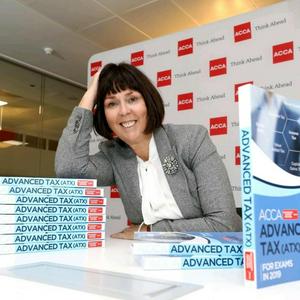
Advanced Tax Lecturer from Griffith College, Paula Byrne helping students pass their Irish professional accountancy tax exams.
Disclaimer: The information in this podcast is intended as an exam revision guide only. While every care is taken to ensure accuracy of information contained in this podcast, Paula Byrne does not accept responsibility for errors or omissions howsoever arising. Email paula@paulabyrne.ie.
#Irish tax
Podcast websiteListen to Study For Tax In Your Coffee Break, Motivation Daily by Motiversity and many other podcasts from around the world with the radio.net app
Get the free radio.net app
- Stations and podcasts to bookmark
- Stream via Wi-Fi or Bluetooth
- Supports Carplay & Android Auto
- Many other app features
Get the free radio.net app
- Stations and podcasts to bookmark
- Stream via Wi-Fi or Bluetooth
- Supports Carplay & Android Auto
- Many other app features

Study For Tax In Your Coffee Break
Scan code,
download the app,
start listening.
download the app,
start listening.
 Ireland