

Listen to this podcast in the app for free: Download for free in the App Store
radio.net
Sleep timer
Save favourites
Unfiltered Autistic with Amanda McGuinness
Amanda Mc Guinness - Little Puddins
Latest episode
42 episodes
AAC - Advice for Families and Educators with Roisin Farrell SLT
15/09/2026 | 29 mins.Róisín is a Speech and Language Therapist with over a decade of experience supporting children and families across Ireland, the United Kingdom and Singapore. She currently works on a Children’s Disability Network Team and holds a Master’s degree in Augmentative and Alternative Communication (AAC).
Róisín is passionate about AAC, communication access and supporting autistic people to communicate in ways that are meaningful and authentic to them.
She is particularly passionate about advocating for greater visibility and celebration of AAC in Ireland, contributing to an inclusive culture where all ways of communicating are embraced and supported.The PDA Space with Nicola Reeki
15/09/2026 | 38 mins.The PDA Space with Nicola Reeki
In this episode of the Unfiltered Autistic Podcast, Amanda McGuinness speaks with Nicola Reekie, founder of The PDA Space, about PDA, Persistent Drive for Autonomy, the work of The PDA Space, and their upcoming PDA Summit.Nicola shares the story behind The PDA Space and its work supporting PDA people, families and professionals through greater understanding, connection, education and community.Amanda and Nicola talk about what PDA can look like in everyday life, why understanding the nervous system, autonomy, empathy, and felt safety matters, and the importance of moving beyond surface-level interpretations of behaviour to understand what may be happening for the person underneath.They also discuss the upcoming PDA Summit, what inspired it, what people can expect, and why bringing together lived experience, families and professionals is so important in developing more informed, compassionate and neuroaffirmative approaches to PDA.This conversation will be particularly relevant for Autistic and PDA people, parents and carers, educators, health professionals and anyone seeking to deepen their understanding of PDA through a neuroaffirmative lens.Topics discussed include:• PDA and Persistent Drive for Autonomy• The story behind The PDA Space• Supporting PDA people and families• Autonomy, pressure and felt safety• Understanding behaviour as communication• Lived experience and professional perspectives• The PDA Space Summit• Neuroaffirmative approaches to PDA• Supporting PDA children, young people and adultsHosted by Amanda McGuinness, Autistic advocate, Autism specialist and creator of Little Puddins.#PDA #PersistentDriveForAutonomy #Autism #Autistic #PDASpace #PDASummit #Neurodiversity #Neuroaffirmative #AutismPodcastLinks to PDA Space offers & resourceshttps://www.thepdaspace.com/summit_2026 - get your Summit ticketshttps://www.thepdaspace.com/2026-summit - Meet the Summit Speakershttps://www.canva.com/design/DAHQ4X1_kxg/66B2OGvGH1D0-vuMQU4y-w/view?utm_content=DAHQ4X1_kxg&utm_campaign=designshare&utm_medium=link2&utm_source=uniquelinks&utlId=hc575a42fa7 E-bookhttps://www.thepdaspace.com/workshops-and-webinars - Find out more about the Portal Membershiphttps://www.thepdaspace.com/offers/LYU9DKgK/checkout - sign up for your Portal Membershiphttps://www.thepdaspace.com/resourcehub - one off recordings you can buyhttps://www.thepdaspace.com/freebies_page - Free Resourceshttps://www.thepdaspace.com/wellbeinghub - Wellbeing Hub sign uphttps://us02web.zoom.us/j/81629280763 - Wellbeing Hub Zoom linkhttps://www.thepdaspace.com/e-books - Ebooks https://www.youtube.com/@thepdaspace - YouTubeUnderstanding ARFID with Teresa Foley OT and Specialist Feeding Therapist
30/08/2026 | 35 mins.ARFID, Autism & Restricted Eating with Specialist Feeding Therapist Teresa Foley
What is ARFID (Avoidant Restrictive Food Intake Disorder), and how is it different from the restricted eating and food differences commonly experienced by Autistic children?
In this episode of the Unfiltered Autistic Podcast, Amanda McGuinness is joined once again by Teresa Foley, Paediatric Occupational Therapist and Specialist Feeding Therapist, for an insightful and practical conversation about ARFID, Autism, restricted eating, Paediatric Feeding Disorder and complex feeding challenges.
Teresa explains why an Autistic child having a very restricted diet does not necessarily mean they have ARFID, and why understanding what is driving a child’s eating differences is so important.
Together, Amanda and Teresa explore:
• What ARFID is and how it can present
• The difference between ARFID, Autistic eating differences and Paediatric Feeding Disorder
• Sensory sensitivity to the smell, taste, texture, appearance and sound of food
• Interoception and differences in recognising hunger and fullness
• Low interest in food and eating
• Fear of choking, vomiting, illness or other frightening experiences associated with food
• Why some children may progressively lose previously accepted or safe foods
• Why safety, trust and regulation are so important around eating
• Why pressure to eat or “just try” a food can make eating more difficult
• Why an Autistic child may eat at home but be unable to eat at school
• The sensory impact of hot school meals, food smells and busy eating environments
• Supporting children who struggle to eat during the school day
• Why appropriately qualified specialist and multidisciplinary support matters
Teresa also discusses something many parents will recognise: desperately wanting your child to eat more foods while also knowing that pressure, even when well intentioned, can increase anxiety around eating.
Teresa Foley is a Paediatric Occupational Therapist and Specialist Feeding Therapist with extensive clinical experience supporting children and families experiencing feeding and eating differences.
Teresa has worked in children’s hospitals and community settings in both Ireland and Australia. She previously worked at the National Specialist Feeding Service for Children at the Central Remedial Clinic, where she was part of the clinical team involved in establishing Ireland’s first services for children experiencing ARFID and other complex feeding challenges.
Teresa is the owner of Shooting Stars Occupational Therapy in North Dublin, where she supports young children, including Autistic children and children with developmental differences.
In 2024, Teresa established The Feeding Therapist, a specialist Occupational Therapy service dedicated to supporting children and families experiencing ARFID, Paediatric Feeding Disorder, restricted eating and other feeding challenges.
Teresa brings extensive specialist clinical knowledge to this conversation while recognising the individuality of every child and family.PDA and Autism: How to Support PDA Children at Home and School | Laura Kerbey
16/08/2026 | 41 mins.What does meaningful support for a child or young person with a PDA profile actually look like, particularly when conventional approaches to parenting, teaching and education are not working?
In this episode of The Unfiltered Autistic Podcast, Amanda McGuinness is joined by Laura Kerbey, Autism and education consultant, author, trainer and specialist in supporting Autistic and PDA children and young people.
With almost 25 years of experience in education, Laura brings an extensive understanding of Autism, PDA, education and alternative approaches to learning. She began her career in Supported Learning within Further Education before becoming an Autism Champion, assistant headteacher and later headteacher of a specialist school for Autistic children and young people.
Laura is the founder of PAST, Positive Assessments Support and Training, and co-founder of Kite Therapeutic Learning, which provides individualised education for children and young people who are unable to access conventional school environments.
Laura is also neurodivergent herself and speaks openly during the episode about being identified as ADHD in adulthood, the self-understanding that followed and the importance of recognising self-identification as valid.
At the heart of this conversation is PDA, autonomy and the importance of understanding what may be happening beneath demand avoidance.
Laura explores the movement away from conceptualising PDA simply as an anxiety-driven need for control towards recognising the central importance of autonomy. Using her memorable car analogy, Laura explains how attempts to direct, control or take over can feel like somebody reaching across and taking the steering wheel.
Instead, she asks parents and professionals to consider how they can become the trusted passenger, supporting the individual while respecting their need for autonomy, agency and meaningful influence.
Amanda and Laura discuss:
• what PDA is and how our understanding of PDA continues to evolve
• Persistent Drive for Autonomy and the importance of autonomy
• why PDA is better understood as “can’t, not won’t”
• why demands can affect things a PDA person genuinely wants to do
• internal demands and expectations
• nervous system sensitivity and anxiety
• why trust and felt safety must come before learning
• becoming a facilitator rather than directing the individual
• building authentic, equal relationships with PDA children and young people
• language, tone of voice and reducing unnecessary pressure
• why PDA learners may need to understand the value and purpose of learning
• interest-led and child-led approaches to education
• perfectionism and the demand of having to finish work
• why reward and punishment approaches can be particularly problematic
• PDA and school distress or difficulty accessing education
• the transition from primary to secondary education
• alternative and individualised approaches to learning
• supporting a PDA learner to reconnect with school
• safe people and safe spaces
• flexible timetables, soft starts and adapted school days
• supporting autonomy while maintaining safety.
For educators, one of the most important messages from this episode is deceptively simple: relationship comes first.
Laura explains that a PDA learner needs to experience the adult as someone who is genuinely safe and trustworthy. Rather than positioning ourselves as the person controlling the journey, we can work alongside the young person, facilitate learning and demonstrate that we are on their team.
The conversation also challenges the misconception that PDA children and young people simply do not want to learn. Laura describes PDA learners who are deeply curious and motivated to learn when learning feels meaningful, relevant and accessible to them.Lisa Galley Parenting Your Autistic Child
16/08/2026 | 28 mins.What happens when conventional parenting advice simply does not work for your Autistic child?
In this episode of The Unfiltered Autistic Podcast, Amanda McGuinness is joined by Lisa Galley, Autism consultant, author, speaker, former Speech and Language Therapist and founder of the Autism Parenting Revolution community.
Lisa is also the parent of three Autistic children, now adults, bringing together decades of parenting experience with her professional background supporting Autistic children and families.
At the heart of this conversation is Lisa’s powerful Permission to Parent Differently approach and her new book, Parenting Your Autistic Child: Permission to Do It Differently.
Amanda and Lisa explore what it can mean to raise an Autistic child in a world where much of the parenting advice families receive has been developed around neurotypical expectations.
They discuss the pressure parents can experience to follow conventional approaches, even when their instincts and their child’s responses are telling them that something different is needed.
The conversation explores:
• parenting Autistic children differently from neurotypical expectations
• nervous system regulation, connection and felt safety
• trusting your instincts as a parent
• matching expectations to an Autistic child’s capacity
• letting go of parental guilt, shame and comparison
• parental burnout and protecting your own nervous system
• maintaining your identity while parenting an Autistic child
• screen time, food and other areas where parents can experience judgement
• PDA and parenting children with a PDA profile
• changing communication and reducing unnecessary pressure
• declarative language and recognising how tone can communicate expectation
• parenting Autistic children into adolescence and adulthood
• loneliness, isolation and the importance of finding an Autism parenting community.
Lisa also speaks candidly about her own parenting journey, including recognising that approaches she encountered professionally did not always align with what her own Autistic children needed.
A particularly important theme throughout the episode is the difference between lowering expectations and matching expectations to capacity.
The conversation also explores PDA and Autism, with Lisa reflecting on what she has learned about parenting her PDA son and the importance of collaboration, communication, nervous system understanding and not interpreting protective responses as something personal.
For parents who have felt judged because their child eats the same foods, needs more screen time, cannot manage particular expectations, struggles with school, experiences distress around demands or simply needs life to look different, this conversation offers another perspective.
As Lisa describes her new book, it is a permission slip, a conversation and a toolkit, designed to help parents develop the confidence and courage to do things differently.
This episode will be particularly valuable for parents and carers of Autistic children, teenagers and adults, as well as teachers, SNAs, Speech and Language Therapists, Occupational Therapists, educators and other professionals seeking a deeper understanding of neuroaffirmative Autism parenting and family life.
About Lisa Galley
Lisa Galley is an Autism consultant, speaker, author and former Speech and Language Therapist. She is the founder of the Autism Parenting Revolution community and combines her professional expertise with her lived experience of raising three Autistic children into adulthood.
Her work supports families to understand Autism through nervous system regulation, connection and wellbeing, moving away from compliance-based approaches and helping parents develop greater confidence in parenting their Autistic child differently.
Lisa’s debut book, Parenting Your Autistic Child: Permission to Do It Differently, is published by Penguin Random House.
More Education podcasts
 6 Minute EnglishEducation, Language Learning
 How to Be a Better HumanEducation, Self-Improvement
 The Comeback with Brenda DennehyEducation, Health & Wellness, Mental Health, Self-Improvement
 Gaeilge WeeklyEducation, Language Learning
 Begin Again with Davina McCallEducation, Health & Wellness, Mental Health, Self-Improvement, Society & Culture
 IMO with Michelle Obama and Craig RobinsonEducation, Self-Improvement, Society & Culture
 Learning English ConversationsEducation, Language Learning
 Learning English For WorkEducation, Language Learning
 The Mel Robbins PodcastEducation, Health & Wellness, Mental Health, Relationships, Self-Improvement, Society & Culture
 The Daily StoicBusiness, Education, Self-Improvement, Society & Culture
Trending Education podcasts
 The Manifest MovementBusiness, Education, Religion & Spirituality, Self-Improvement, Spirituality
 The Calm & Happy HomeEducation, Religion & Spirituality, Self-Improvement, Spirituality, Tutorials
 News in Slow French (Intermediate)Education, Language Learning, News
 The Playful LensEducation, Kids & Family, Parenting
- Learning English ConversationsEducation, Language Learning
 German Stories - Learn German with StoriesComedy Fiction, Courses, Education, Fiction, Language Learning, True Crime
 The Jordan Harbinger ShowBusiness, Education, Science
 Learn Spanish: Fluency in Real Life with HandyspanishEducation
 Little Talk in Slow FrenchCourses, Education, Language Learning
 ALIGNED | The Path to PurposeAlternative Health, Education, Health & Wellness, Religion & Spirituality, Self-Improvement, Spirituality
- Learning English For WorkEducation, Language Learning
 Coffee Break Italian AdvancedCourses, Education, Language Learning
 Learning English VocabularyEducation, Language Learning
 Victim To Victory PodcastEducation, Personal Journals, Relationships, Self-Improvement, Society & Culture
 Английский язык по плейлистам. Английский язык с нуля. Полный курсEducation, Language Learning
 Learning Easy EnglishEducation, Language Learning
 Made In Chaos with Ryan CurtisEducation, Self-Improvement
 English Learning PodcastEducation, Language Learning
 Good Life ProjectBusiness, Education, Health & Wellness, Self-Improvement, Tutorials
 IT IS WHAT IT IS!Education, Self-Improvement
 Motivation Daily by MotiversityEducation, Health & Wellness, Self-Improvement
 Law of Attraction Changed My LifeEducation, Kids & Family, Parenting, Religion & Spirituality, Self-Improvement, Spirituality
About Unfiltered Autistic with Amanda McGuinness
Hello and welcome to the unfiltered Autistic Podcast.
The Podcast that aims to give an unfiltered account of
Autistic lived experiences, created and hosted by me Amanda Mc Guinness, an
Autistic Autism and Visual Support Specialist and parent to 4 Neurodivergent
children.
Having spent a lifetime filtering my true self, to be the
person I felt others wanted me to be, I realised at the age of 39 I could no longer
be that person.
It was time to be my true unfiltered Autistic self.
I realised I deserved to have the same compassion and
thoughtfulness I put out into the world.
I deserved to be me.
Podcast websiteListen to Unfiltered Autistic with Amanda McGuinness, 6 Minute English and many other podcasts from around the world with the radio.net app
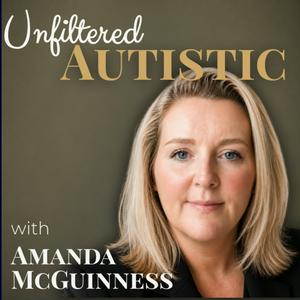
Get the free radio.net app
- Stations and podcasts to bookmark
- Stream via Wi-Fi or Bluetooth
- Supports Carplay & Android Auto
- Many other app features
Get the free radio.net app
- Stations and podcasts to bookmark
- Stream via Wi-Fi or Bluetooth
- Supports Carplay & Android Auto
- Many other app features
Unfiltered Autistic with Amanda McGuinness
Scan code,
download the app,
start listening.
download the app,
start listening.
 Ireland