

Listen to this podcast in the app for free: Download for free in the App Store
radio.net
Sleep timer
Save favourites
90 episodes
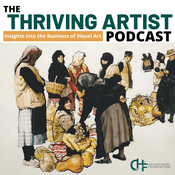
How to Build a Robust Creative Economy That Rewards Everyone—including Artists
27/07/2022 | 38 mins.How do we live in a robust culture? How do we produce a robust culture at a time when we are fracturing, polarized, and creative enterprise is an afterthought?
Let's remind ourselves of where we are. If you look around, you see political fragility, economic uncertainty, and general unhappiness. That's depressing. That's the point. As a people, we ARE depressed. You don't look back at 2021, let alone what's going on now, and go, "it's a happy time." We're not happy and we have to face it. We've got essentially a global war, and a recession only partly driven by that war. We've got a big economic bubble. We have a politically fractured culture at a global level. Totalitarianism, never the friend of a creative culture, is coming back in vogue. We're at each other's throats. We're not happy.
The beast is slouching toward Jerusalem. The earth is heating up. We're settling into (if we're lucky) a mere detente as two nations living in one national entity. Arguably, we began going in that direction in 1945 when we settled into the Cold War and that generated the Korean war, the Vietnam war, El Salvador... and we decided to live in a state of permanent animosity, driven by munitions manufacturers, the intelligence apparatus, and munitions and chemical industries that profit from it. There was a huge amount of money to be made. Those chemical makers clean your baby and make for a sparkling kitchen and they also do deforestation in Laos.
All of that to say that we're now in an understandable state of fragility when it comes to the role of creativity in our lives. We have a tenuous relationship with art.
We do not even now dream so much anymore. Our dreams are smaller. We don't dream of a world that flourishes and we haven't been given a mechanism to build better dreams. The material on CHF's site is basically an insistence that there is another path—that we're working to solve that problem in a robust way.
How do we get a robust and flourishing culture in the first place? That's the entrance to the conversation we are creating. As a culture, we tend to put creatives in a box. And even the goal of showcasing artists as essential workers and ensuring they're well-paid is not yet dreaming big enough. I think even those dreams are too small. I don't want to be a useful cog in someone's wheelhouse. I don't want to work for somebody because I have the skills. I want to work for somebody because without creative enterprise, we don't 'make it' as a culture.
We must move away from the merely theoretical lament toward a vision of doing something practical and economically powerful. Without that, We don't build a robust creative culture. We must build a road for artists to thrive, and creativity to flourish, and it has to be done at the economic and investment level.
Anything less creates the same problem we had all through the cold war, which is the starving artist syndrome. Only the 1% of artists can be famous and only those who know the right people and happen to gain the approval of the taste-makers can make any money. Everybody else is dirt poor and living on their cousins' sofas.
What we're doing at CHF isn't sexy in a theoretical way, but it's actionable and practical. We're asking people to dig deep into the thought process of how we get a culture that we want to live in. And we are starting from the premise that you don't get a robust creative culture without a thriving creative economy.
I don't think we've widely connected the dots between these big questions—first, daring to ask them and then to dream of the ubiquitous, middle-class artist. How do you actually do it? What is the day-to-day? How do you actually implement it? And that's where we actually do have an answer.
It starts at the mindset and knowledge level. We foster a conversation around art as a business, and we empower art-entrepreneurs with the business training all other...Virtual & Analog Art
26/11/2021 | 16 mins.“We’re going to need more art—all of it—to solve the world’s challenging problems. Creative intelligence is what it takes to inject life into the culture, to drive effective leadership, to drive new ideas. We don’t have to choose. We can have one foot in the world of visceral taste and touch and another foot in the digital world without having to split ourselves in half.”
This is a bite-sized The Thriving Artist™podcast episode with a brief perspective on art news and cultural change. In the art news of The New York Times, a couple of headlines really stood out! The first one is 50 years of Taking Photography Seriously. The synopsis: When the Photographer's Gallery opened in London in 1971, few saw the medium as suitable for exhibitions. Today everyone does. The second article is Hands Off the Library's Picture Collection! The synopsis: Cornell Spiegelman and Warhol browse the famous collection of images in the New York Public Library. Now a century of serendipitous discovery will come to an end if the collection is closed off to the public. This episode is courtesy of Shirley Lemmon.Clark Hulings—Archetype of the Independent Artist
24/03/2021 | 54 mins.James D. Balestrieri is the Clark Hulings Foundation’s Writer-in-Residence. He is currently working on a new book on Hulings, Clark Hulings: Quantum Realist. Jim is the proprietor of Balestrieri Fine Arts, a consulting firm that specializes in catalogue research and arts writing, estate and collections management, and marketing and communications for museums and auctions. Jim has a BA from Columbia University, an MA in English from Marquette University, an MFA in Playwriting from Carnegie-Mellon, and was a Screenwriting Fellow at the American Film Institute. He served as Director of J.N. Bartfield Galleries in New York for 20 years and has published over 150 feature essays and reviews in a wide variety of national arts publications.
In this episode, Jim gives us an in-depth look at the themes of the upcoming Hulings book, and discusses how Clark Hulings’ career strategy applies to working artists today. Inspired by Hulings’ successes both within—and outside of—art tastemakers’ approval, Jim and Daniel question who gets to decide which artists matter, and how the canon does and does not serve the best interest of the arts, or artists. Hulings’ accomplishments, both as an artist and a small business owner, call to his deeper understanding of the dignity of work—from running a market stall to the act of making a living as a painter—as a way of belonging to the world.
A Painter of Work
“Clark Hulings was an American artist. A realist—in a way. He began his career as a very successful illustrator in the golden age of illustration.”
“The thing that sets him apart is the subject that he found, chose, and made his life’s work. His life’s work is depicting work. Working people in working situations—whether they’re farmers, laborers, whether it’s an urban setting, a village setting, or a rural setting. What he captured was working people at work, doing what they do. And that sets him apart from almost any other American realist of that time.”
“Lots of people associate Clark with Western Art. [...] But really, the number of paintings he did that could be considered Western or Southwestern is miniscule compared to the numbers of paintings he did in Mexico and Europe. So there’s a whole idea that Elizabeth [Hulings] and I have talked about, which is repositioning Clark Hulings as an American Artist, and indeed, an international artist.”
“[Hulings] doesn’t really give you a story. They’re not narrative paintings. He moves his easel painting as far from illustration as you can imagine. You see these people working and you wonder what they’re thinking, and what they’re like, and what their inner lives are. But he gives them their privacy.”
Travel Beyond Tourism
“For Hulings, travel—and if you look at his paintings, you can see it—travel was a way for him to find places. I would use the word 'traditional places,' where the traditions of work and of life were on a long continuum. He seems to be very interested, not only in showing, ‘oh yeah, those women are washing clothes in a street today,’ but in showing that the place around them was a place that had been inhabited for a long time, so that what they were doing was on a long continuum of existence. A kind of deep time. And for those, you’ve got to travel.”
“There's a whole tradition of travel painting where there are paintings of the famous places: paintings of Notre Dame, paintings of the Ponte Vecchio, paintings of this [or that]...That's not Clark Hulings is about. The first painting that really attracted me to his work is this small painting he did of Naples. And it's this narrow street. Narrow. You couldn't even get a car, one car down there, much less two. And there are deep shadows and the laundry is hanging across it. This is not the Amalfi Coast, this is not someStock Art Can Go to Hell: Corporate Art Without Compromise
26/01/2021 | 1h 20 mins.Artist and illustrator Melissa Whitaker works full-time for companies across the US, bringing her signature pop-graphic-noir style to their branding and storytelling. Melissa’s clients include Madpipe and Free Agent Source. Commissions include food and beverage, real estate, and medical industries—as well cover art for authors and musicians. Her work has been exhibited in LA, San Francisco, KC, and St. Louis. If you happen to be her part of the world, look for her new billboard for the Arts Council Southern Missouri; it’s a satisfying full circle from when she was featured on that same billboard years ago as a real estate agent. Whitaker made the commitment to a full-time art career later on as an adult: she kick-started her art-business skills with CHF and never looked back. itsallintheart.com
The Thriving Commercial Artist
“Companies want to tell the story of who they are, and why they do what they are doing. Maybe they can’t find the perfect stock photography for their business. They will come to me to illustrate their story, and make their website or material, even their PowerPoint presentations, stand out from the rest.”
“Companies are adapting to be able to reach out to people who are not socializing much anymore. They’ve got to put that personality into their marketing presentations. I see new people coming in for personal illustrations: I’m talking to a real estate agent right now who wants to make herself stand out from all the other agents out there. So I’m excited!”
“A whole new world of crypto art is coming out. It works a lot like Bitcoin where you can take your digital artwork and you basically encrypt it, where the person who’s buying that is buying the original—virtual original in a way—so it’s not just a digital copy. And that has value to it.”
Collaboration: The Artist’s Voice in Commercial Work
“The client will tell me: ‘I want a subway station platform.’ I will put myself there, thinking: ‘if I am on the subway, if I get off the subway and I’m on that platform and I’m waiting…How am I going to stand? How am I going to see that train? Where is the train coming from? Who are the people around me? And that’s what goes into the picture. So I would say a lot of myself goes into the picture because I put myself there.”
“I’ll talk with the client and I get a sense of what they are looking for. A lot of questions come out, such as what kind of mood are you looking for? What do you want your customer to feel when they look at this? What is your objective? All of that is information that is needed in order to tell the story accurately.”
“In today’s culture, a lot of people refer to movies. They’ll say, ‘I’m thinking of The Transporter,’ or ‘I’m thinking of 80s music’ and they’ll give me a playlist. That puts me into the zone and it will come out in the art. I try to put everything, all of me, into the art—so whatever is going in, is coming out into the art.
“Sometimes I’ll do rough drafts to get an idea of what the customer wants. And there are times where I have an image in my head and I’ll just do the whole thing and send it to them, because sometimes the client doesn’t know what they want until they see it. Or they can’t envision the rough draft in the final completion of the project.”
“There are struggles at times. There are directions I want to go, and the client has to pull me back and say no, no, no, that’s that’s the wrong way. Or, ‘that looks really fun but we can’t go there.’ So that can be difficult, but often I will go ahead and still create it because I can always use it somewhere else. I’m very open to change and adapting because I will always try to make something work.”
Technique & Composition: from Walls to Web
“If it’s a complex illustration with several individual people—each...Virtualize Your Art Career: Part 2
14/10/2020 | 35 mins.In the second episode of this two-part podcast, Carolyn Edlund weighs-in on how artists can shift their sales strategies and build an art business that will weather these tough times, as well as being resilient to future changes. Contrary to popular belief, collectors are buying art right now, and artists can zoom in on their relationships, update their platforms, and define or redefine their target markets to make this work in their favor.
Carolyn is Sales & Events Director at CHF and our faculty subject matter expert on Sales Strategy. She is the founder of ArtsyShark—and brings a background as an artist, former ED of the Arts Business Institute, years in art-publishing and licensing, and extensive experience in curriculum development and seminars for artists. Work with Carolyn & the CHF Faculty online at the Virtualize Your Art Career™ Conference October 19-30.
What a Sustainable Art Business Looks Like In Today’s Environment
“There are opportunities to really grow your business. I’ve spoken to several artists lately who are making more sales than ever before. Now, how in the world is this happening? I’m sure you’re thinking, ‘What!? Who’s doing that?’ The artists who are making these sales have given some deep thought to how they are going to go virtual with their marketing and sales strategies. And they’re going 100 percent in that direction, using tools online that are helping them reach an audience who is actually very hungry to buy right now.”
“Everybody is sitting at home, people are bored, they’re shopping and they are buying art. We know that’s happening. We know there has been an uptick in art sales. So the people that I see who are succeeding—when I get down into the weeds with them, like, ‘What are you actually doing?’ It turns out that they’ve got systems built into their business that are very methodical for drawing an audience, introducing them to their work, getting them with a hook, and then selling their work. And then selling more work to them. They’re building a very sustainable business with repeat sales, which is what we want to do in any environment. It is possible to do that during a pandemic.”
Leverage Your Art and Your Collectors For That Repeat Sale
“I love repeat sales because it’s easier to sell to an existing customer. They’re the foundation for an ongoing business—where you have existing sales that happen again and again. Part of that is leveraging the work that you sell. I talk about that when I teach sales strategy, and I’m going to be talking more about that in our conference: are you leveraging your collector by selling to them over and over? Are you leveraging your work by selling the next piece in a set? It’s a way of thinking: what do I have that’s going to appeal to people? What can I offer them if I want to keep them as customers, and as eager customers, who will want to own more of my work?”
Embrace Your Power as an Individual Artist
“The market has evolved over the last 20-25 years toward the empowerment of the individual artist. We’ve seen it in other industries. If we look at, for example, the movie industry, back in the day the studios owned all the actors and they would say, ‘You’re doing four movies this year,’ or ‘I’m going to loan you out to Warner Brothers.’ And they would direct the career of the ‘stable’ of actors that they would control. Nowadays, we see actors who are now directing their own production companies. They have their collaborations. They are free, they are empowered. They can do the projects that they choose to do and they’re setting their own career paths. Visual artists are in much the same position. It is not always emotionally easy to step up and say: ‘Yeah, I’m...
More Arts podcasts
 ill-advised by Bill NighyArts, Books, Comedy, Music
 99% InvisibleArts, Design
 DishArts, Comedy, Food, Society & Culture
 Take Four BooksArts, Books
 The Bookshelf with Ryan TubridyArts, Leisure, Society & Culture
 Sunday MiscellanyArts, Books
 Table Manners with Jessie and Lennie WareArts, Food, Kids & Family, Music
Trending Arts podcasts
 The Run-Through with VogueArts, Fashion & Beauty
 Talk ArtArts, Visual Arts
 The EmeraldArts, Religion & Spirituality, Society & Culture
 The Week in ArtArts, Visual Arts
 Meditations by Marcus AureliusArts, Books, Philosophy, Society & Culture
 The Great Women ArtistsArts
 Scary Stories and RainArts, Performing Arts
 Amanda Wakeley: Style DNAArts, Documentary, Fashion & Beauty, Society & Culture
 Ask PenguinArts, Books, Society & Culture
 The Jimmy Dore ShowArts, Comedy, News, Performing Arts, Politics
 Lunchbox EnvyArts, Comedy, Food
 GastropodArts, Food, History, Science
 The New Yorker: The Writer's Voice - New Fiction from The New YorkerArts
 Style-ishArts, Fashion & Beauty
 Daily Rosary Meditations | Catholic PrayersArts, Christianity, Religion & Spirituality
 Roasted with Mark MoriartyArts, Food, News, Society & Culture
 The Great IndoorsArts, Design, Society & Culture
 Simon Mayo's Books of the YearArts, Books, Fiction, Society & Culture
About The Thriving Artist
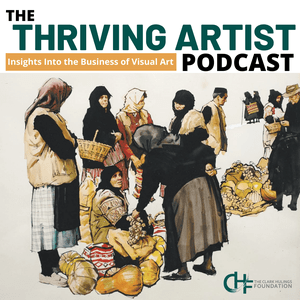
The THRIVING ARTIST PODCAST is a feature of the Clark Hulings Foundation, which exists to provide training, professional introductions, and funding for working artists, to turn working artists into THRIVING artists. Tune in for insights from other artists, art industry experts, art collectors, and business specialists. Don't be a starving artist, be a thriving artist!
Podcast websiteListen to The Thriving Artist, ill-advised by Bill Nighy and many other podcasts from around the world with the radio.net app
Get the free radio.net app
- Stations and podcasts to bookmark
- Stream via Wi-Fi or Bluetooth
- Supports Carplay & Android Auto
- Many other app features
Get the free radio.net app
- Stations and podcasts to bookmark
- Stream via Wi-Fi or Bluetooth
- Supports Carplay & Android Auto
- Many other app features

The Thriving Artist
Scan code,
download the app,
start listening.
download the app,
start listening.
 Ireland