
Listen to this podcast in the app for free: Download for free in the App Store
radio.net
Sleep timer
Save favourites
24 episodes
Our Civilization Is Heading Towards Systemic Collapse | Sarah Wilson
05/11/2026 | 1h 11 mins.What happens when the systems we depend on become too complex to sustain themselves? And what if the future we’re trying so hard to protect is no longer possible?
In this episode, I’m joined by Sarah Wilson, author of I Eat the Stars, to explore one of the more uncomfortable ideas of our time: that modern civilisation may be approaching a period of systemic collapse.
Sarah argues that the issues shaping our world, from climate and energy to geopolitics, democracy, food and technology, are all deeply interconnected rather than isolated problems. Drawing on the work of more than 200 experts in complex systems, she explains why civilisations throughout history have struggled under the weight of their own complexity, and why our attempts to solve today’s problems may be reinforcing the very mindset that created them.
We get into the paradox of the green energy transition, the limits of technological solutions, and why the promise of AI may not be enough to get us out of the situation we’re in. We also talk about what collapse might actually look like, why facing these possibilities has made Sarah less anxious, and what it means to let go of the idea that we can simply return to business as usual.
But this isn’t a conversation about the end of humanity. Sarah offers a different kind of hope — one rooted not in endless growth or technological rescue, but in community, care, love, duty and rediscovering what it means to be human.
What if the collapse of the system we’ve built could also be an opportunity to build something more human in its place?
Support the podcast on Patreon: https://www.patreon.com/cw/HarrisonGardner
CONNECT WITH ME
Instagram: https://www.instagram.com/_harrisongardner
Website: https://www.harrisongardner.net/
Bookstore: https://www.harrisongardner.net/bookstore-1
Pre-order my new book HEAT-SHELTER-WATER-FOOD
https://www.harrisongardner.net/bookstore-1
Resources mentioned in this episode:
Sarah Wilson’s book, I Eat the Stars: https://sarahwilson.com/ieatthestars
Sarah Wilson’s Substack, This Is Precious: https://sarahwilson.substack.comIreland's Food Security Illusion, Climate Crisis & Community | Mary Robinson
29/10/2026 | 46 mins.Ireland is often described as one of the most food-secure countries in the world. But Mary Robinson thinks that narrative is fooling us.
In this conversation, I sit down with Ireland's first female president, former UN High Commissioner for Human Rights, and founding member of The Elders to explore what food security, climate change and community really mean and why the solutions to our biggest global problems might begin much closer to home.
We talk about Ireland's dependence on imported food, the importance of reconnecting with the land and the people who grow our food, and why Mary increasingly believes that local communities are where meaningful change happens.
Mary shares the story of SEWA, a women's trade union in India with over four million members, showing how communities can build their own resilience to climate change and protect the people most vulnerable to its effects. We also explore a powerful idea from the Universal Declaration of Human Rights: that we have duties to our communities, and that giving back can help us become more fully ourselves.
And towards the end of our conversation, Mary tells me about sitting alone in Greenland, listening to a glacier break apart. It's an experience that moved her to tears and led to a realization that brings this whole conversation together.
We are nature. And what we do to nature, we do to ourselves.
Support the podcast on Patreon: https://www.patreon.com/cw/HarrisonGardner
CONNECT WITH ME
Instagram: https://www.instagram.com/_harrisongardnerWebsite: https://www.harrisongardner.net/
Buy my new book: Heat Shelter Water Food
https://www.harrisongardner.net/bookstore-1
Project Dandelion: https://www.projectdandelion.live/
SEWA – Self Employed Women’s Association: https://www.sewa.org/
Mr. Robinson Documentary: https://www.mrsrobinsonfilm.comThe 3 Things Holding Us Back From Change
22/10/2026 | 43 mins.A couple of weeks ago, I found myself crying in my car after listening to a podcast about a change to how the Trump administration interprets harm under the Endangered Species Act. It got me thinking about responsibility, unintended consequences, and what it means to cause harm without meaning to.
That question led me somewhere unexpected: to a conversation about the things that stop us from making the changes we know are necessary in our lives.
I think a lot of it comes down to three things: capacity, capability, and confidence. Do we have the time and emotional space to care? Do we have the skills and knowledge to do something about it? And do we believe that our actions can make a difference?
In this solo episode, I explore how those three things connect, why a history of small successes can help us build momentum, and how our attempts to solve problems can sometimes make them worse when we're too afraid to admit we've got something wrong.
I also tell a story from my time working with a community in Ahmedabad, India, and a young woman who found somewhere to belong when she had nowhere else to go. It changed the way I think about security, and what it means to have enough to share with someone else.
We can't all solve the biggest problems in the world. But we can start by scaling them down to something we can understand, learn from, and act on.
Support the podcast on Patreon: https://www.patreon.com/cw/HarrisonGardner
CONNECT WITH ME
Instagram: https://www.instagram.com/_harrisongardnerWebsite: https://www.harrisongardner.net/
Bookstore: https://www.harrisongardner.net/bookstore-1
00:00 What Stops Us From Taking Action?
01:38 Trump's Endangered Species Rule and Responsibility
05:43 From Anger to Islands of Sanity
10:03 The Three Cs: Capacity, Capability and Confidence
10:51 Capacity: Time, Mental Space and Emotional Bandwidth
19:10 Capability: Learning Practical Skills
21:40 Confidence, Mistakes and Shame
26:27 The Flywheel: From Small Wins to Agency
28:59 How to Scale Big Problems Down
32:45 Community, Security and Belonging
39:56 Climate Carnival and What Comes Next
40:41 A Challenge: Find One Small Thing You Can Do
42:21 Support the Show
Hosted on Acast. See acast.com/privacy for more information.The standard way of building is leading us to a disaster | Robert Bourke
15/10/2026 | 1h 23 mins.What if the way we build our homes and cities is part of the problem and the solution is already around us?
Architect Robert Bourke joins me to explore how we can rethink the way we build, from the materials we use to the relationship between buildings, nature and the communities around them.
With construction contributing significantly to global carbon emissions, Robert questions why concrete, steel and glass have become the default and why we should look at existing buildings before building new ones.
But sustainable architecture isn't just about materials. It's about seeing buildings as part of a much bigger system: how water moves through our cities, how our streets affect rivers, and how we can design places that work with nature rather than against it.
From a tiny three-square-metre extension that won two national awards to a community rain garden designed to help absorb rainfall and reduce flooding, Robert shows how small, thoughtful interventions can make a difference.
What would our towns and cities look like if we stopped treating buildings as isolated objects and started designing for the systems we all depend on?
Support the podcast on Patreon: https://www.patreon.com/cw/HarrisonGardner
CONNECT WITH ME
Instagram: https://www.instagram.com/_harrisongardner
Website: https://www.harrisongardner.net/
Bookstore: https://www.harrisongardner.net/bookstore-1
Pre-order my new book HEAT-SHELTER-WATER-FOOD
https://www.harrisongardner.net/heat-shelter-water-food
Robert Burke Architects: https://www.rba.ie/
Act Now Collective: https://actnowcollective.org/
Chapters
00:00 — Teaser
00:00:55 — Intro
00:02:41 — Why We Need to Rethink How We Build
00:11:27 — What Traditional Buildings Can Teach Us
00:17:50 — Building with Light, Space and Nature
00:25:55 — The Three-Square-Metre Extension That Won Two Awards
00:31:05 — The Value of Working with an Architect
00:39:05 — Building for Permanence and Longevity
00:46:10 — From Architecture to Landscape Systems
00:50:15 — Learning to Think in Systems
00:55:39 — Restoring Rivers and Working with Water
00:57:00 — The Knocklyon Sponge Scape and Rain Garden
01:03:00 — Moving from Protecting Nature to Restoring It
01:08:05 — Learning from Communities and Farmers
01:12:13 — Advice for Young Architects
01:20:30 — How Small Changes Add Up
01:22:10 — Final Thoughts and Where to Find Robert
Hosted on Acast. See acast.com/privacy for more information.Why Ireland Once Made Dancing Illegal | Edwina Guckian | The Devil's in the Dance Hall
08/10/2026 | 59 mins.In 1935, dancing became illegal in Ireland unless you had a licence.
You couldn’t simply organise a dance in a barn. You couldn’t dance at a crossroads. And in rural Ireland, you couldn’t even hold a dance in your own home.
The Public Dance Halls Act was part of a much wider attempt to control Irish social life — with the Church and authorities deeply involved in deciding where, how and even whether people could dance.
But what happens when a community refuses to accept that control?
Edwina Guckian is a dancer, choreographer and community organiser who has spent years exploring Ireland’s lost dance culture and the forces that shaped it. Her work on The Devil's in the Dance Hall brings this history back to life through music, dance and storytelling. The project explores a time when jazz, dancing and new forms of socialising were seen by some as a threat to Irish society — even being described as the work of the devil.
We also get into the extraordinary story of Jimmy Gralton, who reopened a community hall in 1932 as a space for dancing, music, education and gathering. The hall quickly attracted people from beyond the local community, but the conflict surrounding it escalated dramatically. Shots were fired at dancers, and on Christmas Eve 1932, the hall was attacked and burned down.
Nearly a century later, Edwina is helping bring the story full circle.
A campaign is now underway to rebuild Gralton’s Hall on its original site — not simply as a monument to the past, but as a new community space where people can gather, dance and connect across generations.
We talk about why Ireland has lost many of its natural spaces for social connection, why people can feel so inhibited about dancing today, and what it takes to create a genuinely safe space where people feel comfortable getting onto the dance floor.
Edwina also shares the thinking behind the Rambling Project, her work bringing different generations together, and why she believes that if something is missing from your community, you shouldn’t wait for someone else to create it.
Sometimes, you just have to build it yourself.
Support the podcast on Patreon: https://www.patreon.com/cw/HarrisonGardner
CONNECT WITH ME
Instagram: https://www.instagram.com/_harrisongardner
Website: https://www.harrisongardner.net/
Bookstore: https://www.harrisongardner.net/bookstore-1
Pre-order my new book HEAT-SHELTER-WATER-FOOD
https://www.harrisongardner.net/heat-shelter-water-food
Follow Edwina
Instagram: https://www.instagram.com/edwinaguckian/
Support the Rebuild of Gralton’s Hall:
https://www.gofundme.com/f/rebuild-graltons-hall
The Devil’s in the Dance Hall:
https://www.edwinaguckian.com/the-devils-in-the-dance-hall/
00:00 They Once Made Dancing Illegal in Ireland
02:37 Meet Edwina Guckian
05:01 The Devil in the Dance Hall
06:00 How Dancing Became Illegal in Ireland
12:10 How Women Were Policed and Shamed
16:20 Why We’ve Stopped Dancing
19:28 How to Create a Safe Space to Dance
20:50 Inside The Devil in the Dance Hall
25:00 The Story of Jimmy Gralton
32:45 Gralton Reopens the Hall
34:35 The Hall Is Attacked and Burned Down
37:25 Why Edwina Is Bringing It Back
38:35 Dancing Brings Generations Together
40:20 The Rambling Project
42:43 Why We Need New Social Spaces
46:25 Bringing Generations Together
47:10 Rebuilding Community
50:50 If You See the Gap, Build It
52:00 Rebuilding Gralton’s Hall
57:20 How to Support Edwina’s Work
Hosted on Acast. See acast.com/privacy for more information.
More Society & Culture podcasts







Trending Society & Culture podcasts













About The Tools at Hand with Harrison Gardner
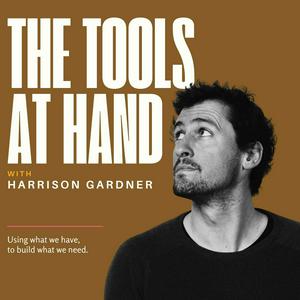
We live in a complex world. And navigating it as the complex, hopeful, emotional, ambitious human beings that we are takes a very real set of tools. The Tools at Hand is a podcast about people who have done the work of finding and developing those tools. People who saw a problem, or felt one, and instead of waiting for someone else to fix it, started figuring it out for themselves. In their community, their discipline, their craft, or their own inner life. Each episode in conversation with one guest who gives an honest account of what it actually took to build something real. The question underneath every conversation is: what did you have to learn to build this?The Tools at Hand podcast is brought to you by Bord Gáis Energy. New episodes drop every Thursday. Hosted on Acast. See acast.com/privacy for more information.
Podcast websiteListen to The Tools at Hand with Harrison Gardner, Today with David McCullagh and many other podcasts from around the world with the radio.net app
Get the free radio.net app
- Stations and podcasts to bookmark
- Stream via Wi-Fi or Bluetooth
- Supports Carplay & Android Auto
- Many other app features

 Ireland

