
Listen to this podcast in the app for free: Download for free in the App Store
radio.net
Sleep timer
Save favourites
331 episodes
This is Democracy Episode 331 – Nonprofit News
19/10/2026 | 42 mins.Jeremi and Zachary speak with Sarah Adler Hartman, CEO of The Texas Tribune, about why journalism is essential to democracy and how nonprofit newsrooms can sustain state and local reporting.This is Democracy – Episode 330: Jewish Politics Since the 19th Century
05/10/2026 | 38 mins.This week, Zachary and Jeremi meet with Yale historian David Sorkin discussing his book, The Emancipationists: 19th Century Jews’ Campaign for Citizenship.
David Sorkin is the Lucy G. Moses Professor of Modern Jewish History at Yale University. He is the author of numerous books, including The Transformation of German Jewry, 1780-1840, Jewish Emancipation: A History Across Five Centuries, and, most recently, The Emancipationists: Nineteenth-Century Jews’ Campaign for Citizenship.This is Democracy – Episode 329: Intelligence: Past and Present
21/09/2026 | 29 mins.This is Democracy – Episode 328: Imperialist Realism
09/09/2026 | 37 mins.Zachary and Jeremi are back this week to speak with University of Washington professor Daniel Bessner about his essay collection Imperialist Realism. They discuss shifting public attitudes across age cohorts, limits of U.S. power in East Asia and changing warfare, and connect these themes to the approaching 25th anniversary of 9/11 and the dashed hopes of the Global War on Terror.This is Democracy – Episode 327: Local Journalism
18/08/2026 | 37 mins.Jeremi and Zachary return from summer break to discuss local journalism. Zachary draws from his experience working as a local reporter in Milwaukee over the summer to highlight the challenges that small, local stations and publications face in reaching wide audiences today, and what opportunities history may teach us to find a path forward.
More Education podcasts





Trending Education podcasts



















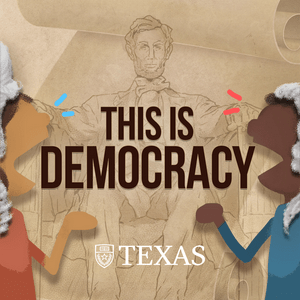
About This is Democracy
The future of democracy is uncertain, but we are committed to its urgent renewal today. This podcast will draw on historical knowledge to inspire a contemporary democratic renaissance. The past offers hope for the present and the future, if only we can escape the negativity of our current moment — and each show will offer a serious way to do that! This podcast will bring together thoughtful voices from different generations to help make sense of current challenges and propose positive steps forward. Our goal is to advance democratic change, one show at a time. Dr. Jeremi Suri, a renown scholar of democracy, will host the podcast and moderate discussions.
Podcast websiteListen to This is Democracy, Begin Again with Davina McCall and many other podcasts from around the world with the radio.net app
Get the free radio.net app
- Stations and podcasts to bookmark
- Stream via Wi-Fi or Bluetooth
- Supports Carplay & Android Auto
- Many other app features
Get the free radio.net app
- Stations and podcasts to bookmark
- Stream via Wi-Fi or Bluetooth
- Supports Carplay & Android Auto
- Many other app features

This is Democracy
Scan code,
download the app,
start listening.
download the app,
start listening.
 Ireland
