
Listen to this podcast in the app for free: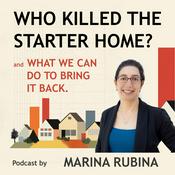 Download for free in the App Store
radio.net
Sleep timer
Save favourites
88 episodes
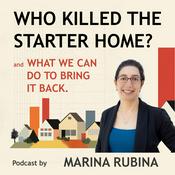
A Phenomenal Place to Live. No Car Needed. Conversation with Robert Ciatto
23/10/2026 | 7 mins.On this show, we usually bring in experts. They share what is broken in housing and what solutions are being tried around the world. Today is different. I recorded this one on my phone at the Princeton Farmers Market on October 15th. So please forgive the sound and video quality.
Meet Bob and his neighbor. They are 95 and 98. And they love living in the heart of town. We hope their stories ease fears about living closer together and be more open to a variety of homes in our communities.Luck Is Not a Housing Policy. Conversation with Charlotte Hayden.
16/10/2026 | 40 mins.Charlotte Hayden grew up in Princeton and recently came back as an adult. She found her apartment through a series of lucky coincidences and loves living in a walkable neighborhood without a car. Charlotte says that’s how it works for almost everyone she knows: all housing searches are workarounds. Someone heard of a friend with a spare room. Someone’s parents bought a house and needed to rent it out. Someone got referred by sheer coincidence. People of her generation are tired of relying on luck as a housing policy. And buying a first home feels out of reach.
We also talk about what it’s like to live without a car. Interestingly, it’s not grocery shopping that is the worst part. It’s the stigma, and how surprised people are when she shows up on a bike. We also talk about what young people want from a town, such as safe bike lanes and places to sit that don’t require a purchase.It's All the Same Crisis: Housing, Climate, Transit. Conversation with Peter Harrison
09/10/2026 | 43 mins.In this episode, Pete Harrison joins us from Connecticut, where he is the director of the Connecticut programs at the Regional Plan Association. RPA's report shows that ninety-one percent of land in Connecticut only allows single-family homes. Pete walks us through why housing, climate, and transit aren't three separate crises. They're the same crisis. Build homes near trains and buses, and you cut emissions, cut car costs, and finally make room for more people to live there. We talk about a new state law called "Work, Live, Ride," built to do exactly that.
My 14-year-old son, Ethan Spitkovsky, put it best: the "last mile" problem people blame on transit isn't really a transit problem. It's a housing problem.The Income of Homeowners: The Rent You Don't Pay. Conversation with Richard Green
02/10/2026 | 51 mins.In this episode, Professor Richard Green joins us. He's the Director and Chair of the University of Southern California Lusk Center for Real Estate, and he's been obsessed with data and cities since he was about nine years old. He's here with a counterintuitive finding. If you bought a house in the Detroit metropolitan area back in 1987, you did better financially than if you'd bought one in San Francisco and even beat the stock market. Not because Detroit went up more in value. It didn't. But because the rent you don't have to pay is income, and that income is worth more in a stable market than a speculative one.
Richard also walks us through the "buy, borrow, die" strategy of the wealthy: borrow cheaply against an asset instead of selling it, invest that money elsewhere, with no need to pay taxes on a sale. Turns out an ordinary homeowner can do a version of that too, just by refinancing smartly when mortgage rates drop. And a fun fact from a hundred and fifteen years ago: a Pasadena newspaper ran complaints about ugly new houses ruining the neighborhood. Those houses were craftsman bungalows that are highly valued landmarks today.The Toolbox We Haven't Used Yet. Conversation with Steven Goldin
25/09/2026 | 59 mins.In this episode, Steve Goldin joins us with a rare perspective of the housing system from all angles. He's been a developer, a municipal planning director, a real estate head at a public university, and even started a proptech company, so he's sat at every side of the table.
His take is that our fear of change drove the death of the starter home, but from there, we get into some genuinely creative ideas most developers or towns have never tried. For example, to get approvals it may not be enough for a developer to bring data that new residents of a building won't overcrowd the school district, but could it be possible to buy insurance to offer the town a sense of security? If there is a fear of data centers, could there be a market system to pay towns to host them?
More Arts podcasts









Trending Arts podcasts


























About Who Killed the Starter Home?
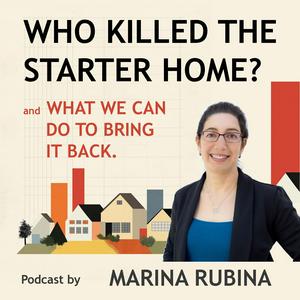
Have you seen any starter homes for sale lately? Neither have we.
In this podcast, we speak with experts and try to figure out why this humble first home is going extinct. We’ll be exploring if it is the politicians, wielding zoning laws like a murder weapon who killed the starter home? Or maybe the scaredy-cat planners and designers? Or the developers, armed with cookie-cutter plans and corporate indifference? Is it our convoluted tax policy that subsidies homeownership, but puts every tax penalty in the way of creation of the starter homes.
Spoiler alert: it’s probably a little of everything.
We’ll be peeling back the layers of bureaucracy, bad faith, and bad planning, with stops along the way for affordable housing scandals, ADU success stories, and a passionate plea for building code updates. Join us for a conversation that’s part policy deep-dive, part therapy session for frustrated builders, and entirely a love letter to cities that deserve better.
Podcast websiteListen to Who Killed the Starter Home?, Comfort Eating with Siobhán McSweeney and many other podcasts from around the world with the radio.net app
Get the free radio.net app
- Stations and podcasts to bookmark
- Stream via Wi-Fi or Bluetooth
- Supports Carplay & Android Auto
- Many other app features
Get the free radio.net app
- Stations and podcasts to bookmark
- Stream via Wi-Fi or Bluetooth
- Supports Carplay & Android Auto
- Many other app features

Who Killed the Starter Home?
Scan code,
download the app,
start listening.
download the app,
start listening.
Who Killed the Starter Home?: Podcasts in Family
 Ireland
