

Listen to this podcast in the app for free: Download for free in the App Store
radio.net
Sleep timer
Save favourites
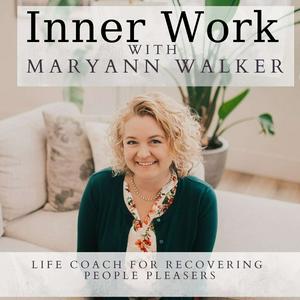
Inner Work With MaryAnn Walker: Life Coach for People Pleasers
MaryAnn Walker: Life Coach for Empaths, Highly Sensitive People & People Pleasers
Latest episode
225 episodes
222: What if What You're Seeking is Closer Than You Think: Good Morning America & The Self Reclamation Project
23/07/2026 | 19 mins.Send us Fan Mail
What if the biggest thing holding you back isn't your circumstances—but the story you've been telling yourself about who you are?
In this deeply personal episode, I share the surprising email I received from Good Morning America and how one unexpected opportunity completely shifted the way I saw myself. Even though the interview didn't happen, the experience revealed something far more valuable: the identities we unconsciously create often determine what's possible in our lives.
If you've ever caught yourself saying things like:
"I'm just not confident."
"I'm not a morning person."
"I'm unlucky in love."
"I never follow through."
"I don't even know who I am anymore."
...this episode is for you.
We'll explore how these identity statements are simply practiced thoughts—not permanent truths—and how changing them can completely transform the way you show up in your life.
I also introduce The Self Reclamation Project, a 12 weeks one-on-one coaching experience designed specifically for women who are ready to reclaim their time, energy, joy, and self identity.
In This Episode You'll Learn:
Why your identity isn't fixed—and how you've been unknowingly creating it
The surprising mindset lesson I learned from Good Morning America
How your brain gathers evidence to support the stories you believe
The difference between self-awareness and true transformation
Why personal growth requires integration, not just information
How coaching helps you uncover blind spots and move through overwhelm faster
The four pillars of The Self Reclamation Project:Reflect
Reclaim
Reframe
Reimagine
How changing just one belief can open doors you never imagined were possible
The Self Reclamation Project is a 12-week, one-on-one coaching experience designed to help you reclaim your voice, confidence, peace, identity, and joy.
Together we'll identify what's keeping you stuck, rewrite limiting beliefs, and build a life that actually feels like yours.
✨ Registration is now open, we begin in September, and this opportunity is limited to just 10 women.
Learn more here: https://maryannwalker.life/coaching-packages
If you're interested, email me at: maryann@maryannwalker.life and tell me what change you're most longing to create. Seats are limited, so email me now to secure your seat.
Contact me: https://maryannwalker.life/contact-me
FREE How to Get Your Needs Met Challenge: https://maryannwalker-life.kit.com/cdf81f07e6221: Am I a People Pleaser? 8 Questions to Help You Find Out
16/07/2026 | 16 mins.Send us Fan Mail
Am I a People Pleaser? 8 Questions to Help You Find Out
You love helping others. You want people to feel seen, supported, and cared for. But when does kindness cross the line into people-pleasing?
In this episode, I'm sharing eight powerful questions to help you identify whether your generosity comes from a place of authenticity—or from fear, guilt, or the need for approval. These questions aren't meant to judge you. They're designed to help you become more aware of the patterns that may be keeping you stuck so you can begin creating healthier, more balanced relationships.
The 8 Questions to Ask Yourself
1. Am I willing to ask for what I need?
If you rarely express your needs and hope others will simply notice them, you may be unintentionally setting yourself up for disappointment.
2. Do my relationships feel balanced?
Healthy relationships involve both giving and receiving, not one person constantly pouring while the other only takes.
3. Am I loved for who I am or for what I do?
If your value feels tied to being the helper, fixer, or caretaker, it may be time to reconnect with your identity beyond those roles.
4. Am I constantly trying to prove myself?
People-pleasing is often fueled by the belief that you're either "too much" or "not enough," leaving you exhausted trying to earn your worth.
5. Do I feel responsible for other people's emotions?
Caring about someone's feelings is different from believing it's your job to keep everyone happy.
6. Am I uncomfortable having needs?
When you believe your needs are a burden, you begin shrinking yourself instead of allowing yourself to be fully seen.
7. Am I avoiding an important conversation?
Fear of conflict often keeps people-pleasers silent, even when speaking up could strengthen the relationship.
8. Have I lost myself along the way?
When you've spent years becoming who everyone else needs you to be, it can become difficult to remember who you are.
Challenge for the Week
Take a few minutes to honestly answer each of these questions. Which one resonated with you the most? Rather than criticizing yourself, simply become curious. Awareness is the first step toward lasting change.
Mentioned in This Episode
Episode 123: The Three Types of Empathizers https://www.buzzsprout.com/2028767/episodes/15657456
Free 7-Day How to Get Your Needs Met Challenge https://maryannwalker-life.kit.com/cdf81f07e6
Coming Next Week
If three or more of these questions resonated with you, don't miss next week's episode. I'll be introducing a brand-new coaching program designed to help you stop people-pleasing, reconnect with yourself, and create healthier relationships. I'll also be opening just 10 spots for women who are ready to create lasting transformation.
If this episode encouraged you, please leave a rating and review, and share it with someone who needs this reminder today.220: Are You Living in a Tragedy or a Hero's Journey? One Quick Exercise to Change Your Story Today
09/07/2026 | 23 mins.Send us Fan Mail
The Stories You Tell Yourself: How Your Thoughts Shape Your Reality
What if the biggest thing keeping you stuck isn't what's happening in your life—but the story your brain keeps telling you about it?
Our minds are incredible storytellers. A comment from a neighbor, a missed invitation, or a simple misunderstanding can quickly become a dramatic narrative about rejection, failure, or not being enough. The problem isn't the circumstance itself—it's the meaning we assign to it.
In this episode of Inner Work with MaryAnn Walker, you'll discover a surprisingly fun mindset exercise that helps you interrupt negative thinking, challenge unhelpful assumptions, and intentionally rewrite the stories shaping your emotions, relationships, and future.
Using the idea of writing your own movie trailer, you'll learn how to shift from seeing yourself as the victim of your circumstances to becoming the hero of your own story.
If you're someone who tends to overthink every interaction, this episode will give you practical tools to create more peace, confidence, and emotional resilience.
In This Episode You'll Learn:
Why your brain naturally creates negative stories (and why it isn't your fault)
How your thoughts—not your circumstances—shape your emotional experience
The psychology behind negativity bias and overthinking
Why people often assume the worst
How to recognize when you're writing a tragedy instead of a growth story
The "Movie Trailer Exercise" that helps you create empowering new narratives
How changing your internal story changes the way you show up in your life
Why you're only living one chapter—not your entire story
Challenge for the Week
Throughout the week, notice the stories your brain automatically creates after everyday situations.
Instead of accepting the first storyline your mind offers, ask yourself:
What else could this mean?
Is this story helping me become the person I want to be?
If my life were a movie, what would the trailer say about this chapter?
Then write your own movie trailer.
Imagine your life being narrated as the beginning of an incredible transformation instead of the end of the story.
Because this isn't your whole story.
It's just one chapter.
Resources Mentioned
Free 7-Day Get Your Needs Met Challenge https://maryannwalker-life.kit.com/cdf81f07e6
One-on-One Coaching with MaryAnn Walker Email: maryann@maryannwalker.life
Work With Me
If you're tired of overthinking every conversation, assuming the worst, or feeling stuck in the same painful patterns, coaching can help you rewrite the beliefs that have been running your life for years.
Together, we'll uncover the stories your brain has been repeating, challenge the beliefs keeping you small, and help you create new thought patterns that lead to healthier relationships, stronger boundaries, and greater emotional peace.
To learn more about working together, email maryann@maryannwalker.life.219: People Pleasing and Codependency: The Two Beliefs That Keep You Exhausted
02/07/2026 | 17 mins.Send us Fan Mail
The Two Hidden Beliefs Keeping People Pleasers Stuck
Do you constantly feel responsible for everyone else's happiness? Do you struggle to ask for help, set boundaries, or admit that you have needs too?
If so, you may be operating from two unconscious beliefs that quietly shape your relationships—and keep you trapped in burnout, resentment, and self-abandonment.
In this episode of Inner Work with MaryAnn Walker, we're exploring the two core beliefs that drive people pleasing, why they develop, and how they create unhealthy relationship dynamics rooted in fear rather than authentic connection.
You'll also learn healthier beliefs to practice so you can experience more balanced, reciprocal relationships without abandoning yourself in the process.
In This Episode You'll Learn:
The fear of abandonment that fuels people pleasing
Why many people pleasers confuse being needed with being loved
How over-functioning creates dependency instead of healthy connection
The hidden cost of believing "I don't have needs"
Why pretending you're "fine" leads to burnout and resentment
How self-abandonment prevents genuine intimacy
The difference between codependency and healthy interdependence
Healthier beliefs that support boundaries, self-worth, and authentic relationships
Reflection questions to help you recognize your own people pleasing patterns
Many people pleasers spend years trying to prove two unconscious beliefs:
You need me.
I don't have needs.
While these beliefs may seem loving or selfless, they're often driven by fear—the fear that if you're not useful, easy, or indispensable, you'll lose love or belonging.
The reality is that healthy relationships aren't built on one person constantly rescuing the other. They're built on two capable people choosing one another while allowing space for both giving and receiving.
Your value has never been determined by how much you do for others.
And having needs doesn't make you difficult to love—it makes you human.
Challenge for the Week
Notice when you find yourself trying to prove one of these beliefs:
"They need me."
"I don't have needs."
Then pause and ask yourself:
Am I helping because I genuinely want to... or because I'm afraid of what might happen if I don't?
That single question can reveal whether you're acting from love—or from fear.
Practice replacing those old beliefs with healthier ones:
My value isn't determined by how needed I am.
My needs are just as important as anyone else's.
I don't have to burn myself out to deserve love.
The people who are meant for me want the real me—not just the endlessly accommodating version of me.
Resources Mentioned
Previous episode: Empathy Without Boundaries is Self-Abandonment
Episode 117: Empathy Without Enabling: Boundaries for Toxic Relationships (Understanding vs Tolerating)
Episode 112: Part 4: Rescuer/Coach Energy: The Drama Triangle & Empowerment Dynamic
Ready to Stop Abandoning Yourself?
If you're ready to create healthier relationships, set boundaries without guilt, and finally start honoring your own needs, I'd love to support you.
Join my FREE 7-Day Feel Better Challenge, where you'll receive a short daily lesson and practical exercise to help you rebuild self-trust, reduce burnout, and create more balanced relationships.
You don't have to earn love by overgiving.
You are already worthy.218: Empathy without Boundaries is Self Abandonment: How to Know When Helping Others Is Hurting You
25/06/2026 | 21 mins.Send us Fan Mail
Empathy, Boundaries, and Self-Abandonment: How to Know When Helping Others Is Hurting You
If you're an empath, highly sensitive person, or recovering people-pleaser, helping others probably comes naturally to you. You can feel what others are going through, understand their struggles, and often step in before anyone even asks for help.
While empathy is a beautiful gift, there comes a point when helping others can cross the line into self-abandonment.
In this episode, we're exploring how to tell the difference between genuine kindness and self-sacrifice that comes at your own expense. You'll learn how to recognize when your empathy is causing you to neglect your own needs, and how to create healthier boundaries that allow you to support others without burning yourself out.
If you've ever found yourself exhausted, resentful, or wondering why everyone else's needs seem to come before your own, this episode is for you.
What You'll Learn
The difference between being helpful and self-abandoning
Why empathy without boundaries often leads to self abandonment
How to identify what you're sacrificing every time you say yes
The hidden cost of struggling to receive support from others
Questions to ask yourself before agreeing to help someone
How to make your kindness more sustainable
Why identifying your own needs is essential for healthy relationships
Common signs that your helpfulness has crossed into self-abandonment
How to create more balance, reciprocity, and self-trust in your relationships
Key Takeaway
Your empathy is not the problem.
The problem arises when your compassion for others consistently outweighs your compassion for yourself.
Healthy relationships require both giving and receiving. Learning to honor your own needs doesn't make you selfish—it makes your support more sustainable and your relationships more balanced.
Challenge for the Week
The next time someone asks for your help, pause before answering.
Ask yourself:
What would I be saying no to in my own life if I say yes to this request?
Then check in with what you need in order to make your support sustainable. You may decide to say yes, say no, or set a boundary that allows you to help without abandoning yourself.
Notice what happens when you give yourself permission to matter too.
Ready to Stop Self-Abandoning?
Join my FREE 7-Day Stop Self-Abandonment Challenge.
Each day you'll receive a simple email with a reflection, exercise, or journaling prompt designed to help you rebuild self-trust, strengthen your boundaries, and reconnect with yourself.
Small shifts create lasting change—and sometimes transformation begins with a single new thought.
Click here to join the challenge! https://maryannwalker-life.kit.com/cdf81f07e6
Want to learn more?
Visit https://maryannwalker.life/ to learn more about coaching opportunities and resources designed specifically for empaths, highly sensitive people, and recovering people-pleasers.
More Education podcasts
 Coffee Break SpanishCourses, Education, Language Learning
 What the Focal!?Education, Language Learning
 Gaeilge WeeklyEducation, Language Learning
 Good Life ProjectBusiness, Education, Health & Wellness, Self-Improvement, Tutorials
 IMO with Michelle Obama and Craig RobinsonEducation, Self-Improvement, Society & Culture
 The Comeback with Brenda DennehyEducation, Health & Wellness, Mental Health, Self-Improvement
 The Mel Robbins PodcastEducation, Health & Wellness, Mental Health, Relationships, Self-Improvement, Society & Culture
 Business Alchemy with Jackie MinskyEducation
 Living Your LegacyBusiness, Education, Entrepreneurship, Film Interviews, Self-Improvement, TV & Film
 Begin Again with Davina McCallEducation, Health & Wellness, Mental Health, Self-Improvement, Society & Culture
Trending Education podcasts
 University of GalwayEducation
 InnerFrenchEducation, Language Learning
 Aware and AggravatedEducation, Health & Wellness, Mental Health, Self-Improvement
 Victim To Victory PodcastEducation, Personal Journals, Relationships, Self-Improvement, Society & Culture
 Dear GabbyEducation, Health & Wellness, Mental Health, Religion & Spirituality, Self-Improvement, Spirituality
 French Through StoriesEducation, Language Learning
 Self ObsessedEducation, Self-Improvement
 Sleep Sounds - White Noise & Sleep Music from Calm CoveEducation, Health & Wellness, Kids & Family, Mental Health, Self-Improvement
- Good Life ProjectBusiness, Education, Health & Wellness, Self-Improvement, Tutorials
 Budget Effect: How to Budget, How to Pay off Debt, Save Money, Live on a Budget, Improve your Money Mindset on a single incomeBusiness, Education, Investing, Self-Improvement, Tutorials
- IMO with Michelle Obama and Craig RobinsonEducation, Self-Improvement, Society & Culture
 Trauma RewiredEducation, Life Sciences, Science, Self-Improvement
 Español con JuanCourses, Education, Language Learning
 Stretch MarksEducation, Kids & Family, Parenting, Personal Journals, Self-Improvement, Society & Culture
 Luke's ENGLISH Podcast - Learn British English with Luke ThompsonComedy, Education, Language Learning
 Nuacht MhallEducation, Language Learning
- Gaeilge WeeklyEducation, Language Learning
 Learning English ConversationsEducation, Language Learning
 Do you really know?Education, News
 The BossticksBusiness, Education
 Learn Spanish: Fluency in Real Life with HandyspanishEducation
- What the Focal!?Education, Language Learning
 6 Minute EnglishEducation, Language Learning
- Coffee Break SpanishCourses, Education, Language Learning
About Inner Work With MaryAnn Walker: Life Coach for People Pleasers
Are you a people pleaser or a highly sensitive person who somehow became the unofficial emotional support human for everyone in your life… and now you’re exhausted? If so, you’re not alone—and this podcast is for you.I’m MaryAnn Walker, and I help people pleasers and highly sensitive people break free from people pleasing, stop abandoning themselves, and finally find peace (without turning into someone they’re not). Each week, we explore how to set boundaries without guilt, stop over-accommodating, and rebuild self-trust—so your relationships can feel more balanced, safe, and mutually supportive.Through practical tools, gentle coaching, and real-life examples, you’ll learn how to care for others without losing yourself, trust your own voice, and create emotional safety in your life.It’s time to stop people pleasing, put down the weight of everyone else’s emotions, and start experiencing the peace and self-respect you deserve.Hit subscribe now and let’s help you feel more grounded, confident, and at home in your own life.If you’re ready for more customized support, I would love to work with you. You can have a life filled with peace, clarity, and connection—and I can show you how.👉 Inquire about one-on-one coaching availability and next steps here:https://maryannwalker.life/contact-meFollow me on social media! https://www.tiktok.com/@maryannwalker.lifehttps://www.instagram.com/maryannwalker.life/https://www.facebook.com/maryannwalker.lifehttps://www.youtube.com/@maryannwalkerlife
Podcast websiteListen to Inner Work With MaryAnn Walker: Life Coach for People Pleasers, Coffee Break Spanish and many other podcasts from around the world with the radio.net app
Get the free radio.net app
- Stations and podcasts to bookmark
- Stream via Wi-Fi or Bluetooth
- Supports Carplay & Android Auto
- Many other app features
Get the free radio.net app
- Stations and podcasts to bookmark
- Stream via Wi-Fi or Bluetooth
- Supports Carplay & Android Auto
- Many other app features

Inner Work With MaryAnn Walker: Life Coach for People Pleasers
Scan code,
download the app,
start listening.
download the app,
start listening.
 Ireland