
Listen to this podcast in the app for free: Download for free in the App Store
radio.net
Sleep timer
Save favourites
109 episodes
Why the Church Needs a New Evangelisation Now | Dr Petroc Willey
12/11/2026 | 1h 7 mins.Theology professor Petroc Willey joins the podcast this week to explain why the Catholic Church needs a “new evangelisation” in a culture shaped by secularism, fragmented worldviews, and weakened intergenerational faith.
Drawing on the ancient Catechetical School of Alexandria, Dr Willey proposes a model of formation that joins intellectual teaching, embodied practices, personal mentoring, and community so that Catholics can become confident witnesses. Light From Alexandria book: https://www.amazon.ie/Light-Alexandria-Recovering-Christian-Education/dp/B0F2JK36GW
Chapters:00:00 Petroc Willey and the purpose of the new evangelization02:24 How modernity fractured a shared moral worldview06:15 Vatican II’s call for a new Pentecost09:12 Why the Church must be evangelized too16:02 Secular assumptions and the challenge of explaining faith22:16 Resourcement and the ancient Catechetical School of Alexandria27:02 Formation as an embodied craft, not just instruction34:10 What a day in the Alexandrian school might involve38:28 The catechumenate: a gradual path into Christian life50:25 Small communities, families, and the mustard-seed approach58:26 Why online Catholic content needs personal mentors01:05:12 Building ongoing formation and training parish catechists
Want to support my work and this channel? Consider sharing this post, publication or becoming a patron 👇
Get full access to Raise the Cross at www.mahonmccann.com/subscribeFr Conor McDonough: The Untold History of How Ireland Became Catholic
05/11/2026 | 55 mins.Father Conor McDonough OP returns to the podcast to examine how Christianity took root in Ireland and what the surviving evidence can tell us.
In the conversation, we trace Patrick’s writings, the Christian shaping of Irish law and literature, monastic experiments, and the legacy of Irish philosophers and scholars in Europe after the fall of the Roman empire!
Timestamps:00:00 Christian humanism: finding goodness across cultures01:08 Patrick’s two writings and the historical gap03:55 Ogham, Roman Britain, and early Christian contact07:16 What can we responsibly say about pagan Ireland?09:16 How Christian Ireland preserved and reshaped older law12:40 Irish legends, monastic manuscripts, and cultural memory17:15 The Book of Invasions as layered origin story22:21 Universal history and the wisdom of particular places30:00 Patrick’s mission without armies, and what remains unknown37:02 Monasteries, women leaders, and exile for Christ42:27 Ascetic experiments, reform, and monastic life46:08 Irish scholars in the Carolingian Renaissance51:15 Christian humanism and spiritual discipline today54:41 Beyond culture war: resisting an oppositional spirit
New book alert 🚨
A friend of the pod, Dr Samuel Shepard (Place, Practice and Virtue) from Ave Maria University, has a new book out this week on ‘Christian Environmental Stewardship: Rediscovering Place, Practice and Virtue’.
“Science, faith, and storytelling come together in this innovative guide to creation care.
What does faithful environmental care look like in practice? This groundbreaking book answers that question by weaving together cutting-edge sustainability science, enduring Christian teaching, and personal accounts of transformative experiences in nature.
Coauthored by an ecologist and a theologian who both love the outdoors, Christian Environmental Stewardship offers an innovative framework for person- and place-based stewardship. Through engaging prose enriched with personal stories, the authors highlight the importance of outdoor experiences where people form strong connections with local places and communities―connections that build virtue and lead to meaningful conservation efforts. The book’s rigorous synthesis of science, theology, and storytelling is a welcome alternative to environmental conversations that can seem politically charged, disconnected from faith, or simply remote from lived experience.”
Want to support the channel? Consider sharing this post, publication or becoming a patron 👇
Get full access to Raise the Cross at www.mahonmccann.com/subscribePeco Gaskovski: How Humanity Survives the Tech Dystopia
15/10/2026 | 1hPeco Gaskovski is a neuropsychologist and the author of ExoGenesis and, most recently, The Last Upheaval.
Peco and his wife, Ruth Gaskovski, are the creators and lead authors of both ‘Pilgrims in the Machine’ and ‘School of the Unconformed’. In my opinion, two of the best publications out there on how to live in a world rapidly changing due to emerging technologies! These publications are a constant source of inspiration for analogue living and a lighthouse for human values online. Truly, they are doing the Lord’s work.
In this interview, we are discussing Peco’s new sci-fi thriller ‘The Last Upheaval’. We focus on the main themes explored in the book: God, family, relationships in a fractured world, and how to remain human in the machine.
After reading an advanced copy of the book, I can confidently say it is the ‘1984’ or ‘Brave New World’ for our current troubled times. But while Orwell and Huxley had the luxury of chronological distance to their hypothesised future dystopias, Gaskovski has hit a buzzer beater and captured our strange civilisational decline in real time! Despite the heavy material, the book never feels hopeless or despondent. Peco’s unique ability to blend big ideas and humour and humanity into an engaging and exciting story keeps you coming back for more and makes ‘The Last Upheaval’ a must-read for anyone who is still awake, upright and literate today. It is a relatable, enlightening, and edifying tale, and the main character is named after Plato’s uncle Solon, so obviously, I’m in.
If you are interested, collect your copy here 👉 https://www.amazon.ie/Last-Upheaval-Peco-Gaskovski/dp/1988604249
Barnes and Noble link: https://www.barnesandnoble.com/w/the-last-upheaval-peco-gaskovski/1151382351?ean=9781988604244
Timestamps:00:00 Introduction to The Last Upheaval and its themes01:03 What is the last upheaval in the novel: a cyber attack02:07 Exploring the human element in societal collapse02:54 Current civilizational moment and technological influences05:09 Narratives around AI and their societal impact07:21 The religious roots of technological eschatology08:53 The infrastructure built by digital technology and its implications10:29 Offloading human cognition onto AI and its risks12:02 The decline of human skills and virtues in the digital age15:00 Relational debt and AI's impact on human relationships16:40 The social and emotional effects of AI relationships18:20 The subtle ways AI creates dependency and relational shifts20:12 The slow erosion of human competence and character22:53 The challenges of governance and ethical AI development24:19 Environmental and energy concerns related to AI and societal collapse26:38 Balancing technological progress with human resilience28:52 The return to community, family, and faith as a solution30:28 Practical ways to stay human in a digital world33:22 The importance of social trust and relationships35:37 The Christian worldview and divine anthropology39:38 Love, virtue, and the Christian model of human relationships44:23 The necessity of conflict and difficult conversations in love48:42 Building resilient communities through faith and family55:51 The role of education and homeschooling in resilience58:39 The future of education and AI's impact on learning
Want to support this Substack publication and my wider work online? Consider sharing this post, publication or becoming a patron below 👇
Get full access to Raise the Cross at www.mahonmccann.com/subscribePlato's Republic, Book 10: Imitation, Immortality and the Myth of Er
27/08/2026 | 15 mins.Folks,
We have finally arrived at the final lecture of the course on Plato’s Republic on book 10!!!
In this final lecture, we survey Plato’s ontological critique of imitative art, the paradoxical case of Plato's frequent use of images despite his critiques, his arguments for the immortality of the soul and, finally, the famous Myth of Er.
The Platonic case against AI Slop: https://www.palladiummag.com/2025/11/14/the-platonic-case-against-ai-slop/
Chapters:00:00 Welcome and Setup00:17 Why Book Ten Exists01:29 Being Versus Appearance02:39 Art Third From Truth05:16 Poets Without Knowledge09:33 Redeeming Images11:57 Myth of Er Begins13:14 Choosing Next Lives14:59 Lethe Rebirth and Wrap
FYI, this will be my last post until the end of September!
I am both getting married and finishing my PhD in the next month, so I’m going to take a back seat on the content until I emerge as a husband and a philosophy doctor.
However, we will be back come October time with some exciting announcements and additions to the future of the publication, so stay tuned and keep living the examined life in the meantime. 🍻
Best,
Mahon.
Get full access to Raise the Cross at www.mahonmccann.com/subscribePlato’s Republic, Book 9: How the Tyrant Is Made (and Why Justice Wins)
20/08/2026 | 21 mins.We are back with Book 9 of Plato’s Republic, which deals with the genesis of the tyrant!
This book returns to the core question from Book 2: why the just person is happier than the unjust and whether the tyrant is wretched or blessed.
We will explain Plato’s account of how a tyrant develops from democratic permissiveness, losing the ability to distinguish necessary from unnecessary desires and becoming ruled by insatiable appetites, like someone living out the lawless impulses revealed in dreams.
The tyrant’s rise is enabled by a chaotic city, but his inner disorder makes him miserable, friendless, and unfree, contrasted with the philosopher-king who is ruled by reason. Mahon then outlines Plato’s further defences of justice: an argument from the tripartite soul and an argument about true vs illusory pleasures, culminating in the claim that justice is 729 times better than injustice.
Chapters:00:00 Welcome and Series Context00:16 Book Nine Big Question01:37 Dreams and Lawless Desires03:32 How a Tyrant Is Made04:51 Tyrant’s Addictions and Misery06:07 Political Rise of Tyranny09:03 Tyrant vs Philosopher King10:53 Tripartite Soul and True Judge14:10 Real vs Illusory Pleasure17:08 Dopamine Nation and Addiction20:11 The 729 Times Proof20:50 Conclusion: Justice Wins
Want to support this work? Consider sharing this post or publication or becoming a Patron 👇
Get full access to Raise the Cross at www.mahonmccann.com/subscribe
More Education podcasts



Trending Education podcasts












About Mahon McCann
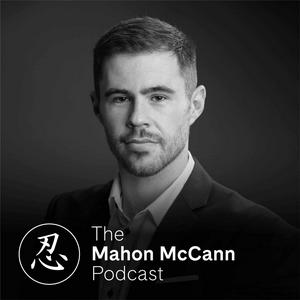
Mahon McCann is an Irish philosophy PhD, lecturer, and APPA-certified philosophical counsellor, fighting back against the machine and the modern meaning crisis. He is a former atheist and Catholic convert, and on this podcast he explores solutions to the meaning crisis, philosophy beyond reductive materialism, meaning and manipulation in the machine age and bridging the gap between the secular world and Christendom. Join the Raise the Cross substack to get every episode to your inbox 👇 www.mahonmccann.com
Podcast websiteListen to Mahon McCann, The Mel Robbins Podcast and many other podcasts from around the world with the radio.net app
Get the free radio.net app
- Stations and podcasts to bookmark
- Stream via Wi-Fi or Bluetooth
- Supports Carplay & Android Auto
- Many other app features

 Ireland

