

Listen to this podcast in the app for free: Download for free in the App Store
radio.net
Sleep timer
Save favourites
316 episodes

Day 39 of 100: I Said Ship It and Nothing Shipped
19/09/2026 | 13 mins.In the last episode I told you I'd hit a wall building an AI product in 100 days. This is what happened after I asked for help.
So many of you replied, and a handful of those replies changed how I build. One pointed me to Matt Pocock's skills on GitHub, which exposed an embarrassing habit: session after session I'd been telling Claude "ship it" and assuming the change went live. It didn't.
Others told me I was trying to boil the ocean. So the PLG analyzer now finds one opportunity worth your week instead of three, and a judge agent decides what matters most rather than a formula weighing everything the same. My own rating went from a 4 out of 10 to a 6.
Next up is cost and speed. A free assessment still costs 40 to 60 cents and takes about two minutes, and I want it under 60 seconds.
I close on something that has little to do with the build: using AI to write without ending up sounding 80% like yourself.
IN THIS EPISODE
00:00 Day 39, and why updates are now every two weeks
00:47 Stuck, and what happened when I asked for help
02:01 Matt Pocock's skills, and the 11 I use all the time
02:37 I said ship it, and nothing shipped
03:41 Stop trying to boil the ocean
04:16 Why a formula misses the biggest problem on your site
04:57 From three opportunities to one worth your week
05:46 Why an LLM product needs a judge agent
06:58 Eric's idea: a playbook behind every recommendation
08:14 The next two weeks: cost and speed
09:20 From a 4 out of 10 to a 6
10:08 What I learned
10:42 Sound like yourself when AI writes for you
MENTIONED
Run the free assessment: https://productled.com
Matt Pocock's skills: https://github.com/mattpocock/skills
Wes Bush on LinkedIn: https://www.linkedin.com/in/wesbush/
What's one skill or tool someone recommended that changed how you build?Day 27 of 100: My AI Product Is a 4 out of 10
08/09/2026 | 8 mins.Day 27 of 100. There's no win to report in this one.
I'm building an AI product in public, and right now I'd rate it a 4 out of 10. That's my own score, and I'm hard on it, because I advise companies on this stuff for a living.
The product is simple to describe. Give it your website URL, and it should hand back recommendations that blow your socks off. Sales-led company? It should spot what you could be giving away for free. Already product-led? It should look at your pricing page and your signup flow and find the real opportunities. All of it in under 60 seconds, because that's one of my success criteria.
Getting there has been a tour of every AI building tool there is. Lovable got me the first 80% fast and then fought me for every point after that. I ported it to GitHub and opened a codebase I couldn't reason about, so I started over. Claude Code produced good recommendations but took 10 minutes to run. Cursor handled the file structure better, so that's where the real app got built, and we shipped it live on Render. Faster. Still not good enough. And now I get to watch what every free analysis costs us in model calls.
None of that is the actual problem.
The actual problem is codifying expertise. If you've spent years building pattern recognition in your head, getting it out of your head and into a product is the billion dollar question. I thought it was a rubric problem. I started with 30 questions and eventually cut my way down to the 13 that really matter. One of them: on your pricing page, can someone understand what they'll be charged in five seconds or less? That one is easy to write down.
Then the nuance eats you alive. A sales-led company doesn't have a pricing page at all, so what's the recommendation now? Multiply that by every edge case and you start to see the shape of it.
I've built a second app whose only job is to be the brain. I feed it tech websites and it finds the opportunities. It's the closest I've gotten, and I still haven't cracked how to break that thinking down and train the AI on it properly.
Which is why this episode is also an ask.
IN THIS EPISODE
(00:48) What the analyzer does, and why I score it a 4 out of 10
(02:09) Lovable gets you 80% there, then it fights you
(03:09) Cursor, Render, and the cost of every free analysis
(04:16) The real wall: how do you codify what you know?
(04:40) From 30 questions to 13, and the five second pricing test
(05:24) The edge cases that break the rubric
(05:45) The second app I built to be the brain
(06:17) Calling in a favor
(07:09) What we actually plan to monetize
MENTIONED
Lovable, Claude Code, Cursor and Render, the tools behind the three rebuilds
Wes Bush on LinkedIn: https://www.linkedin.com/in/wesbush/
Have you tried turning your own expertise into a product? Tell me where you got stuck.Day 5 of 100: Going Full Ironman Mode on an AI Product
14/08/2026 | 27 mins.The podcast has been quiet for a couple of months. This episode is why.
I'm building a new AI-first product at ProductLed, in public, over 100 days. It launches November 19th. You'll be able to use it while I build it, and rip it apart, and I'm sharing everything as I go, including the revenue.
Before any of that, I wanted to talk about how I'm going to attack it.
I recently finished a full Ironman. It ends with a marathon, and that's after the 3.8km swim and the 180km bike. Training for it changed the way I take on anything large, and I'm running the same structure on this build. I call it full Ironman mode, and this episode walks through all 16 parts of it.
Some of it is obvious. Most of it is not. The part that surprised me most was standards, because when you look at the standards you set for a goal, they should make the goal inevitable. That is the difference between hoping you finish and knowing you will.
Whatever your next 100 days hold, this should be useful.
IN THIS EPISODE
(04:15) Get crystal clear on your vision
(04:47) Name the core problem you're actually solving
(05:28) Define the end game, and my three success criteria for this build
(07:42) Tap your network for people who have already done it
(08:54) The identity shift, and the line I write every morning
(10:35) Pick the date
(11:39) Why one why is never enough
(12:53) Get a coach or an advisor
(14:37) Create space, and audit what pulls you away
(17:40) Find peers in the trenches
(18:50) Name the price you're willing to pay
(19:54) Resources are accelerants
(20:48) A daily plan you don't have to think about
(22:09) Standards that make the goal inevitable
(23:05) A reward you only get if you finish
(24:57) Write your own rules
MENTIONED
Conquer 100, the documentary about the Iron Cowboy
Mickey Allen, CEO at Foldspace, advising on this build
What's your next 100 days going to be? Let me know.From 10 Failed Products to a $1M/Month SaaS Portfolio
16/06/2026 | 52 mins.After spending years building unvalidated products that went nowhere, Tibo Louis-Lucas completely changed how he approached startups. In this episode of the ProductLed Podcast, he shares how those early failures pushed him toward a faster, revenue-first way of building, one that eventually led to the success of Tweet Hunter and Taplio, and now powers a growing portfolio of product-led SaaS businesses.
Tibo breaks down why revenue is the only validation that really matters, how Tweet Hunter stood out in a crowded market by going deep on a single platform, and the unusual distribution playbook that helped it take off. That included giving a major profit share to a creator-partner and building a network of “creative investors” who amplified the product from day one.
The conversation also dives into why selling a company was far less glamorous than it sounds, and why Tibo now prefers building and holding long term. He shares how he thinks about creating an “indie hacker stack” for a specific persona, how AI has changed his day-to-day workflow, and why he now spends less time coding and more time reviewing, iterating, and building systems.
One of the biggest takeaways is his operating style: no calls, fast feedback loops through DMs, and a strong focus on staying close to paying users. For founders building product-led companies, this episode is packed with practical lessons on validation, distribution, focus, and building with speed in the AI era.
Key Highlights:
02:21 - Why Two Failed Startups Changed Everything
Tibo shares the painful lesson of spending years on unvalidated ideas, and how that pushed him to become relentlessly validation-driven.
05:38 - Revenue Is the Only Validation That Counts
Why free users can be misleading, how Tibo evaluates startup ideas today, and what made Tweet Hunter feel different almost immediately.
09:47 - How Tweet Hunter Won a Crowded Market
The strategy behind focusing on one platform deeply, serving creators instead of enterprises, and building something clearly better for a narrower use case.
12:11 - The Distribution Deal That Fueled Growth
How Tibo partnered with influencers using profit share and exit incentives, and why aligning distribution with the product was such a powerful lever.
15:25 - The Creative Investors Growth Engine
Why he gave small ownership stakes to 17 creators, how that amplified launches and updates, and what made the model work.
19:31 - Why Selling Wasn’t the Dream Outcome
Tibo opens up about the pressure of earnouts, platform risk, and why the acquisition experience made him want to build and hold instead.
23:46 - Building an Indie Hacker Software Stack
Why Tibo organizes his portfolio around a specific persona instead of a single vertical, and how he thinks about expanding from five products to more.
34:54 - No Calls, More DMs, Better Feedback
A look at his no-meeting policy, why DM-based customer conversations work so well for him, and how staying close to users improves product decisions.
37:18 - How AI Changed the Way He Builds
Tibo explains how AI emptied his backlog, turned him into a QA-first builder, and created a new challenge: resisting feature creep.
Resources:
🚀 Revid AI: https://www.revid.ai/
💼 Connect with Tibo Louis-Lucas on LinkedIn: https://www.linkedin.com/in/tibo-the-maker/
💼 Connect with Wes Bush on LinkedIn: https://www.linkedin.com/in/wesbush/
💼 Connect with Esben Friis-Jensen on LinkedIn: https://www.linkedin.com/in/esbenfriisjensen/
🧠 Sign up for the ProductLed Newsletter: https://www.productled.com/newsletterNo Sales Call Required: Roeland Delrue on Scaling Aikido to a Cybersecurity Unicorn
26/05/2026 | 53 mins.In this episode of the ProductLed Podcast, Wes Bush and Esben Friis-Jensen sit down with Roeland Delrue, CEO and co-founder of Aikido Security, to unpack how the company reached $40M+ ARR in just three and a half years in one of the most sales-heavy categories in software.
Roeland shares how his team entered cybersecurity without a traditional security background, simply by living the problem themselves. After juggling eight different security tools and watching a security engineer quit from the sheer pain of triaging endless false positives, they decided to build the product they wished existed.
The conversation digs into why Aikido took a radically product-led path in a market dominated by demos, gated trials, and opaque pricing. Roeland explains how transparent pricing, fast time-to-value, and a no-nonsense buying experience helped Aikido win trust with developers and security teams alike.
They also get into the bigger growth story behind the business: why product-led motions scale so well, how compliance trends like SOC 2 create strong tailwinds, and why Aikido chose to build a multi-product platform from day one instead of another point solution.
Toward the end, Roeland shares his view on AI in cybersecurity, where AI pen testing is already replacing human work, and where humans will still matter for a long time. It is a candid look at building a category-defining security company without following the usual playbook.
Key Highlights:
01:46 - The Pain That Sparked Aikido
How Roeland and his co-founders went from frustrated security-tool buyers to building their own solution.
04:40 - Why Cybersecurity Needed a PLG Rethink
A sharp breakdown of why traditional sales-led security buying feels broken and expensive.
10:11 - Trust in Security Without Heavy Sales
How Aikido built trust through product quality, compliance, transparency, and social proof.
15:24 - What Drove Aikido’s Fast Growth
Why self-serve foundations, fast setup, and faster time-to-value helped the company scale quickly.
18:06 - Compliance and AI Fueling Demand
How SOC 2, ISO requirements, open source risk, and AI-driven software growth are expanding the market.
20:15 - Building a Security Platform Day One
Why Aikido bet on an all-in-one platform instead of a narrow point solution, and how they keep quality high.
27:08 - Brownfield vs Greenfield Growth
Roeland explains why Aikido started by replacing existing tools and is now moving into faster AI-driven markets.
34:16 - A Practical View of AI in Security
Why Roeland believes the future is hybrid, with deterministic scanners and AI working side by side.
36:31 - Can AI Replace Human Pen Testing?
Where AI pen testing already works today, where it still falls short, and what adoption barriers remain.
Resources:
🚀 Aikido Security: https://www.aikido.dev/
💼 Connect with Roeland Delrue on LinkedIn: https://www.linkedin.com/in/roelanddelrue/
💼 Connect with Wes Bush on LinkedIn: https://www.linkedin.com/in/wesbush/
💼 Connect with Esben Friis-Jensen on LinkedIn: https://www.linkedin.com/in/esbenfriisjensen/
🧠 Sign up for the ProductLed Newsletter: https://www.productled.com/newsletter
More Business podcasts
 Money TalksBusiness
 The BusinessBusiness, Entrepreneurship
 Aspire with Emma GredeBusiness, Entrepreneurship, Society & Culture
 Ask About WealthBusiness, Education, Entrepreneurship, Investing, Tutorials
 Inside Business with Ciaran HancockBusiness
 UnhedgedBusiness, Business News, Investing, News
 Prof G MarketsBusiness, Investing
 Better With MoneyBusiness, Education, Investing, Self-Improvement, Tutorials
 Great Business StoriesBusiness, History
 A Bit of OptimismBusiness, Careers, Education, Self-Improvement
Trending Business podcasts
 Breakfast BriefingBusiness
 The Ryan Leak PodcastBusiness
 Economics ExplainedBusiness, Documentary, Science, Social Sciences, Society & Culture
 TED BusinessBusiness
 Patrick Boyle On FinanceBusiness, Investing
 Natural Resource StocksBusiness, Business News, Investing, News
 Talking DairyBusiness
 Stock ClubBusiness, Investing
 The Martin Lewis PodcastBusiness
 AC AudioBusiness
 Taking StockBusiness
 Hot Money: Agent of ChaosBusiness, Health & Wellness, Sexuality, Society & Culture, Technology
 The Wolf Of All StreetsBusiness, Business News, Investing, News
 Empowering WomenBusiness, Careers, Education, Health & Wellness, Mental Health, Self-Improvement
 HBR IdeaCastBusiness, Entrepreneurship, Management, Marketing
 That Great Business ShowBusiness, News, Technology
 Odd LotsBusiness, Investing, News, News Commentary
 Mad Money w/ Jim CramerBusiness, Investing, News
 Chit Chat StocksBusiness, Investing
 MarketplaceBusiness, News
 The Lucy Gernon ShowBusiness, Careers, Education, Management, Self-Improvement, Society & Culture
 She's On The MoneyBusiness, Investing
About ProductLed Podcast
The ProductLed Podcast is a weekly interview series with both product-led growth leaders and practitioners who have real knowledge to share on what it takes to use their product to grow a business.
Podcast websiteListen to ProductLed Podcast, Money Talks and many other podcasts from around the world with the radio.net app
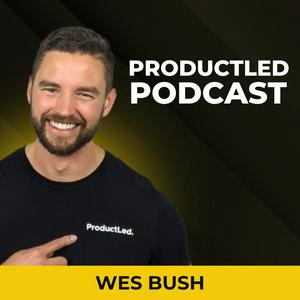
Get the free radio.net app
- Stations and podcasts to bookmark
- Stream via Wi-Fi or Bluetooth
- Supports Carplay & Android Auto
- Many other app features
Get the free radio.net app
- Stations and podcasts to bookmark
- Stream via Wi-Fi or Bluetooth
- Supports Carplay & Android Auto
- Many other app features

ProductLed Podcast
Scan code,
download the app,
start listening.
download the app,
start listening.
 Ireland