

Listen to this podcast in the app for free: Download for free in the App Store
radio.net
Sleep timer
Save favourites
AGE OF VICTORIA PODCAST
Chris Fernandez-Packham (Victorian History Lover/Queen Victoria Fan)
Latest episode
118 episodes
9TH ANNIVERSARY SPECIAL 2026 “Put ’em up!”
11/08/2026 | 1h 8 mins.Blood on the Sawdust: The Brutal World of Victorian Boxing
Episode Overview In this 9th Anniversary Special, we step out of the West End drawing rooms and into the blood-flecked, sawdust-covered floors of 19th-century “Fancy” public houses. Inspired by the depiction of East End street culture in A Thousand Blows, this episode explores the history of Victorian boxing—from the illegal bare-knuckle bouts of the Regency era to the gentrified, gloved sport codified under the Marquess of Queensberry Rules.
We examine how prizefighting evolved from a brutal survival strategy into a national obsession, the legal cat-and-mouse games played across county lines, and the medical and physical toll extracted from the fighters. We also dive into the remarkable life of international combat instructor Colonel Thomas Hoyer Monstery and uncover the overlooked history of 19th-century female prizefighters.
Key Topics Covered:
Housekeeping & AI Voice Policy: Why the podcast is permanently stepping away from AI-generated voice models in favour of human research, along with updates on replacement recording equipment and audio access.
The “Sweet Science” & Prizefighting History: How bare-knuckle fighting functioned as a mix of martial arts, local wrestling, and survival in an era where the body was often a worker’s sole asset.
The Structural Cage of the Law: The jurisdictional loopholes that allowed fights to flourish on county borders, and the evolution of legal precedents from R v Billingham (1825) to R v Coney (1882).
The Aristocratic “Fancy” & Early Pioneers: The rise of sports journalism via Pierce Egan’s Boxiana, and landmark international contests like the 1810 bout between Tom Cribb and former American slave Tom Molineaux.
Case Study – The Ruin of Harry Broome: Following the career arc of Harry Broome from his controversial match at Acorn Bridge to his defeat by Tom Paddock and his eventual death in poverty.
The Queensberry Transition: Why the introduction of gloves in 1867 was viewed with suspicion by working-class fighters, and how padded gloves inadvertently increased the long-term risk of chronic brain injury.
Gentlemen, Self-Defence & Martial Arts: Highlights from Colonel Thomas Hoyer Monstery’s C19th treatise Self Defence for Ladies and Gentlemen, including his views on boxing over firearms and his praise for female swordmasters.
Women in the Ring: The subversion of Victorian gender norms, focusing on the 1888 world championship bout between Hattie Leslie and Alice Leary, and the legal outrage that followed.
Sources & Footnotes
Academic Articles & Published Journals
Anderson, Jack. “The Right to a Fair Fight: Sporting Lessons on Consensual Harm.” New Criminal Law Review, vol. 17, no. 1, 2014, pp. 55–75.
Betts, John Rickards. “Sporting Journalism in Nineteenth-Century America.” American Quarterly, vol. 5, no. 1, 1953, pp. 39–56.
Brayne, Hugh, Lincoln Sargeant, and Carol Brayne. “Could Boxing Be Banned? A Legal and Epidemiological Perspective.” BMJ, vol. 316, no. 7147, 1998, pp. 1813–15.
Burnett, John. A History of the Cost of Living. Penguin Books, 1969, pp. 219–220.
Cone, Carl B. “The Molineaux-Cribb Fight, 1810: Wuz Tom Molineaux Robbed?” Journal of Sport History, vol. 9, no. 3, 1982, pp. 83–91.
De la Cova, Carlina. “Cultural Patterns of Trauma among 19th-Century-Born Males in Cadaver Collections.” American Anthropologist, vol. 112, no. 4, 2010, pp. 589–606.
Di Méo, Grace. “Women, Gangs, and Criminal Networks: A Social Network Analysis of the Forty Elephants Gang.” Social Science History, vol. 50, 2026, pp. 1–25.
Early, Gerald. “The Black Intellectual and the Sport of Prizefighting.” The Kenyon Review, vol. 10, no. 3, 1988, pp. 102–17.
Godfrey, Emelyne. “Urban Heroes versus Folk Devils: Civilian Self-Defence in London (1880–1914).” Crime, Histoire & Sociétés, vol. 14, no. 2, 2010, pp. 5–30.
Gorn, Elliott J. “John L. Sullivan: ‘The Champion of All Champions’.” The Virginia Quarterly Review, vol. 62, no. 4, 1986, pp. 614–33.
Gorn, Elliott J. “The First American Championship Prizefight.” OAH Magazine of History, vol. 7, no. 1, 1992, pp. 19–23.
Huggins, Mike. “Reading the Funeral Rite: A Cultural Analysis of the Funeral Ceremonials and Burial of Selected Leading Sportsmen in Victorian England, 1864–1888.” Journal of Sport History, vol. 38, no. 3, 2011, pp. 407–24.
Juengel, Scott J. “Bare-Knuckle Boxing and the Pedagogy of National Manhood.” Studies in Popular Culture, vol. 25, no. 3, 2003, pp. 91–110.
Kerr, Douglas. “The Straight Left: Sport and the Nation in Arthur Conan Doyle.” Victorian Literature and Culture, vol. 38, no. 1, 2010, pp. 187–206.
McCrory, Paul. “Boxing and the Risk of Chronic Brain Injury.” BMJ, vol. 335, no. 7624, 2007, pp. 781–82.
McLeod, Hugh. “The ‘Sportsman’ and the ‘Muscular Christian’: Rival Ideals in Nineteenth-Century England.” Gender and Christianity in Modern Europe, edited by Patrick Pasture et al., Leuven University Press, 2012, pp. 85–105.
Monstery, Thomas Hoyer. Self-Defence for Ladies and Gentlemen: A Nineteenth-Century Treatise on Boxing, Kicking, Grappling, and Fencing with the Cane and Quarterstaff. Edited by Ben Miller, Blue Snake Books, 2015.
Moore, Louis. “Fit for Citizenship: Black Sparring Masters, Gymnasium Owners, and the White Body, 1825–1886.” The Journal of African American History, vol. 96, no. 4, 2011, pp. 448–73.
Obi, T. J. Desch. “Black Terror: Bill Richmond’s Revolutionary Boxing.” Journal of Sport History, vol. 36, no. 1, 2009, pp. 99–114.
Oswell, George E. “Antedatings of Some Prize-Fighting Terms.” American Speech, vol. 32, no. 2, 1957, p. 155.
Reynolds, Margaret. “‘In Chancery’ Again: Dickens and Prize-Fighting.” Dickens Studies Newsletter, vol. 14, no. 2, 1983, pp. 48–50.
Ross, Ellen. “‘Fierce Questions and Taunts’: Married Life in Working-Class London, 1870–1914.” Feminist Studies, vol. 8, no. 3, 1982, pp. 575–602.
Ross, Macintosh. “The Boxing Boys in Blue: Gloved Sparring and Bare-Knuckle Prizefighting in the Union Army, 1861–65.” Journal of Sport History, vol. 44, no. 3, 2017, pp. 438–55.
Ryan, James Emmett. “Fight Club, 1880: Boxing, Class, and Literary Culture in John Boyle O’Reilly’s Boston.” Journal of American Studies, vol. 54, no. 4, 2020, pp. 706–36.
Sandhu, Sukhdev. “London Calling.” AA Files, no. 49, 2003, pp. 50–56.
Siegler, J. “The Dangers of Boxing.” BMJ, vol. 307, no. 6900, 1993, p. 379.
Standen, Jeffrey. “The Manly Sports: The Problematic Use of Criminal Law to Regulate Sports Violence.” The Journal of Criminal Law and Criminology, vol. 99, no. 3, 2009, pp. 619–42.
Wood, Michael T. “Review of Prizefighting and Civilization… by David C. LaFevor.” Mexican Studies/Estudios Mexicanos, vol. 37, no. 3, 2021, pp. 479–81.
Legal Cases Cited
R v Billingham (1825)
R v Perkins (1831)
R v Hunt (1845)
R v Coney (1882)
Digital & Regional Archival Sources
Chevallot, Isabelle. “18th and 19th Century Fight Club: The Beginnings of British Boxing.” Guildhall Library Blog, 2014.
Cox, Sarah Elizabeth. “A Quick Note on A Thousand Blows, Black Boxers in 1880s London, and ‘Woke History’.” Rediscovering the Wrestlers and Boxers of Late-Victorian London, 2025.
Faith-Kelly, Killian. “The True Story of A Thousand Blows‘ Boxing Behemoth Sugar Goodson.” British GQ, 2025.
Shrivenham Heritage Society. “The Prize Fights at Acorn Bridge.” Shrivenham Heritage Archive, Access Date May 2026.
WBAN Member Archive. “Hattie Leslie vs. Alice Leary: The Prizefight That Sent Victorian Era Buffalo into an Uproar.” Women Boxing Archive Network.
The post 9TH ANNIVERSARY SPECIAL 2026 “Put ’em up!” appeared first on AGE OF VICTORIA PODCAST.EP068 WHEN HUNGER WALKS THE LAND
07/04/2026 | 53 mins.Episode Overview In the third instalment of our series on famine and revolution, we pull away the veil of headline numbers to investigate the visceral, human reality of the Great Hunger in Ireland. This is an exploration of a land filling with desperation, where the brutal biological mechanics of what happens when the human body begins to consume itself take centre stage. We examine the fate of a terrified people, facing ruin triggered by a disease that wreaked havoc on already weak economies.
From the folklore of the Fear Gorta to the harrowing clinical reports of the era, this episode explores how a society is transformed when it is blindsided by biological disaster and administrative indifference.
Key Topics Covered:
The Information Vacuum: Comparing our modern “Ocean of Information” to the terrifying silence of the 1840s, where the sickly sweet smell of rot was a mystery without an immediate answer.
The Folklore of Famine: Why stories like Hansel and Gretel and the Navajo Dine Bahane carry the genetic memory of starvation, and the specific Irish harbinger of death: the Fear Gorta.
The Structural Cage: A deep dive into the Rundale system and Gavelkind inheritance. We look at why the West was trapped in a cycle of subdivision while Ulster was shielded by the “Linen Shield” and Tenant Right.
The Biology of Starvation: Using modern metabolic science and contemporary medical records to explain the “Blue Nose,” the “Sunken Orbit,” and the terrifying reality of Autophagy—the body cannibalising its own architecture.
The Refeeding Trap: The physiological reason why a crust of bread could become a death sentence for a heart shrunken by atrophy.
Conspicuous Consumption: The stark contrast between the “Workhouse Swineries” and the elite social calendar, including the dinner menus of the Cork Harbour Regatta.
The Gregory Clause: How a single piece of legislation—the Quarter-Acre Clause—was used to engineer the clearances and force the starving into homelessness.
The Ledger of the Dead: Analysis of the 1851 Census and the 20–25% demographic erasure that redefined Ireland forever.
SOURCES
Historical Research & Modern Analysis
Delaney, Enda. (2020, December). “‘There But For The Grace of God Go I’: Middle-Class Catholic Responses to Ireland’s Great Famine.” The English Historical Review, Vol. 135, No. 577, pp. 1433–1460.
Donnelly, James S., Jr. (2002). The Great Irish Potato Famine. Stroud: Sutton Publishing.
Guinnane, Timothy W. (1994). “The Great Irish Famine and Population: The Long View.” The American Economic Review, Vol. 84, no. 2, pp. 303–08.
Ó Gráda, Cormac. (2013, March). “Eating people is wrong: Famine’s darkest secret?” UCD Centre for Economic Research, Working Paper No. WP13/02.
O’Riordan, Edmund. (2018, May/June). “‘Every Delicacy of the Season’—Conspicuous Consumption During the Great Hunger.” History Ireland, Vol. 26, No. 3, pp. 26–29.
Poirteir, Cathal (Ed.). (1999). The Great Irish Famine. Dublin: Mercier Press.
Woodham-Smith, Cecil. (1962). The Great Hunger: Ireland 1845–1849. London: Hamish Hamilton.
Guinnane, Timothy W. “The Great Irish Famine and Population: The Long View.” The American Economic Review, vol. 84, no. 2, 1994, pp. 303–08. JSTOR, http://www.jstor.org/stable/2117848. Accessed 31 Mar. 2026
Scientific & Medical Analysis of Starvation
Anabtawi, O., & Valente, B. (2025, August 12). “The science of starvation: This is what happens to your body when it’s deprived of food.” The Conversation.
Donovan, Daniel. (1848). “Observations on the Peculiar Diseases to Which the Famine of Last Year Gave Origin.” Dublin Medical Press.
Keys, Ancel, et al. (1950). The Biology of Human Starvation. University of Minnesota Press. (References derived from the Minnesota Starvation Experiment).
Primary Documents & Government Records
Devon Commission. (1845). Report from Her Majesty’s Commissioners of Inquiry into the State of the Law and Practice in respect to the Occupation of Land in Ireland.
Hansard Parliamentary Debates. (1849). HL Deb 15 June 1849 vol 106 cc285-300. (Correspondence of the Earl of Clancarty regarding Ballinasloe).
O’Rourke, Canon John. (1875). The History of the Great Irish Famine of 1847.
Ridgway, James. (1847). The Irish Relief Measures, Past and Future.
Regional Studies & Files
Best, Barbara. (2025). “Local Female Orphans and The Earl Grey Scheme 1848-1850.”
Tobin, J. “The Famine in Ballyduff and the evictions of Arthur Usher Kiely.” Ballyduff Archive.
University College Dublin. (2024). “Hansel and Gretel’s famine folklore origins.” The Cambridge Group for the History of Population and Social Structure.
Folklore & Cultural Context
Dine Bahane. Navajo creation mythology regarding resource scarcity and survival.
Fear Gorta (The Hungry Man). Traditional Irish folklore regarding the personification of hunger.
Yoruba Mythology. Oral traditions regarding the “Leopards Famine.”
The post EP068 WHEN HUNGER WALKS THE LAND appeared first on AGE OF VICTORIA PODCAST.EP067 HIGHLANDS & HARDSHIP
03/03/2026 | 55 mins.Summary
While the Great Hunger in Ireland remains one of the most documented tragedies of the nineteenth century, the story of what happened across the Irish Sea in the Scottish Highlands is often overlooked or romanticised. In this episode, we strip away the Hollywood imagery of baronial halls and tartan myths to look at the real experience of the Highland Potato Famine of 1846.
We explore the “Geographic Trap” of the Highland Boundary Fault, the Coastal Squeeze of the Clearances, and the legal engineering of the 1845 Poor Law that left the starving with no right to relief. Using the latest research from Sir Tom Devine and Michael Lynch, we investigate the Empathy Gap between the absentee Landlords and the crofters clinging to the soil in the Western Isles.
As the “Year of Railway Mania” gripped the England and the Lowlands of Scotland, a biological rot was creeping north. This is a story of how a system that prioritised economic efficiency over human survival turned a bad harvest into a national catastrophe.
Listen & Follow
Apple Podcasts: https://tinyurl.com/APPLEAgeofVictoriaPodcast
Spotify: https://tinyurl.com/SPOTIFYAgeofVictoriaPodcast
Website: http://www.ageofvictoriapodcast.com/
Support the Show
The Age of Victoria podcast is 100% independent and listener-supported. To help us add more books to the research library and keep the show free for everyone, please consider becoming a patron.
Support on Patreon: https://www.patreon.com/user?u=19744898&fan_landing=true
In this episode, we discuss:
The Geographic Trap: How the verticality and isolation of the Highlands created a “Social Silence.”
The Lumper Dependency: Why the potato became the biological linchpin of the Highland economy.
The Vanishing Middle: The removal of the Tacksman and the death of paternalistic kinship.
The Empathy Gap: The psychological distance between the “Managerial Class” and the poor.
The 1845 Poor Law: How the Scottish legal system was engineered to exclude the able-bodied from help.
The Arrival of the Rot: The “sickly sweet” smell of 1846 and the biological collapse of the North.
Main Sources
Core Historical Texts
Devine, T. M. To the Ends of the Earth: Scotland’s Global Diaspora, 1750-2010. Allen Lane, 2011.
Lynch, Michael. Scotland: A New History. Century, 1991.
Lynch, Michael (Ed). The Oxford Companion to Scottish History. Oxford University Press.
Gray, Malcolm. ‘The Highland Potato Famine of the 1840’s’, The Economic History Review, Vol. 7, No. 3 (1955).
Crisis, Ideology, and Class Dynamics
Gray, Peter. ‘National Humiliation and the Great Hunger: Fast and Famine in 1847’, Irish Historical Studies, Vol. 32, No. 126 (2000).
Howell, David W. ‘The Land Question in nineteenth-century Wales, Ireland and Scotland’, The Agricultural History Review, Vol. 61, No. 1 (2013).
Porter, James. ‘The Folklore of Northern Scotland: Five Discourses on Cultural Representation’, Folklore, Vol. 109 (1998).
Stroh, Silke. ‘Racist Reversals: Appropriating Racial Typology in Late Nineteenth-Century Pro-Gaelic Discourse’, Gaelic Scotland in the Colonial Imagination (2017).
The Psychology of Wealth and the “Empathy Gap”
Loewenstein, George. ‘Hot-cold empathy gaps and self-control’, Challenges to Happiness: Perspective from Economics and Psychology (2005).
Miller, Lisa. ‘The Money-Empathy Gap’, New York Magazine (July 2012).
Primary Sources & Institutional Records
Hansard Parliamentary Debates. HC Deb 01 February 1847 vol 89 cc603-12. ‘Distress in Scotland’.
The Scotsman. ‘Editorial on the Highland Famine’, 14 November 1846.
Museum of Scottish Railways. A Short History of Britain’s Railways.
Knox. Social Structure and Land Tenure in Scotland, 1840-1940.
The post EP067 HIGHLANDS & HARDSHIP appeared first on AGE OF VICTORIA PODCAST.EP066 THE PANDEMIC OF ROT
03/02/2026 | 57 mins.Episode Summary: The Age of Victoria continues its 2026 “Famine & Revolution” series by stepping away from the political scandals of Lola Montez and into the microscopic world of a biological invader. In this episode, we begin our deep dive into the “Hungry Forties” by looking at the environmental and material foundations of the era. Using the “Longue Durée” framework of the Annales School, we explore the forces that dictate the fate of civilizations. We examine the “Malthusian Trap”—the point where surging urban populations outstripped the land’s ability to feed them—and why the humble potato was both the savior and the Achilles’ heel of the 19th-century economy.
Support the Show: This podcast is fiercely independent and relies on listener support to maintain access to academic archives and primary sources. To help us reach our goal of 25 paying patrons this month and keep the history deep, please join the crew at: Patreon.com/ageofvictoria
Key Topics Covered:
The Annales School & Fernand Braudel: Why history is more than just economics or the work of great people—it is the slow, grinding reality of the “Longue Durée”: climate, biology, and the material systems that constrain human action.
The “Biological Invader”: The science of Phytophthora infestans. How a fungus from the Americas managed to cross the Atlantic and “dissolve” the food supply of a continent.
The Malthusian Trap: A demographic analysis of the early 19th century. We look at the “tipping point” where population growth finally collided with limited agricultural resources.
Urbanisation & The Hinterland: How industrial mega-cities like London and Paris broke the traditional link between people and their food sources, creating a precarious global supply chain.
The Chemistry of the Potato: Why the potato was the “perfect” industrial crop—producing more calories per acre than any grain—and why its monoculture became a death trap.
The Global “Hungry Forties”: Debunking the myth that the famine was a localized event; tracing the “Pandemic of Rot” as it moved from the USA to Belgium, Prussia, Scotland, and Ireland.
Works Cited & Sources:
Donnelly, James S., Jr. The Great Irish Potato Famine. (A principal source for the socio-political impact and the progression of the blight).
Braudel, Fernand. The Structures of Everyday Life: The Limits of the Possible. * Allen, Robert C. The British Industrial Revolution in Global Perspective.
Diamond, Jared. Guns, Germs, and Steel.
Bairoch, Paul. Cities and Economic Development: From the Dawn of History to the Present.
Wrigley, E.A. Poverty, Progress and Population.
De Vries, Jan. European Urbanization, 1500–1800.
Grigg, David. The Agricultural Systems of the World: An Evolutionary Approach.
Flinn, M.W. Scottish Population History from the 17th Century to the 1930s.
Vaughan, W.E. and Fitzpatrick, A.J. Irish Historical Statistics: Population 1821–1971.
Bhardwaj, Raju Lal et al. “An Alarming Decline in the Nutritional Quality of Foods.” Foods (Basel, Switzerland) vol. 13,6 877.
Clark, Stuart. The Annales School: Critical Assessments.
Trinder, “Britain’s industrial revolution.” pp575-602
https://merl.reading.ac.uk/collections/royal-agricultural-society-of-england/
https://victoryseeds.com/pages/potato-famine
Allen, Robert C., The British Industrial Revolution in Global Perspective.
Gráda, Cormac Ó. “The Lumper Potato and the Famine.” History Ireland, vol. 1, no. 1, 1993, pp. 22–23. JSTOR, http://www.jstor.org/stable/27724042. Accessed 29 Jan. 2026.
Solar, Peter M. “Why Ireland Starved and the Big Issues in Pre-Famine Irish Economic History.” Irish Economic and Social History, vol. 42, 2015, pp. 62–75. JSTOR, https://www.jstor.org/stable/26375915. Accessed 29 Jan. 2026.
The post EP066 THE PANDEMIC OF ROT appeared first on AGE OF VICTORIA PODCAST.EP065 SETTING EUROPE ON FIRE
06/01/2026 | 48 mins.The Age of Victoria returns for the 2026 season with a high-energy prologue to our new series, “Hunger and Revolution”. In this episode, we follow the “magnificent, terrible, magnetic” Lola Montez as she transitions from the stage to the high-stakes world of European politics. Lola becomes an “accidental bunch of dynamite,” moving through the bohemian circles of Paris and the royal halls of Munich. Her volatile relationship with the “rockstar” composer Franz Liszt and her scandalous influence over King Ludwig I of Bavaria serve as a sparking point for the unrest that would soon consume the continent. Against the grim backdrop of the “Continental Famine” and rising industrial tensions, we examine how one woman’s individual actions could help bring the curtain down on the pre-modern age.
Key Topics Covered:
Bohemian Paris in the 1840s: A city of romance and industry undergoing a transformation marked by early railway stations, gas streetlights, and artistic experimentation.
Lisztomania and the Great Composers: Exploring the electric performances and scandalous love life of Franz Liszt—the “rockstar” of the 19th century—who redefined the status of the artist in society.
The Duel of Dujarier: Lola’s time in the French literary scene alongside figures like Victor Hugo ended in tragedy when her lover, journalist Alexandre Henri Dujarier, was killed in a reluctant pistol duel.
The “Gallery of Beauties”: A look at the 36 oil paintings in King Ludwig’s collection, where Lola’s portrait eventually sparked a national scandal.
The Continental Famine: Examining the “parallel story” of the 1845–1847 potato blight across Europe that fueled the urban discontent leading to the 1848 revolutions.
The Fall of Munich: The student riots at the University of Munich involving the “Lolamannen,” the exile of Montez, and King Ludwig I’s ultimate abdication.
“The Battle of Ballarat”: A summary of Lola’s later years, including her infamous whip-fight with a newspaper editor in the Australian goldfields.
Works Cited & Sources:
Edmund B. d’Auvergne: Lola Montez: An Adventuress of the ’Forties (Project Gutenberg).
Dictionary of Irish Biography: “Gilbert, Eliza Rosana (Lola Montez)” by Lawrence William White.
Schloss Nymphenburg: “King Ludwig I’s Gallery of Beauties (Room 15).”
Interlude.hk: “Life of Chopin: The Controversial Chopin Biography by Liszt” by Emily E. Hogstad .
Interlude.hk: “The Spy who loved me! Liszt and Agnes Street-Klindworth”.
Dance Biographies: “Alexandre Henri Dujarier” & “The Fascinating Lola Montez: The European Years.”
State Library Victoria: “Wild times with Lola Montez” (The Battle of Ballarat).
Elizabeth Kerri Mahon: “Whatever Lola Wants, Lola Gets: The Racy Life of Lola Montez.”
Oktoberfest.de: “The History of Oktoberfest”.
Encyclopedia of 1848 Revolutions: “Economic Crisis in the first half of 1847” (Ohio.edu).
The post EP065 SETTING EUROPE ON FIRE appeared first on AGE OF VICTORIA PODCAST.
More History podcasts
 The Rest Is HistoryHistory
 The Rest Is ClassifiedHistory
 Irish History PodcastHistory
 In Our TimeHistory
 After Dark: Myths, Misdeeds & the ParanormalHistory, Society & Culture, True Crime
 The History PodcastHistory
 Empire: World HistoryHistory
 Real DictatorsDrama, Fiction, History
 Dan Snow's History HitHistory
 Short History Of...History
Trending History podcasts
 The Race F1 RewindAutomotive, History, Leisure, Sports
 Rowan & Pine: A Feminist Folklore & Mythology PodcastHistory, Religion & Spirituality, True Crime
 The History of RomeEducation, History
 HISTORY This WeekEducation, History, Society & Culture
 Conspiracy Theories, Cults, & CrimesHistory, True Crime
 ThroughlineDocumentary, History, Society & Culture
 A Short History of IrelandHistory
 The Medieval Irish History PodcastHistory
 The History of English PodcastEducation, History, Society & Culture
 BlindspotDocumentary, History, Society & Culture
 La face sombre de l'HistoireHistory, News, Places & Travel, Society & Culture
 Adolf Hitler: Rise and DownfallDocumentary, History, Society & Culture
 The History of YugoslaviaCourses, Education, History
 The Martyr Made PodcastHistory, Religion & Spirituality
 Three Castles BurningArts, History
 D-Day: The Tide TurnsHistory
 SpyCastEducation, History, News
 Ladies of LoreEducation, History, Society & Culture
 In Our Time: HistoryHistory
About AGE OF VICTORIA PODCAST
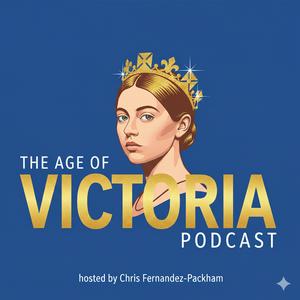
The Victorians were the first truly world wide, high speed, high tech civilisation, but they are often misunderstood. Your host, Chris Fernandez-Packham, will bust popular myths, cover events around the world, and focus on a people centric history. You will see how the Victorians shaped the world, changing it from the age of horse, musket, cannon and sail to the age of steam, rifle and iron in this monthly podcast with regular special episodes and bonus content. You will learn about Queen Victoria, Charles Dickens, Volcanoes, Famines, great art, geography and so much more. You will discover how the Victorians changed our landscapes, and mastered new energy forms that have led us to move from being a part of the natural world to shapers of it. You will learn how the modern world was created by the actions of the Victorians. You will learn how the Victorians gave birth to our modern understanding of weather, climate, history and even time and space.
Podcast websiteListen to AGE OF VICTORIA PODCAST, The Rest Is History and many other podcasts from around the world with the radio.net app
Get the free radio.net app
- Stations and podcasts to bookmark
- Stream via Wi-Fi or Bluetooth
- Supports Carplay & Android Auto
- Many other app features
Get the free radio.net app
- Stations and podcasts to bookmark
- Stream via Wi-Fi or Bluetooth
- Supports Carplay & Android Auto
- Many other app features

AGE OF VICTORIA PODCAST
Scan code,
download the app,
start listening.
download the app,
start listening.
 Ireland