
Listen to this podcast in the app for free: Download for free in the App Store
radio.net
Sleep timer
Save favourites
194 episodes
RSS 76: The T.R.U.S.T. Framework: Scott Baradell on How to Build Lasting Brand Credibility in the AI Era
26/10/2026 | 34 mins.How do you build a brand that buyers trust when they’re surrounded by online noise? Scott Baradell, a trust expert, defines PR as securing trust at scale and walks through his framework for building a constellation of “trust signals.” This matters for us because buyers now check what AI tells them against other sources before they commit, and the brands that show up consistently across those sources win the deal.
Key Takeaways and Insights:
1. Redefining PR for the Modern Era
- PR now means securing trust at scale, which goes well past media coverage.
- The goal is to scale what your best salesperson already does: earn the trust of the person across the table.
- That moves PR out of the tactical column and makes it a core strategic function.
2. Navigating the “Post-Truth” World
- Scott argues we’re in a “trust displacement,” not a trust deficit. People haven’t stopped trusting; they’ve moved to new, fragmented sources of authority.
- You have to know your audience well enough to know which sources they believe.
- The play is a “constellation of trust breadcrumbs” spread across platforms, so wherever a buyer looks, they find proof.
3. The T.R.U.S.T. Signals Framework
- Reputation Management: Stay on top of reviews and online sentiment before they get away from you.
- User Experience: Your website stands in for your business. A clunky site tells buyers the customer experience will be clunky too.
- Search Presence: Strong Google rankings and visibility in AI answers work as endorsements.
- Thought Leadership: Share useful, non-sales information and you build rapport before the first call.
4. Building Trust in the Age of AI
- Plenty of buyers start with ChatGPT or a similar tool, but most still look for outside validation before they buy.
- Brands shape what AI says by earning placements on the sources models cite most, such as top-tier media and review sites.
- Scott expects personalized AI companions to come next, advising people based on preferences and values they’ve learned over time.
Resources & Tools:
🔗 Trust Signals by Scott Baradell - https://book.trustsignals.com/
🔗 Idea Grove - https://www.ideagrove.com/
— 👋🏾 Let's stay connected —
╰ Subscribe to my channel: @RossSimmondsTV
╰ Instagram: @thecoolestcool
╰ Twitter / X: @thecoolestcool
╰ LinkedIn: linkedin.com/in/rosssimmonds
— Connect with Scott —
╰ Twitter / X: @DallasInbound
╰ LinkedIn: linkedin.com/in/baradell/RSS 75: Become Unblockable: The Mindset That Makes You Invaluable
19/10/2026 | 24 mins.Every team has someone you call when a project starts going sideways. I call that person unblockable. They find a way forward while everyone else is still waiting on someone. In this episode I break down what unblockable people actually do and how I spot them when I’m hiring.
Key Takeaways and Insights:
1. What I Mean by “Unblockable”
- Unblockable people go looking for the answer instead of waiting for someone to hand it to them.
- When they hit an obstacle, they treat it as a chance to show what they can do.
- It’s the trait I value most in anyone on my team, and you’ll almost never see it on a resume.
2. Case Study: How Airbnb Refused to Quit
- Airbnb’s founders were getting turned down by investors and racking up debt.
- So they designed custom cereal boxes, sold them, and raised $30,000 to keep the company alive.
- That hustle is what eventually won investors over. A founder who finds a way beats a polished pitch.
3. What This Looks Like in Marketing
- If a white paper is underperforming, I’d rather see a marketer take the story to Reddit, where the audience already is, than keep pushing the same asset.
- Stuck waiting on a client approval? Go get it. Sometimes that means showing up at the client’s office.
- When a competitor is closing in, good enough won’t cut it. Unblockable people push the work further without being told to.
4. How I Spot Unblockable People When Hiring
- The candidates who stand out send a Loom with their own insights instead of a list of questions.
- They ship things nobody asked for. They build a tool or put something useful together before anyone prompts them.
- They test ideas on their own platforms first, so by the time they bring it to the team or a client, they already have proof.
5 Traps That Block Progress (And How to Avoid Them)
- The Permission Trap: Stop waiting on a yes that might never come. Give yourself and your team room to act.
- The Attribution Trap: Some of the most valuable marketing won’t show ROI right away. Play the long game anyway.
- The Expert Trap: A title doesn’t make someone right. If a VP’s experience is out of date and you believe in the idea, fight for it.
- The Algorithm Trap: Platforms will change. Keep distributing your story.
- The Room Trap: Your background doesn’t decide whether you belong. Effort is what gets you in the door.
— 👋🏾 Let's stay connected —
╰ Subscribe to my channel: @RossSimmondsTV
╰ Instagram: @thecoolestcool
╰ Twitter / X: @thecoolestcool
╰ LinkedIn: linkedin.com/in/rosssimmondsRSS 74: The Transformative Power of Events in Your Career
12/10/2026 | 18 mins.The internet is flooded with AI-generated content right now, and that makes real human connection worth more than ever. In this episode of The Ross Simmonds Show, I break down the value I’ve seen from showing up at in-person events and how strategic networking and learning have shaped my own career. I share how I approach getting ROI from a conference and why the payoff from those rooms keeps showing up for years afterward.
Key Takeaways and Insights:
1. The Unseen ROI of Conferences
- I treat events as a long-term investment in my career, my relationships, and the growth of the business.
- Some of the biggest opportunities I’ve had came years after the first conversation.
- If you want to get luckier in business, put yourself in more rooms where genuine connection can happen.
2. Building Your Network from Scratch
- When I started out with no industry connections, online forums and social media chats were how I built my network.
- Standing out online is much harder today because feeds are full of low-value AI comments, what I call “LLM copypasta.”
- The way to cut through is to bring your own experience and point of view into every online interaction.
3. The Power of In-Person Connection
- In-person events get you out of the digital noise and into real, unfiltered conversations.
- Talking face to face about challenges, goals, and ideas builds relationships people actually remember.
- I’ve found the trust you build in person is something you can’t replicate over a screen.
4. How Events Reshape Your Thinking
- Every good conference I attend gives me new mental models for solving problems.
- Hearing how other experts think changes the way I approach challenges in my own work.
- I walk out with faster, sharper solutions than I had when I walked in.
5. What Separates Great Events from Bad Ones
- The worst events I’ve been to lean on big-name “celebrity” speakers who give generic platitudes and nothing you can use.
- The best ones mix inspiring keynotes with practitioners who are in the trenches doing the work every day.
- I look for events that build in both structured and unstructured time to network.
6. The Ultimate Event Strategy: Add Value
- My number one goal at any event is to add as much value as I can to every interaction.
- If I’m speaking, I want to deliver an exceptional presentation. If I’m attending, I’m looking for ways to help people with their problems.
- I want people to leave remembering me as someone who brought good energy and useful advice.
Resources & Tools:
🔗 Foundation’s Citation Conference - https://citationconference.com/
🔗 ExitFive’s DRIVE 2027 - https://exitfive.com/drive-2027/
🔗 HubSpot’s UNBOUND 2027 - https://unbound.hubspot.com/
— 👋🏾 Let's stay connected —
╰ Subscribe to my channel: @RossSimmondsTV
╰ Instagram: @thecoolestcool
╰ Twitter / X: @thecoolestcool
╰ LinkedIn: linkedin.com/in/rosssimmondsRSS 73: Beyond Traffic: Gaetano DiNardi on The B2B Marketer’s Guide to a Winning Search Strategy
05/10/2026 | 1h 3 mins.Most of the SEO playbooks teams still run are out of date. In this episode I sat down with Gaetano DiNardi to talk through the ones that drive real revenue, from winning bottom-of-funnel demand to getting recommended through Answer Engine Optimization (AEO). We got into how to build a marketing engine that captures high-intent buyers and holds up when your category gets crowded.
Key Takeaways and Insights:
1. Career Foundations & Mindset
- What the music industry taught Gaetano about patience and rejection, and how that shaped the way he finds an audience.- Why he believes in "eating mud" and starting at the bottom to build a career that lasts.- How he got his foot in the door by taking initiative and learning from the people he looked up to in the industry.
2. Proven B2B Growth Playbooks
- The Sales Hacker strategy: grow your owned list and lean on expert-led content.- The Nextiva demand capture model: how they took over SERPs with affiliates, paid ads, and organic listings working together.- Why you have to know your "surface area" and map user intent so you stop publishing content that overlaps and goes nowhere.
3. The Shift to AEO & Modern Search
- Gaetano's take on the "ludicrous" area code strategy and why he thinks Reddit gets overhyped for niche B2B.- How SEO and AEO differ: ranking still matters, and now you also need the AI to recommend you.- How challenger brands can use "surround sound" marketing to compete with enterprise players who win on brand alone.
4. The Future of Marketing & AI
- Programmatic SEO: it works when your data isn't a commodity, and it's a real penalty risk when it is.- Why so many AEO problems turn out to be positioning problems, and why solving them takes more than one team.- How AI has changed the daily workflow and given marketers time back for the strategic work that moves the needle.
Resources & Tools:
🔗 Marketing Advice - https://marketingadvice.substack.com/
— 👋🏾 Let's stay connected —
╰ Subscribe to my channel: @RossSimmondsTV
╰ Instagram: @thecoolestcool
╰ Twitter / X: @thecoolestcool
╰ LinkedIn: linkedin.com/in/rosssimmonds
— Connect with Gaetano —
╰ Twitter / X: @gaetano_nyc
╰ LinkedIn: linkedin.com/in/officialg/RSS 72: Revenue Systems That Scale: Doug Davidoff on Building Predictable Growth
28/09/2026 | 48 mins.In this episode of The Ross Simmonds Show, I sit down with Doug Davidoff to break down how high-growth companies build predictable revenue systems through better decisions and disciplined execution. If you want a more strategic approach to RevOps, sales leadership, go-to-market strategy, and AI in sales, this conversation gives you a practical framework you can apply in the next 90 days.
Key Takeaways and Insights:
1. Why "sounds good" advice stalls growth
- Doug explains why advice that feels exciting but lacks market validation often leads teams in the wrong direction.
- Real growth comes from testing ideas in the market, learning from customer behavior, and adjusting based on actual feedback.
- The fastest-growing companies don't assume certainty. They build around experimentation.
2. The revenue acceleration framework in action
- Doug shares the core principle of hypothesis-driven growth: make a decision, test it, measure the result, and refine.
- He makes the case that the companies that learn the fastest often build the most sustainable competitive advantage.
- A strong revenue system is built through continuous feedback loops between strategy and execution.
3. The three zones of execution
- Zone 1 focuses on the next 90 days and the day-to-day performance required to run the business.
- Zone 2, the enablement zone, is where companies operationalize change and prepare for future growth.
- Zone 3 is the transformation zone, where leaders define the long-term vision and direction of the company.
- Doug explains that most teams have plenty of ambition. Where they struggle is skipping the structure that connects today's work to tomorrow's outcomes.
4. Process, discipline, and predictable growth
- Successful organizations rely on routines and review cycles to drive results instead of counting on heroic effort.
- Doug highlights the importance of focusing on inputs alongside outputs to create more predictable sales and revenue performance.
- He pushes leaders to cut the noise and focus on the two or three initiatives that matter most.
5. AI, sales systems, and staying strategic
- Doug shares a balanced perspective on AI in revenue operations, arguing that most companies are still in the early stages.
- AI can accelerate execution, but only when the underlying process and data are already clear.
- The real advantage comes from using AI to support better thinking.
6. Lessons from sports for sales and leadership
- Drawing from his experience coaching college baseball, Doug explains how process drives performance in both sports and business.
- Just like hitters need a repeatable swing path, sales teams need a repeatable path that increases the probability of success.
- Great leaders stay focused on fundamentals and steady improvement over time.
Resources & Tools:
🔗 LiftEnablement.com - https://www.liftenablement.com/
🔗 The RevOps Show - https://www.liftenablement.com/podcasts/revops-show
— 👋🏾 Let's stay connected —
╰ Subscribe to my channel: @RossSimmondsTV
╰ Instagram: @thecoolestcool
╰ Twitter / X: @thecoolestcool
╰ LinkedIn: linkedin.com/in/rosssimmonds
— Connect with Doug —
╰ LinkedIn: linkedin.com/in/doug-davidoff-76396b1/
More Business podcasts

Trending Business podcasts








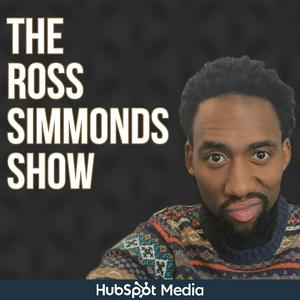
About The Ross Simmonds Show
Welcome to The Ross Simmonds Show. A show exploring the different sides of entrepreneurship, how Ross is growing his global marketing agency, building software, raising a family, and attempting to do so much more. On this show, Ross explores what goes into executing with excellence, embracing innovation, marketing at a high level and doing it all with intent of the playing the long game.
This show is a proud member of the HubSpot Podcast Network.
Podcast websiteListen to The Ross Simmonds Show, The Other Hand and many other podcasts from around the world with the radio.net app
Get the free radio.net app
- Stations and podcasts to bookmark
- Stream via Wi-Fi or Bluetooth
- Supports Carplay & Android Auto
- Many other app features
Get the free radio.net app
- Stations and podcasts to bookmark
- Stream via Wi-Fi or Bluetooth
- Supports Carplay & Android Auto
- Many other app features

The Ross Simmonds Show
Scan code,
download the app,
start listening.
download the app,
start listening.
 Ireland
