

Listen to this podcast in the app for free: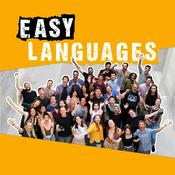 Download for free in the App Store
radio.net
Sleep timer
Save favourites
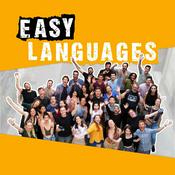
Easy Languages: Stories of Language Learning
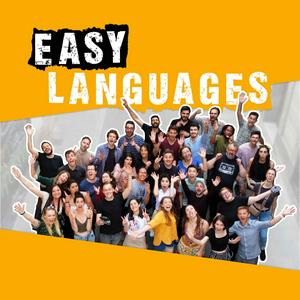
Rita, Raffaele and the teams from Easy Languages
Latest episode
23 episodes
22: It’s a Wrap (For Now)
04/04/2023 | 1 mins.It’s a wrap for season 1! The Easy Languages Podcast is taking a break. We hope you have enjoyed the past 21 episodes, found our language stories interesting, and our tips useful and actionable. As for the future… stay tuned on the Easy Languages YouTube channel and on our website: easy-languages.org
On behalf of the Easy Languages team, thanks for listening, and happy language learning!21: 4 Asian Languages You Can Learn Together (With Hyperpolyglot & Author Tim Keeley)
28/02/2023 | 39 mins.Join Rita in this special episode and listen to our remarkable guest, Tim Keeley - a hyperpolyglot & author - as he tells us about his fantastic life journey in 30 languages and gives us valuable insights into the historical and cultural ties that bind 4 of the major East Asian Languages: Chinese, Vietnamese, Korean and Japanese. Tim explains - examples in support - the fascinating similarities these languages share and how it is an advantage to learn them together.
Show Notes
Polyglot Conference
Polyglot Gathering
Polyglots mentioned in this episode:
Richard Simcott
Luca Lampariello
Judith Meyer
Map of Japan
Ryukyuan languages, Japan
Chinese Dynasties Timeline
Scripts & Language Structure:
Alexandre de Rhodes & the Vietnamese Script
Hiragana, Katakana & Romaji
Old Names for Japan
Korean Script (Hangul)
“Japan Made English” (Wasei-Eigo)
Particles in Korean & Japanese20: New Languages for New Worlds: ConLangs and the Case of Esperanto
20/02/2023 | 26 mins.In this episode we introduce artificial languages: a group of languages spoken, among other places, on Avatar's Pandora, or Tolkien's Middle-Earth. But the first stop of our trip is actually in Eastern Europe, where Esperanto was created in 1887.
In the second part of the episode, we answer questions from two of our listeners, Anna and Joanna.
Tune in and join the language talk!
Show Notes
Esperanto
Esperanto (Wikipedia)
16 Grammar Rules (Wikiversity)
6 Basic Phrases in Esperanto (HiNative)
World Esperanto Congress (Universala Esperanto-Asocio, in Esperanto)
Other Constructed Languages (Wikipedia)
Latino sine Flexione
Klingon
Naʼvi
Dothraki
Valyrian languages
Elvish languages
Toki Pona
13 Sentences to Deconstruct a Language
How to Learn (But Not Master) Any Language in 1 Hour (The Tim Ferriss blog)19: The Hardest Language in the World (Isn’t the One You Think…)
06/02/2023 | 27 mins.What makes some languages harder to learn than others? In this episode, we attempt to entangle the objective factors - as to why a language is complex - from the subjective ones. We also dedicate a section to talking about our experiences with those languages which we traditionally think are the most difficult to master.
Show Notes
Foreign Service Institute Language Rankings (Foreign Language Training)
Can We Measure Language Difficulty by the Numbers? (Ofer Tirosh, TowardsScience)
Rank of Language Difficulty (Michael Campbell, Glossika Blog)
What is the Hardest Language to Learn? (Steve Kaufmann, The Linguist Blog)
Past tense ending in Turkish: ‑mış (TurkishTexbook)
13 Russian Verbs of Motion to Move Your Learning Forward (Kelly Virginia Phelan, FluentU)
Chinese Classifiers: What Are They And How To Use Them ( Angie, ChineseEdge)
Japanese Formal & Informal Speech (Lydia Thron, Wyzant)
Conjugation of The Verb To Eat in Japanese (JapaneseVerbConjugator)18: This is Why We Use Subtitles in 2 Languages
30/01/2023 | 32 mins.Join Rita and Raffaele in this new episode as they discuss the importance of using comprehensible input throughout your language learning journey, and how a certain degree of difficulty is needed and welcome while consuming language-related content.
In the second part of the episode, they share a few resources like apps, books, and courses that make use of this principle and have helped them in the past and can help you too!
But what does Rita really think about all this? Can you believe that even in-comprehensible input can help?
Show Notes
Comprehensible input (British Council)
Linguist (definition) (Cambridge Dictionary)
Dog/Language Learning meme (Fluent Forever)
Resources mentioned:
Rosetta Stone
Lingq
Storylearning Books
Interlinear Books
YouTube videos:
Does Input Have to Be "Comprehensible"? (Matt vs Japan)
Why Did You Learn Esperanto? (Easy Esperanto 1)
More Education podcasts
 IMO with Michelle Obama and Craig RobinsonEducation, Self-Improvement, Society & Culture
 Change is PossibleEducation, Self-Improvement
 Begin Again with Davina McCallEducation, Health & Wellness, Mental Health, Self-Improvement, Society & Culture
 Life KitBusiness, Education, Health & Wellness, Kids & Family, Self-Improvement
 The Mel Robbins PodcastEducation, Health & Wellness, Mental Health, Relationships, Self-Improvement, Society & Culture
 Gaeilge WeeklyEducation, Language Learning
 Law of Attraction Changed My LifeEducation, Kids & Family, Parenting, Religion & Spirituality, Self-Improvement, Spirituality
 The Comeback with Brenda DennehyEducation, Health & Wellness, Mental Health, Self-Improvement
 Platypus Economics with Justin WolfersBusiness, Courses, Education, Science, Social Sciences
 Coffee Break FrenchCourses, Education, Language Learning
Trending Education podcasts
 Learn Japanese with Masa sensei!Courses, Education
 Luke's ENGLISH Podcast - Learn British English with Luke ThompsonComedy, Education, Language Learning
 Flow PodcastEducation, Self-Improvement
 German Stories - Learn German with StoriesComedy Fiction, Courses, Education, Fiction, Language Learning, True Crime
 Español con JuanCourses, Education, Language Learning
 RezultatyEducation
 Astronomy 161 - Introduction to Solar System Astronomy - Autumn 2007Astronomy, Courses, Education, Natural Sciences, Science
 New Thinking Allowed Audio PodcastEducation
 Best Laid PlansEducation, Personal Journals, Self-Improvement, Society & Culture
 The Jordan Harbinger ShowBusiness, Education, Science
 Learn French by PodcastEducation, Language Learning
 Easy German: Learn German with native speakers | Deutsch lernen mit MuttersprachlernCourses, Education, Language Learning
 Immersive SpanishCourses, Education, Language Learning
 ALIGNED | The Path to PurposeAlternative Health, Education, Health & Wellness, Religion & Spirituality, Self-Improvement, Spirituality
 The Florence Given ShowEducation, Health & Wellness, Mental Health, Philosophy, Self-Improvement, Society & Culture
- Life KitBusiness, Education, Health & Wellness, Kids & Family, Self-Improvement
 Coffee Break Italian AdvancedCourses, Education, Language Learning
 Zero to Finals Medical Revision PodcastEducation, Health & Wellness, Life Sciences, Medicine, Science
- Coffee Break FrenchCourses, Education, Language Learning
 Good Life ProjectBusiness, Education, Health & Wellness, Self-Improvement, Tutorials
 Unfiltered Autistic with Amanda McGuinnessEducation
 How to Be a Better HumanEducation, Self-Improvement
 The Daily StoicBusiness, Education, Self-Improvement, Society & Culture
 Learning English For WorkEducation, Language Learning
 The BossticksBusiness, Education
 Dreaming Spanish Podcast – Chats in Beginner SpanishEducation, Language Learning
About Easy Languages: Stories of Language Learning
Who said language learning has to be difficult? Join Rita, Raffaele and the teams from the Easy Languages network as they share their stories of language learning and answer your questions. Members get bonus content, monthly Q&As, discounts and many more perks. Learn more at easy-languages.org/podcast!
Podcast websiteListen to Easy Languages: Stories of Language Learning, IMO with Michelle Obama and Craig Robinson and many other podcasts from around the world with the radio.net app
Get the free radio.net app
- Stations and podcasts to bookmark
- Stream via Wi-Fi or Bluetooth
- Supports Carplay & Android Auto
- Many other app features
Get the free radio.net app
- Stations and podcasts to bookmark
- Stream via Wi-Fi or Bluetooth
- Supports Carplay & Android Auto
- Many other app features
Easy Languages: Stories of Language Learning
Scan code,
download the app,
start listening.
download the app,
start listening.
 Ireland