
Listen to this podcast in the app for free: Download for free in the App Store
radio.net
Sleep timer
Save favourites
118 episodes
Thymos, feat. Ian Dagg | Episode CXVIII
19/10/2026 | 1h 27 mins.Send us Fan Mail
Leontius was passing by the corpses of executed Athenians and tried not to look. But eventually, giving in, he ran over and leaned in to stare. "Have your fill!" he shouted at his own eyes. Socrates tells this story in Book IV of Plato's Republic, in part to illustrate his theory of the tripartite soul: the desiring, the rational, and the spirited faculty. It is this "spiritedness," the θυμός (transliterated thymos or thumos), that seems so close to desire but also seems to oppose desire. Ian Dagg joins Ryan and Jonathan to discuss Leontius and the rest of Book IV, including the parts of the soul as they relate to the parts of the city, the impiety of Socrates, and the proper eye color for a statue.
Plato's Republic (trans. Allan Bloom): https://bookshop.org/a/25626/9780465094080
Ian Dagg's Regime and Education: https://bookshop.org/a/25626/9783031373824
Two ways to support the show and unlock bonus episodes:
Download and subscribe to Ekho: ancientlanguage.com/ekho/
Subscribe to New Humanists+ for bonus episodes: buzzsprout.com/1791279/subscribe
New Humanists is brought to you by the Ancient Language Institute: https://ancientlanguage.com/
Links may have referral codes, which earn us a commission at no additional cost to you. We encourage you, when possible, to use Bookshop.org for your book purchases, an online bookstore which supports local bookstores.
Music: Save Us Now by Shane Ivers - https://www.silvermansound.com
Support the showErotics and Harmonics, feat. Patrick Downey | Episode CXVII
08/09/2026 | 1h 22 mins.Send us Fan Mail
Patrick Downey, professor of philosophy at St. Mary's College of California, returns to New Humanists to discuss Book Three of Plato's Republic. Why does Socrates permit lies in his city? And why does he kick Homer out? Downey gives answers to these questions, as well as raising others about Plato's attempt to transcend comedy and tragedy in the form of dialogic philosophical drama. We also discuss the ideal location in which to conduct philosophical inquiry (California, obviously), good and bad music, and how to keep your kids young and innocent at heart.
Previous New Humanists episode with Patrick Downey: https://podcasts.apple.com/us/podcast/ren%C3%A9-girard-myth-and-the-bible-feat-dr-patrick-downey/id1570296135?i=1000543650312
Plato's Republic (trans. Allan Bloom): https://bookshop.org/a/25626/9780465094080
John Steinbeck's East of Eden: https://bookshop.org/a/25626/9780140186390
Patrick Downey's Serious Comedy: https://amzn.to/4ypQhGK
Patrick Downey's Desperately Wicked: https://bookshop.org/a/25626/9780830828944
Two ways to support the show and unlock bonus episodes:
Download and subscribe to Ekho: ancientlanguage.com/ekho/
Subscribe to New Humanists+ for bonus episodes: buzzsprout.com/1791279/subscribe
New Humanists is brought to you by the Ancient Language Institute: https://ancientlanguage.com/
Links may have referral codes, which earn us a commission at no additional cost to you. We encourage you, when possible, to use Bookshop.org for your book purchases, an online bookstore which supports local bookstores.
Music: Save Us Now by Shane Ivers - https://www.silvermansound.com
Support the showThe Ring of Gyges and the City of Pigs, feat. Pavlos Papadopoulos | Episode CXVI
05/08/2026 | 1h 20 mins.Send us Fan Mail
Glaucon restarts the conversation about justice at the beginning of Book Two of Plato's Republic with this stipulation: Socrates must prove that justice is good in itself, not just good for the reputation it buys. Socrates says - perhaps to the reader's surprise, and even doubt - that he can show justice is the best possible thing to have.
Pavlos Papadopoulos, professor at Wyoming Catholic College, returns to the podcast to walk through Book Two of Plato's Republic including Glaucon's restatement of Thrasymachus' case for injustice, Socrates' vegan city of pigs, Glaucon's lust for relishes, the "crucifixion" of the perfectly just man, the guardian class, and the strange and easily overlooked details of the tale of the Ring of Gyges.
New Humanists episode on Republic Book One: https://podcasts.apple.com/us/podcast/how-not-to-define-justice-feat-colin-redemer-episode-cxv/id1570296135?i=1000775037863
Plato's Republic (trans. Allan Bloom): https://bookshop.org/a/25626/9780465094080
Thucydides' The Peloponnesian War (Landmark): https://bookshop.org/a/25626/9780684827902
Thucydides' The Peloponnesian War (Hobbes): https://amzn.to/4vesx75
Herodotus' Histories: https://bookshop.org/a/25626/9781400031146
Aristophanes' Clouds: https://bookshop.org/a/25626/9780856682100
Aristotle's Politics: https://bookshop.org/a/25626/9780226921846
Thomas Hobbes' Leviathan: https://bookshop.org/a/25626/9780141395098
Numa Denis Fustel de Coulanges' The Ancient City: https://bookshop.org/a/25626/9780648690542
Two ways to support the show and unlock bonus episodes:
Download and subscribe to Ekho: ancientlanguage.com/ekho/
Subscribe to New Humanists+ for bonus episodes: buzzsprout.com/1791279/subscribe
New Humanists is brought to you by the Ancient Language Institute: https://ancientlanguage.com/
Links may have referral codes, which earn us a commission at no additional cost to you. We encourage you, when possible, to use Bookshop.org for your book purchases, an online bookstore which supports local bookstores.
Music: Save Us Now by Shane Ivers - https://www.silvermansound.com
Support the showHow Not to Define Justice, feat. Colin Redemer | Episode CXV
01/07/2026 | 1h 29 mins.Send us Fan Mail
When you first pick up the world's most famous work of philosophy, Plato's Republic, you might be surprised to find that it starts with Socrates describing a day trip he took with his friend Glaucon to check out a festival happening just outside Athens. Where are the syllogisms? Where is the metaphysics? It does not seem very grand, at least at first.
Colin Redemer joins the podcast to kick off part 1 of a 10-episode series on Plato's Republic, to give some suggestions for how to read Plato, and to walk through the various definitions of justice we encounter in Book 1 of The Republic. In Book 1, we encounter a large cast engaged in discussion with Socrates about this very question. Is justice returning to others what you owe them? Benefitting friends and harming enemies? The advantage of the stronger?
H.I. Marrou's A History of Education in Antiquity: https://bookshop.org/a/25626/9780299088149
Plato's Republic (trans. Allan Bloom): https://bookshop.org/a/25626/9780465094080
Davenant Press's Reforming Classical Education: https://davenantinstitute.org/davenant-press/reforming-classical-education/
Austin Hoffman's review of Reforming Classical Education: https://www.frontporchrepublic.com/2023/02/awkward-family-dinner-a-review-of-reforming-classical-education/
Colin Redemer's response to Austin Hoffman: https://adfontesjournal.com/web-exclusives/revisiting-platonic-education-the-ever-sharable-feast/
James Baldwin's The Fire Next Time: https://bookshop.org/a/25626/9780679744726
Two ways to support the show and unlock bonus episodes:
Download and subscribe to Ekho: ancientlanguage.com/ekho/
Subscribe to New Humanists+ for bonus episodes: buzzsprout.com/1791279/subscribe
New Humanists is brought to you by the Ancient Language Institute: https://ancientlanguage.com/
Links may have referral codes, which earn us a commission at no additional cost to you. We encourage you, when possible, to use Bookshop.org for your book purchases, an online bookstore which supports local bookstores.
Music: Save Us Now by Shane Ivers - https://www.silvermansound.com
Support the showThe Charlotte Mason Episode | Episode CXIV
15/06/2026 | 1h 8 mins.Send us Fan Mail
Charlotte Mason argues that all education is ultimately self-education. Unless a student makes the choice to assimilate knowledge into himself, he will not learn anything. If this is so, what role is there for a teacher? Can a student actually be educated into virtue or wisdom?
In this episode, Jonathan and Ryan read and discuss the opening chapters of Charlotte Mason's book A Philosophy of Education.
Charlotte Mason's A Philosophy of Education: https://bookshop.org/a/25626/9781922348050
Harper Lee's To Kill a Mockingbird: https://bookshop.org/a/25626/9780060935467
Ambleside Online: https://www.amblesideonline.org/
Kenneth Grahame's The Wind in the Willows: https://bookshop.org/a/25626/9781402782831
John Senior's The Thousand Good Books: https://seascs.net/documents/2017/10/John%20Senior%20The%20Thousand%20Good%20Books%20List.pdf
Two ways to support the show and unlock bonus episodes:
Download and subscribe to Ekho: ancientlanguage.com/ekho/
Subscribe to New Humanists+ for bonus episodes: buzzsprout.com/1791279/subscribe
New Humanists is brought to you by the Ancient Language Institute: https://ancientlanguage.com/
Links may have referral codes, which earn us a commission at no additional cost to you. We encourage you, when possible, to use Bookshop.org for your book purchases, an online bookstore which supports local bookstores.
Music: Save Us Now by Shane Ivers - https://www.silvermansound.com
Support the show
More Education podcasts






Trending Education podcasts














About New Humanists
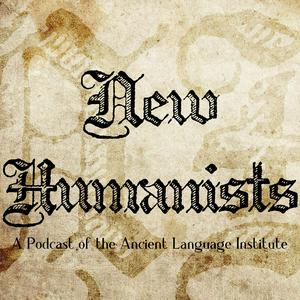
Join the hosts of New Humanists and founders of the Ancient Language Institute, Jonathan Roberts and Ryan Hammill, on their quest to discover what a renewed humanism looks like for the modern world. The Ancient Language Institute is an online language school and think tank, dedicated to changing the way ancient languages are taught.
Podcast websiteListen to New Humanists, Change is Possible and many other podcasts from around the world with the radio.net app
Get the free radio.net app
- Stations and podcasts to bookmark
- Stream via Wi-Fi or Bluetooth
- Supports Carplay & Android Auto
- Many other app features
Get the free radio.net app
- Stations and podcasts to bookmark
- Stream via Wi-Fi or Bluetooth
- Supports Carplay & Android Auto
- Many other app features
New Humanists
Scan code,
download the app,
start listening.
download the app,
start listening.
 Ireland
