
Listen to this podcast in the app for free: Download for free in the App Store
radio.net
Sleep timer
Save favourites
102 episodes
The "Huberman Kick" and other weird sleep protocols
19/10/2026 | 19 mins.The second video in my ongoing series reviewing Huberman's new book "Protocols.
Get Early Access on Substack
Donate to This Channel (tip)
Donate Open
Paypal:
Venmo:
Join the Discord:Auditing Andrew Huberman's "Protocols" (Part 1)
08/10/2026 | 18 mins.This first in a series where we peer review Andrew Huberman's new book. Get Early Access on SubstackDonate to This Channel (tip) Donate OpenPaypal: Venmo: Join the Discord:The Grounding Grift
02/10/2026 | 32 mins.Will Touching Grass make you healthier?
SPONSOR: Get 60% Off Incogni Code: scottcCheck out Kati Rae's "The Healing Delusion" Get Early Access on SubstackAI Designed a Lethal Virus Never before seen in Nature. . . Now What?
25/09/2026 | 59 mins.00:00 – Intro: AI-Designed Viruses and the Stanford Breakthrough02:10 – The Dual-Use Dilemma & Biosecurity Frontiers04:15 – Recreating Pathogens: Horse Pox & Smallpox Precedents06:25 – Anthropic Report: AI Exploits and Bioweapon Risks08:38 – Gain of Function, Geopolitics, and Asymmetric Threats11:35 – Interview Begins: Kevin Esvelt on CRISPR Gene Drives14:00 – The Inventor's Dilemma & Countering Gene Drives17:10 – Eradicating Malaria vs. Regulatory Challenges19:07 – Analyzing the Stanford Bacteriophage Experiment22:38 – The Threat of Limitless AI-Generated Pandemic Variants24:14 – Ordering 1918 Flu DNA: Testing Gene Synthesis Screening30:26 – Regulatory Loopholes in Select Agent Screening33:35 – Legislative Solutions & DNA Fragment Oversight35:50 – Designing Competent Bioweapons vs. Natural Pathogens38:28 – State Actors, Biopreparat, and "Dead Hand" Switches42:30 – Targeted Pathogens & The Probability of AI/Bio Catastrophe (p(doom))47:20 – Biodefense Solutions: PPE, Hadrien Project, and Critical Infrastructure51:24 – Far-UVC Lighting & Glycol Misting to End Airborne Disease57:42 – Closing Thoughts & Where to Find Kevin Esvelt's WorkBig Tech's Civil War
17/09/2026 | 1h 12 mins.An Interview with Gil Duran on his new book "The Nerd Reich"SPONSOR LINK: PlaudAI 10% code code: CARNEY
Notepro Amazon: See the PlaudAI Summary of this video: Get Gil Duran's "The Nerd Reich"
More Science podcasts


Trending Science podcasts








About Scott Carney Investigates
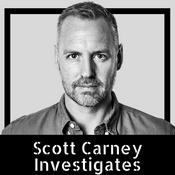
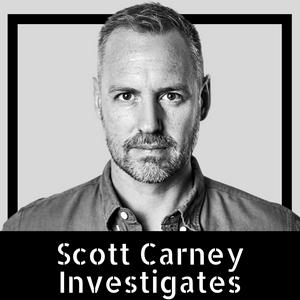
Investigative journalist Scott Carney explores true crime, cult psychology, biohacking, fitness revolutions, climate change calamities, organ trafficking and a whole lot more. Get exclusive access and bonus material at Patreon https://patreon.com/sgcarney
©PokeyBear LLC 2023-
Podcast websiteListen to Scott Carney Investigates, Futureproof with Jonathan McCrea and many other podcasts from around the world with the radio.net app
Get the free radio.net app
- Stations and podcasts to bookmark
- Stream via Wi-Fi or Bluetooth
- Supports Carplay & Android Auto
- Many other app features
Get the free radio.net app
- Stations and podcasts to bookmark
- Stream via Wi-Fi or Bluetooth
- Supports Carplay & Android Auto
- Many other app features

Scott Carney Investigates
Scan code,
download the app,
start listening.
download the app,
start listening.
Scott Carney Investigates: Podcasts in Family
 Ireland
