
Listen to this podcast in the app for free: Download for free in the App Store
radio.net
Sleep timer
Save favourites
100 episodes
The most important persuasive factor today with Henna Pryor
09/11/2026 | 51 mins.A school principal receives a long, heartfelt email from a worried mother. She writes back a thoughtful, personal reply in eight minutes, and the mother's first reaction is that AI must have written it. Henna Pryor says moments like this are now happening everywhere.
Henna calls this the signal gap: the distance between the message we hope to send and what a verifying audience actually receives. We used to trust people until they gave us a reason to check. Today we check first and decide whether to trust afterward.
In this episode of Inner Propaganda, I explore with Henna the four types of congruence that close the signal gap, the cognitive and emotional walls people bring into conversations, and why we can be deeply skeptical of institutions while trusting a favorite creator without question. Henna also shares how she answers questions outside her expertise without sounding vague, and why every post you publish sets a standard people will hold you to.
What you will discover:
Why we now verify first and trust second
The four types of congruence and how each one builds believability
How to recognize and lower the emotional wall in a conversation
Why polished, safe "executive beige" language erodes trust
How to diversify your inputs when the algorithm keeps feeding you more of the same
Henna's brilliant new book, The Signal Gap, is out November 10, 2026: https://thesignalgap.com/
In other exciting news… the Inner Propaganda audiobook is now available to order: https://a.co/d/0iGn0spx
Order my book, Inner Propaganda: https://www.amazon.com/Inner-Propaganda-Leading-Through-Turbulent/dp/1646872444/
Visit my website: https://owenfitzpatrick.com/
Join my newsletter: https://owenfitzpatrick.com/newsletter/How to have better conversations
02/11/2026 | 17 mins.Every time I speak with someone, eight conversations are going on at once. Most of them happen inside our heads, and they shape everything about how the real conversation unfolds.
Some of these conversations are about me, some are about the other person, and two are about the topic we're discussing. Each one carries information that can make me a more understanding, persuasive, and influential communicator, if I learn to notice it.
In this episode of Inner Propaganda, I explore the eight conversations framework one step at a time, from the story I tell myself about myself to the story the other person wants me to believe about them. I share how a single mention of a Ferrari can trigger a silent conversation about status, why feedback at work often goes unheard, and how to prepare for any conversation by mapping what each person is thinking. I finish with a distinction I find invaluable: separating facts, interpretations, opinions, and truth.
What you will discover:
The eight conversations taking place in every interaction
How your self-talk can quietly sabotage what you hear from others
How to close the gap between how people see you and how you want to be seen
Why recognizing how someone sees themselves makes them more receptive to you
How separating facts, interpretations, and opinions leads to smarter disagreements
If you enjoyed this episode, check out my brand new book, Inner Propaganda, where I dig into the hidden stories that shape what we believe about ourselves, other people, and the world around us. Exciting news - the Inner Propaganda audiobook is now available to order: https://a.co/d/0hDqYHbw
Order my book, Inner Propaganda: https://www.amazon.com/Inner-Propaganda-Leading-Through-Turbulent/dp/1646872444/
Visit my website: https://owenfitzpatrick.com/
Join my newsletter: https://owenfitzpatrick.com/newsletter/How to fix burnout with Cait Donovan
26/10/2026 | 49 mins.Cait Donovan burned out while working around 25 hours a week. She had time for long lunches with friends and mornings free to exercise, yet she still felt exhausted, irritated, and stuck. Years later, a single line in the burnout research gave her the answer she had been searching for.
Cait's central idea is that burnout grows out of mismatches between people and their work, their families, their coping habits, and the environments around them. Workload matters, though it is only one piece of a much bigger picture.
In this episode of Inner Propaganda, I explore the six workplace mismatches with Cait, why organizations that ignore them invite attrition and disengagement, and the personal factors that lead good people to accept mismatches in the first place. Cait also shares how she learned to disappoint people in small ways for practice, and why "pee when you need to pee" might be some of the best burnout advice you'll ever hear.
What you will discover:
Why the largest driver of burnout is a mismatch between a person and their role
The six workplace mismatches and how to recognize them
How interoception helps you notice burnout before it takes hold
Why aiming for a 75% match works better than chasing perfection
Simple ways to practice people pleasing less and asking for help more
Cait's brilliant new book, Mismatch: Why Good People Burn Out in Good Organizations, is out October 27, 2026. Order it now: https://caitdonovan.com/mismatch
If you enjoyed this episode, check out my new book, Inner Propaganda, where I explore the stories we sell to ourselves and how they shape what we believe and accept. The audiobook is now available for preorder.
Visit my website: https://owenfitzpatrick.com/
Join my newsletter: https://owenfitzpatrick.com/newsletter/
Order my book, Inner Propaganda: https://www.amazon.com/Inner-Propaganda-Leading-Through-Turbulent/dp/1646872444/5 steps to becoming the hero of your life
19/10/2026 | 26 mins.Over 30 years as a therapist and executive coach, I noticed that almost every person I worked with explained their problems using one of two stories. Some saw themselves as the victim of everything happening around them. Others saw themselves as the villain, the reason everything kept falling apart.
Both stories can feel completely true, and sometimes the evidence backs them up. The trouble is that the inner dictator only shows us the evidence that supports the story it wants us to believe. Each of us has been a victim, a villain, and a hero at different moments, which means we have more choice in the story we sell ourselves than we realize.
In this episode of Inner Propaganda, I explore the victim story and the villain story, how the inner dictator uses each one as a tactic, and how the arcs of Darth Vader and Luke Skywalker show us what it looks like to move toward a hero story. I also share the five steps I have used with clients for decades to help them build a hero narrative and an antifragile identity.
What you will discover:
The two stories most people tell about their problems, and how to spot which one you are running
Why being a villain is another way of being a victim
How the inner dictator chooses evidence to make its narrative feel like fact
The five As: awareness, agency, alternatives, adapt, and accept
How Viktor Frankl's search for meaning and Nassim Nicholas Taleb's idea of antifragility can help you keep moving forward
If you enjoyed this episode, check out my new book, Inner Propaganda, where I explore how the stories we sell to ourselves become the beliefs we buy into. It is packed with research, history, and practical tools to help you recognize your own inner propaganda and change the story.
Visit my website: https://owenfitzpatrick.com/
Join my newsletter: https://owenfitzpatrick.com/newsletter/
Order my book, Inner Propaganda: https://www.amazon.com/Inner-Propaganda-Leading-Through-Turbulent/dp/1646872444/Why we need to learn to disagree
12/10/2026 | 23 mins.When was the last time you sat down with someone who sees the world very differently and listened to understand them? I believe the biggest problem in the world today is that we are not disagreeing effectively enough. Too often, we decide it is pointless even to try.
Polarization, echo chambers, and media that amplify the most extreme voices have convinced many of us that the gap between "us" and "them" is too wide to cross. Research shows we consistently overestimate how extreme the other side is, and when we respond with shame and moral outrage, we often push people further away.
In this episode of Inner Propaganda, I explore why shaming backfires, what the rise of the Nazis teaches us about ignoring people's grievances, and why identity-protective cognition makes us reject views that challenge who we are. I also share a conversation with my guide in Afghanistan that tested my ability to disagree well, along with research on deep canvassing and what it reveals about how people change their minds.
What you will discover:
Why we overestimate how extreme the other side really is
How shaming and moral outrage can create the very thing they oppose
What identity-protective cognition means for every difficult conversation
How the illusion of explanatory depth opens the door to more flexible thinking
Why curiosity and respect give us the best chance of changing minds
If you enjoyed this episode, check out my new book, Inner Propaganda. It explores how the stories we are sold by leaders, by the media, and by our own minds shape what we believe, and what it really takes to change hearts and minds in a polarized world.
Visit my website: https://owenfitzpatrick.com/
Join my newsletter: https://owenfitzpatrick.com/newsletter/
Order my book, Inner Propaganda: https://www.amazon.com/Inner-Propaganda-Leading-Through-Turbulent/dp/1646872444/
More Education podcasts










Trending Education podcasts

























About Inner Propaganda with Owen Fitzpatrick
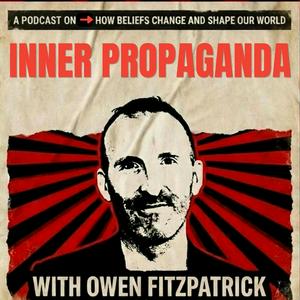
The most powerful propagandist in your life is you. Inner Propaganda with Owen Fitzpatrick explores the unconscious beliefs and stories that shape how we think, decide, and lead. Owen is a social psychologist, keynote speaker, and author of Inner Propaganda (Ideapress, 2026). For over two decades, he's studied belief systems, from global boardrooms to field research in North Korea, Rwanda, and Afghanistan. Each episode unpacks how beliefs form, why they resist change, and what it takes to lead through uncertainty. Ideas for leaders, thinkers, and anyone tired of soft-skill clichés. (Formerly Changing Minds.)
Podcast websiteListen to Inner Propaganda with Owen Fitzpatrick, The Comeback with Brenda Dennehy and many other podcasts from around the world with the radio.net app
Get the free radio.net app
- Stations and podcasts to bookmark
- Stream via Wi-Fi or Bluetooth
- Supports Carplay & Android Auto
- Many other app features

 Ireland

