The Search for Life on Saturn’s Intriguing Moon Enceladus
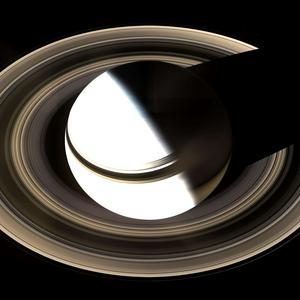
Dr. Alfonso Davila (NASA Ames Research Center)Nov. 24, 2025In 2005, NASA's Cassini spacecraft made a groundbreaking discovery—it found massive plumes of ice and gas erupting from the south pole of Enceladus, a small but geologically-active moon of Saturn. These plumes are now believed to originate from a subsurface ocean of liquid water beneath the moon’s icy crust, with conditions compatible with life, as we know it. The talk focuses on our current understanding of Enceladus' plume and subsurface ocean, and on past and future strategies to search in them for possible evidence of life. Alfonso Davila is a Research Scientist in the Exobiology branch at NASA Ames Research Center, where he helps develop strategies to search for evidence of life beyond Earth.
--------
1:14:09
--------
1:14:09
The Amazing Vera Rubin Observatory and Its Movie of the Sky
A Nontechnical talk by Dr. Steven Kahn (University of California, Berkeley)Oct. 8, 2025The amazing Vera Rubin Observatory is a unique astronomy facility just built in Chile, with the largest digital camera in the world, designed to provide a time-lapse “movie” of the entire sky from the Earth’s southern hemisphere. Over its planned ten years of operation, the Rubin Observatory will obtain nearly 1,000 images of every part of that sky. By comparing the various images, we will be able to detect everything that varies in brightness and everything that moves across the sky. By adding together all of the images, we will be able to catalog nearly 20 billion galaxies and a comparable number of stars. After 20 years of development, this facility has just come on-line and will soon begin its nightly operations. Prof. Kahn, who was Director of the Observatory during its construction phase, reviews the design, development, and construction of Rubin, and describes the exciting science that lies ahead.
--------
1:26:05
--------
1:26:05
Science at the Edge of the Solar System
A Talk by Dr. Oliver White (SETI Institute)May 28, 2025Ten years ago, the New Horizons spacecraft flew by the Pluto system and revealed an unexpectedly diverse range of landscapes on that dwarf planet and its largest moon Charon -- implying much more complex geological histories for these distant worlds than anyone expected. Dr. White leads a vivid tour of their often bizarre terrains, some of which are still evolving, and explains what processes scientists think molded them into their present appearances. After a brief stop at Pluto's four small moons, Dr. White extends the tour 2 billion km farther out into space, to show us Arrokoth, the tiny "planetesimal" that New Horizons flew past three and a half years after visiting Pluto. It is the most primitive object in the Solar System ever visited by a spacecraft.
--------
1:23:12
--------
1:23:12
New Worlds: Analyzing the Atmospheres of Exoplanets with the James Webb Space Telescope
Non-technical Talk by Prof. Jonathan Fortney (U. of California, Santa Cruz) Apr. 9, 2025Over 6000 planets have now been found around other stars, but we only have information about what their atmospheres are like for a few dozen. NASA's powerful James Webb Space Telescope (JWST), which features a 20-foot mirror in space, is currently being used to understand planetary atmospheres. Prof. Fortney explains how we can look for atmospheres around rocky planets the size of the Earth, and how his group and others are already measuring the abundances of molecules like water, methane, ammonia, and carbon dioxide in the atmospheres of larger planets, of sizes similar to Neptune and Jupiter. And he tells us what astronomers are looking forward to in the next year or two with JWST.
--------
1:22:52
--------
1:22:52
Copernicus 4.0: How the Views of Earth's Importance and the Search for Life are Changing
Mar. 5, 2025 Dr. Simon Steel (SETI Institute)Dr. Steel discusses the Copernican revolution and how it changed humanity's view of its place in the universe. He then talked about other "Copernican" discoveries that displaced us from a central perch, including the revision of our place in the Galaxy, the discovery of other galaxies, and now our finding a remarkable number of planets (including Earth-like planets) orbiting other stars. He explains how such discoveries give context for, and have prepared us for, the next potential Copernican revolution, the discover of intelligent life elsewhere in the cosmos. He concludes by describing some of the most exciting experiments now underway to find evidence of such life among the nearest stars and busiest galaxies. Dr. Steel is Deputy Director of the Carl Sagan Center for Research at the SETI Institute.
Listen to exciting, non-technical talks on some of the most interesting developments in astronomy and space science. Founded in 1999, the Silicon Valley Astronomy Lectures are presented on six Wednesday evenings during each school year at Foothill College, in the heart of California's Silicon Valley. Speakers include a wide range of noted scientists, explaining astronomical developments in everyday language. The series is organized and moderated by Foothill's astronomy instructor emeritus Andrew Fraknoi and jointly sponsored by the Foothill College Physical Science, Math, and Engineering Division, the SETI Institute, the Astronomical Society of the Pacific, and the University of California Observatories (including the Lick Observatory.)













![Podcast Cosmosis [Formerly The UFO Rabbit Hole]](https://ie.radio.net/podcast-images/175/the-ufo-rabbit-hole-podcast.jpeg?version=c4cfeed14331265219e0263fd62be755644a8cf4)











 Ireland