
Listen to this podcast in the app for free: Download for free in the App Store
radio.net
Sleep timer
Save favourites
270 episodes
#270 Dr. Henry Mahncke — Neuroplasticity, Brain Training, Cognitive Resilience & Alzheimer’s
11/11/2026 | 54 mins.Ready to upgrade your health, energy, and longevity? Join LLInsider, Claudia’s free newsletter, for insights and practical strategies to optimize your life and health → https://longevity-and-lifestyle.com/llinsider
Can your brain keep changing as you age, and what does it take to keep challenging it?
In this episode of The Longevity & Lifestyle Podcast, Claudia speaks with Dr. Henry Mahncke, neuroscientist and CEO of Posit Science, the company behind BrainHQ, about neuroplasticity, learning, and brain health throughout life.
Henry shares how working with neuroscientist Michael Merzenich changed his understanding of the adult brain. Together, they explore adaptive brain training, processing speed, attention, reward, and the difference between enjoying a familiar game and learning something that challenges you.
They also discuss research on dementia risk, the limits of current evidence for people with more advanced cognitive decline, and why movement, sleep, nutrition, stress and social engagement belong in the same conversation.
From Claudia’s language-learning habit to Henry’s encouragement to start small, this is a conversation about staying curious and engaged without waiting to be perfect.
IN THIS EPISODE
• Why the adult brain remains capable of change
• How adaptive speed-training exercises work
• The role of attention and reward in learning
• Brain training, dementia research and unanswered questions
• Everyday foundations of brain health
• Why meaningful activities and social connection matter
• Learning a language or instrument without needing to master it
• Starting gradually and building a sustainable routine
TIMESTAMPS
00:00 Trailer: effort over perfection
00:31 Brain Blueprint
01:06 Welcome and introduction
01:19 Michael Merzenich and the adaptable brain
05:21 Henry’s journey from McKinsey to brain training
08:35 How our understanding of brain plasticity changed
12:09 How adaptive brain training works
19:51 Brain health and the “noisy radio” analogy
25:54 Lifestyle foundations of brain health
31:49 Claudia on active aging
38:37 Processing speed and everyday activities
41:31 Claudia’s language-learning habit
49:54 How to start a brain-training routine
54:01 Where to find BrainHQ
ABOUT DR. HENRY MAHNCKE
Dr. Henry Mahncke is a neuroscientist and CEO of Posit Science, the developer of BrainHQ. He trained at the University of California, San Francisco, with Michael Merzenich and works on translating brain-plasticity research into adaptive training exercises.
https://www.brainhq.com/
#HenryMahncke #BrainHealth #Neuroplasticity #BrainTraining #HealthyAging #Longevity#269 Dr. David Rock — Focus, Bias, Feedback, AI & the Neuroscience of Leadership
04/11/2026 | 46 mins.Ready to upgrade your health, energy, and longevity? Download my free 10 Life & Longevity Hacks Playbook and start living smarter, stronger, and longer → https://longevity-and-lifestyle.com/freebie
Why is it so hard to focus and could AI be changing how we think?
In this episode of The Longevity & Lifestyle Podcast, Claudia speaks with Dr. David Rock, author of Your Brain at Work and Good with Humans, about attention, cognitive bias, relationships, and the challenges of thinking clearly in an overloaded world.
Drawing on his work at the NeuroLeadership Institute, David explains why understanding your brain’s limits matters, how to ask for genuinely useful feedback, and why even intelligent people struggle to see their own biases.
Together, they explore practical ways to protect your best thinking time, understand emotional reactions, and use AI as a thinking partner rather than a replacement for your own judgment. They also discuss emerging psychedelic research and the questions that remain around its application to leadership.
IN THIS EPISODE
• Why information overload makes clear thinking harder
• How attention supports learning and memory
• Why awareness alone doesn’t eliminate bias
• Two questions for getting better feedback
• What effective leaders balance between people and results
• The five social needs in the SCARF model
• Protecting time for focused, creative work
• Emerging psychedelic research and insight
• Using AI without outsourcing your thinking
TIMESTAMPS
00:00 Trailer: Protect your creative thinking
01:17 Welcome and introduction
02:44 What is neuroleadership?
08:13 Attention, learning, and memory
12:29 Can leadership skills be learned?
14:35 Why we struggle to see our own biases
19:47 How to ask for useful feedback
21:44 What makes an effective leader?
27:09 SCARF: The five social needs
31:13 Brain optimization and information overload
34:56 Put creative work before your inbox
36:56 Psychedelics, insight, and emerging research
42:18 Is AI “fast food for your brain”?
46:54 Using AI as a thinking partner
48:41 Where to find David’s work
ABOUT DR. DAVID ROCK
Dr. David Rock’s work at the NeuroLeadership Institute translates brain research into approaches to learning, feedback, decision-making, and leadership. He is the author of Your Brain at Work and Good with Humans: The Neuroscience of What Makes Us Tick and What Ticks Us Off.
https://neuroleadership.com/
https://goodwithhumans.com/
#DavidRock #BrainHealth #Focus #Neuroscience #CognitiveBias #Leadership #Longevity#268 Dr. Edith Shiro — The Unexpected Gift of Trauma: Healing, Resilience & Post-Traumatic Growth
28/10/2026 | 49 mins.Ready to upgrade your health, energy, and longevity? Download my free 10 Life & Longevity Hacks Playbook and start living smarter, stronger, and longer → https://longevity-and-lifestyle.com/freebie
Can trauma become a source of strength, purpose, and growth?
In this episode of The Longevity & Lifestyle Podcast, Claudia speaks with Dr. Edith Shiro, licensed clinical psychologist, trauma specialist, co-founder of the Trauma and Resilience Center, and author of The Unexpected Gift of Trauma.
Dr. Shiro has spent decades studying trauma, PTSD, resilience, and post-traumatic growth. Her work is also shaped by her family history as the granddaughter of Holocaust survivors and Syrian refugees, and by supporting people through 9/11, the Surfside building collapse, war, migration, and other collective traumas.
Together, they explore why trauma is not only about what happens to us, but how it can reshape our beliefs, relationships, nervous system, and sense of self.
Dr. Shiro explains why healing begins with radical acceptance, why trauma can live in the body, and why being heard, validated, and connected to others can be such an important part of recovery.
They also explore post-traumatic growth and how pain can eventually become a source of purpose, compassion, resilience, and service to others.
IN THIS EPISODE
• What trauma really is
• Big T vs small T trauma
• Intergenerational and collective trauma
• Why trauma can live in the body
• How unresolved trauma affects relationships
• Radical acceptance and emotional healing
• Turning pain into purpose
• Post-traumatic growth
• Gratitude and nervous-system regulation
• Psychedelics and PTSD
• Why human connection matters for longevity
TIMESTAMPS
00:00 Introduction
02:03 How trauma became Dr. Shiro’s life’s work
03:58 Why some people grow after trauma
06:12 Why trauma lives in the body
08:42 Why trauma is relational
12:35 Radical acceptance and healing
14:53 Why we avoid painful emotions
17:06 What actually counts as trauma?
19:57 Big T, small T & intergenerational trauma
21:33 How the body carries unresolved trauma
25:04 How unresolved trauma shapes our reactions
26:32 What is post-traumatic growth?
29:10 Turning pain into purpose
29:33 How your wound can become your superpower
31:00 Claudia shares her childhood trauma
34:02 Reframing childhood beliefs
38:19 The power of gratitude
41:32 Psychedelics and trauma healing
44:33 Dr. Shiro’s book and work
46:21 Mental health as a daily practice
ABOUT DR. EDITH SHIRO
Dr. Edith Shiro is a licensed clinical psychologist specializing in trauma, PTSD, resilience, and post-traumatic growth. She is the author of The Unexpected Gift of Trauma: The Path to Post-Traumatic Growth.
#EdithShiro #TraumaHealing #PostTraumaticGrowth #MentalHealth #Resilience #PTSD #Longevity#267 Sander Brus — Sugar, Dopamine, Cravings & the Future of Metabolic Health
21/10/2026 | 47 mins.Ready to upgrade your health, energy, and longevity? Download my free 10 Life & Longevity Hacks Playbook → https://longevity-and-lifestyle.com/freebie
This episode is brought to you by:
Axolt, a daily brain drink with 46 carefully selected ingredients, no caffeine or stimulants, and formulated with input from neurologists and brain health researchers: https://axoltbrain.com/claudia
Get 20% off through the link above
Why is sugar so hard to resist, even when you know it is not helping your health?
Claudia speaks with Sander Brus, scientist, entrepreneur, and founder of NoSu Health, about the biology behind cravings and how to change your relationship with sugar.
After COVID temporarily took away his sense of taste, Sander stopped reaching for Coca-Cola, changed his eating habits, and lost 15 kilograms. This sparked his exploration of taste receptors, dopamine, and food reward.
They discuss how ultra-processed foods keep us coming back, why willpower alone often fails, and how glucose swings, GLP-1 medications, and satiety influence appetite.
Sander also explains NoSu Health and Gymnema sylvestre, the “sugar destroyer,” which can temporarily reduce sweet taste. Plus, discover how at-home diagnostics and AI-powered retinal imaging could support earlier detection of health risks.
IN THIS EPISODE
• Sugar cravings, dopamine, and the “bliss point”
• Blood sugar, insulin sensitivity, and GLP-1s
• Gymnema sylvestre and sweet taste receptors
• Practical ways to reduce sugar
• At-home diagnostics and AI retinal scans
• Prevention, behavior change, and enjoying life
TIMESTAMPS
00:00 Introduction
01:29 Surfing, dopamine, and big-wave risk
04:47 Claudia’s father’s stroke recovery
09:45 How losing taste changed Sander’s relationship with food
10:30 The “bliss point” and engineered food reward
12:55 How appearance and texture change how much we eat
14:22 Why sugar is so hard to resist
15:00 Dopamine and the brain’s reward pathway
15:55 Big Tobacco and Big Food
17:00 Why willpower is not enough
19:14 GLP-1s and addictive behavior
20:25 Why ultra-processed food is so difficult to resist
22:29 Why sugary breakfasts can trigger more cravings
23:19 The glucose rollercoaster
25:28 How quitting sugar changed Sander’s body
26:26 The story behind NoSu Health
27:00 Blocking sweet taste receptors
28:49 Reducing glucose spikes and crashes
29:32 Gymnema sylvestre and metabolic health
31:08 Where to start if you want to reduce sugar
31:56 How taste buds can reset
32:39 Different ways to use NoSu
35:55 Rewiring the reward response to sugar
37:20 Is sugar really as addictive as cocaine?
38:35 The science behind Gymnema sylvestre
40:00 Sugar hiding under different names
40:30 NoSu’s ongoing research
42:17 Can NoSu complement GLP-1 medications?
43:43 Sander’s other health-tech companies
44:19 The future of at-home diagnostics
47:14 Using the retina to assess cardiovascular health
48:42 Retina scans vs CT calcium scoring
50:38 Why early detection matters
53:08 AI, health technology, and behavior change
55:45 Where to follow Sander
56:31 Sander’s final longevity advice
ABOUT SANDER BRUS
Sander Brus is a Dutch scientist and entrepreneur working across metabolic health, diagnostics, sustainability, and AI. He founded NoSu Health and AUCAS Diagnostics and works with IRO on AI-powered retinal imaging for cardiovascular risk assessment.
#SanderBrus #SugarCravings #MetabolicHealth #Dopamine #UltraProcessedFood #BloodSugar #Longevity #HealthyAging#266 Gazal Vakili — Meet Your Future Self: Identity, Daily Habits, Visualization & AI
14/10/2026 | 51 mins.Ready to upgrade your health, energy, and longevity? Download my free 10 Life & Longevity Hacks Playbook and start living smarter, stronger, and longer → https://longevity-and-lifestyle.com/freebie
This episode is brought to you by:
BioLongevity Labs, science-led supplements supporting mitochondrial function, gut resilience, recovery, and eye health, with transparent ingredients and third-party testing: https://BioLongevitySupplements.com
Get 20% off with code CLAUDIA20.
Axolt, a daily brain drink with 46 carefully selected ingredients, no caffeine or stimulants, and formulated with input from neurologists and brain health researchers: https://axoltbrain.com/claudia
Get 20% off through the link above
What if your future self stopped feeling like a stranger and became someone you could talk to, learn from, and feel responsible for?
Claudia speaks with Gazal Vakili, founder and CEO of Future Self, an AI-powered personal transformation platform that helps people connect with who they want to become.
With more than 15 years of experience across clinical research, biotech, digital health, virtual reality, cognitive science, and AI-enabled health technologies, Gazal explores how our beliefs and identity influence today's choices.
Discover how AI voice cloning, personalized meditations, visualization, and daily micro-actions can help bring your future identity into the present. Together, Claudia and Gazal explore purpose, intuition, self-worth, and learning to listen to yourself.
IN THIS EPISODE
• Imposter syndrome, identity, and the power of belief
• Silent meditation, intuition, and self-awareness
• Why we treat our future selves like strangers
• The psychology of future-self continuity
• Creating an emotionally meaningful future vision
• AI voice cloning and future-self conversations
• Personalized meditations and daily micro-actions
• Why worthiness cannot come from achievement
TIMESTAMPS
00:00 Introduction
04:33 Gazal’s journey into Future Self
05:27 Imposter syndrome
06:00 The placebo effect and belief
07:38 Identity and expectations
08:24 Childhood and self-belief
09:17 Reprogramming identity
11:34 The Future Self mission
12:36 Voice cloning and inner wisdom
14:21 Silent meditation
15:28 Sitting with your thoughts
17:27 Intuition vs the monkey mind
18:08 Observing your thoughts
18:58 Journaling for answers
21:08 Your future self as a stranger
23:38 Future-self continuity
24:56 Connecting with your future identity
26:50 Why identity is not fixed
27:24 How beliefs filter reality
29:16 Creating a bold future vision
30:24 Making your future feel real
31:00 Talking to your future self
32:50 Daily guidance and micro-actions
34:05 Multi-sensory visualization
35:31 Meditations in your own voice
36:29 Weekly future-self check-ins
38:03 Gazal’s transformation
39:08 An emotional future-self encounter
40:38 Becoming an entrepreneur
41:45 Gazal’s daily practice
44:09 Questioning your identity
45:17 Listening to yourself
45:56 What’s next for Future Self
46:58 Gazal’s final message
LEARN MORE ABOUT FUTURE SELF
Website: https://www.future-self.ai/
Join the waitlist for updates on beta access and future availability.
#GazalVakili #FutureSelf #AI #Identity #Mindset #Visualization #HumanPotential #PersonalGrowth #LongevityPodcast
More Alternative Health podcasts




Trending Alternative Health podcasts


About The Longevity & Lifestyle Podcast
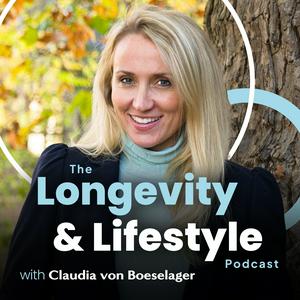
Claudia von Boeselager is here to empower you to live at your best and reach your highest potential by sharing groundbreaking strategies, tools, and practices for your longevity and lifestyle from the world’s pioneering experts. For more, visit: LLinsider.com Welcome to The Longevity & Lifestyle Podcast! Claudia is on a mission to help 1 billion people optimize their lives and reach their fullest potential so that they can make a positive impact in the world! Tune in to learn how to increase your healthspan, improve the quality of your life and lifestyle also around entrepreneurship, managing personal finances and investing, and much more. Topics include how to optimize your health in areas such as sleep, nutrition, cognition, metabolic health, reversing diabetes, intermittent fasting, biomarkers, gut health, hormones, the female biorhythm, skin, hair, biohacking tips, supplements, mastering your mindset, improve your relationships and overall happiness, meditation, how to perform better in business, optimize your daily routines, achieve peak performance, biohacking your age, and more. Claudia is a Peak Performance Coach and Serial Entrepreneur passionate about helping you thrive in all areas of your life & business! She knows what it’s like to feel close to burnout and not be at your best. Thanks to 10+ years of research, countless interviews with global pioneers, and hundreds of thousands spent, she continues to uncover how you, too, can achieve peak performance to live your life at its best - all while having lots of fun! So make sure to TUNE IN and start living the best version of yourself!
Podcast websiteListen to The Longevity & Lifestyle Podcast, Feel Better, Live More with Dr Rangan Chatterjee and many other podcasts from around the world with the radio.net app
Get the free radio.net app
- Stations and podcasts to bookmark
- Stream via Wi-Fi or Bluetooth
- Supports Carplay & Android Auto
- Many other app features
 Ireland

